OM in the News: Standardizing Procedures at Christiana Care Health

cardiacThe Christiana Care Health System in Delaware was concerned it was spending too much on cardiac monitoring for patients who didn’t need it. So it changed its system to encourage doctors to follow American Heart Association guidelines for using the monitors. The number of patients using the monitors, and the group’s daily costs for such monitoring, fell by 70% without any harm to patient care.

The effort is part of a push by some hospitals across the nation to cut costs by standardizing care, reports The Wall Street Journal (Sept. 22, 2014). Although professional bodies such as the AHA publish numerous guidelines advising doctors how best to treat various diseases, many doctors deviate from guidelines, which can lead to overuse of some tests and procedures. Doctors cite various reasons for deviating, from personal preference to institutional custom.

Cardiac telemetry is one of AHA’s procedures in its “Choosing Wisely” campaign. In cardiac telemetry, electrodes are used to monitor the heart for abnormal rhythms. To try to cut inappropriate use of the monitoring at Christiana Care, physicians redesigned the electronic system that doctors use to order tests and other care. First, they removed the option to order telemetry for conditions not included in the AHA guidelines. Then, they attached a fixed AHA-recommended time period for telemetry duration in the computer system. After the changes, the hospital group’s mean daily number of  patients monitored with telemetry fell from 357.5 to 109.1, while the mean daily cost for delivering telemetry fell from $18,971 to $5,772. The changes had no negative effect on patient care; mortality rates at the hospital remained stable, as did the number of “code blue” emergency calls to resuscitate patients. “It is remarkable to achieve such a substantial reduction in the use of this resource without significantly increased adverse outcomes,” says one medical expert.

Classroom discussion questions:

1.  In what other ways can hospitals become more efficient? (Hint: see Chapter 5, page 175).

2. Why are some doctors opposed to these system changes?

OM in the News: How Operations Management Improves Hospital Procedures

hospital nurseSwamped with tasks such as hunting for supplies, tracking down medications, filling out paperwork at the nursing station and looking for missing test results, nurses may spend less than two hours of a 12-hour shift in direct patient care, says The Wall Street Journal (July 22, 2014). But research has also found that the more time nurses spend at the bedside, the less likely patients are to suffer falls, infections and medication errors, and the more likely they will be satisfied with their care.

Now hospitals are changing traditional work practices, shifting more routine tasks to certified nurse assistants and other less highly skilled staffers. They are eliminating inefficient processes that make nurses walk as many as 5 miles around the hospital in a single shift. Some hospitals are aiming to triple the amount of time nurses spend with patients. That means locating supplies inside patient rooms and having pharmacists deliver medications to patient floors. As more hospitals adopt electronic medical records and place computers in patient rooms, they are enabling nurses to access information quickly and fill out medical charts while keeping close to patients.

Presbyterian Medical Center, in Winston-Salem, N.C., found in a 2010 internal audit that nurses were involved in direct patient care at the bedside for only 2.5 hours every 12-hour shift. “Not only was that eye-opening, it was also completely unacceptable,” says its chief clinical officer. With a shift to a team-based model, the hospital hit 6.5 hours per shift at the end of 2013, with a goal to hit 8.5 hours by the end of 2015. Process changes helped save $20 million last year at Presbyterian, and the transfer to electronic records also reduced by 42 minutes the amount of time spent paging doctors, copying and faxing, and tracking down tests.

This is a good article to link to the video case studies on Arnold Palmer Hospital in Chapters 6 (Quality), 7 (Process Analysis), and 9 (Layout).

Classroom discussion questions:

1. What tools of TQM could be used to help improve hospital processes (see pages 218-222)?

2. Why is it important for nurses to spend more time with patients, and less time at their stations?

OM in the News: Best Practices at the Sanford Health System

hospitalIn 2012, waste in the national health care system was measured at $750 billion annually. Driven by tightening margins and increased pressure for positive outcomes, health systems nationwide are looking for ways to maximize resources and trim costs, writes Argus Leader (May 7, 2014).

“It’s not just about cutting costs,” said the CEO of Sanford Clinic in South Dakota. “We do have to cut per-unit costs, but we have to look at standardization, best practices. We have a very fragmented health care system, and that’s where integration and coordination of care is so critical. It’s not just for efficiencies. It’s for best outcomes and eliminating errors and waste.”  The clinic’s approach to becoming more efficient involves the approaches of Kaizen and Six Sigma, tools used in business for process improvement, but the greater goal is to integrate continuous performance improvement into the culture.

The Sanford Health System, of which the clinic is a part, set a goal of finding $100 million in efficiencies this year, with much of the savings coming through better supply chain management. “We looked at cost transformation opportunities, which is tying it back to product standardization; maybe some miscellaneous contracts we have from one region to another that we could consolidate,” added the President of Sanford USD Medical Center. As the system has grown, it has commanded better pricing options from vendors. Various Sanford locations have worked together to identify best practices and streamline products and pharmaceuticals to achieve more savings through buying in bigger quantities.

Agreeing to use a common spine hardware, for example, saved $2.5 million annually. Working with cardiologists to determine the pacemaker of choice across the system saved another $2.4 million. Further, a new asset management system is designed to further optimize staffing and supplies. It will monitor where patients and care providers are to manage patient flow and track equipment.

Classroom discussion questions:

1. Why is OM so important in hospitals?

2. What tools in Chapter 6 can be used to improve hospital quality?


OM in the News: Keeping Some Slack in the Operating Room

hospitalOperating rooms at St. John’s Regional Health Center, an acute-care hospital in Missouri, had been running at 100% capacity. When emergency cases—which make up about 20% of the full load—arose, the hospital was forced to bump long-scheduled surgeries. As a result, doctors often waited several hours to perform 2-hour procedures and sometimes operated at 2 a.m. Staff members regularly worked unplanned overtime. The hospital was constantly behind, according to this interesting article in Strategy + Business (Spring, 2104).

The rather surprising solution: Leave one room unused. Crazy idea? The facility was already being squeezed, and now comes a recommendation to take away even more capacity?

On the surface, St. John’s lacked operating rooms. But what it actually lacked was the ability to accommodate emergencies. Because planned procedures were taking up all the rooms, unplanned surgeries required a continual rearranging of the schedule—which had serious repercussions for costs and even quality of care. The key to finding a solution was the fact that the term unplanned surgery is a bit misleading. The hospital can’t predict each individual procedure, but it knows that there will always be emergencies. Once a room was set aside specifically for unscheduled cases, all the other operating rooms could be packed well and proceed unencumbered by surprises. The empty room thus added much-needed slack to the system. Soon after implementing this plan, the hospital was able to accommodate 5.1% more surgical cases overall, the number of surgeries performed after 3 p.m. fell by 45%, and revenue increased. And in the two years that followed, the hospital experienced a 7 and 11% annual increase in surgical volume.

As Bottleneck Analysis and Theory of Constraints in Supplement 7 suggests, removing a bottleneck can be most helpful in improving throughput. Slack is often undervalued because what appears to be an unnecessary luxury, but in fact may let the system perform at a higher level of efficiency, as was the case at St. John’s.

Classroom Discussion Questions:

1.  What are the costs at St. John’s for not having ‘slack’ and for having ‘slack’?

2.  How does St. John’s solution compare to the solutions in Examples S3 and S4 (pages 304-305)?

OM in the News: Robots vs. Anesthesiologists

J&J's Sedasys system
J&J’s Sedasys system

Anesthesiologists, who are among the highest-paid physicians, have long fought people in health care who target their specialty to curb costs. Now the doctors are confronting a different kind of foe, writes The Wall Street Journal (Sept. 26, 2013): machines.

A new system called Sedasys, made by Johnson & Johnson, automates the sedation of many patients undergoing colon-cancer screenings called colonoscopies. That could take anesthesiologists out of the room, eliminating a big source of income for the doctors. More than $1 billion is spent each year sedating patients undergoing otherwise painful colonoscopies.  Sedasys “is a great way to improve care and reduce costs,” says J&J’s CEO.

Anesthesiologist’s involvement typically adds $600 to $2,000 to the colon-cancer screening procedure’s cost, By contrast, Sedasys would cost about $150 a procedure.

As J&J markets Sedasys, many anesthesiologists are sounding the alarm. They say the machine could endanger some patients because it uses a powerful drug known as propofol that could be used improperly. They also worry that if the anesthesiologist isn’t in the room, he might not be able to get to an emergency fast enough to prevent harm.

But during testing, none of the 1,700 patients sedated by Sedasys required rescuing. This past May, the FDA approved Sedasys for use on healthy patients 18 years of age and older who require mild or moderate levels of sedation during the colon-cancer screenings.

Classroom discussion questions:

1. What are the advantages and disadvantages of technology such as Sedasys?

2.  Why can’t this system be used in more complex surgeries, like heart operations??

OM in the News: Lean Operations and Hospital MRI Productivity

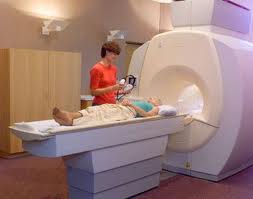
When we discuss how to build a lean organization in Chapter 16 (JIT and Lean Operations), we note that one of the many ways to improve productivity is to eliminate all but value added activities.  A new research study in the Journal of the American College of Radiology (Sept., 2011) reports on a German hospital that was able to almost double the percentage of patients receiving an MRI scan in 24 hours, increase scanner productivity by 1/3, and save $338,000 in its first year of implementing lean management techniques.

Long the lifeblood of corporate bosses, lean is only now beginning to filter down to health care. The authors, at the 1,200 bed University Hospital Giessen write: “Many health care organizations do not measure key parameters such as demand, capacity, patient access, process efficiency, and productivity. They are run like cottage industries of dedicated artisans. Among the consequences are underutilization of very expensive resources and long patient delays”.

They identified 33 “failure modes”, or process snags leading to waste,  and fixed the 14 most critical ones. Fixes included increasing staffing levels to keep personnel from being overloaded, eliminating redundant exams, and getting rid of superfluous documentation. This dropped radiology information systems time from 3 minutes/exam to under 1 minute. After launching the program, 1,000 additional exams  can be run per year. The mean cycle time also dropped (from 52 to 39 minutes), while throughput increased by 38%, and scanner productivity jumped 32%.

“Quality and cost are reconciled by process improvement”, they conclude. We would also note that lean is not just about laying off people  to save money. Here is a good class example about using lean to set the best staffing level and finding new ways to use and develop workers.

Discussion questions:

1. Identify other ways to improve hospital productivity with lean tools.

2. How was the hospital able to justify higher staffing costs?