OM in the News: If the Japanese Can Make Cars in the U.S., Why Can’t Apple Make an iPad?

As you are preparing for the 1st week of Fall classes, you may want to read the New York Times (August 5, 2012) lead article, which basically asks the question in  our blog title. The story opens in 1983 with Smyrna, Tennessee  farmland  paved over so Nissan could build its first American assembly plant. Eighty miles to the south, a Nissan engine factory was added, and across Tennessee about 100 Nissan suppliers now dot the landscape, making steel in Murfreesboro, air conditioning units in Lewisburg, transmission parts in Portland. Nissan broke with conventional wisdom that Japanese automakers would not build many cars anywhere but Japan, where supply chains were in place, costs were tightly controlled and the reputation for quality was unparalleled. (Nissan’s U.S. quality is now so high that it exports engines to Japan).
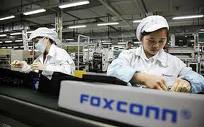
Today, high-tech executives continue to argue that the U.S. cannot compete in making electronic devices. Apple, Dell and HP, which rely on huge Asian factories, assert that manufacturing would be too costly and inefficient in America. Only overseas, they claim, can they find an abundance of educated engineers, low-wage workers and at-the-ready suppliers. But the migration of Japanese auto manufacturing to the U.S.  offers a case study in how the transformations can unfold. We today remain one of the top auto manufacturers and employers in the world. Japanese and other foreign companies account for more than 40% of cars built here, employing hundreds of thousands.

When Apple CEO Tim Cook was asked if his company — which once made computers in America, but now locates most assembly in China — would ever build another product in the U.S., he replied:  “I hope so. One day.”  That day, interestingly, came recently for Brazil instead, which cajoled Apple and Foxconn with a combination of financial incentives and import penalties to make iPads and iPhones there.

Discussion questions:

1. Why did Brazil land iPad manufacturing, when the U.S. did not?

2. What is the answer to the question posed in the blog title?

OM in the News: Outsourcing Leads to Delays For The Airbus 350

Just as aggressive outsourcing  a decade ago on its 787 Dreamliner caused Boeing to stumble, Airbus now faces exactly the same issues as it prepares its direct competitor, the A350. The Wall Street Journal (July 11, 2012)  writes that both companies have lurched through a string of expensive and embarrassing crises while developing their new airplanes. To recover, the competitors are rethinking how they build jetliners. What is emerging is a middle path between outsourcing, which has reshaped the aeronautical industry over recent years, and the highly centralized production systems that preceded it.  In a major retreat, Boeing  has since bought up suppliers, brought work back in-house and integrated more closely with its remaining contractors. Manufacturing problems on the 787 have left Boeing with more than 40 almost-completed Dreamliners awaiting fixes. Customers are getting their planes 4 years late.  For a second, larger version of the Dreamliner, Boeing opted to design many outsourced components itself.

Airbus found internal coordination was equally daunting. The A350 team pressed  plants  to agree on common standards and buy identical equipment. Some  “partners”  balked at spending hundreds of thousands of dollars for the digital “tool set” of software to access A350 blueprints. By 2010, A350 blueprints were running late and the project was delayed 6 months. Last spring, bad news again surfaced. Lower-tier contractors were struggling to deliver parts on time.  Preparations to manufacture composite parts took longer than the setup for metal parts had. As parts arrived late, delays rippled upstream. Large sections of the first test airplanes weren’t ready for assembly. Airbus could rush the unfinished fuselage parts together and appear on schedule (as Boeing had done), even though it would be harder to complete tasks later, out of sequence. It chose to delay yet another 6 months.

Airbus now monitors 450 suppliers  world-wide. “We don’t know everything, but we know all about the risky ones,” says the A350 VP.

Discussion questions:

1. What are the advantages and disadvantages of outsourcing in this industry?

2. What is the impact of a plane delayed by 2-3 years?

OM in the News: Small Manufacturers Giving Up On “Made in China”

As costs in China rise and owners look closely at the hassles of using factories 12,000 miles and 12 time zones away, Businessweek (June 25, 2012) reports that many small companies have decided manufacturing overseas isn’t worth the trouble. American production is “increasingly competitive,” says the head of the Reshoring Initiative, a group  trying to bring factory jobs back to the U.S. “In the last two years there’s been a dramatic increase” in the amount of work returning. Here are 2 examples:

For LightSaver, a lighting manufacturer, the decision was simple. Neither of the founders has ever been to China, which made communicating with manufacturers difficult. Components that were shipped from the U.S. sometimes got stuck in customs for weeks. “If we have an issue in manufacturing, in America we can walk down to the plant floor,” says the CEO. “We can’t do that in China.” He believes manufacturing in the U.S. is probably 2-5% cheaper once he takes into account the time and trouble of outsourcing production overseas.

Even with strong Mandarin skills, the founder of Pigtronix, which makes electric guitar pedals, discovered that he couldn’t  monitor quality at Chinese factories. After several years of finding glitches in 30% of the pedals, the company decided to move production to  N.Y. Now Pigtronix can run multiple tests on its products and even has a guitarist play each of the 500 to 1,000 pedals it sells monthly before they’re shipped. While manufacturing in the U.S. can cost  from 3 to 6 times as much as it does in China,  Pigtronix benefits from not having capital tied up in products that spend weeks in transit and then pile up in inventory. “In China, you have high minimum quantities you have to order, so you’re building a couple thousand of every guitar pedal. Your carrying costs start to get huge.”

The bottom line: Although manufacturing in China can cost a third what it does in American factories, small companies are bringing production back to the U.S.

Discussion questions:

1. Why is reshoring gaining traction?

2. Why do many companies continue to move production to Asia?

OM in the News: How Southwest’s Operations Strategy Gives Low-Cost Competitive Advantage

In an airline industry that is notoriously brutal, writes Slate.com (June 6, 2012), Southwest Airlines just recorded its 39th consecutive year of profitability. How does Southwest do it? It’s all about keeping operations simple. Simpler operations mean fewer things that can go awry and botch up the whole process, as we show in Figure 2.8.

First, while other airline fleets can employ 10 or more types of aircraft, Southwest uses just one, the Boeing 737. The airline’s VP explains: “We only need to train our mechanics on one type of airplane. We only need extra parts inventory for that one type of airplane. If we have to swap a plane out at the last minute for maintenance, the fleet is totally interchangeable.”

Second, Southwest  doesn’t assign seat numbers. Which means that if a plane is swapped out, and a new one’s brought in with a slightly different seat configuration, there’s no need to adjust the entire seating arrangement and issue new boarding passes.

Third, while most other airlines charge to check bags these days, Southwest has resisted the trend. Its “bags fly free” policy  has operations benefits: “When you charge people to check bags they try to carry more on, sometimes more than can fit in the overhead bins,” says the VP. “That results in more bags being checked at the gate, right before departure. And that wastes time.”

Finally, other carriers use a hub-and-spoke system. But hubs  lead to backups as planes queue up awaiting turnaround—cleaning, refueling.  Southwest’s flights are generally point-to-point. The plane lands, goes through turnaround, and often heads right back where it came from. With less interdependence, the network can survive a problem at a single airport. Southwest can turn around planes in about 25 minutes.  A simpler network also means less luggage getting lost in the shuffle.

Discussion questions:

1.Compare Southwest’s operations strategy to that of other airlines.

2. How will adding international flights impact Southwest’s strategy?

OM in the News: Mercedes Heads East To Hungary

Businessweek (April 7-14,2012) reports that Mercedes has began production at its new $1.07 billion factory, located in Kecskemét, Hungary to make its B-Class compact. By heading so far east, CEO Dieter Zetsche is betting that Hungary’s rock-bottom wages will allow the automaker to wring more profit from its small-car, luxury lineup. “This could be the final big plant by a European carmaker in the region,” says one auto analyst. “ The growth and expansion have shifted to Asia and Latin America.”

Hungarian workers are paid a fifth of the about $61 per hour German workers cost, so Mercedes will use the factory to profitably meet its goal of boosting sales 27 percent, to 1.6 million vehicles by 2015. The Kecskemét plant is the first new Mercedes factory since the brand began producing cars in Alabama in 1997. Manufacturing costs at the plant are 30 percent lower than in Germany.  Lower production costs, including increased parts-sharing among models, are part of Mercedes’ plans to save €6 billion by 2017 to offset rising raw material costs and increased spending to lower carbon-dioxide emissions of its vehicles. With about 40 working hours spent to assemble the Mercedes compacts, the savings are about $2,000 per car.  Daimler aims to reduce the average hours spent assembling a vehicle in Hungary to 30.

In Europe, auto sales are poised to decline for a fifth consecutive year in 2012. The region’s automakers will likely use about 65 percent of production capacity this year, down from 71 percent last year. The unused assembly lines could manufacture an additional 10 million vehicles. Given the capacity overhang, it will take plant closures and job cuts to make auto production in Europe profitable again, says Sergio Marchionne, CEO of Fiat Chrysler, who last year closed a Fiat plant in Sicily. In February, Mitsubishi also said it will stop making cars at its factory in the Netherlands.

Discussion questions

1. Why is Mercedes “heading east” to Hungary and “west” to the US?

2. Is capacity an issue with the firm? Other automakers in Europe?

.

Good OM Reading: That Used To Be Us

I just finished reading Thomas Friedman’s latest book, That Used To Be Us, his follow up to The World is Flat. In it, Friedman and coauthor  Mandelbaum, analyze 4 challenges the US faces—globalization, the revolution in information technology,  chronic deficits, and  excessive energy consumption—and spell out what we need to do now to sustain the American dream and preserve our power in the world. Here are just a few excerpts to give you a flavor of a book you can read in a few evenings.

1. It’s no longer good enough to have one of the best schools in the US; the country’s educational system must be world class to compete with countries like Singapore, where the biggest complaint from parents is that students are not being challenged enough.

2. In the labor market, we must operate as though “no job is safe.” Not just low-skill jobs are being shipped overseas but highly skilled technical work as well. “There is no job that is America’s God-given right [to keep] anymore,” says former H-P CEO Carly Fiorina.

3. The authors quote the governor of Pennsylvania, Edward Rendell, complaining that the NFL postponed a game because of a snowstorm. “It goes against everything that football is all about. We’ve become a nation of wusses.  If this was in China, people would have been marching down to the stadium,  and they would have been doing calculus on the way down.”

4. American workers  should think of themselves like new immigrants: “approaching the world with the view that nothing is owed to you, nothing is given, you have to make it on your own.”

5.  “Thirty years ago, 10 percent of California’s general revenue fund went to higher education and 3 percent to prisons. Today nearly 11 percent goes to prisons and 8 percent to higher education.”

6. “Seventy-five percent of young Americans, between the ages of 17 to 24, are unable to enlist in the military today because they have failed to graduate from high school, have a criminal record or are physically unfit.”

And these are just a few of the problems! For the solutions, read the last chapter of this interesting book.

OM in the News: Apple Audits its Suppliers in China

Apple effectively just wrapped its own knuckles publicly, with the publication of an audit of the working conditions at Foxconn, its biggest Chinese supplier. Apple CEO Tim Cook, showing serious leadership, completed the factory tours and committed his company to improvements and further monitoring of its Asian supply chain–particularly regarding

Tim Cook at Foxconn

overtime. Does this mean that the days are gone when Foxconnn would rouse 8,000 workers from their sleep in company dorms to put them on the iPhone assembly line at midnight?

The Wall Street Journal (March 30,2012) reports widespread breaches of work rules at Foxconn, including 60 hour work weeks and other health and safety violations. (The Journal piece includes a 4 minute video on Cook’s visit and an analysis of the impact of the audit on Apple’s reputation and sales.)  The audit of 35,000 workers building iPads, iPhones, and iPods at 3 Foxconn factories, found the majority of workers exceeding China’s legal maximum of 36 overtime hours a month–with the average working 80 hours.  The probe is one of the most detailed investigations of a Chinese manufacturer and the 1st major outside audit of Apple’s supply chain. Foxconn would have to hire tens of thousands of extra workers to comply.

The investigation, conducted  by the Fair Labor Association (FLA),  also found an array of  issues such as inadequate risk analysis and missing protective systems. More than 43% of the workers had experienced or witnessed an accident and “felt generally insecure,” said the FLA.

Foxconnn is already among the best of suppliers in China in terms of working conditions. Conditions at many of the others are incredibly grim. By putting pressure on the top end, Apple is likely doing all Chinese workers a favor.

Discussion questions:

1. Why did Tim Cook visit his Chinese suppliers?

2. How long will it take to implement major changes in working conditions in this supply chain?

OM in the News: Outsourcing’s Passage Out of India

“For years there was pretty much one choice for US firms seeking to move jobs offshore: India,” writes Businessweek (March  19-26, 2012). Outsourcing grew to a $69 billion business there that transformed backwaters such as Chennai and Hyderabad into teeming cities. But this wave has crested. Last year, companies in Latin America and Eastern Europe opened 54 new outsourcing facilities vs. 49 for India.

This change comes as American corporations  increasingly ship higher-level jobs (such as skilled positions in research, accounting, procurement, and financial analysis) offshore. Because these jobs are not the mass-processing functions that are India’s forte, there are greater opportunities for countries such as Argentina, Poland, Brazil, and Guatemala. An Argentinian accountant costs 13% less than one in the US (while an Indian is 51% less), but there are other considerations.  “If you’re working with a hedge fund manager where you interact 10-15 times a day, the same time zone is important,” says one CEO.

Brazil now has the most Java programmers in the world and the second most COBOL programmers. Poland’s Gen Y population is highly educated (50% of its 20-24 year olds are in college)–and prolifically multilingual. There are 26 languages spoken at H-P’s Polish center that serves its European, African, and Middle Eastern operations. They perform high-level services including finance, accounting, marketing, and supply chain analysis. Coca-Cola moved its finance and accounting centers in Paris, Brussels, and London to Poland as well. Other centers have been opened there by IBM, Microsoft, and Ernst & Young.

Even Tata Consultancy Services –India’s outsourcing leader (with 2011 sales of $9.8 billion)–has 8,500 employees in South America in an effort to “nearshore” to clients.

Discussion questions:

1. What are some advantages in moving higher-level functions to Eastern Europe and South America?

2. What are India’s outsourcing strengths and weaknesses?

OM in the News: How “Total Cost of Ownership” Brings Manufacturers Back to the US

Businessweek‘s (Feb.8,2012) headline reads: “For Some US Manufacturers, Time to Head Home”. It appears that when the total cost of ownership is computed (which  includes intellectual property risk, the cost/time to travel to visit distant suppliers, the negative impact of separating manufacturing from engineering back at HQ, and 28 more factors), the true costs of outsourcing can be assessed.

When measured on price alone, says the Reshoring Initiative, the cost of products and components made in the US vs. China are 108% higher. But when total cost of ownership is included, the US averages only 12% higher. “The US is a lot more competitive than people realize,” says the group’s founder. “Over the last several years, firms got caught up in the outsourcing trend without thinking through the costs.”

Two of the factors that drove firms overseas, cheap fuel and labor, no longer favor far-flung ventures. A barrel of oil has jumped from $23 to $88 in the past decade, so the price of shipping goods has gone up. And wages in China have increased 15% a year in that same time frame. Further, the dollar has declined 23% since 2002, with the result that factory labor here is 11% cheaper in dollar terms over that period.

As companies have also gotten better at reducing inventory and adopting JIT delivery, supply chains that stretch  around the world have started to look like liabilities. Researchers at Gartner predict that by 2014, 20% of the goods made in Asia that are destined for the US will shift to the Americas. And a recent survey by Accenture, called “Manufacturing’s Secret Shift,” reports that 61% of 287 manufacturers are thinking of moving operations closer to customers.

Don’t expect a hiring frenzy if some factories return, though. “It’s a marginal improvement, not a tidal wave,” says Businessweek.

Discussion questions:

1. Why won’t a shift in manufacturing result in millions of new jobs?

2. Why should the total cost of ownership be included in outsourcing decisions?

OM in the News: Boeing Wants Production Faster, Faster, Faster

There are not many businesses in which the next 6 years’ worth of customers form an orderly queue, put down fat deposits, and make futher installments as they wait for delivery. But Boeing, reports The Economist (Jan.28,2012), has such a backlog (and 2011 profits of $4 billion). The key to continued success, though, is ramping up production to meet the soaring demand–an operations issue if there ever was one.

At its Renton factory (near Seattle), 737s are being churned out at a record rate of 35/month after a recent speeding up of the 2 assembly lines. The plan is to increase to 42/month by 2014, squeezing a 3rd line into the giant hangar. Likewise, at Boeing’s nearby Everett  factory and at a 2nd plant in South Carolina, plans are to turn out 10 giant 787 Dreamliners/month by the end of 2013.

These assembly plants are the final stage in a long and hugely complex global supply chain that we describe in the Global Company Profile in Chapter 2. Boeing has about 1,200 tier one suppliers, providing parts coming in from 5,400 factories in 40 countries. These in turn are fed by thousnads more tier 2 suppliers, which themselves receive parts from countless others.

Boeing is the first to admit that it outsourced too much work on the 787, leading to 2 years of delays and 40 unfinished jets parked on runways in several states awaiting final parts. Some work has been brought back in-house, and a “war room” has been set up to constantly monitor the world’s supply of parts and raw materials. Boeing just signed a long term contract with the Russians to ensure a steady stream of titanium. It has also hired 100’s of “examiners” to visit suppliers to check that they are building production to meet Boeing’s rush to expansion.

Discussion questions:

1. Why is Boeing working more closely with suppliers now?

2.What is the danger in ramping up production dramatically?

OM in the News: Japanese Manufacturing–Then and Now

When you are in the swamp and an alligator is nibbling on your leg, they say it’s hard to see the big picture. So today, despite the gnawing pain we feel from global competition, let us recall the world just 27 years ago, when Japan was the gator and US manufacturing was being threatened by the likes of  Toyota, Mitsubishi, Sony and many others.

Industrialist Matsushita on Time Cover in 1962

Here is a quote from an OM in Action box in the 2nd edition of our text 24 years ago, based on a 1985 speech by Konosuke Matsushita, CEO of Matsushita Electric Industrial Co., to a group of Western  managers. “We are going to win and the industrial West is going to lose: there is nothing much you can do about it.”

Those were heady days in Japan, when its quality products and overpowering automation were driving its export-led growth.  But The Wall Street Journal (Jan.24, 2012) reports that those days may be over, with a front page headline “End of Era for Japan’s Exports”. Japan  just announced  that it recorded its first trade deficit since 1980, a sign that one of the world’s greatest manufacturing  machines may be running low on steam.

It is a combination of three factors. First, a decline in corporate competitiveness that has been bubbling under the surface for years as Japan transitions into a nation of pensioners. Second, the disastrous earthquake and tsunami last March destroyed factories, crippled supply chains, and idled many of the country’s nuclear reactors. (Before the Fukushima accident, nuclear provided 30% of Japan’s electricity. Now just 4 of the nation’s 54 reactors are in service). And third, despite weaknesses in Japan’s economy, the  yen has remained a strong and safe haven for currency traders (meaning exports are very expensive and creating a need to move production offshore).

Discussion questions:

1. Is the era its leaders called the  “Japanese miracle”  over? Why?

2. What can the US do to protect its manufacturing power?

Good OM Reading: How the US Lost iPhone Production

Yesterday’s Sunday New York Times’ (Jan.22,2012) lead article tells the story of Steve Jobs speaking at a Silicon Valley dinner in front of President Obama. Obama interrupted Jobs to ask :”What would it take to make iPhones in the US”?  In the 1980s, Jobs had boasted that his Mac computer was “a machine made in America”. Today, almost all 70 million iPhones, 30 million ipads, and 59 million other Apple products are made overseas. Jobs’ answer to the Obama question was unambiguous: “Those jobs aren’t coming back”.

If you are teaching OM to a class of MBAs, the lengthy piece will make for great class discussion. It has a bit of every OM topic in our text, from supply chains, to global competition, to ethical issues regarding employee treatment,  to manufacturing technology.

Apple has benefited  the US economy in many ways, says one company exec. But he adds that curing unemployment is not Apple’s job. “Our only obligation is making the best products available”. Despite the 43,000 Apple employees in the US and 20,000 overseas, almost all 700,000 of the workers making Apple products work for Apple contractors in Asia and Europe.

Apple execs say going overseas is the only option. They tell the story of how the firm relied on a Chinese factory to revamp iPhone manufacturing just weeks before the product was due on shelves. The last-minute redesign (a Jobs idea) forced an assembly line overhaul. New screens began arriving at midnight. A foreman immediately roused 8,000 workers from their company dorm beds. Each employee was give a biscuit and a cup of tea and started 12-hour shifts to fit the new screens into frames. Within 96 hours, the plant was producing over 10,000 iPhones/day. “The speed and flexibility is breathtaking” says an Apple exec.

For Tim Cook, the new CEO, and architect of outsourcing production,  the focus is “Asia supply chains have surpassed what’s in the US. The result is we can’t compete at this point”.

OM in the News: R&D Shifts Towards Asia

If yesterday’s blog about increased productivity in US factories provided some good news during these difficult economic times, today’s may take the wind out of our sails. It is based on with two separate articles in the Wall Street Journal (Jan.18,2012) about why we are losing critical (and high-paying) R&D jobs.

In the first, we find we are rapidly losing our research labs to China and Asia. Firms like GE and Caterpillar are spending billions to expand R&D overseas to: “tap a broader pool, of scientific talent, tailor products to overseas markets, and curry favor with foreign governments”. Here is what 3M’s CEO George Buckley has to say: 3M is expanding overseas labs “in preparation for a world where the West is no longer the dominant manufacturing power. Given the moribund interest in science in the US, this is strategically very important”. 

To a large extent, companies are setting up labs near factories (where ideas can be tested) and where engineering and scientific talent is becoming concentrated. Since 56% of the world’s engineering degrees are awarded in Asia–compared to 4% in the US — Caterpillar is hiring 500 engineers at its China R&D center while GE is setting up six product development centers there.

In the second Journal article, Harvard’s  Michael Porter answers that what is making us less competitive is “political gridlock, faltering schools, and a convoluted tax code”. Nearly 1/3 of the 9,750 execs he surveyed said “other countries offered better access to high-skilled workers and labor productivity”. More disquieting, of 607 site decisions resolved the prior year by respondents, work was moved out of the US in 511 (or 84%) of the cases–and many of these “involved R&D and engineering activities, belying the common perception that only low-skill jobs are at risk”.

Discussion questions:

1. What are the chief obstacles to retaining high-paying R&D jobs in the US?

2.  Why are the major manufacturers moving labs overseas?

Good OM Reading: Rethinking Manufacturing Strategy

The latest MIT Sloan Management Review’s (Winter,2012) article “Is It Time to Rethink Your Manufacturing Strategy” is a great piece to use as you start your new semester. It opens with this line: “For the past 10 years, China was the answer to many manufacturing questions. That’s no longer automatically the case”.

It seems that supply chain disruptions, fuel price jumps, rising labor costs in China, advances in technology, and being closer to customers are leading manufacturers to conclude they may be better off with a regional strategy that may not include China. This doesn’t necessarily mean more jobs for the US, as Mexico is a potential regional site, just as Eastern Europe is an alternative to Western Europe.  But it does mean that optimal manufacturing strategy must include raw materials, the product itself, and the location of the customer base.

While long supply lines were economically feasible 15 years ago because of cheap oil, transportation costs have risen, which has given rise to these 3 new cost-optimization realities:

1. Regional distribution centers have become more attractive as companies add warehouses to minimize distance between DCs and retail outlets.

2. Sourcing may need to move closer to demand, ie, on shore, when a company’s  total landed cost analyses includes not just unit costs, but transportation, inventory, handling, duties, and financing. Firms like Sharp (the Japanese TV maker), for example, started moving manufacturing from Asia to Mexico to be closer to American customers.

3. Supply chain flexibility becomes more critical. While “dedicated manufacturing”, where each plant specializes in producing only a few items, uses economies of scale to keep manufacturing costs down, it can also result in long delivery lags and higher transportation costs. “Flexible manufacturing”, where each plant can produce most or all of a firm’s products, protects operations from today’s economic volatility and supply chain disruptions.

The article concludes “corporate planners are on the verge of a leap from low-cost manufacturing to a more regional strategy”.

OM in the News: Honda Revs Up Plants in the US

When discussing global OM issues in Ch.2, the news that Honda is shifting a major chunk of its manufacturing to the US over the next 2 years is noteworthy. The Wall Street Journal (Dec. 21, 2011) reports that the 63-year-old company is accelerating its move away from Japan after two huge challenges: natural disasters and the yen’s gain of 40% to the dollar since 2007.  (The yen was 78 to the dollar this week, compared to 120 a few years ago). Honda plans to  grow to 2 million cars  in N. America, up from 1.29 million last year. This is to be done by building a new factory in Celaya, Mexico and expanding all 7 existing US plants.

With the expansion, Honda will export 200,000 to 300,000 vehicles a year from N. America, a tenfold increase, while reducing exports from its Japanese plants by 50%.  Because of the strong yen, “It is virtually impossible to make money on exporting vehicles from Japan in the short and medium term”, says the president of American Honda. For the US, the move means good news: thousands of new auto-related jobs and a boost for US suppliers that make components for Honda. The Greensburg, Indiana, plant alone will go from 100,000 to 200,000 Civics per year and add 1,000 jobs.

“It’s almost an economic necessity that they co-locate exports outside of Japan”, adds an industry consultant. “You can expect others to follow”. Today,  37% of Honda’s global production is in N. America: this will grow to 50% after expansion.

Toyota, likewise, has begun making its Corolla in Mississippi and is looking to expand its Baja, Mexico factory. Both firms saw earnings drop 50% this quarter.

Discussion questions:

1. Why are many foreign auto makers now expanding in the US?

2. What is the risk to Honda of transferring a large part of capacity offshore?