OM in the News: If the Japanese Can Make Cars in the U.S., Why Can’t Apple Make an iPad?

As you are preparing for the 1st week of Fall classes, you may want to read the New York Times (August 5, 2012) lead article, which basically asks the question in  our blog title. The story opens in 1983 with Smyrna, Tennessee  farmland  paved over so Nissan could build its first American assembly plant. Eighty miles to the south, a Nissan engine factory was added, and across Tennessee about 100 Nissan suppliers now dot the landscape, making steel in Murfreesboro, air conditioning units in Lewisburg, transmission parts in Portland. Nissan broke with conventional wisdom that Japanese automakers would not build many cars anywhere but Japan, where supply chains were in place, costs were tightly controlled and the reputation for quality was unparalleled. (Nissan’s U.S. quality is now so high that it exports engines to Japan).
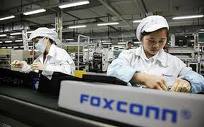
Today, high-tech executives continue to argue that the U.S. cannot compete in making electronic devices. Apple, Dell and HP, which rely on huge Asian factories, assert that manufacturing would be too costly and inefficient in America. Only overseas, they claim, can they find an abundance of educated engineers, low-wage workers and at-the-ready suppliers. But the migration of Japanese auto manufacturing to the U.S.  offers a case study in how the transformations can unfold. We today remain one of the top auto manufacturers and employers in the world. Japanese and other foreign companies account for more than 40% of cars built here, employing hundreds of thousands.

When Apple CEO Tim Cook was asked if his company — which once made computers in America, but now locates most assembly in China — would ever build another product in the U.S., he replied:  “I hope so. One day.”  That day, interestingly, came recently for Brazil instead, which cajoled Apple and Foxconn with a combination of financial incentives and import penalties to make iPads and iPhones there.

Discussion questions:

1. Why did Brazil land iPad manufacturing, when the U.S. did not?

2. What is the answer to the question posed in the blog title?

OM in the News: Vertical Integration at Brazil’s Petrobras

One of the most promising petroleum producers in the world, Petroleo Brasileiro SA (or Petrobras), controls huge new oil deposits off  Brazil’s southeastern coast. For years, pumping oil has been its only business and the key to its profitability as the world’s third-biggest energy company. But The Wall Street Journal (July 27,2011) reports that Petrobras has decided to embrace vertical integration, a topic we discuss in Ch. 11, Supply Chain Management (see Figure 11.2). In an effort to boost its “downstream” business, the giant firm is now in the shipbuilding, petroleum refining, and petrochemical businesses.

Petrobras is in the process of building 4 refineries across Brazil to make the country self-sufficient in refined fuels. (Its fast-growing consumer base is buying cars and fuel at a faster rate than the nation can refine without importing). It is also adding a $2 billion petrochemical plant in an effort to squeeze more revenue out of every drop of oil. Like other big energy firms that have moved into plastics and other derivatives, Petrobras will be adding plastic bottles and polyester fibre to its product list. “We see opportunity for profits in many other businesses beside crude”, says a Petrobras director. 

Is vertical integration always a good idea? Private investors in the firm say the $18 billion being put into building ships (at a cost higher than they would pay to have them built in Korean shipyards), the refineries, and the plastics factory, are a waste of money. “The company has enough to do just to get that oil”, says a BlackRock  fund manager. “Everything else is a distraction”.

Petrobras responds that the new ventures are creating  jobs and helping to develop the towns in which the new facilities are being built.

Discussion questions:

1. What are the advantages of this “forward integration”?

2. Why is vertical integration a danger to firms like Petrobras?

OM in the News(and Video): Ford’s Lean Auto Plant in Brazil

Ford’s most progressive plant in the world may well be in northeast Brazil, where it uses lean manufacturing, sophisticated supply chains, and a vast array of robotics to produce the EcoSport SUV and Fiesta. A  colleague in that country, who is using the Portuguese edition of our text,  just emailed me the link to a video about which he is justifiably proud.  This 3.5 minute video illustrates all 3 concepts: lean, SCM, and automation and makes a nice presentation in Ch11 or Ch.16. (I do need to warn you that the last few seconds are a bit anti-union).

In 2009, the Ford plant produced over 207,000 vehicles. This South American operation brings so much profit to the parent company in Dearborn,Michigan,that the firm was able to turn down federal loans in 2009 that both GM and Chrysler accepted.

Brazil is becoming a leader in lean auto making, with another plant churning out VWs with a similar layout in which suppliers produce, on-site, with their own employees, the parts that are installed in the final vehicle. If you look at the Global Company Profile that opens Ch.16 in our text, you will see a  layout at the Toyota Tundra plant in San Antonio, Texas that also resembles what we see in the video.

Discussion Questions:

1. Why is it doubtful that this Ford plant will be replicated in the US?

2. How does the supply chain differ from most US plants?

3. Why is this an example of lean manufaturing?