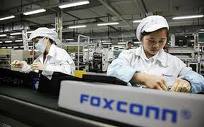
OM in the News: Toyota’s Production Halted Due to Insufficient Disk Space

Managers, as we note in Chapter 7,  appropriately spend a huge amount of time developing the proper process. But the perfect process is useless if not maintained (See Ch. 17 in your Heizer/Render/Munson text). Toyota was recently reminded, in a very expensive way, that lack of maintenance or improper maintenance can destroy even a well designed process.

It appears that Toyota’s 14 Japanese factories all shut down for about two days in late August due to a production order system malfunction caused by failure to maintain adequate computer disk space.

According to Toyota, its Japanese factories and their 28 assembly lines were halted due to “some multiple servers that process part orders” becoming unavailable and causing Toyota’s production order system to malfunction on August 28. The situation caused production output losses of roughly 13,000 cars daily, which threatened to impact exports to the global market.

The problem began during maintenance work on August 27. Toyota said: “During the maintenance procedure, data that had accumulated in the database was deleted and organized, and an error occurred due to insufficient disk space, causing the system to stop. Since these servers were running on the same system, a similar failure occurred in the backup function, and a switchover could not be made.”

A Reuters report claimed that the Toyota saw a third of its total production shut down until August 30. It said it restored its production order system on August 29 after transferring the data to a larger-capacity server. The malfunction happened while the parts ordering system was being updated. This shutdown directly impacted the company’s production ordering system so that no production tasks could be planned and executed.

The announcement is a blunder for the world’s top-selling automaker, which failed to ensure that mission-critical operations would be able to function, reports ArsTechnica (Sept. 6, 2023).

But Toyota affirmed that the outage was “not caused by a cyberattack.” The car vendor’s cybersecurity has faced scrutiny over recent years. Toyota shut down the same 14 Japanese factories in February 2022 due to a supplier getting hacked. But August’s outage may be more financially detrimental to Toyota than the 2022 event since domestic output was up 29 percent in the first half of this year, the first such increase in two years. Toyota was also hacked in 2021 through a US manufacturing parts subsidiary and at least three times more in 2019.

Classroom discussion questions:

  1. How were operations impacted by this shutdown?
  2. Was this a case of “preventive” or “breakdown” maintenance?


OM in the News: An Auto Parts Maker Adapts to Russia’s Invasion

Leoni’s CEO addresses staff at a town hall meeting in western Ukraine.

After Russia invaded Ukraine on Feb. 24, reports The Wall Street Journal ( April 12, 2022), many Western companies in Ukraine packed up and tried to transfer production elsewhere. The sudden stoppages raised concerns among Ukrainians that some of the factories would close for good. Leoni, which makes auto wire harnesses (simple but vital contraptions that help organize electrical and data wires in a car), came close to leaving too. Within hours of the invasion, the company shut its plants. It planned to shift production to Romania and other sites outside the country, uncertain when production would resume in Ukraine.

Some 70% of Leoni’s harnesses produced in Ukraine go to VW. So when production stopped, VW had to shut down some of its biggest plants in Germany.

After sending workers home, Leoni executives set out to duplicate the harness production lines in other countries. As well as Romania, Leoni has plants in Serbia, Slovakia and North Africa where wages and other costs are low. VW said it would assist in the effort financially and logistically, providing factory space outside of Ukraine.

But a strange thing happened.  Workers began calling their supervisors asking to return to work. Initially, Leoni thought the security situation was too precarious to restart production. In the first days of the war, Russia had launched a barrage of missiles at targets across the country. (It takes only 16 minutes for a Russian missile to reach the area).

Leoni discovered it could rent an old abandoned nuclear fallout shelter. Despite being decrepit, the bunker was close enough to get the people out of the factory, into waiting buses, and to safety within 14 minutes. So on March 2, with much of the fighting concentrated in the east and Kyiv, Leoni restarted production. When the sirens blare several times a day, the workers run for the buses. They then hole up in the freezing shelters and wait for the all-clear.

By the end of March, Leoni’s plants were operating two shifts. Raw materials arrive on trucks and finished harnesses are then taken by truck to customers in the West. VW, which had shut much production in the wake of the invasion, said it could restart its idled factories in Germany sooner than expected thanks to Leoni’s efforts. “We are all deeply impressed by the courage of the employees at Leoni,” said a VW exec.

Classroom discussion questions:

  1. Evaluate VW’s harness supply decisions and how it should handle inventory now.
  2. What do you think of Leoni’s decision?

OM in the News: Audi’s Pollution Tricks

An Audi production line in Germany.

“After more than $30 billion in fines, numerous indicted executives and a guilty plea in the U.S, you wouldn’t think there was much more to learn about the Volkswagen emissions scandal,” writes The New York Times (July 26, 2019).

Wrong. Four years after VW confessed to systematically evading pollution rules for a decade, new documents show that VW’s Audi luxury-car unit was more deeply involved in developing the emissions cheating scheme than previously known, and continued to sell vehicles with illegal software even after the scandal became public. The documents show that Audi managers and engineers were just as willing as their VW counterparts to cheat in pursuit of the company’s goal of becoming the largest carmaker in the world.

Audi execs bluntly discussed what was in effect a criminal conspiracy, using terms like “defeat device” or “cycle beating” that clearly connote illegal attempts to defeat the testing procedures used by regulators. “We won’t make it without a few dirty tricks,” wrote an employee. Trapped between corporate aspirations and the laws of physics, Audi engineers devised an ingenious but illegal workaround. They installed software in the engine that could recognize the telltale signs of an official emissions test. If regulators were looking, the software would temporarily ramp up pollution controls to be compliant. In everyday use, the cars produced emissions far above legal limits, resulting in estimates of 1,000s of pollution-influenced deaths.

A 2008 Audi Powerpoint presentation noted that the approach was a form of cycle beating, the automotive equivalent of cheating on an exam. “Highly critical in the USA!” the document warned.
As VW later admitted in a plea agreement, Audi deployed illegal software anyway. So ingrained was the use of illegal software that Audi continued to use it even after the U.S. formally accused it of emissions cheating in 2015.

Classroom discussion questions:

  1. Why is this a sustainability issue?
  2. What exactly did VW do that was wrong?

OM in the News: Tesla’s Model 3 “Production Hell”

When Elon Musk talks about the future of factory automation at Tesla, he envisions new breeds of robots and smart machines compressed in dense factories with little room for human operators, guided by self-learning software. “But so far, the manufacturing of Tesla’s new all-electric compact sedan, the Model 3, at its Fremont, Calif., factory is moving at a more earthbound pace,” reports The Los Angeles Times (Oct. 20, 2017).

Tesla was anticipating a production rate of 20,000 Model 3s a month by the end of December. Over 3 months through September, though, Tesla had produced only 260 — about 3 cars a day. That’s well behind a normal auto-industry production pace of 1 car per minute. The company blamed unnamed manufacturing “bottlenecks,” and promised a quick fix. But the assembly line remained incomplete by early September with some body parts normally installed by robots being employee-assembled by hand.

The “production hell” that Musk acknowledged raises questions about whether the Silicon Valley model he has followed — beta testing with early adopters and launching updates via software — can be adapted for Tesla’s first mass-market product. “Automobile manufacturing is very hard,” said an OM prof at UCLA. “It’s amazing that Tesla has been able to build cars at all.” He meant it as a compliment.

Tesla took the Model S from design to full production faster than traditional manufacturers would consider. Tesla’s breakthrough over-the-air technology made software fixes a snap. Code to fix battery issues, add self-drive features, or simply tweak the music system can be downloaded via the car’s Wi-Fi system. Still, many owners complained that there were more quality problems than they expected in a $90,000 car. In July, Tesla turned the first 30 Model 3s over to paying customers — all Tesla employees. Some of those first 30 cars were returned to Tesla with battery problems.

Classroom discussion questions:

  1. How does Tesla’s approach differ from traditional automakers?
  2. Are such delays to be expected?


OM in the News: Can Mexico Renege on Location Incentives?

Workers at the Kia plant near Monterrey, Mexico conducted tests on the assembly line, which just opened. last month.
Workers at the Kia plant near Monterrey, Mexico conducted tests on the assembly line, which just opened.

The new governor of the northern Mexican state of Nuevo León is balking at the tax breaks, land grants and other public perks that have underwritten the country’s automotive boom of recent years, reports The Wall Street Journal (May 17, 2016). He is refusing to honor a large portion of the incentives promised by the previous state government to woo a $2.5 billion new assembly plant by South Korea’s Kia Motors. Officials say the incentive package amounts to nearly 28% of the investment by Kia and its suppliers, and they are challenging provisions worth up to $100 million, including a 20-year holiday on payroll taxes.

Kia executives say they want it to be honored. The newly opened Kia plant will eventually produce some 300,000 compact Forte cars a year, most of them destined for the U.S., and Mexico has become one of the hottest countries in the globe for car companies. The country churned out 3.4 million vehicles in 2015, making it the world’s 7th-largest producer and 4th-largest exporter. Kia is one of 5 foreign auto makers that have assembly plants coming on line over the next 5 years. Those plants would increase Mexico’s annual production to 5 million vehicles by 2020.

Offering public incentives to auto makers has been standard practice since the 1980s and were key to U.S. southern states winning automotive assembly plants from the Rust Belt, with packages giving back 25%- 35% of the total investment. With its promise of eventually generating 14,000 jobs, Kia’s move here was seen as a vote of confidence for Nuevo León, emerging from years of gangland violence that had turned it into one of Mexico’s more dangerous corners.

Classroom discussion questions:

  1. What other location factors, besides incentives, drew Kia to Mexico? (See Chapter 8).
  2. Compare the Kia location decision to that made by Mercedes, which chose Vance, Alabama, for its first U.S. plant in 1993.

OM in the News: Auto Makers Dare to Boost Capacity

Nissan's new Mexican plant will produce 1 million cars
Nissan’s new Mexican plant will produce 1 million cars

The auto industry’s recent fat profits from rising demand for new cars in North America is about to confront the law of supply and demand: A string of new factories in the region will start cranking out more than a million cars over the next few years. A large increase in production capacity poses a serious risk for auto makers, writes The Wall Street Journal (Jan.15, 2014). They reap strong profits if their factories are running near 100% of capacity, but their losses mount rapidly if the utilization rate falls below 80%.

VW said it would build a new North American plant as part of a near term plan to invest $7 billion in the region. That will be in addition to a factory already under construction in Mexico and its 2-year-old plant in Chattanooga, TN, which now operates at only 50% of capacity. Honda, Mazda, and Nissan are opening new plants in Mexico, while Ford, Toyota, and GM are all expanding capacity at their existing plants in the U.S. and Canada.

Some CEOs, like Fiat/Chrysler’s Sergio Marchionne, are already concerned about overcapacity. “The last thing we need is to get bricks-and-mortar capacity increased. Building new plants isn’t the only trend to watch, because increasing the use of automated production lines can boost output at existing factories,” he states. Marchionne knows the trouble that idle factories can cause. Excess production capacity and the use of heavy price discounting were two of the problems that contributed to Chrysler’s slide into bankruptcy in 2009. In Europe, where auto sales have fallen amid the continent’s prolonged economic slump, Fiat, Peugeot, and GM all have underused plants and are struggling to stem losses.

Classroom discussion questions:

1. Figure S7.6, in Supp. 7 (Capacity and Constraint Management), illustrates 4 approaches to expansion. Which approach are these firms taking?

2. What are the main considerations in capacity decisions?

OM in the News: If the Japanese Can Make Cars in the U.S., Why Can’t Apple Make an iPad?

As you are preparing for the 1st week of Fall classes, you may want to read the New York Times (August 5, 2012) lead article, which basically asks the question in  our blog title. The story opens in 1983 with Smyrna, Tennessee  farmland  paved over so Nissan could build its first American assembly plant. Eighty miles to the south, a Nissan engine factory was added, and across Tennessee about 100 Nissan suppliers now dot the landscape, making steel in Murfreesboro, air conditioning units in Lewisburg, transmission parts in Portland. Nissan broke with conventional wisdom that Japanese automakers would not build many cars anywhere but Japan, where supply chains were in place, costs were tightly controlled and the reputation for quality was unparalleled. (Nissan’s U.S. quality is now so high that it exports engines to Japan).

Today, high-tech executives continue to argue that the U.S. cannot compete in making electronic devices. Apple, Dell and HP, which rely on huge Asian factories, assert that manufacturing would be too costly and inefficient in America. Only overseas, they claim, can they find an abundance of educated engineers, low-wage workers and at-the-ready suppliers. But the migration of Japanese auto manufacturing to the U.S.  offers a case study in how the transformations can unfold. We today remain one of the top auto manufacturers and employers in the world. Japanese and other foreign companies account for more than 40% of cars built here, employing hundreds of thousands.

When Apple CEO Tim Cook was asked if his company — which once made computers in America, but now locates most assembly in China — would ever build another product in the U.S., he replied:  “I hope so. One day.”  That day, interestingly, came recently for Brazil instead, which cajoled Apple and Foxconn with a combination of financial incentives and import penalties to make iPads and iPhones there.

Discussion questions:

1. Why did Brazil land iPad manufacturing, when the U.S. did not?

2. What is the answer to the question posed in the blog title?

Teaching Tip: Why Did the Chevy Steering Wheel Fall Off?

Imagine speeding along the roadway in your brand new 2011 Chevy Cruze, turning your car’s steering wheel, and the wheel breaks off from the steering column!  It’s an interesting story (in The Wall Street Journal, April 10,2011) that certainly ties in with our discussion of quality in Chapter 6. 

Of course, it’s every driver’s nightmare, but in particular to the person who it happened to a few weeks ago. As a result, GM is recalling 2,100 new cars and facing an unwelcome development while it rides high on the compact Cruz’s sales success.

According to the NHTSA (Nat’l Highway Transportation Safety Admin.), the wrong wheel was put in this particular car, then replaced later with the correct one. But the new wheel was not attached properly.

This raises some good issues to discuss in teaching quality in class. First, how did the wrong wheel end up on the assembly line? (JIT delivery gone awry?  What was the root cause of this defect?) 

 Second, why was it that a wrong wheel could fit on the column? (No poka-yoke system in place?)

 Third, was there no Andon call signal to alert supervisors that such a problem had popped up? (Could it have happened before and no one pointed it out?  Had it happened at a different plant? Is there a struggle to change from the old Detroit mentality that the line should never be stopped?)

Chevrolet says “it has changed the production process to make sure the machine used to attach the steering wheel can accommodate only the correct one”.  I like this story because it raises several teachable issues.

OM in the News: Hitachi’s Airflow Sensor Shuts Auto Plants Worldwide

The Wall Street Journal (March 24,2011) reports today that a small electronic part that measures airflow to car engines (and retails for $90) is shutting or cutting auto production at  plants around the world. The impact of the Hitachi sensor is, of course, tied to the earthquake in Japan 2 weeks ago. Hitachi makes 60% of the world’s market for airflow sensors, but its plant in northern Tokyo remains shut down.

Here is the ripple effect from the one part you probably never heard of before:

GM Shreveport, assembly halted March  21.

GM Buffalo engine plant, 10% of workers laid off.

Peugeot-Citreon and  Vigo in Spain,  and Peugeot in France, production cut in half.

Opel in Germany, Zaragoza in Spain,  and Trnava in Slovakia, output slowed.

Hitachi also supplies  Ford, Renault, Nissan, Toyota, and VW.  “Ford is monitoring availability of sensor supplies ‘hourly’ as it runs low on the same part”, says The Journal. But this may be just the tip of the iceberg. Auto makers keep different  supply levels (say 10 days for this part), and since the sensor arrives by ship, it may take another few weeks for the full impact to be felt. The last shipments made before the quake should arrive in the US next week.

On a more positive note, an accompanying article in The Journal announces that Japanese chip makers are gradually resuming operations in northeastern Japan. The problem for Fujitsu, Renesas, and Toshiba is that power supplies are still inconsistent.  Designed to operate 24/7, when systems are shut down, it takes up to a week to reboot all the machines in the plant.

Discussion questions:

1. What can auto makers do to prevent this situation from happening in the future?

2. How can the restart process be speeded up?