OM in the News: Why Used Clothes Head for the Dump and Not the Recycling Center

Shoppers are buying more clothes and discarding them faster than ever, sending an increasing amount of textiles to the dump and propelling the fashion industry to search for new technology to recycle used garments, reports The Wall Street Journal (Oct. 4, 2019). The growth of fast-fashion retailers like H&M, Zara, and Gap–each vying to deliver quicker and cheaper style–has flooded the world with affordable clothing that is worn just a few times.

The number of garments purchased annually by the average consumer jumped 60% from 2000 to 2014, while the number of times an item is worn before it is discarded dropped 36%. Despite the buildup of used clothes, the technology to recycle old textiles into fiber to make new ones has remained embryonic, meaning clothes eventually end up in the dump or incinerator. Textiles in American landfills jumped 68% from 2000 to 2015.

So far, companies have focused on improving collection of used clothes. H&M and Zara have in-store bins to collect garments which are then sold as secondhand clothing, largely to emerging markets. But there has been little regulatory pressure on clothing makers to take responsibility for the waste generated by their products, unlike the crackdown seen in other areas, such as single-use plastics. Garments that are recycled are mostly turned into lower-value products like wiping cloths and insulation, which ultimately hit the landfill. Less than 1% of the fiber used to produce clothes is recycled into new garments.

The growing popularity of synthetic clothing like fleece jackets and gym leggings is also releasing more tiny plastic particles into the ocean when the garments are washed. The good news is that Americans are increasingly shopping for secondhand clothing, driven by desire to save money, help the environment and avoid appearing in the same clothes twice on social media platforms.

Classroom discussion questions:

  1. How can clothing manufacturers design and produce for sustainability? (See p.197-202 for ideas).
  2.  How many students in your class are buying used clothing, and why?


OM in the News: Ethical Issues and Bengladesh’s Clothing Factories

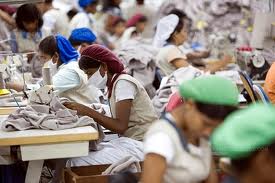
Factory workers in Dhaka, bangladesh
Factory workers in Dhaka, Bangladesh

A group of 17 major North American retailers, including Wal-Mart, Gap, Target and Macy’s, just announced a plan to improve factory safety in Bangladesh, drawing immediate criticism from labor groups who complained that it was less stringent than an accord reached among European companies. The American plan, according to The New York Times (July 11, 2013), commits $42 million for worker safety, including inspections and an anonymous hot line for workers to report concerns about their factories, and more than $100 million in loans and other financing to help Bangladeshi factory owners correct safety problems. But unlike the accord joined mainly by European retailers, the plan lacks legally binding commitments to pay for those improvements.

Labor rights groups estimated that it would cost as much as $3 billion to bring Bangladesh’s garment factories up to an acceptable safety standard.  “Wal-Mart, Gap and the corporations that have chosen to join them, are unwilling to commit to a program under which they actually have to keep the promises they make to workers and accept financial responsibility for ensuring that their factories are made safe,” stated five of the groups. They faulted the plan for being “company-developed and company-controlled,” adding that “under the Gap/Wal-Mart scheme, brands and retailers are not obligated to pay one cent toward the renovation and repair of their factories in Bangladesh.”

The problems in Bangladesh’s garment industry have not affected the retail industry’s demand for cheap goods made there. Exports in June rose 16.3% to $2.7 billion, based on strong clothing sales. Bangladesh has quickly grown into the world’s 2nd largest apparel maker after China. But in a race to keep up with demand, many older buildings that lacked structural support were converted into factories, and building codes were ignored.

Discussion questions:

1. What is the responsibility of US and other firms that contract to have their products made in Bangladesh.

2. Are the critical labor rights groups correct in that US firms need to make stronger commitments to revamping the infrastructure?

OM in the News: Sustainability in the Global Clothing Supply Chain

Some day in the not too distant future, the clothes and shoes you buy will not only have a label sewn in with the brand name/size/fabric content, but with a sustainability score as well.  Yesterday’s New York Times (Mar. 1, 2011) reports that the Sustainable Apparel Coalition is developing a comprehensive database of the environmental impact of every manufacturer, component, and process in apparel and shoe production. The coalition includes such names as Wal-Mart, JC Penney, Hanes, Patagonia, and Timberland.

Americans spent  $340 billion last year on clothes and shoes, which is about a quarter of the global market. Amazingly, virtually all of it purchased here99% of footwear and 98% of clothes–came from other countries. And the various parts of any one garment often come from a diverse multinational chain of fabric mills, dye operations, and assembly plants.

This obscure nature of the global supply chain has long been a concern to environmental groups. Greenpeace, for example, using Google Maps, revealed that  a blue jean factory in  Xintang, China, was washing blue chemicals downriver from its textile mill. But  the company whose name appears on the designer label– and surely the end customer–are often unaware of the environmental connection. “The apparel supply chain is long and quite complicated”, states a University of Delaware prof.

The coalition’s tool is a database of scores assigned to all players in the garment life cycle–cotton growers, fabric makers, dyers, mill owners, and distributors–based on measures such as water use, energy efficiency, waste, chemical use, greenhouse gases, and labor practices. “The government has standards for miles per gallon on a car, but we have no real standards for clothing”, adds the CEO of Timberland.

Discussion questions:

1. Are students interested in such a “green score”?

2. What changes will such a database bring about?

3. Why are the biggest retailers signing on?