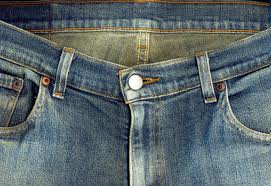
OM in the News: Methane Emissions and the Fashion Industry

Savvy shoppers looking for luxury often hunt for high-quality materials such as 100% wool or genuine leather. But these two materials are responsible for an outsize share of the fashion industry’s methane footprint, reports The Wall Street Journal (Sept. 15, 2025). 

Fashion needs to be more sustainable

Methane traps far more heat than carbon dioxide; it’s 86 times more potent in contributing to global warming in a 20 year time frame than carbon emissions are. These carbon emissions come mainly from animals such as cows, sheep and goats belching out the gas.

Leather and wool are particularly harmful to the environment. The materials make up only 3.8% of the apparel industry, but producing them accounts for 75% of fashion’s methane footprint.

Buying a high-quality piece of clothing made of a natural fiber such as wool will last longer than a cheaper, less durable version made of fossil-fuel derived polyester. But the fashion industry doesn’t do enough to address the environmental impact of animal-derived materials.

Man-made polyester also has a major impact on the planet, particularly as fast fashion companies pump out cheap pieces to satisfy ever-evolving trends—many of which end up in landfills. Greenhouse gas emissions from clothing are ballooning. The global fashion industry is responsible for emitting about 8.3 million metric tons of methane every year, which means its footprint will amount to nearly 4 times the methane emissions released by France annually. Ultimately, shoppers are better off buying fewer pieces of clothing and shopping secondhand when they can to lower methane and carbon emissions.

Sourcing new materials is especially harmful. Producing textiles, from extracting raw materials to manufacturing, accounts for 92% of the fashion industry’s greenhouse gas emissions overall. There is increasing anxiety about where mountains of clothing end up when they’re discarded. The European Parliament is going to adopt a new law requiring producers to oversee textile waste from clothing to blankets and curtains.

One challenge lies in fabric complexity. Most modern textiles are blends of natural and synthetic fibers—like cotton, polyester, and elastane. Yet most recycling technologies today, which are still primarily mechanical, can only process single-material fabrics.

Classroom discussion questions:

  1. Are your students aware of the emissions from different types of fabrics?
  2. Which is worse for the planet–polyester clothes or wool?  Why?

OM in the News: The Fashion Industry Goes Green

In a factory the size of an airport terminal, laser cutters zip across long sheets of cotton, slicing out sleeves for Zara jackets. Until last year, the scraps that spill out into wire baskets were repurposed into stuffing for furniture or hauled off to a landfill near the plant in northern Spain. Now they’re chemically reduced to cellulose, which is mixed with wood fibers and spun into a textile called Refibra that’s used in more than a dozen items such as T-shirts, trousers, and tops.

The initiative by Inditex, the company that owns Zara and 7 other brands, highlights a shift in an industry known for churning out super cheap stuff that fills closets for just a few months before being tossed into the used-clothing bin. Gap promises that by 2021 it will take cotton only from organic farms or other producers it deems sustainable. “One of the biggest challenges is how to continue to provide fashion for a growing population while improving the impact on the environment,” says H&M’s CEO.

The $3 trillion fashion industry consumes vast amounts of cotton, water, and power to make 100 billion accessories and garments annually—3/5 of which are thrown away within a year, writes Businessweek (May 7, 2018). And less than 1% of that is recycled into new clothes. “The equivalent of a dump truck filled with textiles gets landfilled or incinerated every single second,”  says one researcher. To tap into this trend, H&M is seeking to make all its products from recycled and sustainable materials by 2030, up from 35% today.

Inditex last winter started disassembling old clothing to spin into yarns for fashions it markets as “garments with a past.” “We’re trying to find a more sustainable version of all materials,” says an Index exec. Today’s recycled jeans, he says, are typically only about 15% repurposed cotton, because the fiber “gets worn down and we have to mix with new.”

Classroom discussion questions:

  1. Why does this industry consume so many resources?
  2. What are the driving forces for change?

OM in the News: Department Stores Keeping a Tight Lid on Inventory This Year

“With foot traffic at their stores in decline, department stores that would have stocked up for the biggest shopping season of the year months ago are still in the process of placing new orders,” writes Supply & Demand Chain Executive (Nov. 8, 2017). The strategy is aimed to keep their inventory costs down and avoid the experience of previous holiday seasons, when large piles of unsold stock led to deep markdowns that eroded profits. But these retailers risk losing sales if supplies run out at a time when many are struggling to keep up with Amazon and the shift towards online shopping.

Macy’s, J.C Penney, Kohl’s, Nordstrom, Dillard’s, Lord & Taylor are among the retailers buying in smaller batches with shorter lead times this year and relying on a more dynamic demand forecasting process than in the past. Keeping inventory levels low helps manage costs, and may also instill urgency in consumers to spend now rather than hold off on purchases in search of a better deal. But it also risks alienating customers who may end up having less choice, and is also putting strain on vendors to deliver on shorter lead times.

The high-stakes strategy takes a page from the playbook of  Zara, H&M, and other “fast fashion” retailers that consistently keep low inventories of trendy clothes and try to win customers with cheap prices. Traditionally, retailers lock in most of their purchases 9-12 months in advance. This year, retailers started placing a large portion of their holiday orders 3-4 months before the holiday season, and are refreshing fast-selling items within as little as 6-8 weeks.

The risk: Department stores rely on vendors whose traditional supply chains are not built for a fast turnaround, because they handle orders for several brands. Fast-fashion chains, on the other hand, have designed their supply chain to shift on a week to week basis and work with vendors who can deliver quickly on private label items they stock. So far this year, retailers have been willing to sacrifice some orders for tighter inventory management and higher margins.

Classroom discussion questions:

  1. What are the advantages and disadvantages of the smaller batch approach?
  2. What strategy do fast fashion retailers use?

OM in the News: Even Faster Fashion Scares Zara and H&M

Zara and H&M are the world’s two largest fashion retailers. Not by coincidence, they’re also the pioneers of fast fashion. Zara is able to take a coat from design to the sales floor in 25 days, and it can replenish items even more quickly. In the past couple of decades, the two companies have steadily trounced much of their competition, outdoing them on price and speed to claim an ever-larger share of shoppers’ spending. But both are being beat at their own game by even faster competitors.

British fashion retailers ASOS and Boohoo are now able to conceive, design, produce, and have clothing ready for shoppers on the sales floor quicker than Zara and H&M,” reports QuartzMedia.com (April 6, 2017). ASOS expects sales to grow 30-35% this year. Boohoo predicts sales growth of around 50% for the year.

H&M is aware it’s falling behind, announcing plans recently to invest in and rethink its supply chain. Most of its manufacturing takes place in Asia in order to keep prices down, but it’s considering moving more production closer to Europe, to countries such as Turkey, which would let it get items to stores more quickly. That proximity is key to the speed of its faster rivals. Even Japanese retailer Uniqlo, which emphasizes that it isn’t driven by trends, has acknowledged that it needs to speed up.

Classroom discussion questions:

  1. How are supply chains at the heart of this issue?
  2. Why is speed of new product development so important in this industry?

OM in the News: Forecasting for the Fashion Industry

fashionIn the fashion business, faux pas can be costly. In order to hem back the risk, writes The Wall Street Journal (Sept. 9, 2013), some retailers are increasingly turning to trend forecasting and analytics (the topic of Chapter 4). For an average annual fee of $7,000-$15,000, customers get access to forecasts of fashion trends and data offering ideas for colors, fabrics and cuts. Fashion companies use the data to plan their latest collection or show.

“Fashion forecasters have always been used but they’re more accessible now because of the technology,” says a Marks & Spencer exec. “They are important, not always to lead but to re-evaluate and help confirm you’re on the right track.”

Forecasters claim to save their clients travel expenses, the cost of freelancers paid to photograph trendy people, and time spent trawling the vast cache of fashion data on the Internet. “We can’t get rid of risk but we can mitigate risk,” says the CEO of the forecasting firm Stylesight.

“Forecasters take the information and package it in a way that speaks the language of the retailers and manufacturers. Then it’s our job to decide what makes sense for our business; we have to filter it again,” says Kohl’s VP.  “Fashion moves so quickly. Companies like Stylesight, which are updated every day, are really useful in order to make sure we have the right information. They offer us an industry eye on all of the information, broken down by print, color and classification like sweaters of woven tops.”

Retailers say the information forecasters provide has become an important part of how they tap consumers, who spend less, shop online more and demand the latest outfits in increasingly tight time frames.

Discussion questions:

1. Why do large retailers like Macy’s and Kohl’s need forecasts of fashion demands?

2. What forecasting techniques discussed in Chapter 4 can be applied to this problem?

OM in the News: Cost-Cutting and Value Analysis in Fashion

We introduce the subject of value analysis in Ch.5 as a way to manufacture a successful product more economically. And with soaring cotton and labor costs that are hard to pass onto budget-conscious consumers these days, the fashion industry is paying close attention. The shock to apparel company execs, who have experienced only falling or stable prices for the past 2 decades, means they are turning to “deconstruction” to find out how to take garments apart and put them back together with fewer and cheaper materials. Businessweek (May 30-June 5,2011) reports that with costs going up 15% in the 2nd half of 2011, clothing makers are redesigning apparel to extract savings.

Since fabric can cost as much as  50% of a garment’s cost,  cutting it more carefully can reduce waste by 50 cents on a pair of $195 wool slacks. Buying zippers on a roll can save another few cents, eliminating cuffs and pleats, scrimping on linings, and switching to coarser material for pockets  can each save  another 10-50 cents. “For big apparel companies the make 100,000’s of men’s suits a year, saving 20 or 50 cents a garment is a lot of money”, says a prof at the Fashion Institute of Technology.

Deconstruction expert Peter Brown recently examined a $29.50 pair of slacks and spotted a coin pocket. “Eliminating it zaps a nickel”, he states. He also cuts out watch pockets (who uses them anymore?), and decorative stitching on the waist band (which is only seen by the wearer). And does a dress shirt need real shell buttons or will imitation pearl do? At 20 cents a button for a shirt that needs a dozen buttons, one manufacturer recently opted for the imitation.

Discussion questions:

1. How else can clothing manufacturers cut their costs?

2. What is the danger in removing the watch pocket from a pair of dress slacks?