OM in the News: The U.S. Made T-Shirt

The U.S. is awash in a sea of cheap imports that has destroyed much of the domestic apparel industry. In 2023, less than 4% of the apparel purchased in America was made here, reports The Wall Street Journal (Dec. 31, 2024).  Then, there is Walmart, whose aisles are piled high with goods this holiday season. But one item sticks out: cotton T-shirts that were made in America and cost $12.98.

The Walmart T-Shirt

It wasn’t tariffs that made the $12.98 shirt economically feasible, says the CEO of American Giant, the U.S. apparel company producing them. It was Walmart’s heft—and guaranteed orders. The country’s biggest retailer—and importer of consumer goods—pledged in 2013 to buy more items that were made, grown or assembled in the U.S. In 2021, Walmart increased its goal and promised to spend billions more each year through 2030.

American Giant said that without Walmart acting as a backstop by committing to buy a predetermined number of shirts over time, American Giant’s suppliers wouldn’t have had the confidence to make the investments in automation and other upgrades that drove down production costs. The company buys yarn that is grown, spun, dyed and sewn in the U.S., contracting with suppliers mainly in the Southeast. It also owns cutting and sewing facilities in N. Carolina and Los Angeles.

How did American Giant get the price down from the $40-$60 it usually charges for a T-Shirt? By automating parts of the process to keep labor costs low, it was able to compete with countries such as Vietnam and China where workers are paid a fraction of the U.S. minimum wage.

“You can make almost anything here, as long as it doesn’t require lots of labor,” says the CEO. To fulfill Walmart’s order for hundreds of thousands of shirts, the company tweaked the design and then spent $1 million on machinery designed to make production faster and more efficient.

The T-shirts arrived in 1,700 Walmart stores and were up against other 100% cotton T-shirts selling for half as much. But those shirts didn’t have any American emblems. Walmart bars suppliers from using the term “American Made” or the American flag on products that aren’t made in the U.S. Despite the success of American Giant and a handful of other apparel companies that have figured out how to produce domestically, it is unclear how much Americans care about buying products made in the U.S.

Classroom discussion questions:

  1. Could American Giant have reshored without Walmart?
  2. What are the key OM decisions that were made?

OM in the News: “Too Much Supply, Not Enough Demand.”

“It’s classic supply and demand,” says Macey’s CEO in The Wall Street Journal (June 6, 2022). “Too much supply, not enough demand.”

American Eagle Outfitters is trying to clear out excess inventory

Shoppers have shifted their spending from the casual clothes and home items that had been in demand during the height of the pandemic, catching retailers off guard and leaving them with excess goods that need to be marked down.

The scenario playing out at Gap, Macy’s and other chains is a reversal from the past two years, when soaring consumer demand and supply-chain delays created a scarcity of goods that allowed retailers to scale back discounts. Macy’s has too many casual clothes, activewear, home textiles and tableware, as shoppers are instead buying dressier clothes to wear to the office or socially. The shift was quick and dramatic.

 Inflation is prompting consumers to spend fewer dollars for discretionary items like apparel and home goods, just as the supply chain is loosening and merchandise is becoming more plentiful. “There was a lot of misforecasting in terms of how fast that shift would go back the other way,” said a Citi analyst.

Walmart’s inventories rose 33% as it misjudged that shift. The increase also reflected the higher cost of goods due to inflation, along with a sudden improvement of moving goods through U.S. ports after the company had decided to buy products aggressively amid supply-chain snarls and out-of-stocks in past quarters.

The problem is acute among apparel retailers. Gap, American Eagle, and Urban Outfitters said they were sitting on too much inventory and would have to increase discounts to clear out the excess. Gap has 34% more inventory than last year. At American Eagle, inventory jumped 46%, and at Urban Outfitters it was up 32%. Some of the bloat is due to inventory that arrived late as a result of factory closures and other supply-chain delays.

Rather than try to sell through all the excess goods at lower prices right away, some retailers are packing away items for sale at a later date. The strategy had been used for years by discounters like T.J. Maxx. Now, it is going mainstream.

Classroom discussion questions:

  1. What are the OM issues retailers are facing here?
  2. What has caused the overstocking?

OM in the News: The Chicago Cubs and Inventory Control

Checks on a Cubs-themed postseason T-shirt Oct. 5, 2016, ahead of the Cubs' first playoff game against the San Francisco Giants
Checking on a Cubs-themed postseason T-shirt, ahead of their first playoff game against the San Francisco Giants

Even though I grew up a few blocks from Wrigley Field, home of the Chicago Cubs baseball team, I was a loyal White Sox fan and never set foot in Wrigley Field! Today, however, I am proud of the Cubs’ success. They won over 100 regular season games and may pull off the real feat of winning the World Series. But what does this have to do with Inventory Management, Chapter 12 of our text? The postseason run can bring big business for local team merchandise companies — if they understand the single-period inventory model.

“Nobody alive has ever seen the Cubs win the World Series, and there were no licensed goods the last time they were there,” said one sports paraphernalia maker. “No one has seen Cubs World Series merchandise in their lifetime, so I believe that every Cubs fan will want something. We can’t not have enough to supply the fans. But what makes me nervous is if there’s a number where you overbuy? The postseason is no automatic moneymaker.” In Chicago, where World Series experience is thin, there’s no precedent to say how much is enough, but not too much, writes The Chicago Tribune (Oct.6, 2016).

By the time a manufacturer is ready to produce T-shirts and hats, the playoff picture may have changed. Then there’s the problem of getting access to retailers. Manufacturers have to worry that the season might end before the products ever make it to stores. So they need to be ready to drop everything and crank up the presses to produce the tens of thousands of products on short notice. And that is where the single-period model comes to play. Companies need to compute the cost of underestimating (shortages) versus the cost of overestimating. This a great example of the real world inventory management.

Classroom discussion questions:

  1. How does the single-period model differ from the EOQ model?
  2. What are the factors that complicate the decision manufacturers must make immediately?

OM in the News: Levi Strauss’s Push for More Ethical Factories

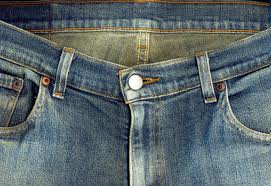
leviIn an attempt to bolster its ethical credentials and meet the demands of increasingly fussy millennial consumers, Levi Strauss is offering a new financial incentive to suppliers as far away as Bangladesh and China to meet environmental, labor and safety standards. The jeans maker is providing lower-cost working capital to those of its 550 suppliers who do best on those measures. The project sprang out of the 2013 Rana Plaza factory collapse in Bangladesh, which left more than 1,100 dead and prompted new scrutiny of international fashion brands’ supply chains.

“The move reflects two important trends in globalization,” writes The Financial Times (Nov. 4, 2014). As consumers fret about the conditions under which their clothes are made, fashion brands are facing greater pressure to ensure their suppliers in places like Bangladesh, Cambodia and Vietnam abide by higher standards. In some cases that issue, together with rising wages and costs in China and other production centers, is leading to brands “reshoring” production closer to home. But the combination of those pressures and the way global supply chains are becoming ever more intricate is also leading multinational companies to build tighter bonds with suppliers and to use new tools to manage them.

Levi Strauss’s VP of sustainability said the company now relies on “fewer, more capable” vendors and that its relationships go back an average of 10 years with top contractors. The firm claims to require its suppliers to abide by some of the strictest labor standards in the garment industry and employs full-time inspectors to visit factories around the world. It also is rare among fashion brands in publishing a full list of the factories and suppliers it uses around the world. It has, however, had dark chapters in its past. In the early 1990s Levi Strauss was accused of using Chinese prison labor to make clothes. It withdrew production from China on human rights grounds for five years, becoming an example of the potential pitfalls of doing business in China.

Classroom discussion questions:

1. Why is Levi Strauss making this move?

2. What are the advantages of having fewer vendors?

OM in the News: Is T.J.Maxx the Best Retailer in the U.S.?

tjmaxxT.J. Maxx (the TJX company) is the “black box” of retailing–one of the most secretive retailers around– writes Fortune (Aug. 11, 2014). With over 3,200 stores in the U.S., the TJX off-price business is a volume game: selling a ton of goods and selling them fast. The measure of speed here is how quickly a company turns over its inventory: TJX does that every 55 days, vs. 85 for its peer group. Indeed, the company is structured to whisk items through its distribution centers and stores: TJX shipped some 2 billion units to its stores in 2014, up from 1.6 billion in 2010.

The stuff moves so rapidly that merchandise is often sold before TJX has paid its vendors for it. The busiest stores can take daily delivery of product, which employees put out on the floor right away—a “door to floor” approach that cuts down on the amount of space needed for backroom storage. Items typically go on markdown if the turn rate is slower than about 7 weeks, which also contributes to the rapid flow. 

TJX’s supplier relationship is so strong partly because of the adversarial relations department stores have with the same suppliers.“A lot of buyers beat up people in the market to try to get what they want, as if they’re making a one-time car buy and they’re never going to go back,” says a former TJX buyer. Department stores want concessions for advertising and markdown allowances. They want money for delayed deliveries and returns.

By contrast, the buyer-supplier relationship with TJX has historically been more of a partnership. TJX buyers are taught to make the vendor feel like it’s a win-win and to leave the door open if they can’t come to an agreement this time around. They will make a deal with a vendor they know isn’t a great deal to maintain or establish a relationship with a brand they know is important. TJX also pays on time, which seems like a given, but suppliers can go out of business because they don’t always get paid.

Classroom discussion questions:

1. How does TJX manage its inventory?

2. Describe TJX’s relations with suppliers.


OM in the News: Nike’s Struggle to Balance Cost and Worker Safety


Nike's factory in Vietnam
Nike’s factory in Vietnam

Nike’s head of sustainable business had been lecturing colleagues for years about the dangers of manufacturing in Bangladesh, reports The Wall Street Journal (April 22, 2014). Yes, the country featured some of the cheapest factories in the world, she argued, but the athletic-gear maker could ill afford another public pasting over its labor practices. Her counterparts in operations, charged with squeezing costs, countered that they should all visit the place together and then decide. So one day last year, they popped into a Dhaka building that housed one of Nike’s suppliers, Lyric Industries. Rolls of fabric were strewn across the production floor and some windows were bolted shut, clear-cut hazards in the event of a fire. The team flew home and decided to cut ties with the company.

Nike’s internal conflict over Bangladesh shows that its effort to clean up its act in the developing world, which began about 20 years ago, remains a work in progress. As the U.S. apparel industry sends more production to low-cost nations, Nike’s experience offers a lesson in the difficulty of managing the twin priorities of controlling costs and maintaining acceptable working conditions.

Nike was founded in 1964, in part on the premise that it could produce quality footwear at lower costs by using cheap labor at overseas factories. At the time, only 4% of U.S. footwear was imported. Today, the figure is 98%. But by 1998, the Nike CEO stated: “The Nike product has become synonymous with slave wages, forced overtime and arbitrary abuse.”

So Nike released the names and locations of its factories—the first major retailer to do so—to be more transparent about its supply chain. It improved air quality for workers and stationed dozens of people in countries where it manufactured products to help find cost savings and improve worker treatment. In 2008,  Nike created a “country risk index” to score the potential downside of doing business in certain locations. Bangladesh ranked near the bottom, with over 5,400 garment factories churning out $20 billion of clothing exports.

Classroom discussion questions:

1. Since Nike has 1,000,000 workers in 744 factories worldwide, how can it monitor both quality and sustainability?

2. What major disaster occurred in Bangladesh recently that highlighted the problems of manufacturing there?

OM in the News: Pakistan’s Manufacturing Hobbled by Power Outages

Power outages mean workers in Pakistan have to sit out much of their shifts

Until a few years ago, Chenab Ltd. made high end sportswear and bed linen for some of America’s best known retailers, from Macy’s to Tommy Hilfiger to Victoria’s Secret, in the industrial region of Punjab, Pakistan. A workforce of 14,000 fed rolls of cloth into state-of-the art Italian and German machines or sewed garments on sprawling automated production lines. Today, crippled by the shortages of electricity that have paralyzed the country in the past 5 years, most of the machinery stands idle, the staff has shrunk to 4,500 and sales are down nearly 75%. The plant, running at 1/3 of capacity and turning down orders, represents one of the biggest challenges for Pakistan: finding a way to end power outages of up to 12 hours a day in cities and 18 hours a day in the countryside that have enfeebled industrial production and added misery to day-to-day lives.

Industries in Punjab get gas to operate 3 days a week during summer, and none in winter, when gas is diverted to heat homes. For Chenab Ltd., which needs both gas and electricity, that means there isn’t enough power to run two 8-hour shifts. Textiles, which make up more than half of Pakistan’s $25 billion annual export earnings, have been particularly hard hit. The export volume of ready-made garments has fallen 32% in the past 6 years.

Power shortages cost Pakistan about $12.5 billion, or 6% of gross domestic product, last fiscal year, reports The Wall Street Journal (Nov. 29, 2013). The country of 180 million is producing 12,000 megawatts of power, compared with demand of at least 18,000 megawatts. By comparison, California, with a population of about 40 million, produces nearly 60,000 megawatts. For households, life can seem preindustrial. Refrigerators don’t run; children can’t do homework in the dark. One Pakistani, complaining sleep is impossible in the heat without a working fan, called Pakistan “a nation of sleep-deprived zombies.”

Classroom discussion questions:

1. What factors should global firms consider in selecting a country to locate (see Chapter 8)?

2. Why is electricity shortage a critical OM issue?

OM in the News: Forecasting for the Fashion Industry

fashionIn the fashion business, faux pas can be costly. In order to hem back the risk, writes The Wall Street Journal (Sept. 9, 2013), some retailers are increasingly turning to trend forecasting and analytics (the topic of Chapter 4). For an average annual fee of $7,000-$15,000, customers get access to forecasts of fashion trends and data offering ideas for colors, fabrics and cuts. Fashion companies use the data to plan their latest collection or show.

“Fashion forecasters have always been used but they’re more accessible now because of the technology,” says a Marks & Spencer exec. “They are important, not always to lead but to re-evaluate and help confirm you’re on the right track.”

Forecasters claim to save their clients travel expenses, the cost of freelancers paid to photograph trendy people, and time spent trawling the vast cache of fashion data on the Internet. “We can’t get rid of risk but we can mitigate risk,” says the CEO of the forecasting firm Stylesight.

“Forecasters take the information and package it in a way that speaks the language of the retailers and manufacturers. Then it’s our job to decide what makes sense for our business; we have to filter it again,” says Kohl’s VP.  “Fashion moves so quickly. Companies like Stylesight, which are updated every day, are really useful in order to make sure we have the right information. They offer us an industry eye on all of the information, broken down by print, color and classification like sweaters of woven tops.”

Retailers say the information forecasters provide has become an important part of how they tap consumers, who spend less, shop online more and demand the latest outfits in increasingly tight time frames.

Discussion questions:

1. Why do large retailers like Macy’s and Kohl’s need forecasts of fashion demands?

2. What forecasting techniques discussed in Chapter 4 can be applied to this problem?

OM in the News: Li & Fung, The Most Important Company You Never Heard Of

Li & Fung workers protesting unpaid wages

Li & Fung — the most important company that most American shoppers have never heard of — has long been on the cutting edge of globalization, chasing cheap labor to garment factories first in China, then elsewhere in Asia, including Bangladesh. Now, with sweatshop disasters there drawing international scrutiny, the business is looking for the next best place where it can steer apparel buyers seeking workers to stitch clothing together for a few dollars a day.

As the world’s largest sourcing and logistics company,” writes The New York Times (Aug. 8, 2013), “Li & Fung plays matchmaker between poor countries’ factories and affluent countries’ vendors, finding the lowest-cost workers, haggling over prices and handling the logistics for 1/3 of the retailers found in the typical American shopping mall, including Sears, Macy’s, JCPenney and Kohl’s.”

The Hong Kong merchandiser owns no clothing factories, no sewing machines and no fabric mills. Its chief asset is the 15,000 suppliers in over 60 countries that make up a network so sprawling that an order for 500,000 bubble skirts that once took 6 months from drawing board to store shelf now takes 6 weeks at a sliver of the price.

“If globalization is a race to the bottom, where lowest wages win,” says an A.F.L.-C.I.O. spokeswoman, “Li & Fung is the sherpa showing companies the fastest route down that slope.” Li & Fung’s ability to exert pressure on factories can have unfortunate consequences, adds a labor advocacy group executive: “Every extra penny you squeeze from a factory is a step closer to that factory cutting the kind of corners that lead to deadly disasters.”

Meanwhile Li & Fung’s CEO says his company is considering South America and sub-Saharan Africa as possible places for growth. “I wouldn’t write Bangladesh off,” he said. “It still has some of the cheapest labor in the world. For factories to get safer, clothing prices would have to go up. So far, consumers have just not been willing to accept higher costs.”

Discussion questions:

1. What is the firm’s role in the apparel supply chain?

2. What risks do clothing companies take in depending on Li & Fung?

OM in the News: The Case of the $6.75 Bangladeshi Shirt

bangladesh sewingThe recent tragedies at several Bangladeshi garment factories have claimed over 1,000 lives—and focused international attention on this important industry. So far, much of the discussion has focused on Bangladesh’s minimum wage law–the average garment worker gets take-home pay of $70-$80 per month. But The Wall Street Journal (May 17, 2013) raises the question of how that minimum wage is being paid.

While the worker is sewing, on another floor of the same factory building negotiations are under way between the factory owner and a retailer’s rep. The factory owner is offering a shirt to the buyer at $6.75 per piece. Of that, the owner will spend $4.75 buying the 1.9 yards of 100% cotton with a fine 50s thread count, and another $1 buying the labels, accessories and other components the retailer specifies. The remaining $1 per shirt funds the “cutting and making,” which includes wages for the workers. Part of it funds the letters of credit the manufacturer will use to ensure a steady supply of raw materials. Part of it goes toward capital expenses–and part will become the manufacturer’s profit.

An order for 400,000 shirts typically means that 400 workers produce 3,077 pieces per day. The wage cost works out to about 38 cents per shirt. Another 15 cents goes to sending the shirt for a fine washing spin. Rent and utilities for the factory floor works out to about 11 cents per shirt, and head-office and marketing costs for the factory are 11 cents.

The remaining 25 cents may cover repaying a 10-year bank loan at 18% interest, which the factory owner has used for set-up costs. All is at a delicate equilibrium, writes the Journal, until the owner feels compelled to give in to a firmly worded request from the retailer for an additional discount, or a demand to air-freight some boxes of shirts that suffered a 2-week production delay.

Discussion questions:

1. If the cost of upgrading factory safety averages $128,000, where should the money come from?

2. How do students feel about paying more for clothes to help raise the living and safety standards in the country making the product?

OM in the News: Cost-Cutting and Value Analysis in Fashion

We introduce the subject of value analysis in Ch.5 as a way to manufacture a successful product more economically. And with soaring cotton and labor costs that are hard to pass onto budget-conscious consumers these days, the fashion industry is paying close attention. The shock to apparel company execs, who have experienced only falling or stable prices for the past 2 decades, means they are turning to “deconstruction” to find out how to take garments apart and put them back together with fewer and cheaper materials. Businessweek (May 30-June 5,2011) reports that with costs going up 15% in the 2nd half of 2011, clothing makers are redesigning apparel to extract savings.

Since fabric can cost as much as  50% of a garment’s cost,  cutting it more carefully can reduce waste by 50 cents on a pair of $195 wool slacks. Buying zippers on a roll can save another few cents, eliminating cuffs and pleats, scrimping on linings, and switching to coarser material for pockets  can each save  another 10-50 cents. “For big apparel companies the make 100,000’s of men’s suits a year, saving 20 or 50 cents a garment is a lot of money”, says a prof at the Fashion Institute of Technology.

Deconstruction expert Peter Brown recently examined a $29.50 pair of slacks and spotted a coin pocket. “Eliminating it zaps a nickel”, he states. He also cuts out watch pockets (who uses them anymore?), and decorative stitching on the waist band (which is only seen by the wearer). And does a dress shirt need real shell buttons or will imitation pearl do? At 20 cents a button for a shirt that needs a dozen buttons, one manufacturer recently opted for the imitation.

Discussion questions:

1. How else can clothing manufacturers cut their costs?

2. What is the danger in removing the watch pocket from a pair of dress slacks?