Teaching Tip: Apple’s Ethical Dilemma

We end each chapter in the book with an Ethical Dilemma, intended to enhance class discussion on topics of interest. Here is a timely issue regarding Apple, based on a front-page New York Times (Jan.26,2012) report that details the shocking working conditions in Chinese factories that build the company’s  products. The article tells the story of one worker who was killed in an aluminum dust explosion at a  factory last year and paints a picture of the “harsh” and “bleak” environment in which iPads and other devices are built.
 
One former Apple executive says: “Most people would still be really disturbed if they saw where their iPhone comes from.” An ex-employee of Foxconn, the biggest of Apple’s suppliers in China, which has made headlines because of suicides among workers, said: “Apple never cared about anything other than increasing product quality and decreasing production cost. Workers’ welfare has nothing to do with their interests.”
 
And while excited buyers eagerly anticipate new products,  Apple’s audits have found evidence of employees being forced to work  more than 6 days a week and put in extended overtime. There have been allegations of involuntary labor, under-age workers, record falsification and the improper disposal of hazardous waste.

 
The  Times also details the pressure manufacturers are under. “Executives want to know every financial detail. Afterward, Apple calculates how much it will pay for a part. Most suppliers are allowed only the slimmest of profits. So suppliers often try to cut corners, replace expensive chemicals with less costly alternatives, or push their employees to work faster and longer.”
 
The lengthy article notes that companies like Nike and Gap have been forced to change their ways in the face of public outrage, but ends with the words of a current Apple exec: “Right now, customers care more about a new iPhone than working conditions in China.”  Do your students agree?

OM in the News: The Foxconn Explosion and the iPad

We last blogged about Foxconn– one of  China’s and the world’s largest manufacturers–when Businessweek featured the company as its cover story last September. Known as the “consumer electronics assembler of the world, this giant firm makes products for nearly every major electronics company. Its customers include Apple (iPads and iPhones), Acer (PCs), Amazon (Kindles), Cisco (networking gear), H-P (printers and PCs), Dell (PCs), Motorola (phones), Microsoft (Xbox systems), and Sony (Playstations). The headlines at that time centered about working conditions at Foxconn, where almost a dozen employees committed suicide last year.

So yesterday’s headline in The Wall Street Journal (May 24, 2011), “Factory Blast Roils Tech Supply Chain” raised a number of concerns, especially at Apple, whose iPads are reportedly made at the same Hon Hai plant in southwestern China.  (Apple, concerned about even rumors of supply chain disruptions for the popular iPad2, would not  acknowledge that the product is manufactured there. The original report came in a leak to the Washington Post 2 days ago).

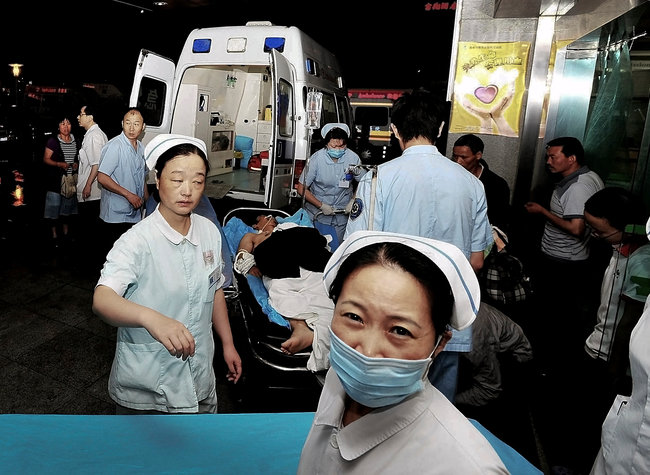
In the blast at the relatively new Hon Hai plant, 3 workers were killed and 15 injured, and the safety practices at Foxconnn are being raised anew. Labor rights groups had already warned the factory about hazardous working conditions , including aluminum dust floating in the air because of a process that workers use to polish iPad cases. The combustible dust, a recognized risk in electronics manufacturing, appears to be  the cause of the explosion. Apple had earlier complained to Foxconn about factory conditions, but did not move its contracts elsewhere.

Discussion questions:

1. Why do so many electronics firms contract out their manufacturing?

2. Why is Apple unwilling to confirm where its iPads are made?

OM in the News: China’s Massive Foxconn Facing Wage Increases

Foxconn, the giant Chinese manufacturer employing 920,000 workers,may not have been a household name a year ago. But that is rapidly changing. Business Week’s cover story recently highlighted Foxconn (see our Blog dated 9/21/10) where we learned that the firm’s products include iPads, Nokia phones, Dell computers, and HP printers.

The thrust of this WSJ article, though, is wages. Foxconn’s chairman Terry Gou is rapidly moving manufacturing inland, to 2nd tier cities where wages are only 2/3 of the more -developed coastal areas. Gou intends to expand to 1.5 million workers, with the majority inland, in the next 5 years.

And Gou plans to keep plowing billions into China. “I think in the next 20 years China won’t have a competitor” as the world’s manufacturing center, he states.

As the BusinessWeek article detailed, 11 employee suicides have caused Gou to accelerate his plans to move jobs closer to inland towns where he recruits employees.The long hours of overtime in the coastal factories, living in Gou’s dorms, and eating at his cafeterias, may have contributed to the bleak lifestyle.

Gou also raised the minimum pay for assembly line workers to about $295, more than double, starting this month.

Discussion Questions:

1. Will China still dominate the world manufacturing scene in 20 years? Where will the US lie?

2. Why isn’t Gou afraid of Vietnam, India, Brazil, or Russia?

3. How does managing wages by moving inland affect Apple, Nokia, and HP?

OM in the News: BW Cover Article on Foxconn

          Business Week’s cover story on September 9, 2010, provides a detailed look at one of the largest manufacturing companies in the world, that few students have heard of.  But they will know the products it produces under contract – iPhones, Sony Playstations, and Dell computers.  With 920,000 workers at its 20 Chinese factories, Chairmen Terry Gou was thrown into the spotlight after eleven Foxconn employees committed suicide last year.  Although Apple pressured Foxconn to eliminate its triple-decker bunk beds and excessive overtime, Steve Jobs was not about to sever ties with the iPhone being produced at the rate of 137,000 per day. 

Possible class discussion questions:

  1. How diversified is the Foxconn supply chain? 
  2. How did Gou get into the business of making the chassis of Compaq computers? 
  3. What was Flextronics reaction to the Gou supply chain?
  4. Why do workers stay at a company known for it “suicide cluster”?