OM in the News: GE’s New Management Strategy Goes Deep, Not Wide

In Chapter 10, we bring up the subjects of job design and job expansion. The theory is that variety makes a job “better”, yields a higher quality of life for the employee, and provides better flexibility that benefits both worker and company. Job rotation occurs when the employee is allowed to move from one specialized job to another.

I mention this because The Wall Street Journal (March 7, 2012) writes that General Electric is breaking up its old paradigm that for decades groomed jack-of-all-trades generalists as managers. GE’s commitment to “professional managers”, serving short stints in multiple business units, traces back to the firm’s 5th president, Ralph Cordiner, in 1956. The model moved promising managers every 2 years “to test their executive mettle.”

 As a young computer analyst, designing jet engines at GE’s aerospace division in Cincinnati back in the 1970s, I often doubted this concept. My boss was a bright fellow who had worked in GE facilities all over the map–but didn’t know a thing about jet engines–and this often caused real problems in our staff meetings. Does a good manager at the locomotive factory, in the nuclear power division, in health care, finance, or in the light bulb plant, automatically succeed in the aerospace arena?

The answer might be “no”, as GE now leaves managers in business units longer–perhaps their whole career. The idea is that their understanding of products and customers will help in our complex world. “We need people who are pretty deep”, says GE’s exec development director. My old Cincinnati operation is now led by a manager who spent his whole career in GE Aviation, working on jet engines.

Discussion questions:

1. How does rotating managers compare to rotating blue-collar factory workers?

2. What are the advantages of moving managers every 2 years to a new business unit in a giant firm like GE?

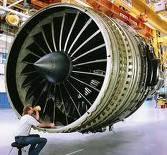
OM in the News: Is What’s Good for GE Good for America?

Remember the famous 1953 quote before Congress–actually it was a misquote– by the president of General Motors: “What’s good for GM is good for the country”? That remark was just rephrased to GE’s CEO, Jeff Immelt, in a question by a Wall Street Journal (Sept. 30,2011) reporter under the headline “China Venture is Good for GE but Is It Good for U.S.?”  Immelt’s edgy response: “I’m done”.

The basic question is whether the U.S. can compete in China without giving away the store.  The Journal asks: “What’s to keep GE’s new avionics joint venture with China from transferring the best of U.S. technology abroad, empowering a new set of Chinese companies to challenge U.S. aircraft makers?” After all, avionics–the “brains” on an airplane–are at the pinnacle of American know-how. It’s where the U.S. is still highly competitive and it’s technology that China covets.

GE says it has built protection into the transfer of technology. But one Congressman says: “To suggest there are going to be firewalls that will stop this technology from going to the Chinese military is approaching laughable”. This is not, of course, the first case of industrial companies striking difficult bargains with Chinese state-owned  firms in exchange for access to the growing market. Siemens earlier joint venture in high-speed rail resulted in direct competition from Chinese firms that borrowed its technology.  China’s industrial strategy has been explicit about “metabolizing” foreign technology and making it China’s own.

“We’ve been passive in deciding how to deal with China’s aggressive industrial policies”, says a former Commerce Department official. Adds a China expert: “It’s unclear whether anyone in the U.S. government took a look at the GE deal in terms of U.S. competitiveness–the future of the aviation industry 10 or 20 years out”.

Discussion questions:

1. Make the case for and against GE’s joint venture.

2. Should the government play a more active role  to protect  Boeing from China’s planned passenger jet that will use GE avionics?

OM in the News: Why GE and Toyota Operations Managers Worry About “Rare Earths”

Here are 4 increasingly important manufacturing components you probably never heard of: (1) neodymium–used in magnets in wind turbines and Toyota Prius engines; (2) yttrium–used in wind-turbine blades and flourescent lamps; (3) lanthanum–used in batteries in hybrid cars and as a catalyst in gas and jet fuel;  and (4) europium–makes the color red in TV, laptop, and iPhone screens.

 As The Wall Street Journal (Sept. 12,2011) writes: “Manufacturers of high-tech products rely on a steady stream of metals–some of them scarce–to make their goods”. These “rare earth” metals, a collective name for 17 minerals used in products like these, have skyrocketed in price in the past 2 years as China (which controls 90% of global production) slashed exports to tighten control over the sector. Lanthanum, for example, jumped from $10/kg in 2009 to $160/kg today. Neodymium surged from $20/kg to $455/kg.

As a result, mining companies around the world, shut down by 20 years of cheap supply from China, are reopening. And companies like GE and Toyota are trying desperately to reduce or eliminate the need for the metals. GE, for example uses rhenium in engine blades. It has started experimenting with other hardening additives that are cheaper and more abundant. It has also started a global recycling program–pulling out old engines from scrap piles and dissolving them in acid baths to retrieve the scarce metal. Toyota is working with Tesla Motors to develop a new electric motor that does not use neodymium magnets.

Yet scientists have had little success in finding a replacement for the europium found in dozens of products from light bulbs to computer screens. This rare earth generates the color red, while terbium provides your iPhone’s green color.

Discussion questions:

1. Why are rare earths so important and now so rare?

2. How does an operations manager respond to changes in the supply chain such as these?

OM in the News: GE Moves X-Ray Headquarters to China

In Ch.8, we list seven reasons why companies select one country in which to locate  over another. One of the seven, proximity to markets, leads to a disturbing headline in yesterday’s paper. The Wall Street Journal (July 26,2011) reports the General Electric is moving  its 115 year-old x-ray business headquarters unit from Wisconsin to China–its first business unit to be based there.  The move, to be completed this year, includes the chief executive and members of the executive team. It is the latest sign of China’s growing importance to GE, which GE CEO Jeff Immelt calls the company’s “second home market”. Earlier this year, Immelt finalized a deal with the state-owned Aviation Industry Corp. to inject GE’s avionics business with a 50-50 joint venture based in China.

GE sees accelerated sales in China’s fast-growing health-care market, with that country’s central government increasing its public health budget by 16% this year, to $26 billion. “As the company grows more global, it’s increasingly important for us to be close to our customers”, says the head of  GE Healthcare Global X-Ray. The company wants to develop more medical equipment specifically for the Chinese market. In China, GE Healthcare already employs 700 engineers  who are focusing on developing more affordable products for rural health clinics.

Last year, GE launched the Brivo CT, a scaled down CT scanner for less-developed hospitals, and in 2009 it rolled out a low-cost digital x-ray machine for the Chinese market. The company declines to say how many new employees will be added at the Beijing HQ, but adds it does not expect job losses in Wisconsin.

Discussion questions:

1. What are the implications of GE moving an entire multi-billion dollar business unit abroad?

2. What are the dangers to GE in partnering in high-tech areas like avionics and medical imaging with China?

3. What are the other location decision factors, and how do they come into play here?

OM in the News: The Pressure on Hospitals to Improve Efficiency and Curb Waste

As the White House and Congress debate how to contain runaway medical costs, equipment maker GE is embarking on its own quest to help hospitals reduce wasteful spending and treatment errors. As much as $500 billion out of the $2.2 trillion spent on health care is wasted on duplicate processes, bad coordination, and out-of-date scheduling, says GE, in the latest Businessweek (April  18-24, 2011). “It’s generally accepted that for every $100 spent on health care, $20 or more is waste”, adds the CEO of GE’s health-care/IT unit.

GE’s plan takes two approaches. The first is to cut costs of medical imaging, with 80 new products coming on-line in the next 2 years, including an MRI that scans only extremities. This frees up whole-body machines for more complex scans, which both cuts a hospital’s costs and raises its revenues.

Although improving molecular imaging , which helps catch diseases earlier, is the most glamorous way to save money, the US health-care overhaul is also looking at a second source. For GE, that means branching into information technology and consulting. The 2010 law signed by Obama  requires hospitals to use more IT to reduce costs and medical errors. As a result, hospitals are looking for outside expertise. GE  Healthcare plans to do $1 billion annually with its new consulting unit, analyzing patient data and digitizing medical records.

OM is again at the center of these changes, leading the way with new technology (Ch.7), process improvements, and quality tools. Many profs have asked us to keep an eye out for health-related examples such as this one.

Discussion questions:

1.Why are so many expensive devices used in hospitals?

2. How can OM help make hospitals more efficient?

3. How can medical records increase the quality of healthcare?

OM in the News: GE’s Move to Solar Power

As global demand for solar panels and power continues to explode (from 2 gigawatts in 2007 to 15 gigawatts this year to 75 gigawatts forecast in 2016), GE has just announced that it plans to open the largest solar panel factory in the US in 2013. The company wants its solar energy business to match its $6 billion wind-turbine unit.

Today’s Wall Street Journal (April 8,2011) reports that the new plant will employ 400 people and produce thin-film solar panels sufficient to generate 400 megawatts of electricity annually. This is enough to power 80,000 homes a year. SolarWorld AG (of Germany) currently operates the biggest solar-panel plant in the US (in Oregon) and generates 350 megawatts.

GEs investment of $600 million in solar technology adds to its $3.2 billion deal to buy Converteam, a French power-conversion company. Converteam complements GEs solar effort by converting sunlight into grid-ready electricity. GE says it already has 100 megawatts for its thin-film technology on order.

The move is not only good news for the economy, but means the US will be fighting hard to keep from losing this vast market to China’s government-subsidized solar industry (see our earlier blog on the topic).

Discussion questions:

1. How will GE be able to compete successfully with low-cost Chinese firms?

2. Why is GE entering this market?

3. Why is sustainability an important OM topic (see Ch. 7)?

OM in the News: GE’s Dangerous Game in China

It was just 2 months ago that our blog  Planes, Trains, and Drones–China’s Reverse Engineering Controversy  pointed out the costs and dangers of  sharing technology and trade secrets with China.  American, European, and Israeli firms have all learned that the short-term profits from chasing the lucrative markets in China have longer-term negative implications when Chinese companies beat them at their own game by making the same products cheaper, if not better. But as one who has served on the board of a publicly- traded (NASDAQ) manufacturer, I am well aware of the quarterly and annual pressures from shareholders who want immediate returns and profits. What US firm takes a 20- or 50-year view of  global strategy?

With the Chinese President touring the US this week, the risk and reward strategy has no better example than GEs decision to share its  airplane electronics and engines with a state-owned Chinese partner, Avic, for the new C919 jetliner. (See Ch.5’s discussion of  joint ventures and alliances).  The New York Times (Jan.18,2011) reports, “As China strives for leadership in the world’s most advanced technologies, it sees commercial jetliners…as a top prize. The Times adds, “GE will be sharing its most sophisticated airplane electronics, including some of the same technology  used in Boeing’s new state-of-the-art 787 Dreamliner”.

Neither Boeing nor Airbus are thrilled to see GE, one of their major suppliers, helping the Chinese so much. But both firms have already opened their own joint plane and parts factories in China. “Boeing has opted to accept the reality of both partnering and competing with China”, says the firm’s CEO.

 The VP of another aviation firm, Rockwell Collins, adds, “his employees often ask whether the company is trading its future for immediate sales in China… It comes down to who can innovate faster”.

Discussion questions:

1.What are the benefits and dangers of joint technology ventures with Chinese firms?

2. Where does China view itself  in 20 years in terms of manufacturing?

OM in the News: GE Decides Making Stuff is the Future

An interesting way to end this semester–or start next semester– is through a series of quotes from GE CEO Jeffrey Immelt in a major story in the New York Times (Dec.5,2010). GE, as you probably know, lost 3/4 of its market value with the recent financial crisis–hit harder than any company not in the banking sector, because of its finance arm called GE Capital. With a heritage of industrial innovation going back to Edison’s light bulb, GE lost its way to GE Capital’s cash machine that bolstered the bottom line for over a decade.

GE, according to Immelt, “must rely more on making physical products and less on financial engineering–a path that …is also necessary for the American economy as a whole.…Many bought into the idea that America could go from a technology-based, export-oriented powerhouse to a services-led consumption-based economy–and still expect to prosper. That idea was flat wrong”.

“Technology-based manufacturing of all sorts has to be the central part of reinvigorating the economy”, he adds. A White House advisory board has called for doubling US manufacturing employment, to 20% of the workforce. (Refer to Figure 1.4 and Table 1.3 in the text). GE, by the way, is the 2nd largest US exporter, after Boeing.

The products where GE has competitive advantage and a strong manufacturing presence are: next generation jet engines, power turbines, locomotives, nuclear plants, water-treatment systems, medical-imaging equipment, solar panels, and windmills. GE plans to add 4,000 manufacturing jobs in the US.

GE  is stating what is becoming increasingly obvious. We must get back to basics in this country, creating not just services, but goods as well. Nations that do not produce goods sought by others will not be able to compete in the competitive global economy.

Discussion questions:

1. What if  we do continue to become a service driven-economy, with fewer and fewer jobs in manufacturing?

2. Why the change in GE’s attitude?

3. Can we ever revert to making most of the goods we consume, or will China be our biggest supplier for decades to come?