OM in the News: Tesla and the Mother of All Factory Chases

Tesla NevadaAfter pitting five potential host states against one another in a quest for hundreds of millions of dollars in incentives, Tesla Motors reports in The New York Times (Sept. 5, 2014) that it has struck a deal with Nevada for construction of a sprawling factory to build batteries for electric cars and the power grid. To secure the deal, Nevada paid dearly. The package of tax breaks totals about $1.25 billion over 20 years. Gov. Brian Sandoval acknowledged that there were concerns over the deal’s cost, but said that the agreement would “change Nevada forever” and that he expected the enormous tax breaks to pay dividends down the road.

Whether it will work that way is not clear. But the prospect of having such a large plant nevertheless set off “the mother of all factory chases,” according to an industry expert. The deal goes beyond tax breaks. It means Tesla would pay no sales tax for 20 years, no property tax and payroll tax for 10 years, and it would receive other tax credits tied to job creation and development. Nevada will also grant Tesla discount electricity rates for 8 years and make millions of dollars in road improvements around the factory site.

An important element for Tesla is the anticipated cost reduction is moving the fabrication of various components to a single spot, making the factory more of a campus than a single operation. Today, bringing the main components of the battery together is expensive. CEO Elon Musk describes the current system as “being put in a box, and then on a truck and then on a boat, and going through customs and stuff like that.” Still, analysts question whether the plant’s vast size will result in the huge price cut, an essential element of making the factory useful. At the heart of the strategy is to build a kind of battery that resembles the ones used for years in laptops and hand-held electronics.

Classroom discussion questions:

1. Referring to the incentive issue in Chapter 8, discuss Nevada’s decision.

2. Who is taking the most risk in this location decision?

OM in the News: Making the Decision to “Reshore”

reshoring-5_0“Recently, rising energy prices, wage inflation and customer demand for shorter lead times have led many U.S. companies to consider “reshoring” the production of goods bound for domestic markets back to America,” writes Industry Week (Aug.5, 2014). But getting it right can be tricky. A decision to reshore needs to consider the following 7 issues:

1. A focus on total costs instead of unit costs: By focusing on unit costs instead of the total cost of ownership – which includes costs such as transportation, intellectual property risks and inventory carrying costs – manufacturers are overestimating potential savings from overseas operations by 20%- 30%.

2. Invest time to understand domestic labor markets: Supply, quality, and cost of labor are critical to the success of almost all reshoring projects. Plant closures and an aging workforce have depleted the pool of skilled manufacturing workers in some parts of the country.

3. Pursue government incentives to offset costs: local, state, and federal governments have actively supported the resurgence of American manufacturing.

4. Analyze transportation cost differentials: In- and out-bound transportation costs, including the delivery of raw materials and the shipment of finished product, can comprise a major share of the cost of goods sold in the U.S., and can vary widely depending on the location.

5. Carefully assess product demand: Spurred by efforts such as Walmart’s $250 billion “Buy American” campaign, locally produced goods are in high demand. However, miscalculations can lead to lost investment and time.

6. A review of utility services and rates: Reliable, cost-competitive electric power is critical for many manufacturing operations. Power prices can vary from below 4¢ to above 12¢ per KWH.

7. Consider tax climates: State and local tax rates and structures vary greatly across the country. Carefully assess the potential impact of corporate income taxes and taxes on the purchase of production equipment, real estate, machinery, and inventory.

In short, deciding whether and/or where to reshore a manufacturing operation in the U.S. is a complex decision involving many considerations.

Classroom discussion questions:

1. Why has reshoring become an important OM issue?

2. How does reshoring differ from nearshoring?

Good OM Reading: An Analysis of State-Provided Benefits in Location Decisions

Competing for businesses by offering companies targeted benefits is a popular policy among the governments of American states. As we discuss in Chapter 8, benefits come in many forms, including business tax credits for investments, property tax abatements, and reductions in the sales tax paid by the recipient businesses. Policymakers sometimes establish “enterprise zones” to facilitate these benefits, granting them to companies that hire people and invest in the zones. The purpose of benefits is to promote employment, innovation, economic growth, and revitalization.

Despite their good intentions, policymakers often overlook the unseen and unintended negative consequences of targeted benefits, according to a new study titled The Political Economy of State Provided Targeted Benefits (May, 2014). The paper analyzes two major, neglected downsides of these policies: (1) they lead to a misallocation of resources, and (2) they encourage “rent-seeking.” The authors, both at George Mason U., argue that these negative consequences of benefits are likely to outweigh any benefits.

Targeted benefits are by no means a new policy in the U.S. During the “railroad era” in the 1800s, many American cities provided subsidies to railway companies to attract their business. As railroad expansion slowed in the early 1900s, local governments’ role in luring particular companies to their locales diminished. But in recent decades, the trend has been a steady increase in the number of state governments offering various tax benefits to businesses. The 1980s has been called the “decade of industrial recruitment and state incentive packages.” Surprisingly many states do not evaluate their benefits programs consistently.

 The study examines the systemic effects of targeted benefits on market competition and the incentives facing both companies and politicians. It concludes that benefits cause a misallocation of resources as governments use them to change the composition of economic activity and to attempt to increase overall economic activity. It also finds they lead to cronyism as firms seek to secure benefits from the government.


OM in the News: Why the VW Vote to Reject a Union is Big News

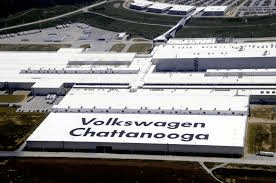
vwAs we note in Chapter 8, Location Strategies, the presence of labor unions can have a major impact on a company’s decision where to locate a manufacturing plant. So when workers at the Tennessee VW auto factory voted 712 to 626 last week against joining the United Automobile Workers, it was national news. VW did not oppose unionization, reports The New York Times (Feb. 17, 2014), and seemed to give tacit approval for unionization as a step toward establishing a “works council” at the plant. A works council is a committee, common at German factories, in which white-collar and blue-collar workers elect representatives who establish policies on issues like work hours, vacations and standards for firing workers. But it would be illegal under U.S. law for a company to establish a works council unless workers first voted to have a union represent them. Had a works council been set up at the VW plant, it would have been the first in the U.S.

U.A.W. officials were stunned by the defeat; they had expected to win because VW was not fighting the effort and, just months before, a majority of the plant’s employees had signed cards saying they favored union representation. One industry expert called the loss “a very serious setback for the union, a setback that will resonate throughout the South.” The U.A.W. campaign was clearly hurt by the anti-union sentiment common in the South, as well as an intense campaign by anti-union workers inside the plant who argued that they did not need a union or union dues because VW already treated and paid them well. Wages at the plant average $19.50 an hour.

Union officials accused Tennessee Senator Bob Corker of poisoning the atmosphere and preventing a fair election before the vote. Corker had told the media that VW had assured him they would add another production line at the plant (instead of going to Mexico) to make a new SUV if the factory’s workers rejected the union. This story can make for a lively class discussion of incentives, unions, worker rights, and more.

Classroom discussion questions:

1. Why did state officials take a position against the union vote?

2. Why did VW encourage creation of a works council?

OM in the News: Alabama Opens Its Wallet to Airbus

airbus alabamaFollowing a year of secret negotiations, Airbus broke ground this month in Mobile, Alabama, for its new plant that will produce the popular A320 jet.  Businessweek (April 22-28, 2013) provides the details of the final location decision and incentives: After looking at “just about every site in the US that had industrial capacity,” Airbus promised to bring an estimated $600 million in investment and 4,000 jobs to the state, no fewer than 1,000 permanent. Alabama, for its part, offered incentives totaling $158 million. They include $82 million in funds for capital investments in the plant and other expenses; and $51.9 million for a 40,000-sq.-ft. on-site training center where workers will be prepared, at state expense, for their new jobs. Faculty from the aerospace departments of colleges in the state will provide the training. The deal also includes tax breaks on manufacturing equipment and a state corporate income tax credit.

The State’s governor says Alabama taxpayers will recoup the investment more than 2-fold within 3 years.

Settling in Alabama, a right-to-work state, will mean lower labor costs for Airbus since plant employees won’t be unionized. Yet opening up shop in Alabama isn’t just about saving Airbus money. The facility won’t make entire airplanes—it will assemble pieces made overseas. Partially completed sections, from cockpit to tail, will be transported by barge from the company’s European factories to Alabama, where they’ll be put together. The cost of transporting the pieces means that even with lower labor costs, planes completed in the U.S. will cost more to manufacture than those made start to finish in Europe.

But having a presence in the U.S. is worth the cost and complications if it helps the company to sell more planes. “Being close to the customer always works—in any industry,” says one French industry analyst. “We believe, similar to other industries, including the auto industry, that if we create an industrial presence in the U.S. our market share will go up.”

Discussion questions:

1. Why did Airbus open a factory outside of Europe?

2. Were the incentives provided unusual or unreasonable?

OM in the News: The Continuing Use Of Incentives in Location Decisions

Boeing 787 plant in S. Carolina

States and cities across the U.S., hungry to create jobs, are using increasingly controversial incentives to compete for some of the world’s most sophisticated manufacturers: passenger-jet makers. The trend, writes The Wall Street Journal (Dec.12, 2012),  has accelerated since the recession, with states providing at least $1 billion in various incentives since 2008 to draw aerospace investments. That includes $450 million to attract Boeing to S. Carolina, $158 million from Alabama for rival Airbus, and $57 million from Virginia to draw engine-maker Rolls-Royce. But the escalation of local sweeteners also faces opposition from critics who say politicians are using public funds inefficiently to pick winners that market forces should be lifting.

Discussing the issue over lunch with my friend Michael yesterday, we agreed that these incentive packages don’t do much to help the overall economy. The benefit to one state is simply a loss to another. Michael,  the retired CEO of 2 major multinationals, has made many location decisions in his career. In almost every case, the location selection hinged on a slew of other factors (qualified employees, distribution channels, right-to-work, among others). Incentives were the bonus that he fought for after finding the best site–never the #1 criterion.

But backers of incentives say aerospace factories are especially attractive because they lead to follow-on investment and other jobs at suppliers.  Alabama Gov. Robert Bentley admits wooing Airbus “was an expensive project.” The funding will support training for many of the 1,000 new staff, new equipment and local infrastructure. For every new position at the Airbus facility, Bentley predicts 4 additional jobs at suppliers and service businesses will be created. Similarly, S. Carolina estimates the Boeing  factory, employing more than 6,000 people, will create thousands more jobs in the local supply chain and generate $4.6 billion in annual economic benefits to the region.

Discussion questions:

1. Refer your students to the Chapter 8 OM in Action box regarding Mercedes decision to open a plant in Alabama. What do the auto and aerospace industries have in common?

2. What factors should OM managers focus on in decisions such as these?

OM in the News: Incentive Systems and NCAA Football Coaches

gene chizikHow things have changed for Auburn University’s football coach Gene Chizik! Just under 2 years ago, we blogged about the incentives that school offered him as his Tigers won the national championship. In addition to his $2.1 million base salary, Chizik was awarded about $1.25 million in bonuses for reaching specific targets. (As we note in Chapter 10, incentive systems are used in half the manufacturing firms in the U.S.). So The New York Times (Nov.29 ,2102) front page article announcing that Chizik had just been fired, (shortly after losing to rival Alabama 49-0) creates an interesting class discussion.

Chizik was awarded $7.5 million in severance on the 2 remaining years in his contract– to be paid out at $208,334 per month for the next 36 months!  As The Times writes: “For an especially lucrative occupation, one might consider becoming a fired college football coach.” Still, college presidents appear willing to pay the coaches handsomely to go away and make room for new hires — despite little evidence that coaching changes generally result in better teams.

A new study in Social Science Quarterly may provide sobering news to Auburn and other universities that have fired their coaches. It compared the performance of major college teams that replaced their coach with teams with similar records that kept their coach.  The lowliest teams subsequently performed about the same as other struggling teams that did not replace their coach. Mediocre teams, like Auburn, performed worse than similar teams that did not replace their coach. Statistically speaking, the study concludes: “There’s not much to be said for every few years dumping a coach who’s had a couple bad seasons. In the long run, you are about in the same situation down the road if you had done nothing and ridden out the storm.”

But universities view football as a kind of front porch to their campuses, drawing attention in a way that no other endeavor can. At the college sports level, writes The Times, “you can’t fire the players,” so the coach takes the fall for a lack of success.

Discussion questions:

1. How would this strategy of changing leaders work in manufacturing, banking, or healthcare ?

2. What are the ethical implications of the salaries and the buyouts such as that at Auburn?

OM in the News: Want Caterpillar’s New Plant in Your State?–Then Start Bidding

“Forget Kindle Fires and iPads”, writes The Wall Street Journal (Nov.26-27, 2011).”The holiday gift most coveted by local officials across the US is a new Caterpillar Inc. construction-equipment factory”. The planned $150 million factory (location announcement in the next few weeks) comes with 1,000 jobs– and election time bragging rights. So far, 2 dozen states, plus Canada and Mexico, have found enough cash for incentives to set off this major bidding war. Because Caterpillar is such a well-known brand with a long track record, it will be “asking for an awful lot from state and local governments”.

This is a great article to use in class when you discuss location decisions in Chapter 8.  First, we find that the firm is moving production of small excavators and bulldozers from Japan to North America –“to be nearer to customers”. Second, Caterpillar “says it is looking for good ports and other transportation links, as well as an established base of suppliers”. Third, the incentives. Caterpillar expects free land, road improvements, help with other infrastructure, tax relief, worker training programs, and cash. The firm is also adept at playing states against one another, and has released letters from governors of four states urging the company to move there. “If Illinois doesn’t want your business, Texas does”, writes Governor Perry.

Are these outrageous expectations? Electrolux AB, the Swedish appliance maker, won about $180 million in incentives from Tennessee when it located its new $190 million factory in Memphis last year. The plant created 1,200 jobs.

Discussion questions:

1. How would your state or local government justify a bidding war for a new plant like this one? Who pays the incentives?

2. Make a list of a dozen factors you think Caterpillar considers in its final selection process.

OM in the News: White Collar Perks for Hourly Workers

My neice, who works for a local vet clinic, recently had a baby and I have watched how her schedule is often disrupted by her growing family’s needs. She is not alone. The Wall Street Journal (Oct.3, 2011) describes how about 1/2 of all low-wage, hourly employees have “little or no” control over their schedules and nearly 1/3 are required to work overtime with scant notice. This can lead to absenteeism and turnover in businesses that rely heavily on hourly workers. One study even showed that 30% of workers took time off the job for family issues during a single week. With turnover rates as high as 80%-100% in hourly retail employees, this becomes a big issue. Replacing a single worker can cost 30% of the annual wage.

So it is not surprising that companies in industries such as retail, food service, hospitality, call centers, and manufacturing, are exploring ways to provide the flexible scheduling found in the white collar workplace. Kaiser Permanente and Marriott have implemented innovative policies such as providing paid time off in shorter (part-day) increments, so workers can schedule school or doctor appointments without losing a entire day’s work. They are also providing leeway on shift start and end times–allowing workers to be available for a school pickup, for instance. One Minnesota manufacturer is considering letting factory workers to do some of their tasks (like labeling) from home. And some firms are giving hourly workers more lead-time on their schedules. A typical retail schedule for the week beginning on a Sunday can be posted as late as the Thursday before, which makes it difficult to secure family care on short notice.

 The bottom line, which we discuss in Chapter 10’s Human Resource Strategies, is that firms can benefit from decreased employee turnover and higher employee engagement by “matching the workplace to the work force”.

Discussion questions:

1. Why is employee scheding a major OM issue?

2. What other flex policies might a firm use to increase employee satisfaction and productivity?

OM in the News: Alabama’s Incentives to Lure Hyundai–9 Years Later

It was April, 2002 when the State of Alabama announced that Hyundai would be opening a new billion dollar plant in 2005 in economically distressed Montgomery. I recall the headlines at the time about whether the $253 million in industrial incentives were sound business or public policy decisions. Indeed, in Chapter 8 we debate the merits of such incentive programs.

OK, so let’s look back with the benefit of 9 years of hindsight. The New York Times (Feb.18,2011) reports that Hyundai and its sister company, Kia (which just opened a plant nearby) have brought 1,000s of high-paying jobs to the region—and have even nurtured a little Korean culture in Montgomery. Hyundai is running its plant flat-out, with 2,650 workers staffing 3 shifts  24 hours a day. The jobs pay about $20/hour and there is so much overtime that workers make more than their unionized colleagues in plants up North.

 Kia has hired 600 workers to ramp up a second shift at its Sante Fe brand SUV plant and plans to add 1,000 more for a 3rd shift. The presence of Hyundai and Kia have kept Alabama’s unemployment rates among the lowest in the SE—this despite the closure of 12 textile mills that had formed the area’s economic base for decades. Most of those textile jobs went to mills in China and India.

More good news: rarely do a few weeks go by without another parts supplier hiring up. Alabama now lists 138 suppliers that support the Hyundai plant, directly or indirectly.(Some also do business with Honda and Mercedes near Birmingham and Toyota in Huntsville). More than 50 companies have followed Hyundai from Korea to Montgomery, bringing 3,000 Koreans to the area. Finally, near the car plant, a Hyundai subsidiary that makes electrical transformers is building a factory that will create another 1,100 jobs.

Discussion questions:

1. Evaluate the incentive program today, nine years later.

2. What are the hidden benefits of attracting a major manufacturer like Hyundai?

3. Why is the company doing so well in this economy?

OM in the News: Incentives at Auburn U.’s Football Program

We received so many comments and emails about our blog on NFL Sports Incentives a few weeks ago that we decided to follow-up by looking at how Auburn U. head football coach Gene Chizik did after leading his team to a BCS National Championship. Auburn, which finished the season 14-0 knocked off the #2  U. of Oregon team on Jan. 10, 22-19 ( just in case you were one of the few people  in the country not watching the game).

It turns out Chizik did quite well. In addition to his $2.1 million base salary (which, sadly, is less than 6 other coaches in the SEC, but more than I made in my whole academic career), he had already earned an extra $500,000 for hitting 4 of his incentive targets: 13 wins, an SEC title, SEC Coach of the Year, and a BCS bowl appearance.

He also receives $150,000/year for 5 years to help pay the $750,000 buyout he owes Iowa State U. for departing before his contract ended there.

According to Bloomberg (Jan. 11, 2011), Chizik also made the final incentive of $600,000 by winning the national title, claiming 14 victories, and finishing in the Top 5 in the final AP poll.

Chizik did miss the $150,000 that was attached to his program reaching a score of 1,000 on the annual Academic Progress Rate for student athletes. Nor did he get the $50,000 bonus for a score of 950. The team had a 915 on its most recent evaluation.

How much were the Auburn players paid? The answer, of course, was $0. According to the NCAA website, “Student athletes are students first and athletes second. They are not university employees who are paid for their labor.”

Discussion questions:

1. Are incentives a good idea for professional athletes? For coaches?

2. Are there ethical considerations?

OM in the News: Incentives Help Toyota’s Move to Mississippi

It was 4 years ago when the Mississippi governor doled out some big incentives to get  Toyota to locate its next plant in Tupelo. The offer (see USA Today,Mar.5,2007) included $294 million to build out a factory infrastructure, add a 2-mile RR spur, and run 11 miles of natural gas lines. Not enough? How about closing the deal with a 20-year corporate tax holiday?  Toyota signed on, promised 2,000 jobs, and the state finished the plant in 2008. Mississippi forecast a 10-year ROI, but hoped that more models would be one day added to the large SUV (Toyota Highlander) line, with dreams of new suppliers and spinoffs setting up nearby…meaning even more jobs in the future.

The problem, as The Wall Street Journal reports (Dec.27, 2010), is that the buildings have sat as empty shells for the past 2 years, thanks to the recession.  Will the governor’s decision pay off?  Toyota  announced last year that it planned to proceed…but with the Prius gas-electric model instead. Then in June, it decided that the cheaper Toyota Corolla would be the product that rolls out—at the rate of 140,000 per year.

This decision, not discussed in the WSJ  piece, is the latest setback for the beleaguered UAW union.The Corolla was previously built in a unionized plant—NUMMI, in Fremont CA that Toyota shut down in March,2010. The car has been built for the US market in Japan since that date. Mississippi is, of course, a “right-to-work” state and happy to have the $20/hour jobs.

As a side note, Toyota’s utilization of production capacity (Ch.1) at existing North American plants fell to 60% last year after peaking at 106% in 2006. The company expects 2010 capacity to climb back to 90% as sales pick up.

This is our 4th blog on incentives being used in location decisions. To see the others, type “incentives” in the search box on the right.

Discussion questions:

1. Discuss the incentives given to Toyota?  How do they compare with  offers to other auto firms?

2. Will the investment pay off for the state one day? Why?

3. Read the Ethical Dilemma in Ch.8, regarding UAL. What happens when a firm moves out, or in this case, if  Toyota had never opened?

OM in the News: Incentives Spur Utah’s Growth

We raise the question in Ch. 8 as to why firms choose to locate in one area vs. another—and clearly incentives are one major factor. Today’s Wall Street Journal (Nov.27-28,2010) describes how Utah’s aggressive approach to courting businesses has fueled its high ranking job growth.

Adobe Systems, for example, is setting up a new technology campus there (which hopes one day to create 1,000 new jobs) , after Utah offered $40.2 million in tax credits. Other firms in the article are  also mentioned having responded to cash incentives.

But as Jay wrote in his Sept. 23 blog, in the long run, communities  are better off investing in honest government, good workers compensation programs, education, and quality of life. Utah seems to recognize this by offering  support from local colleges. The U. of Utah, for example, put together 5 new graduate programs in engineering to meet demand in the state’s growing medical devices industry.

Out of state firms say they are impressed with Utah’s pro-business strategy. “More so than any incentives, what makes Utah attractive to businesses is the state’s stable, predictable regulatory and tax environment”, says IM Flash Technology’s CEO. This pretty well agrees with Jay’s assessment. Its not so much the money, its a whole list of other factors that are at least as important.

Discussion questions:

1. Why are some incentives more important than money?

2. Why isn’t every state and county as aggressive as Utah?

3. Provide some examples of situations where financial incentives backfired.