
A few months ago, we reviewed an excellent new book called Thinking, Fast and Slow (Oct.22, 2011) in which author Daniel Kahneman talks about how we make decisions. We see what we want , ignore probabilities, and, as Kahneman writes, “we are often confident even when we are wrong”. But The Wall Street Journal’s (Jan.4, 2012) article “What’s Your Algorithm”, says the important theme in business for 2012 will be “how analytics harvested from massive databases will begin to inform our day-to-day business decisions. Call it Big Data, analytics, or decision science. This will change your world.”
The new algorithms can help us reduce the human decision-making biases that Kahneman fears. These software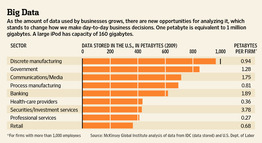 systems can chew through billions of bits of data, analyze them, and package the insights for immediate use. For example, crunching millions of data points about traffic flows, an analytics system might find that on Fridays a delivery fleet should stick to the highways–despite your devout belief in surface road shortcuts.
Until recently, we have been stymied by the cost of storage, slower processing speeds and the flood of data itself, often spread across different corporate databases. “A few years ago it might take a month to run a project involving 30 billion calculations. Today it can be done in 2 or 3 hours”, says Opera Solutions’ CEO. HP just spent $11 billion to buy Autonomy Corp., which vacuums up “unstructured data” then applies analytic approaches to it.
Analytics (or as we called it, OR, MS, QA, or Decision Sciences when studying in grad school) is becoming mainstream WSJ reading.
Discussion questions:
1. How has IBM taken a leading role in business analytics?
2. How can massive number crunching help the operations manager?