Good OM Reading: Top 10 Supply Chain Trends for 2025

In its new report, Top 10 Supply Chain Trends, the Association for Supply Chain Management states the supply chain landscape will continue to evolve at an unprecedented pace. To be competitive, companies will consider technological advancements and innovation, geopolitical shifts, and evolving consumer expectations.

Here are the top ten trends:

  1. Artificial Intelligence. AI will be employed for better decision-making, optimized transportation routes, prediction of demand fluctuations and automated quality control inspections. Smart robots work alongside humans to perform packaging and assembly, while automation tools such as computer vision systems identify product defects.
  2. Global Trade Dynamics and Geopolitical Policies. Supply chain organizations will prioritize diversification and contingency planning to address challenges related to global trade dynamics and geopolitics. These companies will spread supply sources across multiple regions and develop backup plans.
  3. Big Data and Advanced Analytics. Tapping into vast amounts of supply chain data, businesses will improve inventory management, supply chain visibility, forecasting of demand and production, transportation and logistics processes, and decision-making. Big data and analytics will also enable better predictive maintenance, digital twin modeling and AI-powered insights.
  4. Cybersecurity. Supply chains will prioritize cybersecurity to protect sensitive data and critical operations.
  5. Agility and Resilience. Organizations will prioritize agility and resilience to adapt to rapidly changing market conditions by implementing flexible manufacturing systems and advanced technologies including robotics and AI. Real-time visibility, diversified supplier bases and robust contingency plans will further enhance their resilience.
  6. Visibility and Traceability. By implementing real-time tracking systems, tapping into IOT-enabled devices and leveraging blockchain technology, companies will better monitor the movement of goods, identify potential disruptions and improve supply chain efficiency.
  7. Digital Integration and Connectivity. To improve efficiency, transparency and resilience, supply chains will implement the latest technologies — particularly AI, robotics and automation, cloud computing, and the IOT, making it possible to streamline operations and  reduce costs.
  8. Strategic Sourcing and Supplier Management. Advanced analytics and AI-powered tools will help identify and assess potential risks, such as geopolitical events and natural disasters. By tracking and analyzing key metrics, organizations will be able to select suppliers that align with sustainability goals.
  9. Workforce Evolution. By upskilling and reskilling employees, businesses will ensure their workforces are equipped to handle the demands of an increasingly automated and digital supply chain.
  10. Risk Management. By mapping networks, evaluating suppliers, forecasting demand and simulating scenarios, organizations will be able to handle potential disruptions.

OM in the News: How Applications, Automation, Analytics and AI Transform OM

Digital transformation, writes the INFORMS magazine Analytics (June 2020), is leveraging modern technology and innovation so that an organization can help its people achieve maximum capability and the company processes can run optimally. Digital transformation also helps a business focus on its greatest means of success: its customers. Its main technology drivers come from the “Straight A’s”: applications, automation, analytics and AI. Technology, which we discuss in Chapter 7, is a great enabler for organizational productivity, creativity, efficiency and improved profits.

Applications: Ideal business applications help organizations manage business processes and enhance productivity. There are cloud-based business application platforms that provide solutions for end-to-end business processes right from strategy development, product development, work management, project management, field services, customer services, and operations.

Automation: Automating business processes to remove manual, redundant tasks, which can free staff from repetitive, time-consuming work items.

Analytics: Using actionable analytics, organizations can access relevant data and relationships to take immediate action on business initiatives to achieve stronger outcomes.

AI:  With AI, companies can literally transform business processes into intelligent systems that will help identify patterns, gain deeper insights from data, and leverage data science to improve fact-based decision-making.

Classroom discussion questions:

  1. What is data analytics, and why is it an important OM tool? (Hint: see Module G in your Heizer/Render/Munson text)
  2. Why is automation so important to U.S. supply chains?

OM in the News: Merck’s Move to Prevent Drug Shortages

Merck, the Germany-based pharmaceutical, needs to stockpile medications to make sure it has enough on hand because some expire before they can be used. Its supply-and-demand forecasts are about 85% accurate. To sharpen its predictions, Merck plans to use analytics and machine learning to predict and prevent drug shortages, a move that could also save it money. Its new platform, from TraceLink Inc., can analyze data in real time from organizations within Merck’s supply chain, including pharmacies, hospitals and wholesalers.

The U.S. had 600-1,200 drug shortages every year from 2014 and 2019, reports The Wall Street Journal (Oct. 15, 2019). Shortages can happen due to issues with manufacturing, supply-and-demand forecasts, and natural disasters. Drugs in short supply have included antibiotics, chemotherapy and cardiovascular treatments. More precise supply-and-demand forecasts mean pharmaceuticals could save hundreds of millions of dollars annually, a benefit of not having excess drugs on hand and avoiding expedited shipment costs.

On average, pharmaceutical companies carry 156 days of inventory. For retailers selling consumer products, it is 78 days. For IT equipment, it is 57 days. Pharmaceuticals traditionally have predicted demand for drugs based on historical data and input from sales teams. But as many as 10 entities handle a drug before it gets to a patient, including manufacturers, pharmacies and wholesale distributors. “It’s a highly complex supply chain,” said TraceLink’s CEO. The TraceLink network includes data from more than 275,000 organizations world-wide, including hospitals, retail pharmacies, wholesale distributors and drugmakers.

TraceLink’s algorithms give Merck signals about the days of inventory for a specific drug and how long it will take for a drug to get to a particular phase in the supply chain. A better supply-and-demand forecast also makes it easier for Merck to expand into locations without a reliable supply-chain infrastructure, such as parts of Africa and Southeast Asia.

Classroom discussion questions:

  1. Why do pharm firms carry such a large inventory?
  2.  How might data analytics improve forecasting at Merck?

OM in the News: The Fourth Industrial Revolution–Industry 4.0

A recent IndustryWeek survey (Nov. 6, 2018) found that manufacturers are having trouble joining the Fourth Industrial Revolution, called Industry 4.0. And the World Economic Forum (WEF) found that 7 out of 10 manufacturers fail in pushing initiatives in big data analytics, A.I., and additive manufacturing.

But there is hope, the Forum asserts. They scoured the planet and after vetting 1,000 manufacturers, selected 9 “lighthouses” (listed below) with a solid Industry 4.0 strategy. “These pioneers have created factories that have 20-50% higher performance and create a competitive edge,” says a McKinsey exec. “They have agile teams with analytics, IoT and software development expertise that are rapidly innovating.” Industry 4.0 is expected to deliver productivity gains over $3.7 trillion.

Bayer Biopharmaceutical: Italy. Most companies use less than 1% of the data they generate. Bayer makes the most of its data, leading to a 25% drop in maintenance costs and while gaining 30-40% in operational efficiency.

Bosch Automotive: China. Bosch uses data analytics to deeply understand and eliminate output losses, simulate and optimize process settings, and predict machine interruptions before they occur.

Haier: China. Use of AI facilitates a “user-centric mass customization model” with electronic products made on-demand. Maintenance needs are predicted before incurring downtime via AI.

Johnson & Johnson: Ireland. This hip and knee joint factory implements IoT, leading to a 10% reduction in operating costs and 5% drop in machine downtime.

Phoenix Contact: Germany. The electronics manufacturer relies heavily on customer-specific clones to cut production time for repairs or replacements by 30%.

P&G: Czech Republic. Production lines, in a plant built in 1875, seamlessly change the product being manufactured with a push of a button, an innovation that reduced costs by 20% and upped output by 160%!

Schneider Electric: France. Sharing of best practices across its multinational force allows each site to reap the benefits of the others, saving 10% on energy and 30% on maintenance.

Siemens: China. Leveraging augmented reality to create 3D simulations, Siemens has optimized its production lines with reduced cycle time and 300% jump in output.

Fast Radius: U.S. The lone U.S. company uses real-time analytics and globally positioned distribution 3D printing farms to maintain rapid turnaround times to deliver prototypes and custom parts.

Classroom discussion questions:

  1. What is Industry 4.0?
  2. What do these 9 firms seem to have in common?


Good OM Reading: An MIT Case Study of Hospital Efficiency

hospitalAmerican health care is undergoing a data-driven transformation. This MIT Sloan Management Review (June 25, 2015) case study examines the data and operations analysis culture at Intermountain Healthcare, a Utah-based company that runs 22 hospitals and 185 clinics. Data-driven decision making has improved patient outcomes in Intermountain’s cardiovascular medicine, endocrinology, surgery, obstetrics and care processes — while saving millions of dollars in its supply chain. Here are just two examples from this lengthy, but  very readable study, one worth sharing with your class.

SURGERY:  When data showed Intermountain’s chief of surgery that surgical infection rates at the hospital were in line with national norms, he presented the findings to the surgeons there. He said, “You think you’re great, but compared to other hospitals in the country, you’re not above average.” So a committee of clinicians spent a year developing a list of 30 possible causes, then whittled it down to 5 and made recommendations of changes. Doctors hated some, like having to give up bringing personal items into the operating room, including fleece jackets they would wear to keep warm. But in fact, after a 6 month trial, infection rates fell to half the national standard.

SUPPLY CHAIN: Supply costs will exceed hospitals’ top expense–labor–by 2020. The challenge is that a lack of price transparency and no system for sharing cost information with unaware doctors. So Intermountain started a supply chain organization–facing 12,000 vendors, $1.3 billion in expenses, and a culture that ceded much purchasing authority to doctors. One challenge was finding a way to reduce expenses for physician preference items (PPIs)–the devices that doctors request because they prefer them to comparable products. PPIs consume as much as 40% of a hospital’s supply budget. Intermountain launched a system designed to reduce costs by tracking its 50 highest-volume procedures and presenting information to surgeons on their supply options. One thing it found was that some coronary surgeons used sutures that cost $750, while others used sutures that cost $250. The analytics revealed no appreciable difference in patient outcomes. Doctors had no idea that the things they were using cost so much.

Good OM Reading: Analytics at Disney World

Here in the tourist mecca of Orlando, Disney World reigns as king. With 60,000 employees (called “cast members”), Disney is a driving force not just in our economy, but in the use of operations management tools. Analytics (Sept.-Oct. 2012) has a great piece on the careful planning guests don’t see taking place “behind the scenes” to run the operation smoothly. The article examines the role analytics plays in ensuring the guest experience is maximized. It makes a nice supplement to our text coverage of Disney in both the forecasting (Ch.4) and waiting line (Module D) chapters.

The authors write: “Forecasting serves as the analytical foundation for operations planning at the Resort. It all starts with the park attendance forecast, which lays out the expected attendance at each park. These predictions are strongly considered when setting park hours and performing other strategic planning. More granular forecasts are required for each individual area, such as guest arrivals at the hotel front desks. The company recently launched a new labor demand planning system, which generates forecasts for every 15-minute period at many locations throughout the property, including park entry turnstiles, quick-service restaurants and merchandise locations. These forecasts help the resort plan labor effectively to ensure guest service standards are met”.

Another innovative way the resort uses forecasting is for attraction wait times. The most popular attractions use Disney’s FASTPASS system – a unique virtual queueing system that allows guests to receive a ticket with a designated 1-hour window of time when they can return and skip the regular line. From a central command center underneath the Magic Kingdom, forecasting models are executed every 5-10 minutes to project the return patterns of FASTPASS guests based on entertainment schedules and the number of FASTPASS tickets that have been distributed. The forecasts are posted at the front of the attractions to help guests choose whether to enter the line, take a FASTPASS ticket or return to the attraction later in the day. These wait times are also available on Disney’s Mobile Magic smart phone app, which shares real-time information about the parks throughout the day.

I think your students may also enjoy reading this down-to-earth article.

OM in the News: How Analytics Will Change Day-to-Day Decisions

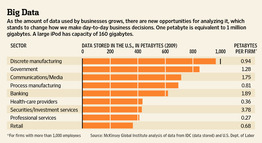
A few months ago, we reviewed an excellent new book called Thinking, Fast and Slow (Oct.22, 2011)  in which author Daniel Kahneman talks about how we make decisions. We see what we want , ignore probabilities, and, as Kahneman writes,  “we are often confident even when we are wrong”. But The Wall Street Journal’s  (Jan.4, 2012) article “What’s Your Algorithm”, says the important theme in business for 2012 will be “how analytics harvested from massive databases will begin to inform our day-to-day business decisions.  Call it Big Data, analytics, or decision science. This will change your world.”

The new algorithms can help us reduce the human decision-making biases that Kahneman fears. These software systems can chew through billions of bits of data, analyze them, and package the insights for immediate use. For example, crunching millions of data points about traffic flows, an analytics system might find that on Fridays a delivery fleet should stick to the highways–despite your devout belief in surface road shortcuts.

Until recently, we have been stymied by the cost of storage, slower processing speeds and the flood of data itself, often spread across different corporate databases. “A few years ago it might take a month to run a project involving 30 billion calculations. Today it can be done in 2 or 3 hours”, says Opera Solutions’  CEO.  HP just spent $11 billion to buy Autonomy Corp., which vacuums up “unstructured data” then applies analytic approaches to it.

Analytics (or as we called it, OR, MS, QA, or Decision Sciences when studying in grad school) is becoming mainstream WSJ reading.

Discussion questions:

1. How has IBM taken a leading role in business analytics?

2. How can massive number crunching help the operations manager?