OM in the News: A New Twist on Reverse Logistics

Walgreens has struck about a dozen deals with companies in a bid to increase pharmacy revenue.

Some retailers believe that getting more directly involved in reverse logistics could them win new customers. Walgreens and Nordstrom will let online shoppers at other brands and retailers pick up or return orders at stores, the Wall Street Journal reports (April 17, 2019), a sign of how retailers are teaming up in new ways to draw customers as more shopping shifts online. Walgreens will offer package pickup and returns at more than 8,000 U.S. locations to companies including Levi Strauss and Urban Outfitters. For example, when shoppers want to return a product purchased on Levi.com, they can choose to ship it to Levi, drop it off at a Levi store, or take it to a Walgreens store.

Nordstrom will test the tactic at Los Angeles-area stores with a group of brands. The strategy highlights how e-commerce is pressing retailers to adjust to changing consumer habits and reset relationships between brands and stores. Department store Kohl’s has helped drive the trend by allowing Amazon returns at about 100 of its stores.

The rise of Amazon and new shopper habits have prompted many brick-and-mortar retailers to reevaluate how they allocate space. Last year, Saks Fifth Avenue moved its beauty department from its traditional spot on the high-traffic first floor in some stores, rebuilding on the 2nd floor to provide more room to offer services and compete with rivals.

Chains are also forming partnerships that would have been unthinkable years ago, including carving out real estate for their competitors in the name of getting people in the door. The industry is still grappling with how to navigate the logistic and competitive challenges these partnerships can bring.

Classroom discussion questions:

  1. Is it easy to set up such reverse logistics systems?
  2. What are the ramifications of Sak’s layout decision?

OM in the News: Don’t Even Think About Returning This Dress

Bloomingdales' tag reads "Returns Will Only Be Accepted If All Original Tags Remain Affixed"
Bloomingdales’ tag reads “Returns Will Only Be Accepted If All Original Tags Remain Affixed”

Chapter 12’s discussion of  services inventories notes that shrinkage and pilferage account for 1-3% of retail inventory loss. But BusinessWeek (Sept. 30-Oct.6, 2013) reports on yet another source of loss to retailers. Many merchants have long lived by the mantra that the customer is always right, adopting liberal return policies in hopes of winning the loyalty of free spending shoppers. But with a recent increase in the wearing and subsequent return of expensive clothes—a practice merchants call wardrobing—many retailers are taking a stronger stand against the industry’s $8.8 billion-a-year return fraud problem.

Bloomingdale’s just started placing 3 inch black plastic tags in highly visible places on dresses costing more than $150 as they are being purchased. The clothes can be tried on at home without disturbing the special tag. But once a customer snaps it off to wear in public, the garment can’t be returned. Similarly, Nordstrom uses silver-colored paper tags, similar to price tags, which are affixed high on the outer side seam under the arm of special-occasion dresses. They must still be attached for returns.

The department store chains are not alone in trying to outwit some unscrupulous customers. Electronics retailers have turned to hefty restocking fees to discourage short-term use of expensive electronics to watch events such as the Super Bowl.  Improper returns afflict a wide swath of products. Such “borrowing” also has become prevalent in fine jewelry, seasonal décor, and tools. Ditto for expensive video cameras popular at weddings. After the nuptials, the gear sometimes goes back into the package and off to the store for a refund. Some Victoria’s Secret stores are compiling lists of serial returners. And high-end outdoor goods retailer REI recently announced it’s ending its lifetime return policy after customers took advantage of its lenient rules.

Merchants say the costs are now too great to ignore. About 65% of retailers reported experiencing wardrobing last year, meaning 3.3% of their total returns were fraudulent.

Classroom discussion questions:
1. How is wardrobing an OM issue?

2. What are the risks of cracking down on wardrobing and other frauds?

OM in the News: Penney’s Turns to the iPad For a Cash Register

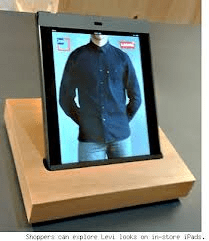
In Chapter 7, Process Strategy, we discuss the impact of new technology and equipment on the customer service experience. USA Today (July 25, 2012) provides a great example to use in class with a front page story that starting this weekend, salespeople in Penney’s new Levi’s shops will use only iPads to check out customers. All of Penney’s 1,100 stores will offer mobile checkout by the end of the year.

More than 6,000 Nordstrom salespeople are already using mobile devices to check people out, just like at Apple stores. “By the end of this year, Nordstrom salespeople will be able to do everything on their handheld devices that they can at a register,” says Jamie Nordstrom, grandson of the chain’s founder. “I believe the future of our point-of-sale systems is completely mobile,” he adds. “It’s hard to know whether it’s in one year or five years because the technology is evolving so rapidly.”

Several grocery stores — Costco and Sam’s Club are two — already use employees armed with mobile devices for “line busting.” The workers scan products for customers standing in lines and print a bar code that they can take to cashiers to pay. Nordstrom salespeople will still be able to make change, but not with the “cash registers of yesterday”. “As long as there is cash, we’ll always be happy to accept cash”, Nordstrom says.

Other stores where customers interact often with salespeople will likely start adopting mobile checkout. “If you go through the whole process of shopping with help along the way, why should you have to stop and be funneled to a line?” says an industry consultant.

Discussion questions:

1. What other technology changes are impacting OM in the retail scene?

2. How does the iPad build flexibility into the store’s operations?