Guest Post: Kraft Heinz’s Mission to Reduce, Recycle and Replace its Plastics Packaging

Dr. Misty Blessley is Associate Professor of Supply Chain Management at Temple U.

Kraft Heinz, the fifth largest food and beverage company in the world (founded in 2015 with the merger of Kraft Foods and H.J. Heinz companies), is on a mission to reduce, recycle and replace virgin plastics in their packaging, including their tomato ketchup bottles. In 1983, as did many firms at that time, Heinz introduced plastic bottles as the packaging of choice for its famous tomato ketchup distributed to the retail grocery channel.

Virgin plastic is newly produced plastic, and Heinz has a goal of eliminating 100 million pounds by 2030. This is a reduction of 20% when compared to their 2021 baseline. Kraft Heinz recently stated: “When deciding what packages to focus on, we first see if there’s an opportunity to remove any unneeded plastic, then we look for opportunities where we can reduce plastic weight, add recycled content, or replace plastics with other types of materials, while ensuring we do not compromise the product quality and [do] meet consumer expectations.”

Kraft Heinz was able to reduce plastic by simply removing the bag from some products and worked towards their recycling objective by swapping some virgin plastic with recyclable plastic. They are also replacing their plastic ketchup bottles with a paper-based bottle made of 100% sustainably sourced wood pulp. A prototype is currently being tested, for this first of its kind in the sauce category.

Rethinking the Ketchup bottle, Heinz teams with Pulpex to deliver paper-based packaging

The firm is partnering with Pulpex, a packaging technology company focused on delivering sustainability through renewable packaging. If the bottle in the photo looks new yet familiar, it is because Pulpex is innovating with Heinz’s iconic ketchup bottle, the same one seen on Heinz ketchup (at restaurants, as an image on foil packs and dip and squeeze packs, etc.) since 1876.

Classroom discussion questions:
1. Product decisions are fundamental to firm strategy and to competitive advantage (see pages 161 – 162 of your Heizer/Render/Munson OM text). Given the need for sustainability in operations and supply chain management, why and how has packaging become part of the product decision?
2. Why do you think Kraft Heinz and Pulpex both feel that familiar looking packaging is a customer expectation?

Guest Post: Walmart Makes Strides in Reducing Scope 3 Value Chain Emissions

Dr. Misty Blessley is Associate Professor of Supply Chain Management and Academic Director of Experiential Learning at Temple University

Walmart is the world’s largest retailer, with an historically strong brick and mortar presence. According to a recent article in Supply Chain Dive (June  2, 2023), “E-commerce is a growing channel for Walmart, and associated waste and packaging are some of the company’s priority areas as it tackles emissions — particularly Scope 3, or value chain, emissions.”

 But what exactly are Scope 3 emissions, how is Walmart tackling emissions in this category, and why it is important to do so? 

Walmart’s paper bag mailer packaging.

According to the World Resources Institute’s Greenhouse Gas Protocol, Scope 3 emissions are those that occur in the upstream and downstream value chain.(Scope 1 emissions are tied to a firm’s facilities and Scope 2 emissions relate to purchased energy). What makes Scope 3 emissions so important to address is that this category is about ten times the magnitude of Scopes 1 and 2, according to Walmart’s Chief Sustainability Officer.

Walmart is tackling Scope 3 emissions in its e-commerce by replacing all plastic mailers with paper mailers. This one change will eliminate the need for 2,000 tons of difficult to recycle plastic over the next seven months. A change such as this has huge longer-term implications. Additionally, Walmart has invested in technology in about half of its fulfillment network that helps create custom-fitted packaging. This change is estimated to eliminate the need for packing filler by 60%. Following through to the customer’s hands, upon placing an order they have the option to opt out of receiving their pick-up orders in single-use plastic bags, which is expected to keep millions of bags out of circulation.

Walmart has pilots for reusable or refillable packaging in some categories. They “have a goal for all global private brand packaging to be recyclable, reusable or industrially compostable by 2025,” and they are making strides. In viewing themselves as one node in a larger supply chain, Walmart also encourages their suppliers to consider their alternatives for reducing packaging waste.

Classroom discussion questions:

  1. In what ways is Walmart practicing good corporate social responsibility?
  2. How has Walmart looked beyond design and production for sustainability, to include product distribution?

OM in the News: Retailers Tackle Cardboard Overload

The days of tiny online orders shipping to customers in oversized boxes are a step closer to becoming a thing of the past, writes The Wall Street Journal (April 4, 2023).

Big retailers are rolling out machines in their e-commerce distribution operations that make packages sized specifically to fit the items being shipped, potentially reining in some of the big volumes of cardboard generated as online shopping has grown.

Walmart is using machines from packaging-technology company Packsize that take dimensions needed to ship an item, then cut, crease and glue corrugated cardboard to make custom boxes. The machines then label and seal the packages.

Walmart said it has installed machines that churn out custom boxes at 12 of its fulfillment centers, and plans to add the technology to more. It has been able to cut down the amount of cardboard and filler material it uses per order by making individual boxes.

Amazon has also been increasing its use of made-to-fit packaging to ship items from books to shoes. It started using custom packaging in 2016 and is expanding its use of the technology.

Retailers traditionally have used boxes of set sizes to fill online orders, many of them not suited to the enormous array of products now available online. The push to deliver goods faster has also put a premium on speed in fulfillment centers, leading workers to stuff goods in the closest available boxes. But the speed and functionality of machines that make custom boxes has improved in recent years.

The accumulation of cardboard in households, trash heaps and recycling centers has been one visible result of the surge in online shopping in recent years. Each order has added to the boxes reaching Americans’ doorsteps, including containers that can be far bigger than the items inside.

Besides being better for the environment, the made-to-fit boxes can help companies cut shipping costs because the shipments take up less space in trucks and delivery vans.

Classroom discussion questions:

  1. How do companies benefit from better packaging?
  2. Are there other ways to improve packaging beside machines such as the one shown above?

OM in the News: Bumble Bee’s Sustainable Packaging Push

To the Bumble Bee Seafood Company, improving the sustainability and the quality of packaging go hand in hand. The company just announced new outer packaging for its multipack tuna cans made of readily recyclable paperboard. It is the first shelf-stable seafood brand to replace its shrink wrap packaging with a recyclable alternative.

The paperboard is made of 100% recycled material with at least 35% post-consumer content, and is certified by a major sustainability nonprofit. The new packaging has debuted on 23 SKUs, from 4- to 12-can packages. By moving from shrink wrap to paperboard, Bumble Bee will eliminate 23 million pieces of plastic waste per year. (This is an important topic in Supplement 5 in your Heizer/Render/Munson text).

Beyond the sustainability aspect, Bumble Bee saw other benefits to adopting the new paperboard packaging, writes Supply Chain Dive (April 26, 2022). For one, the carton allows the products’ barcodes to be scanned more easily than the shrink wrap, and to be placed on store shelves in two different orientations. In addition, the new paperboard packaging features bright colors and a picture of the tuna cans, along with nutritional information in a way that looks clearer than was possible on the shrink wrap.

This change from shrink wrap to paperboard will move the brand from 96% to 98% readily recyclable packaging. Both the new paperboard packaging and the metal tuna cans are curbside recyclable. A company survey that found 67% of consumers wanted its product packaging to be more recyclable.

“If you think about it, the U.S. recycling system was designed 50 years ago. It was designed for paper and bottles. It’s not designed for the type of flexible plastics that we have today,” said the company’s VP of global corporate responsibility.

Classroom discussion questions:

  1. Why is Bumble Bee making this change?
  2. What other product designs do your students note that have become more sustainable?

OM in the News: Packing Your Beer 6-Pack Sustainably

For many consumers concerned about their food, packaging has become a major factor in deciding what to buy. More than 2/3 consider it important that the products they buy are in recyclable packaging, according to one report. Another study found 58% of consumers said they were likely or very likely to purchase food products in packaging that clearly states it is reusable or recyclable.

With that in mind, companies like Molson Coors can no longer just depend on the taste and ingredients of the product itself to attract consumers but increasingly what the offering is packaged in. As more companies overhaul their packaging to make it more environmentally friendly, competitors have no choice but to respond or risk getting passed over on grocery store shelves, writes SupplyChainDive (March 15, 2022).

So Coors just announced that it will begin moving out of plastic rings this year from its packaging globally in favor of fully recyclable and sustainably sourced cardboard-wrap carriers. To support the move to more sustainable packaging,  Coors is investing $85 million in its operations to upgrade machinery to allow its entire North American portfolio — covering more than 30 brands that currently use plastic rings — to use cardboard wrap carriers by the end of 2025.  Coors estimates the move to cardboard-wrap will save 1.7 million pounds of plastic waste annually by 2025. The announcement moves Coors closer to its goal of ensuring its packaging is 100% reusable, recyclable or compostable, and consumer-facing plastic packaging is made from at least 30% recycled content by 2026.

Many sustainability-minded food companies, from Nestlé and PepsiCo to General Mills and AB InBev, have improved their packaging to help them meet their own environmental goals. Coors would be the largest beer brand in North America to move away from plastic rings.

What started out as a few companies making changes to sustainable packaging has quickly gained momentum across the industry. Nestlé is moving at least some of it Carnation Breakfast Essentials offerings from plastic bottles to Tetra Pak cartons made with paper it claims is responsibly sourced. General Mills’ Nature Valley Crunchy granola bars moved to fully recyclable plastic wrappers and PepsiCo’s Frito-Lay division is introducing a compostable bag for its Off The Eaten Path brand. Coca-Cola has introduced bottles made from 100% recycled plastic material while Mars Wrigley has created biodegradable wrappers for Skittles.

Classroom discussion questions:

  1. Why is Coors making this move?
  2. What is the “triple bottom line” (see page 195 in your Heizer/Render/Munson text) and how does it apply here?

OM in the News: J and J’s Circular Supply Chain for Packaging

Converting bottles to recycled plastic. Redesigning baby lotion bottles to ditch the pump. Swapping out the black Listerine cap for a clear resin one. Reducing the dimensions of cartons holding Carefree pads to use less paper. Johnson & Johnson’s goal is to use 100% recyclable, reusable or compostable plastic packaging, and recycled paper and pulp-based packaging by 2025, reports Supply Chain Dive (Oct. 13, 2020) .

The company will spend $800 million to make these packaging changes in an effort to convert its consumer health products packaging to sustainable options. To make a package fully recyclable, every part must be recyclable, including the label. (Some bottles use a label which can cause recycling issues). The packaging should also be compatible with the recycling process, likely a reason J&J is looking to remove the pump from some products. The pump needs to be discarded before recycling the bottles, and not all consumers do this.

J&J is planning to change Listerine’s black cap for a clear resin one, because clear plastic can be reprocessed into more forms than black plastic.

But sustainability isn’t the only consideration in packaging. The packaging has to be functional. There’s a greater issue if the packaging causes product damage in an effort to use more sustainable packaging materials. Plastic color can also change to generate higher recovery values.

Instantly reducing supply chain waste starts with using less material. Package optimization testing can help determine the least amount of material needed to effectively ship products. Looking at the carbon footprint is also part of the sustainability process. Usually, the less material used, the lower the carbon footprint.

These efforts all support the circular economy that we describe in Supp.5, “Sustainability in the Supply Chain” on pages 197-200.

Classroom discussion questions:

  1. Select three products and evaluate their packaging. How could it be more sustainable?
  2. How have hotels become more sustainable conscience?

OM in the News: Hasbro to Phase Out Plastics From Packages

Hasbro Inc. — known for its plastic dolls, Transformers and Mr. Potato Heads — is vowing to cut down on the plastic components used to package those products, reports Industry Week (Aug. 20, 2019). The toy company will start phasing out plastic from new packaging, including elastic bands and shrink wrap, starting next year, with a plan to eliminate virtually all plastic from packages for new products by the end of 2022. The company has not yet announced a plan to cut down on plastic usage in the toys themselves, though it will soon announce steps involving more sustainable materials.

The packaging switch will only apply to new products. About two-thirds of Hasbro’s product portfolio is new each year. “Something already designed and on the shelf we’re not taking off the shelf, but everything we’re putting into the marketplace going forward” would get the new packaging where it makes sense, said Hasbro’s CEO. The new packaging costs will be about the same for the company.

There are some places Hasbro won’t be able to replace plastic, because of health and regulatory rules. For example, packaging for Easy Bake Oven ingredients will remain wrapped in plastic to keep the food tamper-proof and fresh. So far, Hasbro hasn’t been able to find an alternative.

Consumer companies are facing an increasing backlash to single-use plastics, with major corporations from PepsiCo to Procter & Gamble vowing to cut back.

Classroom discussion questions:

  1. How is this an OM issue?
  2. Why is packaging so important to Hasbro?

OM in the News: Going Green (and Light) for Amazon

“Amazon’s rise is forcing laundry detergents to shrink, writes The New York Times (Dec. 28, 2018). Tide and Seventh Generation have introduced redesigned laundry detergents that are several pounds lighter by cutting down on plastic in their packaging and using less water in their formulas. They’re making the changes to please Amazon: Lighter packaging means it costs less to ship the detergent to shopper’s doorsteps, making each sale more profitable.

Tide has cut down the plastic in packaging

For consumers, the new packaging has been designed to better survive shipping without leaking. The challenge, however, is getting online shoppers to buy detergent that looks nothing like the heavy bottles they are used to. Tide is putting its detergent into a cardboard box, making it 4 pounds lighter than its 150-ounce plastic bottles, but still able to wash the same 96 loads. Seventh Generation went with a compact plastic bottle that’s less than 9 inches tall, rectangular in shape and has no measuring cup.

Amazon may drop products from their website that cost too much to ship. Tide, owned by P&G, says its Eco-Box has 60% less plastic and uses 30% less water in its soap than its 150 ounce bottles. The boxed detergent doesn’t need to be packed in another box: online retailers can just slap an address on it. Seventh Generation, owned by Unilever, spent 3 years developing its smaller bottle. At 1.6 pounds, it is 5 pounds lighter than its standard 100 ounce bottle. It still washes the same 66 loads as the heavier one. The measuring cup was replaced with a cap that automatically squirts out the right amount of detergent needed for a single load of laundry. To make sure the new bottle could withstand delivery, it was sent to a laboratory that mimics the vibrations of Amazon’s warehouse conveyor belts, the bumps of a delivery truck and any accidental drops by warehouse workers.

Classroom discussion questions:

  1. Why is this an OM issue for Amazon?
  2. Why is product design an important part of sustainability?

OM in the News: It’s Ikea’s World

 At Ikea’s distribution center in Älmhult, Sweden, pallets are stacked and retrieved through a fully automated process.
At Ikea’s distribution center in Älmhult, Sweden, pallets are stacked and retrieved through a fully automated process.

In a stunning global expansion, the Swedish home furnishings giant has been quietly planting its blue and yellow flag in places you’d never expect. “Pay attention, Wal-Mart:” writes Fortune (April 6, 2015),  “You could learn a few things.” Ikea, it seems, is a genius at selling Ikea—flat packing, transporting, and reassembling its quirky Swedish styling all across the planet. The furniture and furnishings brand is in more countries than Wal-Mart, Carrefour, and Toys “R” Us.

In an industry where the product is often passed down from generation to generation, Ikea has shaken up the paradigm. It kept its prices down with an obsessive focus on costs. It might skip an extra coating of lacquer on the underside of a table that people never see or use. The company has also stripped out as much labor as possible from the system, pushing tasks that were once done by traditional retailers onto the customer. Flat packed furniture made it easier for customers to take purchases with them, cutting out the expense of stocking and delivery. (Ikea figured out flat packing in 1956, when a designer took the legs off a Lövet table to get it in his trunk.) The magic of flat packing allows goods to be jammed into shipping containers without wasting any space. Wasted space means wasted money and is also environmentally unfriendly. “I hate air,” says Ikea’s head of packaging.

The firm’s success, in large part, is based on improving its product design. As much as it has doubled down on market research and logistics, Ikea has been relentless in its focus on design. Ikea comes up with some 2,000 new products every year. Products under development go through rapid prototyping in the pattern shop to provide a sense of what they will actually look like in the flesh. During Fortune’s visit, one of the four 3-D printers was outputting a toilet brush. If air is the enemy in shipping, it is the ally in design. “The more air in our products, the better,” says Ikea.

Classroom discussion questions:

1. What operations strategies are key to Ikea’s success?

2. How pleased are students who have had to assemble the products themselves?

OM in the News: Sustainability and eBay Packaging

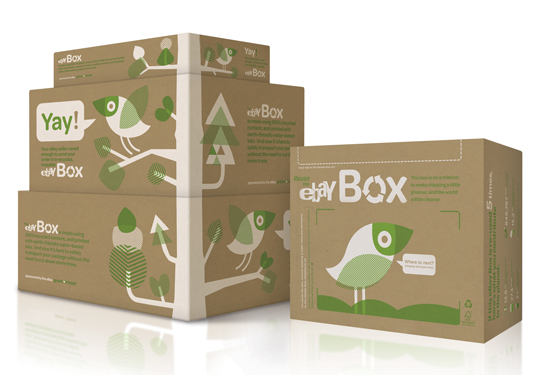
In Chapter 5 we discuss some of the easiest ways to make products more  sustainable. We can: (1) make them recyclable; (2) use recycled materials; (3) use less harmful ingredients; (4) use lighter materials; (5) use less energy; and (6) use less material. MITSloan Management Review (Aug. 11, 2011–E Newsletter) describes how eBay has made its packing boxes more sustainable by using almost all of these approaches. In doing so, the online auction company has come up with a solution that not only feeds on people’s desire to recycle, but helps brand the business as sensitive to the environment.

The eBay box is made of especially durable cardboard. Covered in graphics of birds and trees, it has text all over that basically says: “this box has been designed to be used over and over”. The inside of the lid even has spaces where users can leave notes where the box has been, essentially inviting recipients to celebrate the fact that the box has been used and reused.

The idea bubbled up internally. The firm’s Green Team is tasked with “inspiring the world to buy, sell and think green every day”. Out of the 250 suggestions submitted to eBay’s annual Innovation Expo, the grand prize winner was the eBay box. The project received a prestigious Clio design award a few months ago.

By May that the company had given away 100,000 of the boxes. The Green Team reports that “each box is made of 100% recycled material, printed with water-based inks, and designed to require minimal tape”. The 1,500 boxes reused so far have “conserved almost 7,000 gallons of water, energy to power 13 homes for a week, and reduced greenhouse gasses equivalent to taking 18 cars off the road for a week”.

Discussion questions:

1. Ask students to pick another product that can be redesigned to be greener.

2. Show the Frito-Lay video on sustainability (in Ch.7) and compare that company’s packing efforts to eBay’s.