Guest Post: Omnichannel Operations–Where Technology Meets Retail Strategy

Dr. Prince Vijai is Assistant Professor of Operations at IBS Hyderabad, India. This post is based on his recent presentation at the DSI meeting in Orlando.

In today’s retail world, customers expect a smooth and unified experience across both online and offline channels. This customer expectation has turned omnichannel inventory management into a strategic necessity. By integrating supply chain management, information systems, and analytics, retailers can ensure that products are available where and when customers need them – across stores, warehouses, and digital channels.

Centralized inventory visibility is the key enabler of this unified commerce inventory strategy. Instead of managing separate stock pools, leading retailers maintain a unified view of inventory across all sales channels. This reduces overstocking, prevents stockouts, and supports flexible fulfillment options, such as ship-from-store, click-and-collect, buy online pickup in-store (BOPSIS), and dropshipping.

To achieve this omni-channel inventory visibility, real-time data synchronization is essential. Technologies like Shopify APIs and AWS Lambda update stock levels instantly as purchases occur, ensuring accuracy across systems. NoSQL databases, such as DynamoDB or Firebase, provide the scalability and speed necessary for these continuous updates.

Leading retailers clearly demonstrate the benefits of such integrated omnichannel operations. Zara uses RFID for item-level tracking, enabling rapid replenishment and online fulfillment from its stores. Nike uses a unified commerce platform to synchronize data across its physical and digital channels. Amazon exemplifies data-driven order routing and fulfillment efficiency.

As omnichannel operations mature, the role of the Omnichannel Planner is emerging. This is a professional skilled in analytics, ERP, and API integration who aligns supply with demand across channels. Such expertise ensures a balance between operational efficiency and superior customer experience.

The key omnichannel retail trends include unified commerce integration, adoption of practical generative AI, enhanced inventory visibility, flexible fulfillment options, and personalized in-store experiences. These strategies aim to strike a balance between customer value and operational efficiency, driving agility and competitiveness.

Ultimately, omnichannel inventory management represents more than just logistical coordination – it’s a foundation for business agility and customer satisfaction. Retailers mastering this capability gain a decisive edge in speed, accuracy, and trust in a competitive, data-driven marketplace.

 Classroom Discussion Questions

1.How does real-time data synchronization enhance both customer experience and retailer performance?

2. What future technologies could further improve omnichannel inventory visibility?


OM in the News: Chipotle Rolls Out RFID for Food Traceability

We note the increasing role of RFID (Radio Frequency ID) tags, which are smart bar codes that can automatically identify and track inventory, in our Process Strategy and Inventory chapters (Ch. 7, 12). This blog has addressed RFID in retailing, warehousing, the drug industry, hospitals, at Disney, and in luggage control at airports. (Type RFID in the search box on the right, below, to read about these applications).

Now, Chipotle Mexican Grill is translating the technology to the food industry. Chipotle has scaled up its use of RFID to trace ingredients from suppliers to restaurants in real-time, writes Supply Chain Dive  (May 23, 2023).

The restaurant chain has asked all of its suppliers to tag products with RFID. Chipotle is doing final testing use of the technology on a regional basis, and plans to roll it out nationally in the coming months.

“There’s no restaurant company in the U.S. that has this visibility into inventory on the national level,” says the company’s VP-Supply Chains. “Not one.”

The use of RFID is part of Chipotle’s herculean effort over the past few years to better trace its ingredients following a headline-grabbing E. coli outbreak in 2015 that sickened over 1,000 customers and took a bite out of profits.

Using RFID gives Chipotle a real-time snapshot of its inventory across distribution centers and restaurants, but the technology also benefits the company’s suppliers. Vendors can use Chipotle’s RFID system to improve their own inventory management processes and cut down on repetitive tasks.

Poor inventory management can lead to more food waste, as was the case in 2018 when the FDA ordered the destruction of all romaine lettuce due to limited visibility into suppliers.

“It is imperative to know where your products come from and where they are at all times,” the firm’s VP added. “You have to have very, very good visibility of that supply chain and the value chain so that if something were to happen, you can address it right away.”

The cost to integrate the technology is also minimal since RFID readers already complement existing scanners in Chipotle restaurants.

Classroom discussion questions:

  1. Reviewing past blog posts, summarize the use of RFID in three other industries.
  2. Why is Chipotle implementing this system?

OM in the News: Retailers Make Big Bets on Tiny RFID Chips

A customer uses the RFID-based self checkout system at the Uniqlo store in New York

At all Uniqlo’s stores in the U.S. and Canada, shoppers can checkout simply by placing their goods in bins of automated stations. Unlike the self-checkout process at many stores, customers of the casual apparel retailer don’t need to scan individual items or look up prices on a screen—they can simply drop their items in a bin and pay.

This next-generation process is powered by radio frequency identification readers inside the checkout machines, which automatically read hidden RFID chips embedded in price tags. Uniqlo (Asia’s top clothing retailer) embeds these chips into their price tags—allowing it to track individual items from its factories to warehouses and inside stores. That data is critical for Uniqlo in improving the accuracy of inventory in stores, adjusting production based on demand, and getting more visibility into its supply chain, reports The Wall Street Journal (April 8, 2023).

Newer and cheaper RFID chips, reader hardware, and software are enabling retailers to implement the technology at lower cost and with more precision.  The cost of RFID tags has fallen from 60 cents a tag a few decades ago to 4 cents a tag, and reader hardware has improved in range and accuracy.

An article of clothing in the self-checkout system.

RFID has resulted in significant reduction in out-of-stock items on the Uniqlo sales floor, and has contributed to improving customer satisfaction. While the most common use for RFID is improving inventory management (a topic we address on page 496 in Chapter 12), the use of RFID at self-checkout machines is gaining traction as more apparel retailers explore ways to apply the technology once their merchandise has been tagged. Most apparel brands plan to implement RFID this year or next.

The unique benefit of an RFID-based checkout system is that it is faster and more accurate than barcode-based self-checkout machines. Many retailers still rely on printed bar codes, which require manual scanning and are more limited in the data they carry.  Since Uniqlo rolled out the machines, customers have reduced their wait time at checkout by 50%. Computer vision (see page 291 in Chapter 7), a form of artificial intelligence that analyzes images, is still too expensive for widespread use for self-checkout and inventory management.

Classroom discussion questions:

  1. How does RFID work? What are its strengths and limitations?
  2. Why is RFID implementation speeding up at retailers?

Good OM Reading: The Benefits of RFID Technology to Retailers and Brands

Since the advent of the barcode in the 1970s, the flow of information and goods between brands and retailers has been relatively consistent—a purchase order is issued from a retailer, the brand collects the products to be sent to the retailer, an advanced shipping notice (ASN) is created, the products are shipped, the retailer receives the products, and any difference between what is ordered and what is received is reconciled. The process is straightforward and established. However, inherent errors introduced at various stages of the process are not understood.

This 35 page study, called Project Zipper, by 3 Auburn U. profs,  examined the flow of information between 8 brands and 5 retailers from 2017 to 2018 to evaluate and analyze process errors. They originally speculated that, given the longevity of use and the stability of the process, errors would be few. However, using solely U.P.C. data—the primary form of data capture and sharing currently—almost 70% of the orders contained an error somewhere along the supply chain process. These errors were manifested in picking, shipping, and receiving, resulting in inventory inaccuracies, at best, and claims (i.e., chargebacks) from the retailers to the brands, at worst. Interestingly, they also found that brands and retailers generally accept the inherent errors in the process, and that they attempt “workarounds” which often result in additional errors. Conversely, for those brands using RFID tags to capture information and reconcile shipments, order accuracy was greater than 99.9%. During this study, claims from the retailer were eliminated for those using RFID technology.

In an era of omnichannel retail—which demands high inventory accuracy—the errors created in the supply chain propagate downstream and ultimately impact a retailer’s ability to meet customer demand in a timely manner. Several of these errors found at the store or in direct shipments to the consumer via a retailer’s fulfillment center are caused by the upstream disparity between the information flow and the physical product flow amongst brands and retailers. As demonstrated in the study, RFID technology eliminates the errors commonly found in the process, ensuring the accurate flow of information and products.

OM in the News: The Solution to the Lost Luggage Problem

An unclaimed bag at the Charlotte N.C. Airport

The airline industry says its rate of mishandled baggage is lower than ever, down more than 12% from 2015 and the lowest ever recorded. “Much of the reduction is due to investments by airlines in technology improvements,” writes The New York Times (May 16, 2017).  Still, that is small comfort to the lone traveler waiting by a deserted carousel with a sinking feeling.

There are myriad reasons a bag can go missing. “Weather and missed connections are by far the largest proportion of causes for bags not arriving on time,” says Delta’s VP. “We’ve invested about $50 million in deploying baggage tech across our organization,” he said. That investment includes integrating baggage data into the Delta mobile app. “If you’re traveling and you check a bag, you get a push notification when your bag is loaded.”

New technology and better baggage handling procedures had paid off, but the drop also coincided with the major carriers beginning to charge passenger fees for checking a bag. Those fees reduced the number of travelers checking bags.

Bag tags are now embedded with RFID chips, which means the location of bags is tracked and electronically crosschecked against a database to make sure that they are in the right place at the right time. This increases security, since each bag is linked to a ticketed passenger. It also speeds up the discovery of a bag in the wrong place so the process of reconnecting a bag to its owner can begin sooner.

At most U.S. airports, the airlines have operational control of their terminals, so it is incumbent on them to add new technology. By June, 2018, all airlines must maintain an accurate inventory of passenger baggage by tracking when each piece of checked luggage moves on, off or between planes.

Classroom discussion questions:

  1. Discuss how Alaska Air guarantees its 20 minute baggage delivery. (See the Video Case Study in Chapter 7).
  2. What is the role of RFID in baggage tracking?

OM in the News: RFID and Luggage Tracking

Radio chips are embedded in the tags being used at Las Vegas' airport ensure that suitcases move more quickly and accurately through the system.
Radio chips are embedded in the tags being used at Las Vegas’ airport ensure that suitcases move more quickly and accurately through the system.

One of my favorite new video cases for this edition is called Alaska Airlines: 20-Minute Baggage Process–Guaranteed! in Chapter 7. This is great example of process analysis and how OM can be applied in a way to improve customer service in the airline industry.  And industry-wide, airlines show a steadily decreasing likelihood of bags going astray. Last year had the lowest rate of wayward luggage — 6.5 bags per 1,000 — in the past 12 years. Why?

Various advances in technology and bag-handling procedures deserve credit, including improvements over the years in the bar-coded tags and optical scanners that have long been in use for identifying and sorting checked luggage. Where bar-coded tags fall short is if the tag is wrinkled, smudged or torn, or not in line of sight of the scanner. If the tag is not readable, the bag can get lost without being noticed. Bar code readers have a “read rate” of only 80%- 95% of baggage tags.

“That is why the industry is intent on improving the tracking rate by looking beyond the 30-year-old baggage bar code,” writes The New York Times (Aug.23, 2016). They are adopting RFID tags that do not need to be seen to be read. Embedded chips can store travel information and need to be only close to radio scanners along the way for the bag’s progress to be recorded. Fliers can use travel apps to keep track of their bags. Delta is spending $50 million on the necessary scanners, printers and radio tags, which look little different from conventional bar-code tags. The system is now in place at all of the 344 airports into which Delta flies.

R.F.I.D. technology is hardly new, of course. But updating to the latest technology requires infrastructure changes that can be expensive and disruptive. And because most airports leave it to each airline to handle its own bag-checking system, the technology and procedures vary widely.

Classroom discussion questions:

  1. What are the advantages of RFID over bar codes?
  2. What does Alaska Air do to make sure bags arrive in 20 minutes?

OM in the News: The Barcode’s Intelligent New Rival

Thin film technology

In June 1974 history was made at a supermarket in Troy, Ohio, with a ten-pack of Wrigley’s Juicy Fruit chewing gum. It was the first time a commercial item bearing a Universal Product Code was scanned by a cashier at the checkout. Forty years on, the barcode has transformed the world of commerce by providing reliable product identification, tracking and pricing. Nearly everything now comes with a barcode.

As revolutionary as it was, the barcode has limited abilities, reports The Economist (March 8, 2014). It can impart only the information it was printed with and that can be read by an optical device. The next generation of labeling contains tiny printable electronics able to generate, store and share information. The technology behind “smart labels” is a flexible film of electronics that can be printed like a barcode. The memory circuits which can be used by smart labels to store information are printed as a film of ferroelectric polymer sandwiched between two electrodes. A tiny 20-bit memory label can store over 1 million combinations.

Yet another advancement is called Near Field Communication (NFC). This allows a user to tap an NFC tag with a portable device, like a smartphone, to send or receive data. NFC is a more sophisticated version of RFID and is already used by some contactless payment systems. By incorporating NFC, smart labels will be able to communicate wirelessly. Besides conveying product codes, applications include recording storage times and temperatures for perishable goods like food and pharmaceuticals. Smart labels might even be programmed to automatically discount their prices in response to marketing campaigns. To gain widespread use, smart labels will need to be cheap. Basic printed-memory labels can be produced for around 2 cents. Printed sensor-labels cost 50 cents, compared with $10 or more for a system using conventional microelectronics.

Classroom discussion questions:

1. How do RFID tags differ from barcodes?

2. Why are smart labels a major new OM tool?

OM in the News: Big Mickey Is Watching

Disney's bands track user patterns
Disney’s bands track user patterns

The couple tapped their lunch orders onto a touchscreen at the entrance to the restaurant at Disney World and were told to take any open seat. Moments later, a food server appeared at their table with their sandwiches. “How did they know where we were sitting,” asked the guest. The answer, writes BusinessWeek (March 10-16, 2014), was on the electronic bands the couple wore on their wrists.

That’s the magic of the MyMagic+, Walt Disney’s $1 billion experiment in crowd control, data collection, and wearable technology that could change the way people play—and spend–at Disney. If the system works, it could be copied not only by other theme parks but also by museums, zoos, airports, and malls. Change is always tricky for Disney, where introducing a new brand of coffee can spark a revolt by fans. And MyMagic+ promises far more radical change. It’s a sweeping reservation and ride planning system that allows for bookings months in advance on a website or smartphone app. Bracelets called MagicBands, which link electronically to a database of visitor information, serve as admission tickets, hotel keys, and credit or debit cards; a tap against a sensor pays for food or trinkets. The bands have RFID chips—which critics derisively call spychips.

The goal is to offer people what Disney calls “a more immersive, more seamless, and more personal experience”—allowing Disney employees to address a child by name, for example, or wish someone a happy birthday. Moreover, visitors with full Disney World schedules mapped out in advance on the MyMagic+ system will be less likely to jump spontaneously to one of the dozens of other attractions here in Central Florida, including Universal, SeaWorld, and Legoland. And, of course, the MagicBands make it so easy to spend. The new system also helped the Magic Kingdom park accommodate 3,000 additional daily guests during the Christmas holiday season by reducing congestion around the most popular attractions.

Classroom discussion questions:

1. What other examples of RFID use in services exist? (Hint: see Table 7.4)

2. Why is this an important OM issue at Disney?

OM in the News: J.C. Penny Loses Control of its Inventory

pennyShoppers are buying more at J.C.Penny after a disastrous overhaul under former CEO Ron Johnson, who drove customers away when he did away with promotions and eliminated in-house brands. But the problem is that customers are also stealing more, reports The Wall Street Journal (Nov.21, 2013). As the chain is learning, its extensive inventory makes inventory management crucial. We note in Chapter 12 the importance of controlling pilferage through RFID and bar codes.

Theft spiked last quarter after Penny removed sensor security tags from merchandise while it shifted to a new inventory-tracking system that uses radio tags. Shoplifting took a full percentage point off  Penny’s profit margins. That was just one more weight that dragged the 1,100-store chain down to a loss of half a billion dollars. The need to liquidate old inventory did further damage to profits.

The shoplifting. Penney unveiled plans in 2012 to add RFID tags to every item in its stores. The tags are more expensive than traditional bar codes, but they promise to make it easier to manage inventory. Sensor tags designed to prevent theft were removed from merchandise, because they would have interfered with the radio frequency. At the same time, Penney had switched to a friendlier return policy that did not require customers to present a receipt. The combination gave people the opportunity to grab armloads of merchandise off store shelves, walk over to a cash register and return the goods on the spot. New CEO Mike Ullman says “the move away from sensors actually encouraged thieves to come to Penney. Competitors were still using the devices, so most of the theft comes to our place.”

The company is now retagging items on the sales floors with sensors, as well as tagging those that it is bringing in. It also recently tightened its return policy by giving store credit, rather than a refund, to customers who return goods without a receipt and are unable to produce the credit card used for purchase.

Classroom discussion questions:

1. What else can Penny do to eliminate pilferage?

2. Why is inventory control crucial is service industries like retailers?

OM in the News: RFID Tags Ensure Hospital Hygiene Practices

Wristband contains RFID reader and motion sensors to measure hygiene

My wife was so disturbed with yesterday’s post about hospital quality problems, that I decided to provide a positive hospital story today. RFID Journal (April 1, 2013) reports  that IntelligentM has developed a hospital solution that employs RFID readers built into wristbands to identify tags on soap dispensers, intravenous (IV) solution packaging, surgical drains and ID badges–thereby alerting users if they fail to wash their hands, or need to do so more thoroughly.

Users’ wristbands incorporate very small readers that interrogate RFID tags installed on sinks, disinfectant dispensers and other objects. IntelligentM also sends weekly hand-hygiene “report cards” to employees. In developing the system, the firm wanted to be able to provide alerts that would lead to corrective action being taken before a patient was exposed to potentially infectious materials. The wristband is small enough so as not to be cumbersome to users who may also be wearing and removing rubber gloves.

When the nurse places her hand under a sanitizer or soap dispenser, the wristband reader interrogates the tag mounted there. The reader vibrates once, reminding the wristband bearer to indeed wash her hands, and indicating that it has read the dispenser’s tag. If the band detects that she has stopped washing before the proper amount of predetermined scrubbing time has elapsed, it vibrates three pulses, thereby prompting her to wash her hands a second time using the proper procedure.

When the nurse meets with a patient and begins a procedure, such as opening an IV package, a tag on that package is read and the system again identifies the action based on the tag’s ID number. The wristband’s software checks its database to determine the last time this worker had washed her hands. If it was not recent enough, the tag vibrates three times to indicate she must wash her hands before continuing the procedure.

Discussion questions:

1. What other uses for RFID can you envision in hospitals?

2. What prevents this system from being universally applied?

Guest Post: Zero Human Intervention in Operations (0HIO)

bill hardgraveDr. Bill Hardgrave is Dean of the School of Business at Auburn University and is also founder of the RFID Research Center at the U. of Arkansas.

It’s time for retailers to move to 0HIO— zero (0) Human Intervention in Operations. The concept is simple: Eliminate the human touch points in operations. Essentially, why have people do something that can be done automatically?  I have seen several retailers make the same mistake in early-stage RFID—they treat RFID as a “super bar code.” They swap out bar-code equipment for RFID devices, and keep existing processes in place. In doing so, they minimize the opportunity for gain and maximize the opportunity for mistakes.

For complete inventory management, retailers must know when product is received at the store and when it moves from the back room to the sales floor. Retailers that used mobile RFID readers in place of bar-code scanners to track products experienced execution failures. That’s because store associates became busy and forgot to read products that arrived at the store. And when they couldn’t easily locate a mobile reader, they didn’t read products that were moved from the back room to the sales floor. As a result, stores had incorrect inventory counts, and they did not know where items were located. Instead, the RFID system should have been built on the premise of human touch reduction. Installing RFID portals at the receiving door and transition door from back room to sales floor would have removed the need for human intervention and ensured products were recognized and recorded.

One retailer, for example, had two full-time store associates use bar-code scanners to track the items going into and out of dressing rooms. After adopting RFID, the retailer replaced the bar-code scanners with RFID mobile devices and was disappointed to find there were no benefits. That’s because the process hadn’t changed. When the retailer installed RFID readers in the dressing rooms, the information gathered was better, and dressing-room associates were free to help customers. When evaluating existing processes, ask the question: How can I remove the requirement for human intervention at this step? (Please see RFID Journal (Feb. 19, 2013) for more details).

OM in the News: RFID for Tracking Surgical Implants

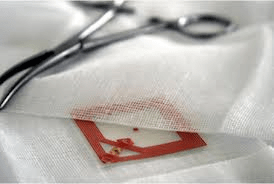
rfidWe note the increasing role of RFID (Radio Frequency ID) tags in our Process Strategy and Inventory chapters (Ch. 7, 12). Now, RFID Journal (Feb. 5, 2013) describes an exciting medical advance that will soon track surgical implants by placing the tags on implants and tools. The system, by Texas startup Innovapaedics, also includes a cloud-based server to store data and provide reporting to customers regarding the location, use and status of each instrument used during surgery, as well as devices implanted  into patients.

Innovapaedics’ 3-5-year goal is to offer a “Smart Implant” solution that would include RFID tags and sensors permanently attached to implants. After an item is implanted into a patient, its RFID sensors would detect pressure and temperature changes, among other events, in order to track a patient’s healing process, as well as the device’s condition, and transmit that information to a reader. In the short-term, meanwhile, the company has developed MedEx, an RFID solution for tracking implants prior to their use within a patient, to track which items were used on that individual. The resulting data is incorporated into medical and billing records.

MedEx also enables hospitals to track surgical tools. A tag can be permanently attached to each surgical tool, and the tag’s ID number is linked to specific data about that tool in the MedEx. As a new tray of tools is created for use during a surgery, each tag is interrogated as the tool is placed into the tray and linked to that tray’s RFID number. Post-surgery, the tools are cleaned and sterilized, and are then placed in a tray once more. MedEx  stores a record of which tools belong in that tray, and displays an alert if the wrong tool is placed there, or if a tool is missing. The software cannot only track the tray in which a specific tool is stored, or to which patient a particular implant has been administered, but also enable the reordering of inventory based on which implants were used.

Discussion questions:

1. Why is this an important OM advancement?

2. Describe other medical applications of RFID tags already in use–(see Chapter 5).

OM in the News: Qantas Airways Turns to RFID to Eliminate Queues

 The Wall Street Journal (Dec.29,2011) writes: “Qantas has created practically paperless airports, rolling out new technology that eliminates many long lines and speeds passengers all the way to their seats. No paper itinerary. No sticky luggage tag. No boarding pass.” Says one frequent business traveller: “I think this is the best check-in in the world. It’s incredibly efficient”.

The system, built around RFID, is similar to toll tags used on highways. Fliers get an ID card that they flash at a kiosk in the ticketing area. The system assigns a seat and checks the passenger in.  To check luggage, the passenger goes to a baggage drop area and flashes the card again. Personalized RFID tags are placed on the bags, which are scanned for weight and size.. Finally, the ID is flashed at the gate–no boarding pass needed– and agents hand the flier a receipt with the seat number printed on it.

Qantas started building the system a few years ago when it was running out of room in its large Sydney terminal and faced long backups at counters. It concluded that to eliminate lines, it needed to eliminate the “pain points” at the airport–checking in, checking bags, and boarding. So it decided to invest in technology rather than floor space. With kiosks positioned in 4 V-shaped patterns, it’s almost impossible for long queues to build up. The system is largely self-service for customers, sp ground workers now roam the lobby to assist with things like directions and kiosk help.

Discussion questions:

1. Why did Qantas decide to use RFID technology?

2. How does this system benefit both fliers and the airline?