OM in the News: Sustainability in the Global Clothing Supply Chain

Some day in the not too distant future, the clothes and shoes you buy will not only have a label sewn in with the brand name/size/fabric content, but with a sustainability score as well.  Yesterday’s New York Times (Mar. 1, 2011) reports that the Sustainable Apparel Coalition is developing a comprehensive database of the environmental impact of every manufacturer, component, and process in apparel and shoe production. The coalition includes such names as Wal-Mart, JC Penney, Hanes, Patagonia, and Timberland.
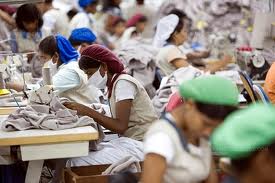
Americans spent  $340 billion last year on clothes and shoes, which is about a quarter of the global market. Amazingly, virtually all of it purchased here99% of footwear and 98% of clothes–came from other countries. And the various parts of any one garment often come from a diverse multinational chain of fabric mills, dye operations, and assembly plants.

This obscure nature of the global supply chain has long been a concern to environmental groups. Greenpeace, for example, using Google Maps, revealed that  a blue jean factory in  Xintang, China, was washing blue chemicals downriver from its textile mill. But  the company whose name appears on the designer label– and surely the end customer–are often unaware of the environmental connection. “The apparel supply chain is long and quite complicated”, states a University of Delaware prof.

The coalition’s tool is a database of scores assigned to all players in the garment life cycle–cotton growers, fabric makers, dyers, mill owners, and distributors–based on measures such as water use, energy efficiency, waste, chemical use, greenhouse gases, and labor practices. “The government has standards for miles per gallon on a car, but we have no real standards for clothing”, adds the CEO of Timberland.

Discussion questions:

1. Are students interested in such a “green score”?

2. What changes will such a database bring about?

3. Why are the biggest retailers signing on?

OM in the News: Recycling is a Necessity at Hitachi

Neodymium. You say you never heard of it?  If you worked at Japanese firms Hitachi, Mitsubishi, Panasonic, or Sharp, your companies would be spending a lot of time trying to find this product, called a “rare earth”. Rare earths are light-weight, malleable  metals that are essential to hybrid cars, cell phones, and hard disk drives. (Toyota Prius batteries use neodymium to power the car).  Hundreds of  other Japanese manufacturers also depend on them. And they had all counted on China, which produces 97% of the world’s supply of neodymium, dysprosium, didymium, and other rare earths, as the supplier.

But the latest issue of Businessweek (Jan.11,2011) describes how China has cut its exports of rare earths by over 3/4, driving up prices more than four-fold this past year. (Neodymium is now at $40/lb.) China wants to free up supplies for its own manufacturers, as well as reign in a very toxic industry.

So what is Hitachi doing ? The firm, which makes everything from nuclear power plants to home appliances to the Prius batteries, uses 600 tons of rare earths per year. The answer is recycling (Supp.5). Hitachi’s new facility in Matsudo City carefully saws open A/C compressors to retrieve rare earth magnets inside. It takes 2 workers 8 minutes to get to the prize inside each used air conditioner—4 wafer thin magnets containing 30 grams of rare earth metal. A separate conveyor belt feeds used disk drives into a massive machine, which pops out rare earth metal ready for harvesting. Other Japanese companies are following Hitachi’s lead in mining discarded products such as washing machines. The bottom line: China’s decision has prompted a whole new recycling industry.

Discussion questions:

1. Why did China cut its supply? What were its motives?

2. How might recycling of rare earths impact the world and its economy?

3. Why are rare earths so important and what other sources are going to be available?

Video Tip: Green Manufacturing and Sustainability at Frito-Lay

As a Math/Physics undergrad in the late 60s, I somehow took an elective course called FORTRAN. This turned out to be quite a break, as McDonnell Douglas hired me to design jets based on this one, well-timed class. At a time when very few people knew much about computers, this was a great edge.

I think today’s “great edge” is Sustainability.  Hundreds of college are offering courses in the subject now, but it is still in its infancy, with a huge demand building in the coming years for knowledgable grads. Johns Hopkins U. has just started the nation’s 1st B.S. in Sustainability.

With this background, I encourage you to show our newest video, “Green Manufacturing and Sustainability at Frito-Lay”, when you cover Supplement 5, Sustainability. Frito-Lay is a leader in solar, “going green”, moving off the power grid, and conservation/recycling resources. Its Sun Chips, for example,  are produced under full solar power. The firm has received the LEED (Leadership in Energy and Environmental Design) award and has “zero environmental impact” as a long- term goal. Will this help sell potato chips? Can only multi-billion dollar firms step up like Frito-Lay is doing?

Jay and I are especially proud of this video as it won the prestigious Silver Addy as best educational film in 2010. We hope you and your students enjoy the film and the case study in Supp.5.