
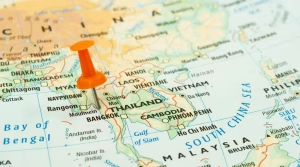
 India, Malaysia, Thailand, Vietnam, and Taiwan have emerged as the most prominent alternative suppliers to China for the technology industry, despite Taiwan’s own geopolitical challenges.
The products most affected by these diversification strategies include smartphones, smart watches, computers, and laptops, representing core product lines for the world’s leading technology manufacturers.
Despite the rhetoric in support of nearshoring that was born out of the pandemic, U.S. companies like Apple have kept the largest share of their suppliers in Asia. This is because of the comparative advantage that exists in countries like India, Malaysia, Thailand, Vietnam, and Taiwan.
Here are the regional advantages of each:
India: Offers a large domestic workforce skilled in smartphone and laptop manufacturing at a fraction of the labor cost. The country has rapidly developed its technology manufacturing capabilities, particularly in smartphone assembly, where it has become a major production hub for both Samsung and Apple devices. India’s combination of technical expertise, lower wages, and massive domestic market makes it particularly attractive for technology companies.
Malaysia: Has well-established infrastructure and a low-cost workforce skilled in the back-end processes of semiconductor manufacturing. Malaysia has developed specialized expertise in semiconductor packaging and testing, making it a critical node in the global chip supply chain. The country’s established technology parks and government support for high-tech manufacturing have created a conducive environment for technology suppliers.
Vietnam & Thailand: Government incentives, including tax breaks for technology companies and funding for new facilities, have fostered an innovative environment for new suppliers. Vietnam has emerged as a particularly important alternative for smartphone and laptop manufacturing, while Thailand has developed strengths in smartwatch and computer production. Both countries have benefited from their proximity to China’s supply ecosystem while offering lower costs and reduced geopolitical risk.
Taiwan: Taiwan is becoming increasingly prominent in the global computer parts supply chain. Taiwan’s world-leading semiconductor industry, centered around TSMC, gives it a unique and difficult-to-replicate advantage in high-end electronics manufacturing. The country’s technical expertise and established ecosystem for advanced electronics production make it an essential partner for many technology companies.
Classroom discussion questions:
- Does this article conflict with the the fact that reshoring continues to add jobs in the U.S.?
- What do these 5 countries have in common?
