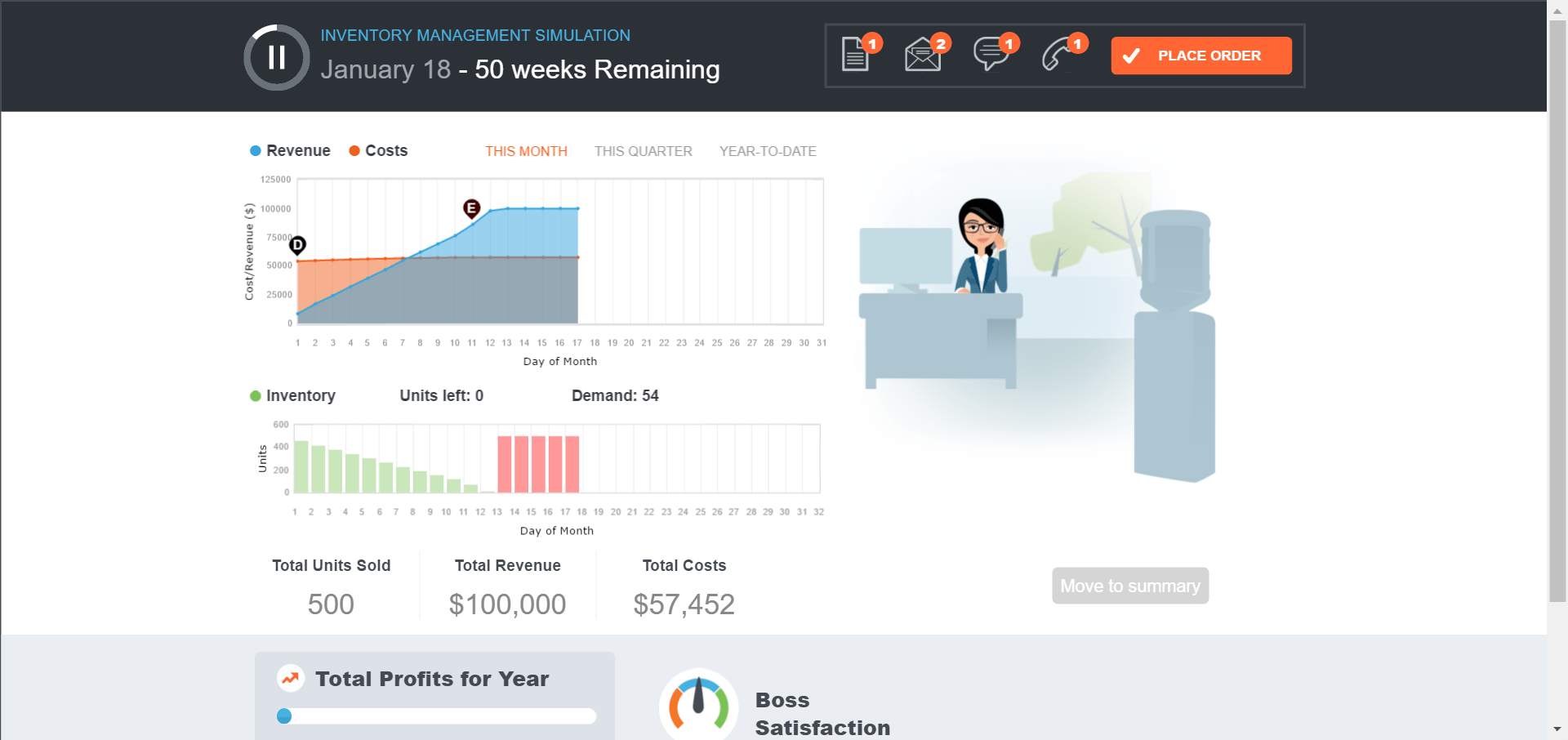
Inventory Simulation is the 4th of our four new classroom gaming exercises. It accompanies Chapter 12, Inventory Management and is free within our MyOMLab learning system.
Goal: Manage stock of electronics device to minimize costs and maximize profits.
You are the store manager at a local branch of DigiLife, a large electronics retail chain. A new version of a popular consumer electronics device called the Amulet is coming out this year. It is your job to sell as many Amulets as you can while minimizing your costs in order to maximize your store’s profits.
Learning Objectives
Primary Objectives:
- Understanding how EOQ is calculated
- Understanding the limits of EOQ
Ancillary Objectives:
- Use EOQ formula = sqrt(2ds/h)
- Where d = qty demanded, s = ordering/setup cost, h=holding cost
- Understand what the answer means and what the inputs mean.
- Knowing how EOQ can help guide you towards better decisions about order size and time between orders.
- Understand that demand is variable (Sales/marketing give you their best forecast but no one can predict the future. Also, you may be given an average demand where actual demand will fluctuate from day to day.)
- Understand that h has fixed and variable components (if you already have a fridge you might as well fill it. But if you’re paying for storage by the square foot, that’s going to vary).
- Understand ordering costs aren’t always obvious (going to the gas station every day to top off your tank doesn’t mean you may more for your gas, but it’s a huge waste of time).
- Understanding the economic impacts of defects and damage, stockouts and rush orders.
- Understanding the limitations of using EOQ to guide your decisions–that EOQ doesn’t give you an exact answer, but it gets you close.