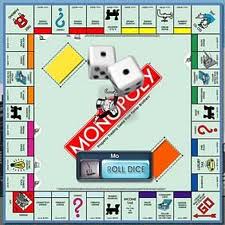
Teaching Tip: Time & Motion and Monopoly Sets

There is no question that we crave more decent-paying factory jobs in this country. But to keep things in perspective, most of us (and our students) would probably not enjoy making our living with these jobs. Today’s Fortune (Feb.7, 2011, pp. 80-81) lists the “100 Best Companies to Work For”, with Hasbro ( the toy and game maker) ranked #59. In a world of ruthless outsourcing, the Hasbro plant in Springfield, Mass., is an anachronism. Even though more of its Monopoly, Scrabble, and Mousetrap games are now made in Southern China, Hasbro employees are deeply loyal to a company that just committed to $40 million in capital upgrades to keep their US plant’s assembly lines going.

But in a humorous article (not as yet on-line), Fortune reporter David Kaplan goes to work at Hasbro  to see why the company is so beloved. He lasts a day, as a sort of George Plimpton in overalls– a cog in the assembly line for Monopoly boxes. Here is his tale:

“I’m at the back end of the assembly line, doing quality control. On a conveyor belt that mercilessly keeps advancing to my left comes open Monopoly box after Monopoly box. My dual task–every 1.81 seconds–is to place a plastic bag of dice and game tokens in a tray, while also ensuring that each box includes a container of 12 hotels and 32 houses, instructions, and a shrink-wrapped stack of money. I know just how Lucy and Ethel felt when they couldn’t keep up with the chocolates at the candy factory–except I can’t stuff the accumulating boxes in my bra….Who knew you could get motion sickness on an assembly line?”

Kaplan last only 4 minutes before vomiting.  But Hasbro’s 600 employees, with average seniority of 21 years, seem to have mastered the manual dexterity, automatous concentration, and the need for a refined inner-ear. How many of us could do so for 21 years?  The Fortune piece provides a good chance to discuss job enrichment and enlargement in Ch.10.

OM in the News: Incentives at Auburn U.’s Football Program

We received so many comments and emails about our blog on NFL Sports Incentives a few weeks ago that we decided to follow-up by looking at how Auburn U. head football coach Gene Chizik did after leading his team to a BCS National Championship. Auburn, which finished the season 14-0 knocked off the #2  U. of Oregon team on Jan. 10, 22-19 ( just in case you were one of the few people  in the country not watching the game).

It turns out Chizik did quite well. In addition to his $2.1 million base salary (which, sadly, is less than 6 other coaches in the SEC, but more than I made in my whole academic career), he had already earned an extra $500,000 for hitting 4 of his incentive targets: 13 wins, an SEC title, SEC Coach of the Year, and a BCS bowl appearance.

He also receives $150,000/year for 5 years to help pay the $750,000 buyout he owes Iowa State U. for departing before his contract ended there.

According to Bloomberg (Jan. 11, 2011), Chizik also made the final incentive of $600,000 by winning the national title, claiming 14 victories, and finishing in the Top 5 in the final AP poll.

Chizik did miss the $150,000 that was attached to his program reaching a score of 1,000 on the annual Academic Progress Rate for student athletes. Nor did he get the $50,000 bonus for a score of 950. The team had a 915 on its most recent evaluation.

How much were the Auburn players paid? The answer, of course, was $0. According to the NCAA website, “Student athletes are students first and athletes second. They are not university employees who are paid for their labor.”

Discussion questions:

1. Are incentives a good idea for professional athletes? For coaches?

2. Are there ethical considerations?

Teaching Tip: Incentive Systems Work in Sports Too!

If you are over 30 and have followed the NBA along the way, you probably remember one of the most colorful players of the game—Dennis Rodman. Green hair, difficult team player, a pattern of not showing up for games, Chicago Bulls NBA championship, and one of the most unusual incentive systems set up outside the C-suite….those are my memories. Rodman’s base was $4.5 million, with another $5.95 million (which he actually collected!) for completing each of the following: playing every game, leading the league in rebounding, having a 1.5 to 1 assist-to-turnover ratio, and hitting over 66% from the free-throw line. (Details from USA Today, Nov.26,1997, p.12).

Since we cover incentive systems in Ch.10, I am always looking for more current examples to use in class that will be of interest to our sports-oriented students–and I found one.  ESPN.com just reported (Dec. 28, 2010) that NY Jets QB Mark Sanchez and Baltimore Ravens QB Joe Flacco stand to make  millions in post-season contract incentives in early 2011.

Sanchez can pick up $1.875 million if he leads the Jets to a Super Bowl XLV victory on Feb.6 in Texas, and also lands the Lombardi Trophy. He  gets $250,000 for every playoff win even if the final victory is elusive.

Flacco will be paid $200,000 per post-season win by the Ravens. This means a maximum of $800,000 for leading his team to the a Superbowl title.

One could question the need for such incentive systems in general. After all,  they are already paid a small fortune to do their jobs. Maybe  it only bothers me because my dean never gave out such bonuses in the B-school!

Video Tip: Hard Rock’s Human Resource Strategy

Filming the whole series of 7 Hard Rock videos was a really interesting experience. First, it is such an unusual company–the 8th most-recognized brand name in the world: with  food ostensibly as its product–but in reality it is an experience-based product of rock n’ roll, memorabilia, exciting/unusual staff, popular gifts, and finally the meal.

What was the biggest eye opener, though, was not seeing one employee–from CEO on down–ever dressed in coat and tie. And that is what makes this particular video fun to show in class (as part of Ch.10, or just to close out the semester). What other company (prior to the recession, of course) had minimal turnover, allowed employees to have pink hair, body piercings galore, and multiple tatoos? And who else offers every employee a Rolex watch to celebrate their 10 year anniversary? What a strange contrast to the so clean-cut image of our other major employer in Orlando, namely Disneyworld!

This video is very reassuring to undergrads who see themselves as non-conformist, and hope there is some place in the wide world of business in which they can make a home. It is easy to generate good classroom discussion with students who have had work experience in normal restaurants, sharing impressions of the differences.

OM in the News: Layout and Hiring Tales at Uni-Solar

 We are aware of the dramatic impact China’s new solar production push has had on this fledgling US industry. (See my blog on Oct,19,2010) . Selling prices have dropped 30-40% in the past 2 years due the Chinese competition.

The Wall Street Journal (Dec. 1, 2010) tells the story of Greenville, Michigan’s loss of 4,000 jobs overnight in 2006 when Electrolux shut its refrigerator factory. When Uni-Solar broke ground on the 1st two of 6 giant new solar factories, the town of 8,000 saw the sun about to shine again. But quickly shrivelling in sales and unprofitable, Uni-Solar capped at only 400 employees and is already looking to move production abroad to India. 

Now as to why I share this story as a layout (Ch.9) topic:  the twin solar plants (each more than 288,000 sq.ft.–the size of 5 football fields) sit side-by-side, part of building plenty of capacity for growth. But shortly after the plants were built, managers realized they could have instead doubled capacityby simply attaching  a small wing on the side of a plant and  reconfiguring  the floor plans to maximize the use of long rows of automated machines”. A very interesting quote!

The 2nd half of the tale you may want to share with students is the changing skill set needed (Ch.10) from the time the old Electrolux plant opened 28 years ago. Donna Cooper, 51, tells of her start in the old factory: “I had never had a job interview”. The screening process consisted of reading an eye chart and showing she could touch her toes. For Uni-Solar she had to go back to school at a community college, then through a terrifying series of  job interviews, some 3-on-1. At $15/hour, she makes less than her old job paid. “High wages for unskilled workers is a thing of the past”, adds Cooper. This points to a structural change in our economy.

Discussion questions:

1. How common is the Greenville story?

2. What caused the sudden changes in the solar panel industry when everyone seeks “green” energy?

3. Discuss the new skill sets needed in manufacturing.

Teaching Tip: Fun Class Exercise in Work Measurement (Ch.10)

I am always looking for a simple, fun exercise to break up class for a few minutes, and find that shuffling cards is perfect for Chapter 10’s topic of Time Studies.

The equations average observed time, normal time, and standard time are very straightforward (see Equations 10-1,10-2, and 10-3 in the text). But some bright students  usually inquire as to where the Performance Rating needed in Equation 10-2 comes from. So I bring as many decks of playing cards as I can find to class that day.

Explaining that there are some tasks for which the Normal time is already known and established, I recompute the equation as Performance rating factor=Normal time/Average observed time. Then I bring out the decks of cards and group the students into teams that measure how fast each person can deal the deck into a very neat bridge hands (ie, 4 piles of 13 cards per pile). Each student repeats the task 2-3 times, while team members time her, then compute the average. Each person takes a turn being timed.

The Standard time for this task turns out to be 30 seconds , and I point out that the dealing activity resembles other production tasks involving manual dexterity. Each person’s Performance rating is then computed (30 sec./average time) and recorded by the team on the board next to that student’s name. Students have fun seeing who has the highest and lowest Performance ratings for this type of job skill.