OM in the News: Out of the Office, But Still on the Job

aetnaWork and home in the U.S. once were at the same place—the farm or the shop. The notion of working away from home emerged at the start of the 19th century, when New England mills hired young women and, later, immigrants, to tend machines and the mills put them up in dorms. Expanding offices hired clerks, who moved to cities and lived in boardinghouses. But The Wall Street Journal (Dec.20,2102) writes that work has now moved from office to employee homes in a relentless drive by America’s big service-sector companies to cut costs, as well the effect that the spread of cheap, reliable and fast communications, particularly the Internet, has on the economy.

The Journal cites Aetna, Inc. as the nation’s leader in home work. Worried about losing talent when it closed some offices in 1996, Aetna decided to let employees work from home. Ten years later, only 9% of the insurers’ employees worked from home full-time. Around 2005, though, the insurer began to see working from home as more than a favor to employees. Today, nearly half of Aetna’s 35,000 U.S. employees work from home. And we aren’t talking about checking email after dinner or working from home on Fridays. These employees stay home every day: no desk, no cubicle, no computer in an office somewhere. Aetna staff are required to have a quiet place—no barking dogs or crying kids. The company pays for office furniture, a locked file cabinet and a shredder, plus computer gear and telephone and Internet service.

For the company, this is a money-saver. Aetna’s real-estate costs are 15% -25% lower than they would otherwise be—annual savings of about $80 million. Working at home has reduced Aetna’s total office space by 2.7 million square feet. (Overall, about 9.4 million Americans work from home).

Discussion questions:

1. From an operations perspective, what are the advantages and disadvantages of home workers?

2. What types of firms can benefit from home workers? What kind cannot?

OM in the News: Incentive Systems and NCAA Football Coaches

gene chizikHow things have changed for Auburn University’s football coach Gene Chizik! Just under 2 years ago, we blogged about the incentives that school offered him as his Tigers won the national championship. In addition to his $2.1 million base salary, Chizik was awarded about $1.25 million in bonuses for reaching specific targets. (As we note in Chapter 10, incentive systems are used in half the manufacturing firms in the U.S.). So The New York Times (Nov.29 ,2102) front page article announcing that Chizik had just been fired, (shortly after losing to rival Alabama 49-0) creates an interesting class discussion.

Chizik was awarded $7.5 million in severance on the 2 remaining years in his contract– to be paid out at $208,334 per month for the next 36 months!  As The Times writes: “For an especially lucrative occupation, one might consider becoming a fired college football coach.” Still, college presidents appear willing to pay the coaches handsomely to go away and make room for new hires — despite little evidence that coaching changes generally result in better teams.

A new study in Social Science Quarterly may provide sobering news to Auburn and other universities that have fired their coaches. It compared the performance of major college teams that replaced their coach with teams with similar records that kept their coach.  The lowliest teams subsequently performed about the same as other struggling teams that did not replace their coach. Mediocre teams, like Auburn, performed worse than similar teams that did not replace their coach. Statistically speaking, the study concludes: “There’s not much to be said for every few years dumping a coach who’s had a couple bad seasons. In the long run, you are about in the same situation down the road if you had done nothing and ridden out the storm.”

But universities view football as a kind of front porch to their campuses, drawing attention in a way that no other endeavor can. At the college sports level, writes The Times, “you can’t fire the players,” so the coach takes the fall for a lack of success.

Discussion questions:

1. How would this strategy of changing leaders work in manufacturing, banking, or healthcare ?

2. What are the ethical implications of the salaries and the buyouts such as that at Auburn?

OM in the News: A Tale of 2 Auto Workers

If you want to add a human touch to your discussion of  Human Resources and Job Design in Chapter 10, ask your students to read Businessweek’s (Oct. 15-21, 2012) article called “A Tale of 2 Auto Workers.” Here are excerpts.

Joe Geiser, 51 Blank and shear operator at GM’s metal fabrication plant in Lordstown, Ohio. When General Motors announced plans to shut down its plant in Massena, N.Y., in 2008, Joe Geiser pulled up roots and moved to the automaker’s factory in Lordstown, Ohio. Six months later, Geiser was laid off when GM, which posted a loss of $31 billion for 2008, continued cutting costs. But slowly, manufacturing picked up. In  2009, after nine months out of work, Geiser was rehired. “I was getting 40 hours a week at my full rate—$28 an hour,” he says, noting that his UAW contract guaranteed him pay security.  Eventually, GM added back its third shift. It also hired new workers, though their “Tier 2” union contracts aren’t as generous as the costly legacy contracts that have made competition with nonunionized automakers difficult for GM. “I feel bad for them,” says Geiser.

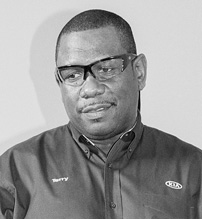
Terry Gosha, 46 Assembly-line group leader at Kia’s plant in West Point, Ga.  Kia Motors opened its first American plant in West Point, Ga., in 2009. Before landing his job there that year, Terry Gosha was laid off by Panasonic twice. The first factory relocated to Mexico, and the second shut down. Today, with Kia doing brisk business, he feels secure. “Now I got bills caught up, and when I’m off the job I can actually relax, get a good night’s sleep, and enjoy my family.” In the past three years, Gosha has been promoted from a $14.90-an-hour assembly-line job to a salaried group leader position overseeing 35 people. “I’ve been here since the plant’s infancy, before there were even 1,000 people,” he says. Right-to-work states like Georgia and S. Carolina, where companies are freed from union demands, have attracted automakers including Honda, BMW, and Mercedes. Gosha doesn’t mind that he’s not part of a union. “There’s plenty of work here—and everyone feels secure,” he says.

Discussion questions:

1. Compare the policies of the two companies.

2. For which company would students prefer to work? Why?

OM in the News: Hiring With Algorithms

Xerox call center

Our Chapter 10, Human Resources, Job Design and Work Measurement, covers almost every OM aspect of  dealing with employees–except how to hire them. As I think about all the instructors and staff I have hired over my 40 year academic career, I realize many personnel decisions were based on resume length and intuition. So The Wall Street Journal’s article (Sept.20, 2012) on how computer modeling is upending the way workers are hired caught my attention.

For more and more companies, the hiring boss is an algorithm.  Jobs that were once filled on the basis of work history and interviews are now determined by data analysis. Under pressure to cut costs and boost productivity, employers are trying to predict specific outcomes, such as whether a prospective hire will quit too soon, file disability claims or steal.

The new hiring tools are part of a broader effort to gather and analyze employee data. Globally, spending on so-called talent-management software rose to $3.8 billion in 2011. Though hiring is a crucial business function, conventional methods are usually short on rigor. Depending on who decides, what gets candidates hired can vary wildly—from academic achievement to work experience to appearance. Managers hunches generally have little value in predicting how someone will perform on the job. The statistical approach to hiring can improve results by reducing the influence of a manager’s biases.

When looking for workers to staff its call centers, for example,  Xerox used to pay lots of attention to applicants who had done the job before. Then, a computer program said that what does matter in a good call-center worker—one who won’t quit before the company recoups its $5,000 investment in training—is personality. After a short trial that cut attrition by a fifth, Xerox now leaves all hiring for its 48,700 call-center jobs to software that asks applicants to choose between statements like: “I ask more questions than most people do” and “People tend to trust what I say.”

Discussion questions:

1. What are the advantages of this software-driven approach?

2. How can algorithms help determine how much to pay workers?

OM in Action: Hyundai Workers’ Graveyard Shift Demands

Union members, left, wearing head bands saying “Unity Fight”

Our discussion in Chapter 10 about work schedules, incentive systems, and employee motivation can certainly be enhanced by The Wall Street Journal’s article (Aug.16, 2012) called “Hyundai Strikers Demand End to the Graveyard Shift.”  With a  strike  set for today, the company’s  union demands an end to night-shift work. Hyundai now runs two 10-hour shifts at its domestic assembly plants. But union leader  Moon Yong-moon is pressing for two 8-hour shifts. Mr. Moon has brought a decade long fight to end night-shift production to a head with a series of strikes that have cut Hyundai’s output so far this year by 40,000 vehicles worth $712 million.

While major car makers including GM run plants into the night—as do all of South Korea’s auto companies—Mr. Moon argues that night-shift work is unhealthy. “Working through the night has caused chronic fatigue, sleep disorders and indigestion for workers,” he said in an interview. “In some cases, it is also to blame for family troubles.”

His proposal to replace the current 10-hour shifts with shorter, daytime-only schedules is opposed by Hyundai. Its counter proposal would include 8 and 9-hour shifts each day tied to higher worker productivity. The union wants the company to add workers to maintain output volumes and insists the company agreed in principle in 2005 to end night work and hasn’t matched its promise with any action. Alongside an end to night work, Hyundai workers want a monthly pay increase of $134 and for 30% of the company’s net profit to be used for performance-based pay.

The company and union remain far apart.

Discussion questions:

1. Make the case for each side in this conflict.

2. What are the downsides of graveyard shifts?

OM in the News: Amazon Warehouse Jobs Push Workers To The Limit

The physical demands at the Amazon warehouse in Campbellsville, Ky. take a toll on employees, reports the Seattle Times (April 4, 2012). “Just as Amazon tracks and analyzes the habits of online shoppers, the company has created a hyper-efficient warehouse culture where worker performance is continually monitored and measured in pursuit of slashing costs and shipping times.” Three former workers at Amazon’s warehouse in Campbellsville told the Times there was pressure to manage injuries so they would not have to be reported to OSHA, such as attributing workplace injuries to pre-existing conditions or treating wounds in a way that did not trigger federal reports.

A former Amazon safety official in Campbellsville wanted to discuss reducing the work pace when temperatures pushed over 100 degrees, but says he never dared broach the subject with management. “I knew that was off the table — not an option,” he said.  Instead, he outfitted roving managers with backpacks full of Gatorade, which they served to workers so the workers wouldn’t have to leave their posts.”  Managers said the company created a work environment where employees who complained about such conditions risked retaliation and firing.

More than 15,000 full-time employees, earning stock and health benefits, work at Amazon’s fulfillment centers (warehouses) in the US. The firm is expanding at breakneck speed to staff its global network of 70 centers–17 opened just last year. And as we noted a few days ago in this blog, Amazon just bought Kiva Systems, a warehouse robot company which Amazon believes will increase employee productivity dramatically.

At Campbellsville, Amazon was viewed as an economic savior when it opened in 1999 with 700 jobs. The town’s biggest employer, Fruit of the Loom, had just shut its factory and unemployment topped 22%. Jobs at $14/hour are high in the region.

Discussion questions:

1. How do these conditions compare to companies in Asia?

2. What is Amazon’s position regarding unions?

OM in the News: GE’s New Management Strategy Goes Deep, Not Wide

In Chapter 10, we bring up the subjects of job design and job expansion. The theory is that variety makes a job “better”, yields a higher quality of life for the employee, and provides better flexibility that benefits both worker and company. Job rotation occurs when the employee is allowed to move from one specialized job to another.

I mention this because The Wall Street Journal (March 7, 2012) writes that General Electric is breaking up its old paradigm that for decades groomed jack-of-all-trades generalists as managers. GE’s commitment to “professional managers”, serving short stints in multiple business units, traces back to the firm’s 5th president, Ralph Cordiner, in 1956. The model moved promising managers every 2 years “to test their executive mettle.”

 As a young computer analyst, designing jet engines at GE’s aerospace division in Cincinnati back in the 1970s, I often doubted this concept. My boss was a bright fellow who had worked in GE facilities all over the map–but didn’t know a thing about jet engines–and this often caused real problems in our staff meetings. Does a good manager at the locomotive factory, in the nuclear power division, in health care, finance, or in the light bulb plant, automatically succeed in the aerospace arena?

The answer might be “no”, as GE now leaves managers in business units longer–perhaps their whole career. The idea is that their understanding of products and customers will help in our complex world. “We need people who are pretty deep”, says GE’s exec development director. My old Cincinnati operation is now led by a manager who spent his whole career in GE Aviation, working on jet engines.

Discussion questions:

1. How does rotating managers compare to rotating blue-collar factory workers?

2. What are the advantages of moving managers every 2 years to a new business unit in a giant firm like GE?

OM in the News: Boeing’s Self-Directed Work Teams Speed Up 737 Output

The Wall Street Journal (Feb.7, 2012) provides a great example of the self-directed work teams we discuss in Chapter 10 (Human Resources, Job Design, and Work Measurement). Boeing started emphasizing such employee groups in the late 1990’s, when its 737 plant in Renton, WA, began adopting lean manufacturing techniques from Japan’s auto industry.  Now Boeing is forming more of the teams as it attempts to make big gains in production (there is a backlog of 2,300 of the 737 model), while holding down costs. There are currently 1,300 teams in its commercial jet programs.

Employee teams meet once a week and are composed of 7-10 workers with varying backgrounds (mechanics to engineers)–and they tend to focus on a particular part of the jet (like bathrooms). A big issue at the plant is how to produce more aircraft without expanding the building.

Here are some of the worker-led improvements: (1) canvas covers for landing gear tires as  the planes come down the assembly line (stray metal fasteners on the factory floor used to puncture the $10,000 tires)–saving $250,000/year; (2) rearranging work cells to prep 4 engines at a time (instead of 3) for attachment to the planes; (3) revamping the paint shop work routines to cut 10-15 minutes off each job; and (4) taking the 650 tubes going into a wheel-well and have easier-to-install subassemblies prepared in advance at another plant instead.

The result: workers recently boosted output from 31.5 Boeing 737s a month to 35/month, with an aim to make 42/ month by 2014–all in the same sized plant. The company now takes  11 days for final assembly, down from 22 days a decade ago.

Discussion questions:

1. Why doesn’t every company use such teams?

2. Why is Boeing trying to increase throughput so quickly?

Teaching Tip: Apple’s Ethical Dilemma

We end each chapter in the book with an Ethical Dilemma, intended to enhance class discussion on topics of interest. Here is a timely issue regarding Apple, based on a front-page New York Times (Jan.26,2012) report that details the shocking working conditions in Chinese factories that build the company’s  products. The article tells the story of one worker who was killed in an aluminum dust explosion at a  factory last year and paints a picture of the “harsh” and “bleak” environment in which iPads and other devices are built.
 
One former Apple executive says: “Most people would still be really disturbed if they saw where their iPhone comes from.” An ex-employee of Foxconn, the biggest of Apple’s suppliers in China, which has made headlines because of suicides among workers, said: “Apple never cared about anything other than increasing product quality and decreasing production cost. Workers’ welfare has nothing to do with their interests.”
 
And while excited buyers eagerly anticipate new products,  Apple’s audits have found evidence of employees being forced to work  more than 6 days a week and put in extended overtime. There have been allegations of involuntary labor, under-age workers, record falsification and the improper disposal of hazardous waste.

 
The  Times also details the pressure manufacturers are under. “Executives want to know every financial detail. Afterward, Apple calculates how much it will pay for a part. Most suppliers are allowed only the slimmest of profits. So suppliers often try to cut corners, replace expensive chemicals with less costly alternatives, or push their employees to work faster and longer.”
 
The lengthy article notes that companies like Nike and Gap have been forced to change their ways in the face of public outrage, but ends with the words of a current Apple exec: “Right now, customers care more about a new iPhone than working conditions in China.”  Do your students agree?

Video Tip: NASCAR Racing and Time & Motion Studies

Jay and I spend a lot of time developing the Global Company Profiles that open each chapter. The whole idea is to motivate students as they enter the topic by providing an interesting company that uses the techniques we are about to introduce. Some of the firms highlighted are Hard Rock (Ch.1), Disney (Ch.4), FedEx (Ch.8), McDonald’s (Ch.9), Amazon (Ch.12), and Delta (Ch.15). But my favorite Global Profile (and the one that took us the longest to create) is definitely the introduction to Chapter 10, Human Resources, Job Design, and Work Measurement. Here we highlight Rusty Wallace’s NASCAR racing team and how they live and breathe  time studies in the “pit”, where tires are changed and fuel added.

We just came across a great 6 minute video to accompany the Global Profile and think it’s a nice way to kick-start Chapter 10. The video features the NASCAR team of Kyle Busch and looks at the anatomy of a pit stop. The pit crew manages an amazing 73 maneuvers in just 12.12 seconds. Even if you aren’t a racing fan, I think you and your students will be impressed by this operation. It also makes a good tie-in to discussion of flow diagrams (Figure 10.5),  activity charts (Figure 10.6), and operations charts (Figure 10.7).

OM in the News: Illegal Immigrants Vacate Jobs that Americans Find Undesireable

When I was a young child, my dad proudly took me for a tour one Saturday morning of the meat processing plant, Dubuque Packing (home of the famous Dubuque ham), where he worked. Decades later, I still recall the stench, the noise from cows being slaughtered, and the massive cold and damp rooms. Jobs in slaughter houses, as are field-hand picking jobs, are unpleasant, with low pay and skimpy benefits.  As our US population has become better-educated, we seek office and manufacturing  jobs that have set hours, higher pay, and safer conditions–things we take for granted. Businessweek (Nov.10-17, 2011) tackles a tough issue of how illegal immigrants have taken over many of the dirty jobs Americans no longer aspire to.

In particular, this lengthy article deals with Alabama, which in September passed a law making it almost impossible to employ illegal immigrants, mostly Hispanic and heavily Guatemalan (the Hispanic population had grown from 1% in 1990 to 4% today). The law follows an anti-immigration sentiment throughout the country that has accompanied the recession. With 211,000 residents out of work and high unemployment rates (18% in some rural counties), the state’s ruling has resulted in an exodus of 1,000’s of  immigrant field hands, hotel housekeepers, dishwashers, and chicken plant employees.

The result:  employers trying to fill a massive number of vacant positions with Americans. But Americans are not interested in these jobs, and it’s not just because of the hard work and low pay. We have come to think of these jobs as beneath us, says a Princeton prof. “It doesn’t have anything to do with the job itself. In other countries, citizens refuse to take jobs Americans compete for. In Europe, auto manufacturing is an immigrant job category”.

Furious employers have bombarded their legislators with complaints of unpicked tomatoes, unmade beds, and uncleaned fish. This is a thoughtful article that you may want your students to read as you teach Chapter 10.

Discussion questions:

1. Why is this an important OM issue?

2. Should illegal immigrants be hired to do the jobs Americans don’t want?

OM in the News: White Collar Perks for Hourly Workers

My neice, who works for a local vet clinic, recently had a baby and I have watched how her schedule is often disrupted by her growing family’s needs. She is not alone. The Wall Street Journal (Oct.3, 2011) describes how about 1/2 of all low-wage, hourly employees have “little or no” control over their schedules and nearly 1/3 are required to work overtime with scant notice. This can lead to absenteeism and turnover in businesses that rely heavily on hourly workers. One study even showed that 30% of workers took time off the job for family issues during a single week. With turnover rates as high as 80%-100% in hourly retail employees, this becomes a big issue. Replacing a single worker can cost 30% of the annual wage.

So it is not surprising that companies in industries such as retail, food service, hospitality, call centers, and manufacturing, are exploring ways to provide the flexible scheduling found in the white collar workplace. Kaiser Permanente and Marriott have implemented innovative policies such as providing paid time off in shorter (part-day) increments, so workers can schedule school or doctor appointments without losing a entire day’s work. They are also providing leeway on shift start and end times–allowing workers to be available for a school pickup, for instance. One Minnesota manufacturer is considering letting factory workers to do some of their tasks (like labeling) from home. And some firms are giving hourly workers more lead-time on their schedules. A typical retail schedule for the week beginning on a Sunday can be posted as late as the Thursday before, which makes it difficult to secure family care on short notice.

 The bottom line, which we discuss in Chapter 10’s Human Resource Strategies, is that firms can benefit from decreased employee turnover and higher employee engagement by “matching the workplace to the work force”.

Discussion questions:

1. Why is employee scheding a major OM issue?

2. What other flex policies might a firm use to increase employee satisfaction and productivity?

OM in the News: Don’t Touch My $900 Ergonomic Chair!

An important, but often overlooked topic in Chapter 10 (Human Resources), is ergonomics. An interesting article in The Wall Street Journal (Sept.21, 2011) points out that improving the ergonomics of office chairs increases worker productivity by an average of 17%. “Bad office chairs are to chiropractors what candy is to dentists”, says one doctor. Staples Inc.’s research says that 86% of office workers say their furniture causes discomfort, with more than 1/2 saying the one change they would make would be a better chair.

No other piece of workplace furniture evokes stronger  physical and emotional attachments than the office chair. When Mike Williams, an exec in Grand Rapids, bought his $500 chair (called “Think” by Steelcase, Inc.), his productivity and energy immediately skyrocketed. When Williams is out-of-town, coworkers borrow the chair. When he presents at a meeting standing up, “it’s a fight over who gets to sit in the chair”, he says.

In a perfectly fitting chair, your back is supported and your feet are planted on the floor with your thighs parallel to the floor, and your knees at a 90 degree angle.

After putting in long hours as chief engineer  for  a Charlotte, N.C., company, Jason Ashbrook felt his back and neck get so stiff that he had to got to chiropractors and massage therapists.  When his firm brought in the $900 “Generation” chair, by Knoll, Inc. (who knew that chairs all had names?) to try out, he sat in it and then wouldn’t let them take it back!  He reasons that “if you can sit in the chair an extra 15 minutes a day, the savings are double or triple” the cost of the chair.  I never had a dean who offered me a $900 chair, but if I did, I would probably agree with Ashbrook.

Discussion questions:

1. Why isn’t office ergonomics taken more seriously?

2. Ask students to identify some non-office jobs in which ergonomics plays an important role.

OM in the News: UPS Drivers Pick Up the Pace

In Chapter 10’s discussion of work measurement, we describe UPS as “one of the most efficient companies anywhere in applying effective labor standards”. And in Chapter 6, Managing Quality, we provide a photo of a UPS driver and talk about the 340 precise methods he is taught to correctly deliver a package. So I guess it shouldn’t come as a surprise that the company which designs its routes so drivers avoid left turns (so as not to waste time waiting for a break in oncoming traffic), has added yet a 341st time saver!

The Wall Street Journal (Sept.16, 2011) describes how UPS ‘ newest cost-savings strategy–taking away the drivers’ keys–will save $70 million a year.  Currently, drivers are required to carry key rings on their ring finger to avoid wasting time searching for them. Still, wrangling with keys can waste valuable seconds. Once a driver stops, he or she has to take the keys out of the ignition, then turn around to use them to unlock the bulkhead door that leads to the packages. Soon, drivers will wear a digital-remote fob on their belts and will be able to turn the engine off with a button that will unlock the bulkhead door at the same time.

That will save 1.75 seconds per stop, or 6.5 minutes a day per driver–and also reduce motion and fatigue. UPS’s COO acknowledged that the company is “obsessive about efficiency”. Each night, when drivers return from deliveries, UPS  industrial engineers study data from computers aboard each truck. The data show details such as how much drivers idle, how often they back up, whether they are wearing seatbelts, or whether they are going out of their way to get lunch. All this helps shape new procedures such as the surrendering of keys.

Discussion questions:

1. Name some of the (many) other UPS efficiency techniques.

2. Ask students to identify efficiency improvements they could make at places they worked.

OM in the News: Do Happier Employees Work Harder?

I may be one of the few OM profs who think that Chapter 10, Human Resources, is the most important  in our text. As a former college administrator, I  agree with the conclusion in the New York Times  article (Sept. 5, 2011) that “happier people do work harder”.  But a recent Gallup poll finds: “People of all ages, and across income levels, are unhappy with their supervisors, apathetic about their organizations and detached from what they do”. This translates, according to the Times, into a staggering $300 billion in lost productivity annually. “When people don’t care about their jobs or their employers, they don’t show up consistently, they produce less, or their work quality suffers”.

So what does it take to keep employees happy and motivated?   The answer (according to a Harvard study) is that progress in meaningful work is primary. As long as workers experience their labor as meaningful, progress is often followed by joy and excitement about the work. Ensuring that workers are happily engaged is not expensive. Well-being depends on managers’ ability and willingness to facilitate workers’ accomplishments–by removing obstacles, providing help, and acknowledging strong effort. (Which is exactly what Dr. Deming said for decades). “Promoting workers’ well-being”, writes the Times, “ isn’t just being ethical; it makes economic sense”. Those who lead organizations –from CEOs to small team leaders –need to recognize that their mission is to support workers’ everyday progress.

With sports on our minds, here is a video clip of what may not fit the positive motivation the article espouses. We see Notre Dame coach Brian Kelly in a rage against a player in  last weekend’s game against USF.

Discussion questions:

1. Ask students what bosses had the most positive or negative motivation over them–and why.

2. Comment on the  Brian Kelly video.

3. Tom Peters once said: “If you don’t sincerely care about the people who work for you, become a consultant, not a boss”. Comment.