OM in the News:Thinking About Foxconn

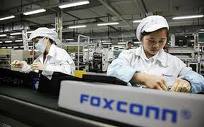
In describing Foxconn, China’s massive contract manufacturer, Fortune (Oct.29, 2012) writes that the firm “has become synonymous with emblematic 21st-century workplace misery.” In September, worker brawls triggered riots at its assembly plant in central China. From January – June, 2010, 14 workers at Foxconn’s massive operation in Shenzhe — a facility  puts together iPads and iPhones — committed suicide at the company dorms, while 4 others tried and failed. Apple responded by hiring the Fair Labor Association, a global monitoring group, to report on conditions at Foxconn. The findings (high rates of worker accidents and forced overtime) prompted Apple CEO Tim Cook to pledge he’d work with Foxconn to improve conditions.

No one disputes that Foxconn needs to make significant changes. But often lost in the criticism of Apple and Foxconn is some local context. Although Foxconn may run its plants in a way that appalls Westerners, it turns away nearly 3 workers for every one it hires in China every year. Nor is Foxconn simply a sweatshop doing low-tech assembly of devices. Ranked 43rd on the Fortune Global 500, the firm is an innovator too. It is “the only company on the planet that could mass-produce such an array of products so quickly on the same production lines,” says one China expert.

And while the central government in Beijing has tried to pressure the company to clean up its act, local officials are constantly wooing Foxconn to set up new operations in their provinces. Officials in Henan, for example, helped the company recruit thousands of young workers to a new iPhone 5 factory in the city of Zhengzhou.

Recently, the nonprofit China Labor Watch issued a report on HEG Electronics (a major Samsung supplier) that documented the use of child labor in its factories. The report concluded: “Working conditions at HEG are well below those general conditions in Apple’s supplier factories.”

Discussion questions:

1. Why is Apple tied to Foxconn?

2. What human resource issues discussed in Chapter 10 are violated at Foxconn?
OM in the News: If the Japanese Can Make Cars in the U.S., Why Can’t Apple Make an iPad?

As you are preparing for the 1st week of Fall classes, you may want to read the New York Times (August 5, 2012) lead article, which basically asks the question in  our blog title. The story opens in 1983 with Smyrna, Tennessee  farmland  paved over so Nissan could build its first American assembly plant. Eighty miles to the south, a Nissan engine factory was added, and across Tennessee about 100 Nissan suppliers now dot the landscape, making steel in Murfreesboro, air conditioning units in Lewisburg, transmission parts in Portland. Nissan broke with conventional wisdom that Japanese automakers would not build many cars anywhere but Japan, where supply chains were in place, costs were tightly controlled and the reputation for quality was unparalleled. (Nissan’s U.S. quality is now so high that it exports engines to Japan).

Today, high-tech executives continue to argue that the U.S. cannot compete in making electronic devices. Apple, Dell and HP, which rely on huge Asian factories, assert that manufacturing would be too costly and inefficient in America. Only overseas, they claim, can they find an abundance of educated engineers, low-wage workers and at-the-ready suppliers. But the migration of Japanese auto manufacturing to the U.S.  offers a case study in how the transformations can unfold. We today remain one of the top auto manufacturers and employers in the world. Japanese and other foreign companies account for more than 40% of cars built here, employing hundreds of thousands.

When Apple CEO Tim Cook was asked if his company — which once made computers in America, but now locates most assembly in China — would ever build another product in the U.S., he replied:  “I hope so. One day.”  That day, interestingly, came recently for Brazil instead, which cajoled Apple and Foxconn with a combination of financial incentives and import penalties to make iPads and iPhones there.

Discussion questions:

1. Why did Brazil land iPad manufacturing, when the U.S. did not?

2. What is the answer to the question posed in the blog title?

OM in the News: Small Manufacturers Giving Up On “Made in China”

As costs in China rise and owners look closely at the hassles of using factories 12,000 miles and 12 time zones away, Businessweek (June 25, 2012) reports that many small companies have decided manufacturing overseas isn’t worth the trouble. American production is “increasingly competitive,” says the head of the Reshoring Initiative, a group  trying to bring factory jobs back to the U.S. “In the last two years there’s been a dramatic increase” in the amount of work returning. Here are 2 examples:

For LightSaver, a lighting manufacturer, the decision was simple. Neither of the founders has ever been to China, which made communicating with manufacturers difficult. Components that were shipped from the U.S. sometimes got stuck in customs for weeks. “If we have an issue in manufacturing, in America we can walk down to the plant floor,” says the CEO. “We can’t do that in China.” He believes manufacturing in the U.S. is probably 2-5% cheaper once he takes into account the time and trouble of outsourcing production overseas.

Even with strong Mandarin skills, the founder of Pigtronix, which makes electric guitar pedals, discovered that he couldn’t  monitor quality at Chinese factories. After several years of finding glitches in 30% of the pedals, the company decided to move production to  N.Y. Now Pigtronix can run multiple tests on its products and even has a guitarist play each of the 500 to 1,000 pedals it sells monthly before they’re shipped. While manufacturing in the U.S. can cost  from 3 to 6 times as much as it does in China,  Pigtronix benefits from not having capital tied up in products that spend weeks in transit and then pile up in inventory. “In China, you have high minimum quantities you have to order, so you’re building a couple thousand of every guitar pedal. Your carrying costs start to get huge.”

The bottom line: Although manufacturing in China can cost a third what it does in American factories, small companies are bringing production back to the U.S.

Discussion questions:

1. Why is reshoring gaining traction?

2. Why do many companies continue to move production to Asia?

OM in the News: How Southwest’s Operations Strategy Gives Low-Cost Competitive Advantage

In an airline industry that is notoriously brutal, writes Slate.com (June 6, 2012), Southwest Airlines just recorded its 39th consecutive year of profitability. How does Southwest do it? It’s all about keeping operations simple. Simpler operations mean fewer things that can go awry and botch up the whole process, as we show in Figure 2.8.

First, while other airline fleets can employ 10 or more types of aircraft, Southwest uses just one, the Boeing 737. The airline’s VP explains: “We only need to train our mechanics on one type of airplane. We only need extra parts inventory for that one type of airplane. If we have to swap a plane out at the last minute for maintenance, the fleet is totally interchangeable.”

Second, Southwest  doesn’t assign seat numbers. Which means that if a plane is swapped out, and a new one’s brought in with a slightly different seat configuration, there’s no need to adjust the entire seating arrangement and issue new boarding passes.

Third, while most other airlines charge to check bags these days, Southwest has resisted the trend. Its “bags fly free” policy  has operations benefits: “When you charge people to check bags they try to carry more on, sometimes more than can fit in the overhead bins,” says the VP. “That results in more bags being checked at the gate, right before departure. And that wastes time.”

Finally, other carriers use a hub-and-spoke system. But hubs  lead to backups as planes queue up awaiting turnaround—cleaning, refueling.  Southwest’s flights are generally point-to-point. The plane lands, goes through turnaround, and often heads right back where it came from. With less interdependence, the network can survive a problem at a single airport. Southwest can turn around planes in about 25 minutes.  A simpler network also means less luggage getting lost in the shuffle.

Discussion questions:

1.Compare Southwest’s operations strategy to that of other airlines.

2. How will adding international flights impact Southwest’s strategy?

OM in the News: Mercedes Heads East To Hungary

Businessweek (April 7-14,2012) reports that Mercedes has began production at its new $1.07 billion factory, located in Kecskemét, Hungary to make its B-Class compact. By heading so far east, CEO Dieter Zetsche is betting that Hungary’s rock-bottom wages will allow the automaker to wring more profit from its small-car, luxury lineup. “This could be the final big plant by a European carmaker in the region,” says one auto analyst. “ The growth and expansion have shifted to Asia and Latin America.”

Hungarian workers are paid a fifth of the about $61 per hour German workers cost, so Mercedes will use the factory to profitably meet its goal of boosting sales 27 percent, to 1.6 million vehicles by 2015. The Kecskemét plant is the first new Mercedes factory since the brand began producing cars in Alabama in 1997. Manufacturing costs at the plant are 30 percent lower than in Germany.  Lower production costs, including increased parts-sharing among models, are part of Mercedes’ plans to save €6 billion by 2017 to offset rising raw material costs and increased spending to lower carbon-dioxide emissions of its vehicles. With about 40 working hours spent to assemble the Mercedes compacts, the savings are about $2,000 per car.  Daimler aims to reduce the average hours spent assembling a vehicle in Hungary to 30.

In Europe, auto sales are poised to decline for a fifth consecutive year in 2012. The region’s automakers will likely use about 65 percent of production capacity this year, down from 71 percent last year. The unused assembly lines could manufacture an additional 10 million vehicles. Given the capacity overhang, it will take plant closures and job cuts to make auto production in Europe profitable again, says Sergio Marchionne, CEO of Fiat Chrysler, who last year closed a Fiat plant in Sicily. In February, Mitsubishi also said it will stop making cars at its factory in the Netherlands.

Discussion questions

1. Why is Mercedes “heading east” to Hungary and “west” to the US?

2. Is capacity an issue with the firm? Other automakers in Europe?

.

OM in the News: Apple Audits its Suppliers in China

Apple effectively just wrapped its own knuckles publicly, with the publication of an audit of the working conditions at Foxconn, its biggest Chinese supplier. Apple CEO Tim Cook, showing serious leadership, completed the factory tours and committed his company to improvements and further monitoring of its Asian supply chain–particularly regarding

Tim Cook at Foxconn

overtime. Does this mean that the days are gone when Foxconnn would rouse 8,000 workers from their sleep in company dorms to put them on the iPhone assembly line at midnight?

The Wall Street Journal (March 30,2012) reports widespread breaches of work rules at Foxconn, including 60 hour work weeks and other health and safety violations. (The Journal piece includes a 4 minute video on Cook’s visit and an analysis of the impact of the audit on Apple’s reputation and sales.)  The audit of 35,000 workers building iPads, iPhones, and iPods at 3 Foxconn factories, found the majority of workers exceeding China’s legal maximum of 36 overtime hours a month–with the average working 80 hours.  The probe is one of the most detailed investigations of a Chinese manufacturer and the 1st major outside audit of Apple’s supply chain. Foxconn would have to hire tens of thousands of extra workers to comply.

The investigation, conducted  by the Fair Labor Association (FLA),  also found an array of  issues such as inadequate risk analysis and missing protective systems. More than 43% of the workers had experienced or witnessed an accident and “felt generally insecure,” said the FLA.

Foxconnn is already among the best of suppliers in China in terms of working conditions. Conditions at many of the others are incredibly grim. By putting pressure on the top end, Apple is likely doing all Chinese workers a favor.

Discussion questions:

1. Why did Tim Cook visit his Chinese suppliers?

2. How long will it take to implement major changes in working conditions in this supply chain?

OM in the News: Boeing Wants Production Faster, Faster, Faster

There are not many businesses in which the next 6 years’ worth of customers form an orderly queue, put down fat deposits, and make futher installments as they wait for delivery. But Boeing, reports The Economist (Jan.28,2012), has such a backlog (and 2011 profits of $4 billion). The key to continued success, though, is ramping up production to meet the soaring demand–an operations issue if there ever was one.

At its Renton factory (near Seattle), 737s are being churned out at a record rate of 35/month after a recent speeding up of the 2 assembly lines. The plan is to increase to 42/month by 2014, squeezing a 3rd line into the giant hangar. Likewise, at Boeing’s nearby Everett  factory and at a 2nd plant in South Carolina, plans are to turn out 10 giant 787 Dreamliners/month by the end of 2013.

These assembly plants are the final stage in a long and hugely complex global supply chain that we describe in the Global Company Profile in Chapter 2. Boeing has about 1,200 tier one suppliers, providing parts coming in from 5,400 factories in 40 countries. These in turn are fed by thousnads more tier 2 suppliers, which themselves receive parts from countless others.

Boeing is the first to admit that it outsourced too much work on the 787, leading to 2 years of delays and 40 unfinished jets parked on runways in several states awaiting final parts. Some work has been brought back in-house, and a “war room” has been set up to constantly monitor the world’s supply of parts and raw materials. Boeing just signed a long term contract with the Russians to ensure a steady stream of titanium. It has also hired 100’s of “examiners” to visit suppliers to check that they are building production to meet Boeing’s rush to expansion.

Discussion questions:

1. Why is Boeing working more closely with suppliers now?

2.What is the danger in ramping up production dramatically?

OM in the News: Japanese Manufacturing–Then and Now

When you are in the swamp and an alligator is nibbling on your leg, they say it’s hard to see the big picture. So today, despite the gnawing pain we feel from global competition, let us recall the world just 27 years ago, when Japan was the gator and US manufacturing was being threatened by the likes of  Toyota, Mitsubishi, Sony and many others.

Industrialist Matsushita on Time Cover in 1962

Here is a quote from an OM in Action box in the 2nd edition of our text 24 years ago, based on a 1985 speech by Konosuke Matsushita, CEO of Matsushita Electric Industrial Co., to a group of Western  managers. “We are going to win and the industrial West is going to lose: there is nothing much you can do about it.”

Those were heady days in Japan, when its quality products and overpowering automation were driving its export-led growth.  But The Wall Street Journal (Jan.24, 2012) reports that those days may be over, with a front page headline “End of Era for Japan’s Exports”. Japan  just announced  that it recorded its first trade deficit since 1980, a sign that one of the world’s greatest manufacturing  machines may be running low on steam.

It is a combination of three factors. First, a decline in corporate competitiveness that has been bubbling under the surface for years as Japan transitions into a nation of pensioners. Second, the disastrous earthquake and tsunami last March destroyed factories, crippled supply chains, and idled many of the country’s nuclear reactors. (Before the Fukushima accident, nuclear provided 30% of Japan’s electricity. Now just 4 of the nation’s 54 reactors are in service). And third, despite weaknesses in Japan’s economy, the  yen has remained a strong and safe haven for currency traders (meaning exports are very expensive and creating a need to move production offshore).

Discussion questions:

1. Is the era its leaders called the  “Japanese miracle”  over? Why?

2. What can the US do to protect its manufacturing power?

OM in the News: R&D Shifts Towards Asia

If yesterday’s blog about increased productivity in US factories provided some good news during these difficult economic times, today’s may take the wind out of our sails. It is based on with two separate articles in the Wall Street Journal (Jan.18,2012) about why we are losing critical (and high-paying) R&D jobs.

In the first, we find we are rapidly losing our research labs to China and Asia. Firms like GE and Caterpillar are spending billions to expand R&D overseas to: “tap a broader pool, of scientific talent, tailor products to overseas markets, and curry favor with foreign governments”. Here is what 3M’s CEO George Buckley has to say: 3M is expanding overseas labs “in preparation for a world where the West is no longer the dominant manufacturing power. Given the moribund interest in science in the US, this is strategically very important”. 

To a large extent, companies are setting up labs near factories (where ideas can be tested) and where engineering and scientific talent is becoming concentrated. Since 56% of the world’s engineering degrees are awarded in Asia–compared to 4% in the US — Caterpillar is hiring 500 engineers at its China R&D center while GE is setting up six product development centers there.

In the second Journal article, Harvard’s  Michael Porter answers that what is making us less competitive is “political gridlock, faltering schools, and a convoluted tax code”. Nearly 1/3 of the 9,750 execs he surveyed said “other countries offered better access to high-skilled workers and labor productivity”. More disquieting, of 607 site decisions resolved the prior year by respondents, work was moved out of the US in 511 (or 84%) of the cases–and many of these “involved R&D and engineering activities, belying the common perception that only low-skill jobs are at risk”.

Discussion questions:

1. What are the chief obstacles to retaining high-paying R&D jobs in the US?

2.  Why are the major manufacturers moving labs overseas?

Good OM Reading: Rethinking Manufacturing Strategy

The latest MIT Sloan Management Review’s (Winter,2012) article “Is It Time to Rethink Your Manufacturing Strategy” is a great piece to use as you start your new semester. It opens with this line: “For the past 10 years, China was the answer to many manufacturing questions. That’s no longer automatically the case”.

It seems that supply chain disruptions, fuel price jumps, rising labor costs in China, advances in technology, and being closer to customers are leading manufacturers to conclude they may be better off with a regional strategy that may not include China. This doesn’t necessarily mean more jobs for the US, as Mexico is a potential regional site, just as Eastern Europe is an alternative to Western Europe.  But it does mean that optimal manufacturing strategy must include raw materials, the product itself, and the location of the customer base.

While long supply lines were economically feasible 15 years ago because of cheap oil, transportation costs have risen, which has given rise to these 3 new cost-optimization realities:

1. Regional distribution centers have become more attractive as companies add warehouses to minimize distance between DCs and retail outlets.

2. Sourcing may need to move closer to demand, ie, on shore, when a company’s  total landed cost analyses includes not just unit costs, but transportation, inventory, handling, duties, and financing. Firms like Sharp (the Japanese TV maker), for example, started moving manufacturing from Asia to Mexico to be closer to American customers.

3. Supply chain flexibility becomes more critical. While “dedicated manufacturing”, where each plant specializes in producing only a few items, uses economies of scale to keep manufacturing costs down, it can also result in long delivery lags and higher transportation costs. “Flexible manufacturing”, where each plant can produce most or all of a firm’s products, protects operations from today’s economic volatility and supply chain disruptions.

The article concludes “corporate planners are on the verge of a leap from low-cost manufacturing to a more regional strategy”.

OM in the News: Honda Revs Up Plants in the US

When discussing global OM issues in Ch.2, the news that Honda is shifting a major chunk of its manufacturing to the US over the next 2 years is noteworthy. The Wall Street Journal (Dec. 21, 2011) reports that the 63-year-old company is accelerating its move away from Japan after two huge challenges: natural disasters and the yen’s gain of 40% to the dollar since 2007.  (The yen was 78 to the dollar this week, compared to 120 a few years ago). Honda plans to  grow to 2 million cars  in N. America, up from 1.29 million last year. This is to be done by building a new factory in Celaya, Mexico and expanding all 7 existing US plants.

With the expansion, Honda will export 200,000 to 300,000 vehicles a year from N. America, a tenfold increase, while reducing exports from its Japanese plants by 50%.  Because of the strong yen, “It is virtually impossible to make money on exporting vehicles from Japan in the short and medium term”, says the president of American Honda. For the US, the move means good news: thousands of new auto-related jobs and a boost for US suppliers that make components for Honda. The Greensburg, Indiana, plant alone will go from 100,000 to 200,000 Civics per year and add 1,000 jobs.

“It’s almost an economic necessity that they co-locate exports outside of Japan”, adds an industry consultant. “You can expect others to follow”. Today,  37% of Honda’s global production is in N. America: this will grow to 50% after expansion.

Toyota, likewise, has begun making its Corolla in Mississippi and is looking to expand its Baja, Mexico factory. Both firms saw earnings drop 50% this quarter.

Discussion questions:

1. Why are many foreign auto makers now expanding in the US?

2. What is the risk to Honda of transferring a large part of capacity offshore?

OM in the News: Harada–How America Can Fight Against Low-Cost Labor in China

Norman Bodek has visited Japan 78 times to study the Japanese continuous-improvement philosophy. On his most recent trip Bodek met with Takashi Harada, who has developed the ultimate recipe for competing against low-cost labor in China and India. The Harada Method, reported in IndustryWeek (Oct.25,2011), is one part monozukuri (or product excellence) and one part hitozukuri (or people excellence), and is steeped in respect for people. The Harada Method is designed to help shop-floor workers develop their skills and capabilities–on their own.

The key, says Bodek, is “self-reliance”, where “you, the worker can make a decision for yourself and your company and for your customer that is right. This is missing in so many American corporations. You call a company and the first thing you get is ‘ This call is being recorded’ . Why are they recording it? They don’t trust their people, and they don’t empower them to be trusted”.

The Harada Method, already taught to 55,000 managers at 380 companies in Japan, is enormously popular there because Japan (like the US) is struggling to compete with low-cost labor in China and other emerging economies.

Through the method, workers are encouraged to pick a skill that they’d like to master, and to set goals to help them accomplish it. Employees write down their goals, create a step-by-step plan to attain them, measure themselves against their goals and receive feedback and guidance. To achieve hitozukuri, managers provide lifelong training and mentoring of employees. “What I’m trying to do is get American mangers to focus on their people — recognizing that developing people doesn’t even cost you anything. It doesn’t”, says Bodek.

Discussion questions:

1. Compare the Harada Method to some of the  quality improvement philosophies used in the US.

2. How can ordinary people become heroes in their own lives, and how does this apply to the factory floor?

OM in the News: Why Rolls Royce Does Its Production in High-Wage Countries

While many American and European manufacturers have transplanted production  to low-wage countries like China, Vietnam, Bangladesh, and Mexico in the past two decades, one company, Rolls-Royce PLC, has taken a contrarian course. The Wall Street Journal(Oct.21,2011) reports that the jet engine producer (it no longer makes cars–that went to BMW in 1998), has factories in England, the US, and Germany–and is about to open a new titanium jet-engine fan blade factory in Singapore, where wages dwarf those of the surrounding region. Why a billion dollar investment in Singapore?

Executives chose Singapore for 3 reasons: (1) a highly educated workforce, with the government picking up the tab for training 500 new hires–people  capable of dealing with the advanced processes of manufacturing to tolerances smaller than a human hair; (2) booming Asian demand for its engines, which power such jets as the jumbo A380; and (3) a link to new network of local suppliers. Rolls is willing to pay lavishly  for the talented employees that will confirm its bet that brains can match the brawn of lower-cost competitors. On the other hand, GE, Rolls’ biggest competitor, has research centers in Brazil, China, and India. “We want to be a participant in China, not just sell products there”, says a  GE spokesman.

Rolls-Royce joins a handful of companies, including Whirlpool and Caterpillar, that are bringing jobs back home. Most of these producers emphasize know-how and manufacturing efficiency over labor cost. They also avoid  a problem for major corporations in China and other developing countries regarding protection of copyright laws. Execs from GE, Microsoft, Kawasaki, and Siemens have all criticized China for costing them billions of dollars, due to ineffective intellectual property rights.

Discussion questions:

1. Why does Rolls take the stategy of manufacturing in high-cost countries?

2. How does Rolls train its hundreds of apprentices every year?

OM in the News: Ten US Industries Still Hanging On

Although for much of the 20th century the US dominated global manufacturing, recent  years have not been as kind. We have seen the last US silverware company close its doors, as did the last coat-hanger maker, sardine cannery and shirt maker. But MSM Money (Oct.10, 2011) just found 10 pockets of  manufacturing that  are still hanging tough. It’s an interesting list to share in class when covering Chapters 1 and 2. The question is whether we should celebrate these limited successes–or are they dinosaurs that are still walking?

1. Bowling balls: Down from 12,000 bowling alleys in 1960, today 5,800 still operate as the sport has remained a  family pastime. Ebonite, in Hopkinsville, KY, makes 4 popular brands of bowling balls and is one of several small firms still  manufacturing in the US.

2. Sparklers: Diamond Sparkler, of Youngstown, is one of the few producers of fireworks to survive the onslaught of cheaper Chinese imports.

3. Compact discs: Although CD sales are falling, Sony just spent $72 million to expand its Terre Haute, Ind., plant where 1,300 employees plan to churn out disks for us old-timers for another decade.

4. Pianos: 98% of concert pianists still demand a grand piano from Steinway, consisting of 12,000 parts assembled by 450 workers in NYC.

5. Socks: Formerly known as the “Sock Capitol of the World”, Fort Payne, Ala., still has 20 mills and 600 employees–but certainly off from its peak of 120 mills and 8,000 workers.

6. Ironing boards: Indiana’s HPI-Seymour pumps out 720 boards/hour with 200 employees, thanks to steep tariffs to protect it from Asian competitors.

7. Pencils: General Pencil, of Jersey City, NJ, has ceded the yellow #2 pencil to China, but produces special graphic and colored drawing pencils.

8. Sneakers: With 1,000 workers in 5 New England plants, New Balance is the last standing athletic footware maker.

9. Electric relays: Struthers-Dunn, in SC, is also the final surviving maker of customized relays and controls. The rest have gone to India and other Asian nations.

10. Chopsticks: Georgia Chopsticks, as we blogged recently, is actually ramping up production, making millions per day for export to China.

Discussion questions:

1. What will OM managers have to do to help these businesses continue to operate in the US?

2. Why are many of these businesses surviving ? How many will be here in a decade?

OM in the News: What Do China, Mexico, and South Carolina Have in Common?

The answer to this question about Mexico, China, and S. Carolina is good news re American jobs. But specifically, it’s that The Wall Street Journal (Oct.6,2011) just ran three articles in the same issue that are all tied to the  theme of globalization coming full circle.

In the 1st, we find that Otis Elevator is moving production from its plant in Nogales, Mexico (which it opened in 1998) to Florence, S. Carolina. Otis says the move will save money. The cost of producing abroad has risen and Otis has devised more efficient ways to make the product closer to where it sells it. Since designers and engineers had stayed in the US, it meant a lot of cross-border travel. “We needed to rationalize our supply chain”, says the CEO. Net to US: 360 jobs. (Also see the 5 min.video link in the article).

Second, the Journal reports that German tire maker Continental AG is building a new $500 million plant in S. Carolina, bolstering  a major turnaround in the US tire industry. Eventually, 8 million tires will roll out annually, creating 1,600 jobs. The strategic shift comes amid reduced labor costs (partly from new 2-tiered wage plans) and a supply of highly-skilled workers, making the US competitive  globally. As a bonus, Japan’s Bridgestone Corp, also announced a $1.1 billion expansion of its existing tire plant. Where? Why S. Carolina, of course!

 “China is Getting Too Expensive”, talks about a S. Carolina furniture maker who moved production  to China a few years back, only to be bumped aside by his Chinese partners who started selling directly to the US market. The Journal writes: “But with labor, materials and shipping costs rising, the advantage will tip (back) to the US in 4 years” in 7 major industries. Among the forces: rising costs in China, more flexible American unions, state subsidies, higher productivity here, and shorter turnaround times, meaning shorter supply chains. Automation, however, means a furniture maker can accomplish with 135 employees what took 250 to do in the past.

Discussion questions:

1. Why are some US companies  abandoning Mexican production?

2. What factors are working against China?