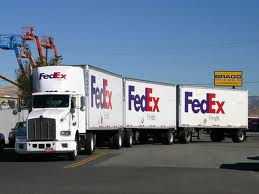
Guest Post: FedEx Network 2.0– The Real-World Challenges of Facility Closures and Location Strategy

Dr. Jon Jackson is Associate Professor of Operations Management  and the MSBA Director in the School of Business at Providence College.

In 2022, FedEx announced its “Network 2.0” initiative, designed to streamline and integrate the resources of its Express, Ground, and Freight operations. This project was initially estimated to cost $2 billion, would result in the closure of 100 stations, and was targeted for completion by fiscal year 2027.

As of this month, February, 2026, FedEx has closed more than 200 stations, with projections indicating a total of 475 closures by the end of 2027 as part of the Network 2.0 initiative. This accounts for nearly 30% of the company’s facility footprint across the United States and Canada, writes Supply Chain Dive (Feb. 13, 2026). 

As discussed in Ch. 8 (Location Strategies) in your Heizer/Render/Munson textbook, location strategy involves not only selecting new sites but also making tough calls about which existing facilities to consolidate or close. For FedEx, network streamlining was prompted by significant overlap between Express and Ground operations. Scott Ray, the COO-elect for U.S. and Canada surface operations explained, “The concept is pretty straightforward: Our customers don’t need both an Express and a Ground truck in the same neighborhood on the same day, and they don’t need to separate their Express and Ground packages for two separate pickups.”

One of the main challenges for FedEx during this transformation is maintaining high service levels amid such a significant network overhaul. The company has addressed this challenge by creating dedicated routes for high-priority services and customers, as well as factoring in market-level characteristics.

(A regularly updated list of FedEx station closures is available on Supply Chain Dive)


Classroom Discussion Questions

  1. FedEx has already closed twice as many stations as originally projected in 2022. What factors could have led to this outcome? Do you see this as a cause for concern, or could it indicate greater-than-expected benefits?
  2. In your local metro area, what factors should FedEx consider when deciding which stations might be closed, if any?

OM in the News: UPS Says No!

“No exceptions,” said the message from UPS to its drivers. As we enter a holiday season when retailers are increasingly dependent on delivery companies to move online orders, we see a dynamic that has shifted power significantly. United Parcel Service, reports The Wall Street Journal (Dec. 3, 2020), imposed shipping restrictions on some large retailers this week, an early sign that the pandemic-fueled online shopping season is stretching delivery networks to their limits.

The company on Cyber Monday notified drivers across the U.S. to stop picking up packages at Gap, Nike, L.L. Bean, Hot Topic, Newegg, and Macy’s. The move comes as UPS and rival FedEx have raised prices and promised to hold merchants to volume agreements. It is a sign that UPS is metering the flow of packages into its network to preserve its performance during one of the busiest shipping weeks of the year. 

FedEx and UPS both prepared their customers for tight capacity for this holiday season, as consumers, fearful of venturing out to stores due to the virus, are stocking up on household essentials from online merchants at the same time the holiday shopping season kicks off. The combination is expected to create a surplus of as many as 7 million daily packages between Thanksgiving and Christmas.

FedEx and UPS for months have been processing packages at levels more common during the Christmas season and were preparing to layer another surge of orders on top of that. They have responded with restrictions on capacity and surcharges to offset higher costs from hiring tens of thousands of workers and renting extra equipment. UPS picked up 81% of packages on the day they were ready between Nov. 15 and Nov. 21, compared with 95% for FedEx.

Abercrombie & Fitch tells online shoppers to place their orders by Dec. 4 if they want items to arrive by Christmas using its standard shipping option.

Classroom discussion questions:

  1. What techniques can UPS apply to handle this capacity issue? (Hint: see p. 312 in your Heizer/Render/Munson OM text).
  2. Compare this capacity problem to that facing airlines today.

OM in the News and Video Tip: FedEx Recruits Robots

Robotic arms manufactured by Yaskawa America

Sue, Randall, Colin and Bobby are 4 of the most reliable FedEx workers in Memphis. Each clocks 8 hours a day, sorting 1,300 packages an hour. They almost never take breaks, as they are actually 260-pound industrial robot arms.

They work only about half as fast as skilled humans, but they are quickly becoming an important part of the chain that keeps packages flowing. These robots, getting both “eyes” and “brains” that allow them to sense and respond, typify an important and growing trend in automation, writes The Wall Street Journal (Aug. 8-9, 2020). They have cameras which perceive visible light and sensors to perceive depth, and their “brains” are built with machine-learning AI. This gives them a level of adaptability not before seen. (There is an excellent 6 min. video that opens this WSJ article).

But the robots are not about to steal all the jobs in these industries. For now, they’re mostly filling vacancies created by surging demand. The explosion of e-commerce means an explosion in the volume of packages shipped to homes. Some 87 billion parcels were shipped worldwide in 2018—that’s 40 a year to every person in the U.S.—and this volume will more than double by 2025.

The need for social distancing within warehouses means robots can play a role in helping workers do their jobs without being directly adjacent to one another. And logistics companies are still finding it hard to hire people fast enough. (FedEx’s air hub in Memphis currently has 500 job openings).  FedEx estimates one human could tend up to 8 robots.

The overwhelming majority of industrial robot arms in the world are still the “dumb” kind: They repeat the same action over and over again—for example welding the same parts together repeatedly on an auto production line. The holy grail of picking technology—a robot that can handle the same variety as a human—will remain out of reach for a long time, in the same way we have yet to create an autonomous vehicle that can handle the same variety of road situations a human can.

Classroom discussion questions:

  1. Why is it so hard for robots to replace warehouse workers?
  2. Why are firms like FedEx more driven to automate?

OM in the News: Supplying and Shipping Take on New Importance

Companies like UPS are experiencing a boom in home deliveries

Just a few weeks ago, many people would have been hard-pressed to talk about the nation’s supply chain, writes The New York Times (April 1, 2020). But with shortages of protective gear for medical workers and basics like toilet paper and hand sanitizer, the inner workings of transporting goods from manufacturers to consumers, medical professionals and other businesses suddenly has taken on new importance.

“Shippers are facing huge challenges to ensure that they have the tools and have capacity,” said the CEO of an online trucking marketplace. “And the truckers had enormous pressure as well because they can’t work from home and are constantly on the road.”

Some manufacturing plants and warehouses are understaffed, so the truckers that went expecting a quick turnaround for loading could wait as much as 15 hours for their cargo. Pennsylvania briefly decided to close all of its rest stops in a move intended to protect travelers, but the closures also impeded long-haul shipping without roadside facilities, so some were later reopened. And there are driver shortages, compounded by the aging population of truck drivers, whom some deem to be more at risk to die from the virus than those who are younger.

Delivery companies like FedEx and UPS are experiencing a Christmas-like boom in home deliveries, while shipments to business, which have closed by the thousands on government orders, have deteriorated. One estimate shows that  business-to-business shipments could decline up to 25% for months. Delivering to homes is generally less profitable because drivers ferry fewer packages across many more stops.

Classroom discussion questions:

1. What are the challenges facing shippers?

2. How are each of the six shipping systems described in Ch.11 (in the section on Logistics Management) impacted by the current crisis?

OM in the News: Warehouse to Doorstep–Amazon Builds a Shipping Empire

Amazon’s recent breakup with longtime shipping partner FedEx shows how far it has come in creating its own delivery network. As consumers flock to its site for everything from toilet paper to TVs, Amazon has quietly blanketed the nation with hundreds of warehouses and package-sorting centers, flooded the streets with tens of thousands of vans and taken to the air. The costly effort is enabling Amazon to control how goods reach its customers—and increasingly turning it from a customer of delivery companies into a rival. Here is The Wall Street Journal’s (Aug. 30, 2019) look at Amazon’s vast shipping empire.

Storing, Sorting and Shipping The 2013 holiday season was a turning point for Amazon, after orders overwhelmed carriers and led to late packages and upset customers. Since then, it has multiplied the number of fulfillment, sorting and other facilities from 65 to 400+, planting facilities near city centers across the country to be as close to each customer as possible. That has enabled Amazon to deliver more packages to doorsteps within a day, catering to demanding online shoppers.

Big Spender Amazon’s aggressive pursuit of greater shipping control and speed has raised the amount it spends on shipping and fulfillment. Those costs have risen from $5.5 billion in 2010 to $61.7 billion in 2018, and they now equal more than 1/4 of Amazon’s revenue. It spent more than $800 million alone in the second quarter to shift its standard free shipping option to next-day from 2 days.

Heavy Lifting Amazon is no longer handling a small glut of overflowing orders. It is the primary carrier of its brown boxes. The shift over the past few years is staggering. It now delivers 1/2 of its orders, up from 15% in 2017.

By Land, Sea and Air All of this means Amazon needs more ways to transport its increasing volume. Last year it created a program where entrepreneurs with their own delivery companies could begin delivering packages in Amazon-branded trucks. Amazon is also renting 60 planes, and expects to adding another 10 by 2021. It has even sought to manage ocean freight.

Classroom discussion questions:

  1. What unique strategies is Amazon using to expand its delivery services?
  2. How is Amazon achieving competitive advantage through OM? (See Ch. 2).


OM in the News: The Roads Will Be Crowded on Sundays With UPS Trucks

UPS will start delivering packages on Sundays next year, following the move of FedEx as the two package giants battle to control the nonstop demands of online shopping. UPS, which currently delivers and picks up 6 days a week, will switch to 7 days in January. It will be assisted by the U.S. Postal Service, which delivers some UPS packages to homes for the final leg of a package’s journey.

UPS notes that Americans shop online 7 days a week and that there is increasing demand for deliveries every day. Amazon, one of the biggest package shippers, is building out its own transportation operations and fleet of local delivery vehicles. “The changes illustrate a grand realignment of America’s parcel delivery apparatus as companies try to determine how best to deliver packages for insatiable online shoppers at the lowest cost possible,” writes The Wall Street Journal (July 24, 2019).

UPS recently negotiated a union contract with its workers that created a new type of driver that would work weekend shifts at a lower pay scale than its regular delivery drivers. The company is taking additional steps to meet shipping challenges, including teaming up with the retailers CVS, Michaels. and Advance Auto Parts to use 12,000 of their stores as new drop-off points for deliveries and returns. More of these access points help lower delivery costs because its cheaper to deliver multiple packages to one location instead of singular deliveries to multiple homes.

FedEx itself has pushed ahead into expanding its own onsite network, recently announcing that it would work with Dollar General to use 8,000 of the retailer’s stores as drop-off and pick-up locations. UPS and FedEx both say that more than 90% of Americans will live within 5 miles of a drop-off location in their networks.

Classroom discussion questions:

  1. Referring to Figure 2.4 (Achieving Competitive Advantage Through Operations), which strategy is UPS following?
  2. What steps is UPS taking to compete successfully on Sundays?

OM in the News: FedEx Goes the “Last Mile” on Sundays

FedEx just announced it would start offering Sunday deliveries to most U.S. homes, the latest sign that online shopping habits are pressuring companies to revamp their operations to fulfill orders as they are placed. With people ordering everything from saunas to sandwiches online and expecting to have them quickly appear at the door, retailers and carriers are racing to adapt to service the last mile, writes The Wall Street Journal (May 31, 2019).

And Amazon, whose sprawl of warehouses has upped the ante, is promising 1-day delivery on many items later this year. “Online shopping is 7 days a week,” says FedEx’s CEO. “So there is increasing demand from online shoppers and e-commerce shippers for 7-day service.”

With the change, FedEx plans to deliver many of the packages it currently drops at local post offices. The shift will seek to lower costs by building density along FedEx Ground routes, while also shifting 2 million packages daily out of the U.S.P.S’s network.

FedEx and UPS have invested heavily in recent years to manage the volume of e-commerce packages moving through their sorting facilities. Until recently, the companies have taken steps to outsource last-mile delivery to the Post Office, worried that home deliveries would be less profitable than shipments between businesses. But as the volumes climb—to 50 million domestic packages a day—the companies are adjusting their operations to boost market share and handle weekend deliveries. They are also experimenting with more immediate delivery options, including drones and robots (both the subjects of recent blogs).

At the same time, FedEx’s traditional business of rushing deliveries by jet across the globe has slowed. Amazon, Walmart, and others have expanded their warehouse networks, adding locations near more U.S. cities where they can store goods and ship them shorter distances.

Classroom discussion questions:

  1. What major market shifts caused FedEx to add this Sunday service?
  2. What new OM issues will FedEx face now?

OM in the News: FedEx’s Delivery Robot

The new FedEx Same-Day Bot can climb stairs to deliver packages.

FedEx will soon start testing robots that could make same-day deliveries of medicine, pizzas and other items to consumers’ homes, pushing the parcel-delivery giant into a new market competing against startups like Postmates that use humans for rapid deliveries.

The project makes FedEx the latest in a growing stream of companies to test automated, unmanned machines to make deliveries, writes The Wall Street Journal (Feb. 28, 2019). Amazon and UPS have demonstrated drones to deliver packages in certain areas, and Amazon has displayed a rolling robot it calls Scout in trials on city streets. Grocery chain Kroger recently showed off an unmanned vehicle that can deliver groceries in certain markets, and several robotics startups are testing autonomous delivery robots that use sensors and cameras to navigate sidewalks for short trips, including lunch deliveries to crowded Beijing office buildings.

But on-demand delivery companies such as Deliv and DoorDash that make point-to-point trips carrying food or e-commerce purchases typically rely on armies of couriers who travel by car, scooter or bicycle. The FedEx “SameDay Bot” is starting off with tests planned in the corporation’s hometown of Memphis. AutoZone, Lowe’s, Pizza Hut, Target, Walgreens and Walmart are looking at using the FedEx bot. Retailers envision having robot fleets ready to make same-day deliveries that would be branded with the retailer’s logo and modified for different uses– a cooler for grocery, a heater for pizza.

“The economics of a point-to-point delivery versus a planned or even an overnight delivery, they’re just very different,” says a FedEx exec. “Eventually, we believe the majority of same-day, point-to-point will be delivered using the FedEx SameDay Bot.”

Your students will enjoy the 30 second video embedded in the article.

Classroom discussion questions:

  1. What makes delivery with the robot less than optimal?
  2. What are the robot’s main advantages?

OM in the News: How Big is the Role of Robots in Shipping?

Humans and robots work side by side in a FedEx distribution center. The green “tugger” robots pulls heavy goods.

In 2012, Amazon acquired the robotics company Kiva. Since then, it has moved more than 100,000 Kiva robots into its network of  210 fulfillment and package-sorting centers. Now, writes The New York Times (March 19, 2018), many Amazon competitors are moving in the same direction, including shipping and logistics operations like FedEx and DHL. But what is happening at all 3 firms may be a surprise to people who fear that they are about to be replaced by a smart machine: a robot might take your role, but not necessarily your job.

Yes, the robots replace a few jobs right away (typically taking 25 jobs in a facility that employs 1,300 people). But warehouses create lots of new jobs every year — and a heavily robot work force still seems like the distant future. Inside Amazon the need for human labor is growing much faster than the robot work force. Since deploying its first robots, Amazon has expanded its work force by 300,000 people.


A control center inside a FedEx distribution hub

As people have become more comfortable buying online, big and bulky goods like car tires, canoes and boxes as big as a coffin have accounted for an increasing percentage of the packages flowing through distribution centers. These ungainly items can’t fit on a conveyor belt.

McKinsey recently predicted that about 1/3 of workers in the U.S. will have to switch occupations because of technology-driven automation by 2030. “What people underestimate is the time needed for this to happen,” said a McKinsey partner.

Classroom discussion questions:

  1. Why can’t distribution centers be fully automated?
  2. What roles can robots play in distribution hubs?


OM in the News: Gearing Up Capacity at FedEx and UPS

fedexFacing an even bigger mountain of packages this holiday season, FedEx and UPS are hiring more workers to avoid the delays that frustrated shoppers and gift-recipients a year ago. Last December, the delivery giants were caught off-guard by bad weather and a surge in last-minute online shopping, writes Supply & Demand Chain Executive (Oct. 24, 2014). An estimated 2 million packages were late at Christmas. FedEx expects deliveries between Thanksgiving and Christmas Eve to rise 8.8% over last year, to 290 million shipments. Volume is expected to surge in December, with FedEx predicting a peak of 22.6 million shipments on Monday, Dec. 15.

The delivery companies are benefiting from a strengthening economy and optimism about consumer spending. At the same time, they’re dealing with consumers who increasingly enjoy the ease of shopping on computers and mobile devices but expect the goods to show up almost as quickly as if they had shopped at a store. “Every single year the percentage of retailers offering free shipping goes up,” said an industry expert. “The consumer expects it. The retailer may or may not be able to afford it.” Target has started offering free holiday shipping for any item on its website, a first for the retailer as it tries to compete better against online rivals such as Amazon.com.

FedEx plans to hire 50,000 seasonal workers, up from 40,000 last year. UPS will add 95,000 people, up from 85,000. Last year, both companies wound up scrambling to hire more seasonal employees than they had planned, which increased costs and cut into profits. FedEx also expects to invest $1.2 billion in its ground-shipping network this fiscal year, with most of that going to increase capacity and automation. The improvements have sped up ground delivery by a day or more in 2/3 of the U.S. UPS has also invested to boost shipping capacity during the holidays, and has improved its forecasting and package tracking.

Classroom discussion questions:

1. Which techniques (see Supplement 7) for managing capacity and demand do FedEx and UPS employ?

2. How will the shippers be able to improve over last year’s backlog?

OM in the News: FedEx Jolts E-Commerce Companies

fedex2“The joy ride is over,” said the president of a shipment-tracking software company. FedEx is changing the way it charges to ship bulky packages, jolting e-commerce companies with price increases for delivering items as diverse as diapers, shoes and paper towels (The Wall Street Journal –May 7, 2014). Instead of charging by weight alone, all ground packages will now be priced according to size. In effect, that will mean a price increase on more than 1/3 of its U.S. ground shipments. The move will greatly affect bulky but lighter weight items which many people have delivered on a regular basis, as well as Zappos.com shoes, which ship for free, including free returns. Indeed, shoe shoppers are encouraged to buy multiple pairs, keep what fits and return the rest. Avid Web shoppers do the same with sweaters, dresses, and jackets at retailers like J. Crew, Macy’s, and Banana Republic.

Under FedEx Ground’s current pricing, a one-pound square package with 12-inch sides—which might hold several shirts would be priced by weight and cost $6.24 to ship. After the changes, the same box would be priced at $8.83, a 41% increase. If an item is heavier than its “dimensional weight,” the customer will be charged the higher amount.

The change in pricing could dramatically affect both online shoppers and retailers. Someone will have to swallow the estimated hundreds of millions of dollars in extra shipping costs. Shipping is already one of the biggest and most rapidly increasing costs for big online retailers. For FedEx, it comes down to efficiency. Lightweight e-commerce orders take up a lot of room in the truck, and Amazon and other shippers don’t always match the box size to what is inside. (Companies like Zappos do use elaborate algorithms to determine exactly how many items should ship in a box to minimize the cost.)

Classroom discussion questions:

1. How does this decision impact operations managers at online sellers?
2. How will this effect large chains like Wal-Mart and Walgreen?

OM in the News: Which is Better–Electric Cars or Electric Trucks?

My blog on Oct.31, 2010 dealt with forecasting the demand for electric cars. Who doesn’t  love the idea of electric vehicles (EVs)?  But as we wrote: “everybody feels that everybody else should be driving environmentally-friendly vehicles”. With gas hovering under $3/ gallon, does it really pay financially for you or me to invest in a $40,000 Chevy Volt?

Maybe not, but logistics managers at such firms as Staples, Frito-Lay, FedEx, and AT&T have come to find that electric trucks make a lot of sense for their commercial delivery fleets. As The Wall Street Journal (Dec.8,2010) writes:” electric delivery trucks…make more sense in many ways than electric cars”. That’s because delivery trucks generally drive  short, defined routes each day–better suited to the limits in range of EVs. And  EVs have lower maintenance costs, a big concern to companies with large fleets.

“We’re a business here”, says  Staples’ VP-Fleet  Services. “They have to justify themselves”. Staples just bought  41 trucks from Smith Electric Vehicles, in Kansas City, and plans to double the order. The trucks have a top speed of  50 mph, and can carry 16,000 lbs. They cost about $90,000, which is $30,000 more than a diesel, but Staples expects to recover that expense in 3.3 years. The EVs have no transmissions; need no fluids, filters, or belts (which cost around $2,700/year); have “regenerative” brakes that last 4-5 years, vs. 1-2 on regular trucks; save $700/year because there is no exhaust system  to maintain; and cut fuel costs by $6,500/year. It all adds up to $60,000 savings over the 10 year life of a truck.

Frito-Lay, with an order for 176 Smith trucks, plans to convert 2,000 more delivery vehicles to EVs. Similarly, FedEx, which has 19 EVs in London, Paris, and LA, expects a proliferation of electric trucks. Its not a “good deed for the sake of a good deed. There is a great return on that investment”, adds a Frito-Lay OM exec.

Discussion questions:

1. Do you think use of electric trucks will spread faster than electric cars? Why?

2. What limits the proliferation of electric trucks?

3. Make the case for the USPS to switch to an EV fleet.