Good OM Reading: An Analysis of State-Provided Benefits in Location Decisions

Competing for businesses by offering companies targeted benefits is a popular policy among the governments of American states. As we discuss in Chapter 8, benefits come in many forms, including business tax credits for investments, property tax abatements, and reductions in the sales tax paid by the recipient businesses. Policymakers sometimes establish “enterprise zones” to facilitate these benefits, granting them to companies that hire people and invest in the zones. The purpose of benefits is to promote employment, innovation, economic growth, and revitalization.

Despite their good intentions, policymakers often overlook the unseen and unintended negative consequences of targeted benefits, according to a new study titled The Political Economy of State Provided Targeted Benefits (May, 2014). The paper analyzes two major, neglected downsides of these policies: (1) they lead to a misallocation of resources, and (2) they encourage “rent-seeking.” The authors, both at George Mason U., argue that these negative consequences of benefits are likely to outweigh any benefits.

Targeted benefits are by no means a new policy in the U.S. During the “railroad era” in the 1800s, many American cities provided subsidies to railway companies to attract their business. As railroad expansion slowed in the early 1900s, local governments’ role in luring particular companies to their locales diminished. But in recent decades, the trend has been a steady increase in the number of state governments offering various tax benefits to businesses. The 1980s has been called the “decade of industrial recruitment and state incentive packages.” Surprisingly many states do not evaluate their benefits programs consistently.

 The study examines the systemic effects of targeted benefits on market competition and the incentives facing both companies and politicians. It concludes that benefits cause a misallocation of resources as governments use them to change the composition of economic activity and to attempt to increase overall economic activity. It also finds they lead to cronyism as firms seek to secure benefits from the government.


OM in the News: Factory Rebound’s Winner–Mobile, Alabama

Austral has increased the workforce at its Mobile shipyard to 4,100 from 900 in 2009

The U.S. has added about 650,000 factory jobs since their numbers rebounded after the recession, putting manufacturing workers at 12.1 million and reversing a long decline in such jobs, reports The Wall Street Journal (May 30, 2014). But uneven growth has created regional disparities in the nation’s overall economic recovery.

Mobile, Alabama is among the winners. Shipbuilder Austral Ltd.’s facility here is busy seven days a week as workers piece together enormous aluminum sheets in a space the size of 13 football fields. Airbus and BAE Systems, too, are adding factory jobs here. Mobile created more manufacturing jobs than all but 15 U.S. counties in the past 4 years. U.S. factory-job gains—driven by a range of factors from cheaper domestic energy to the auto-industry recovery—have concentrated in pockets since the recession, particularly in the Southeast and Midwest.

Mobile’s success illustrates some common patterns: Often, companies have added jobs in states with “right-to-work” laws—which allow workers in unionized workplaces to opt out of paying union dues—and where taxes are relatively low, in counties where governments provide large incentives and strong vocational education, and in places with access to ports or other transport hubs.

Austal chose Mobile because of location, waterfront property, cooperative local and state governments, low taxes and low union membership. Alabama’s government sponsored training for Austal workers and built it a $12 million training center.

Airbus Americas, hiring about 1,000 new employees for its first U.S. commercial assembly plant, didn’t consider any Northern states as finalists, as it was looking for a port to which it could ship airplane parts for assembly. Alabama’s right-to-work rules were a key attraction. Alabama gave Airbus tax credits and cash grants valued at $158 million to build in Mobile—including a $6 million training center. “Alabama had it all,” says the Airbus chairman. “I’m not sure the rust-belt states have the same attitude.”

Classroom discussion questions:

1. Evaluate the incentives offered Austral and Airbus based on the material in Chapter 8.

2. What are “right-to-work” states and what advantages do they offer?

OM in the News: Clustering in Warsaw, Indiana?


orthopedicsHere in Orlando, we well understand the concept and power of “clustering,” one of our topics in Chapter 8, Location Strategies. Our cluster of theme parks, including the six Disney facilities, two Universal Studio parks, Lego Land, Sea World, Gator Land, and many smaller tourist destinations, employs over 100, 000 people. But one of the more unusual of all the industry clusters in the world exists in Warsaw, Indiana.

A $13.35 billion deal to combine two medical-device makers was big news on Wall Street,” writes The Wall Street Journal (April 25, 2014)—”and also in this 14,000-person city where both companies are based, which proudly calls itself the Orthopedic Capital of the World.”  The deal positions Zimmer, based in Warsaw since 1927, to become the second largest company in the $45 billion global market for artificial knees, hips and other orthopedic and bone-mending implants.  In addition to Zimmer and Biomet, medical-device maker DePuy Orthopedics is among the 48 medical equipment firms based in Warsaw. The industry got its start in that town in 1895 when DePuy’s founder, a Canadian pharmacist named Revra DePuy, came up with the idea of making flexible splints to replace the wooden barrel staves then used to set broken bones. The company he created eventually spawned others, as people left to start competing firms.

One of the nation’s last company towns, Warsaw is a microcosm of 1950s Detroit, where manufacturing workers with a high-school education are able to live middle-class lifestyles. Some 21% of workers in Warsaw’s county were employed in medical-equipment and supplies manufacturing in 2012. The average annual salary of workers in the industry was $80,300, compared with $44,600 across all industries in the county.

Classroom discussion questions:

1. Why are so many medical device firms located in Warsaw?

2. Why is the takeover so complex for the city?

OM in the News: Why the VW Vote to Reject a Union is Big News

vwAs we note in Chapter 8, Location Strategies, the presence of labor unions can have a major impact on a company’s decision where to locate a manufacturing plant. So when workers at the Tennessee VW auto factory voted 712 to 626 last week against joining the United Automobile Workers, it was national news. VW did not oppose unionization, reports The New York Times (Feb. 17, 2014), and seemed to give tacit approval for unionization as a step toward establishing a “works council” at the plant. A works council is a committee, common at German factories, in which white-collar and blue-collar workers elect representatives who establish policies on issues like work hours, vacations and standards for firing workers. But it would be illegal under U.S. law for a company to establish a works council unless workers first voted to have a union represent them. Had a works council been set up at the VW plant, it would have been the first in the U.S.

U.A.W. officials were stunned by the defeat; they had expected to win because VW was not fighting the effort and, just months before, a majority of the plant’s employees had signed cards saying they favored union representation. One industry expert called the loss “a very serious setback for the union, a setback that will resonate throughout the South.” The U.A.W. campaign was clearly hurt by the anti-union sentiment common in the South, as well as an intense campaign by anti-union workers inside the plant who argued that they did not need a union or union dues because VW already treated and paid them well. Wages at the plant average $19.50 an hour.

Union officials accused Tennessee Senator Bob Corker of poisoning the atmosphere and preventing a fair election before the vote. Corker had told the media that VW had assured him they would add another production line at the plant (instead of going to Mexico) to make a new SUV if the factory’s workers rejected the union. This story can make for a lively class discussion of incentives, unions, worker rights, and more.

Classroom discussion questions:

1. Why did state officials take a position against the union vote?

2. Why did VW encourage creation of a works council?

OM in the News: Heinz Goes on a Diet

Heinz's Pocatello factory scheduled for closure
Heinz’s Pocatello factory scheduled for closure

For years, H.J. Heinz Co. managers considered their frozen-food plant in Pocatello, Idaho, the heart of potato country, a model factory, ranking it the best in the U.S. in 2009 and 2011 for safety, cleanliness and efficiency. But in November, 2013, Heinz said it would close the Idaho plant this year. It may have been a model factory, writes The Wall Street Journal (Feb.11, 2014), but it also was an example of the kind of dubious logistics that were costing Heinz money. Frozen enchiladas, for instance, were trucked nearly 1,000 miles from a factory in San Diego, packaged with rice and sauce by workers in Pocatello then shipped across the country to distribution centers on the East Coast.

The market for packaged frozen foods had been hit hard by a broad consumer shift to fresher foods. And Heinz had too much production capacity in that sector. It had built a new frozen-food factory in South Carolina in 2009. Moreover, Pocatello was situated far from Heinz’s other factories and from its main markets. Roughly 70% of all ingredients used in the factory are shipped in from east of the Mississippi, well over 1,000 miles away. Others came from Denver, nearly 600 miles to the south.

A similar announcement at another plant last November proved tumultuous. Managers at a century-old Heinz ketchup factory in Leamington, Ontario, told several hundred employees that their plant also was to be closed. Some started cursing, crying and knocking over chairs, and others stormed out. The company will consolidate its frozen-meal operations at its factory in Ohio, which, according to its spokesperson, is “the most central location to customers, distributors and the supplies we need.” He added that the decision to close the Idaho plant “is based primarily on factory location in relation to our customer/consumer base and the need to improve transportation efficiencies and the fact we have we have excess frozen manufacturing capacity.”

Classroom discussion questions:

1. Why is Heinz closing the two factories?

2. Which of the factors that affect location decisions (see Chapter 8) influenced Heinz?

OM in the News: Clustering Technology and the Danish Pig

hogsEvery weekday 20,000 pigs are delivered to the Danish Crown company’s slaughterhouse in central Denmark, writes The Economist (Jan.4, 2014). They trot into the stunning room, guided by workers armed with giant fly swats. They are hung upside down, divided in two, shaved of their bristles and scalded clean. A machine cuts them into pieces, which are then cooled, boned and packed.

The slaughterhouse is enormous, ten football fields long with 7 miles of conveyor belts. Its managers attend to the tiniest detail. The fly-swatting workers wear green rather than white because this puts the pigs in a better mood. The cutting machine photographs a carcass before adjusting its blades to its exact contours. The company calibrates not only how to carve the flesh, but also where the various parts will fetch the highest prices.

Denmark is a tiny country, with 5.6 million people and wallet-draining labor costs. But it is an agricultural giant, home to 30 million pigs and numerous global brands. In 2011, farm products made up 20% of its goods exports. The value of food exports grew from $5.5 billion in 2001 to $22 billion in 2011. The government expects it to rise by a further $9 billion by 2020.

Why, in a post-industrial economy, is the food industry still thriving? Much of the answer lies in a cluster in the central region of the country. The cluster includes several big companies, which act as its leading investors: Danish Crown, Arla, Rose Poultry and DuPont Danisco.  Plenty of smaller firms are also sprouting, which act as indicators of nascent trends and incubators of new ideas. Interestingly, among the Danish public, distaste for “factory farming” is increasing. Borgen, a popular television political drama, devoted an entire episode to criticizing pig farming.

Classroom discussion questions:

1. Why is clustering so important (see Chapter 8)?

2. How is technology impacting the food processing industry?

OM in the News: Trying to Close French Factories Can Lead to “Boss-napping”

Workers set tires on fire at this French Goodyear plant where 2 execs were held hostage

Negotiations broke down last week at a Goodyear tire factory scheduled for closing in northern France, so employees kidnapped the bosses. Hundreds of employees held two senior executives captive, threatening to detain them until the company agreed to pay out “huge amounts of money” to nearly 1,200 workers about to lose their jobs. The revival of the French unions’ “boss-napping” tactic clearly causes concerns of multinationals about France as a place to locate, reports The New York Times (Jan. 8, 2014). “This happened because workers were desperate,” said a French prof. “But it is still an act that will underline the perception that it’s difficult to do business in France.”

Tension at the Goodyear plant flared last year after Maurice Taylor, CEO of an American tire company, Titan International, rejected a government appeal to step in and buy the plant. Taylor described French workers as loafers of minimal productivity. “In the U.S., we call this kidnapping,” he stated. “These people would be arrested and prosecuted. But in France, your government does nothing — it’s crazy.”

France’s rigid labor market and the influence of labor unions has long been a source of aggravation to employers. The country’s 3,200-page labor code embodied what the government acknowledged was a “cult of regulation” that choked business. Procedures for shedding workers when economic conditions deteriorate are lengthy and expensive, and businesses pay high taxes to help fund France’s social welfare system. For an employee earning 1,200 euros a month, employers pay an additional €1,000 in tax and pension costs. Unions at the Goodyear plant had been demanding severance packages of €80,000 ($110,000) plus €2,500 for each year worked.

In recent years, French employees took executives of Caterpillar hostage when talks over revamping the company’s operation broke down, trapped the CEO of the group that owns Gucci, while bosses at 3M and Sony were held in an attempt to get bigger severance packages.

Classroom discussion questions:

1. How else can companies in France deal with overcapacity?

2. Why does the French government seem to favor unions?

OM in the News: Pakistan’s Manufacturing Hobbled by Power Outages

Power outages mean workers in Pakistan have to sit out much of their shifts

Until a few years ago, Chenab Ltd. made high end sportswear and bed linen for some of America’s best known retailers, from Macy’s to Tommy Hilfiger to Victoria’s Secret, in the industrial region of Punjab, Pakistan. A workforce of 14,000 fed rolls of cloth into state-of-the art Italian and German machines or sewed garments on sprawling automated production lines. Today, crippled by the shortages of electricity that have paralyzed the country in the past 5 years, most of the machinery stands idle, the staff has shrunk to 4,500 and sales are down nearly 75%. The plant, running at 1/3 of capacity and turning down orders, represents one of the biggest challenges for Pakistan: finding a way to end power outages of up to 12 hours a day in cities and 18 hours a day in the countryside that have enfeebled industrial production and added misery to day-to-day lives.

Industries in Punjab get gas to operate 3 days a week during summer, and none in winter, when gas is diverted to heat homes. For Chenab Ltd., which needs both gas and electricity, that means there isn’t enough power to run two 8-hour shifts. Textiles, which make up more than half of Pakistan’s $25 billion annual export earnings, have been particularly hard hit. The export volume of ready-made garments has fallen 32% in the past 6 years.

Power shortages cost Pakistan about $12.5 billion, or 6% of gross domestic product, last fiscal year, reports The Wall Street Journal (Nov. 29, 2013). The country of 180 million is producing 12,000 megawatts of power, compared with demand of at least 18,000 megawatts. By comparison, California, with a population of about 40 million, produces nearly 60,000 megawatts. For households, life can seem preindustrial. Refrigerators don’t run; children can’t do homework in the dark. One Pakistani, complaining sleep is impossible in the heat without a working fan, called Pakistan “a nation of sleep-deprived zombies.”

Classroom discussion questions:

1. What factors should global firms consider in selecting a country to locate (see Chapter 8)?

2. Why is electricity shortage a critical OM issue?

OM in the News: Reinventing the Maquiladoras

Mexican maquiladora
Mexican maquiladora

Jordi Muñoz, a 27-year-old Mexican entrepreneur, makes small drones for civilian use. Muñoz’s Tijuana plant is a maquiladora, a factory that enjoys special tax breaks. When Mexico set up the first maquiladoras 50 years ago, they were sweatshops that simply bolted or stitched together imported parts, then exported the assembled product across the border to the US. America got cheap goods; Mexico got jobs and export revenues. “Now, with competition growing from other low-cost locations (such as Haiti), and with the government cutting some of their tax breaks, the maquiladoras are having to step up their efforts to become innovative,” writes The Economist (Oct.26, 2013).

Over the years, the maquiladoras have already lost much basic work, such as stitching fabrics, to cheaper places in Asia. Recently, rising pay in Chinese factories has made Mexico an attractive location again. Exports grew by more than 50% between 2009 and 2012, to $196 billion. Carmakers, in particular, have been investing heavily in Mexico in response to a recovery in US sales.  Increased Mexican taxes risk prompting a fresh wave of departures to cheaper shores. So the maquiladoras are having to move into more sophisticated types of manufacturing and do more product design. On the first score, there has been some progress: much of the stitching done in Tijuana these days is not of T-shirts but of medical devices such as stents, made of fine pig tissue. The aim of Muñoz’s company and others is to go a step further and to get involved in design and development.

Aerospace and defense companies are among those thought likely to “nearshore” some of the manufacturing currently sent to China. The Tijuana maquiladora zone already has more than 50 firms in these industries, and it is here that the efforts to become more innovative are most visible. To become a plausible aerospace “cluster” and attract more investment from the world’s top manufacturers, the maquiladoras need to bolster the local supply chain, as well as produce more engineers capable of product design.

Classroom discussion questions:

1. What are the advantages of locating manufacturing plants in maquiladoras?

2. Why has Mexico announced a tax increase (from 17% to 30%) on maquiladora exports?

OM in the News: The Memphis and Louisville Aerotropolises

More than just a hub

“After most Memphians have gone to bed and before they switch on their coffee-makers,” writes The Economist (Nov. 2, 2013), “150 cargo jets land at Memphis International Airport and take off again.” They have no passengers, but some planes are able to carry 225,000 pounds (102 tons) of cargo non-stop from Tennessee to Shanghai. Such flights make Memphis the world’s 2nd busiest airport by cargo volume (after Hong Kong). Around 10,000 people work the FedEx overnight shift, sorting 1.5 million packages.

Memphis calls itself America’s “aerotropolis,” referring to the title of a recent book by Kasarda and Lindsay. The book argues that cities of the future, and their economies, will increasingly be built around airports. We open Chapter 8, “Location Strategies,” with a definition of aerotropolis as: “an airport integration region, extending as far as 60 miles from the inner cluster of hotel, office, distribution, and logistics facilities.”

Memphis’ air-cargo operations produces a total economic output of $22.1 billion and supports 132,000 jobs. Louisville, Kentucky—home to the hub of FedEx’s chief rival, UPS—has a similar story. Louisville’s 2 airports are responsible for 9% of all jobs in the Louisville area.

The carriers have in turn attracted companies that profit from being near a direct mail hub. Some are retailers: Zappos, an online shoes and clothes store, has a huge distribution center there. CaféPress, another online seller, moved its headquarters from California to Louisville, netting it millions from cost savings and later cutoff times for orders. Louisville claims that since 1993 more than 150 firms have moved there to be near the UPS hub. These include health care outfits such as the National Eye Bank Center, which stores corneas for ocular surgery, and Oxford Immunotec, a medical diagnostics firm, which moved its laboratory from Boston. Now Oxford can guarantee that blood samples from almost anywhere in America can get from patient to lab within 32 hours.

Classroom discussion questions:

1. Why is the aerotropolis concept a location strategy factor?

2. Identify some other cities in the world that fit this definition.

OM in the News: Incentives Drive Boeing Back to Washington State for the 777X

777XAfter much wrangling and predictions that Boeing would locate its new 777X plant in nonunion South Carolina, the firm may have reached deals with state and IAM union officials to win the aerospace giant new tax breaks and 8 more years of labor peace in exchange for building its planned jetliner in Washington. The Wall Street Journal (Nov.6, 2013) reports that Gov. Jay Inslee called for a special session of the state legislature to approve a package of tax and policy incentives valued at $18.7 billion. Inslee said approval of that package and of the labor agreement are necessary for Boeing to make the 777X in its longtime Puget Sound base. “Inaction will cost the state of Washington,” said Inslee.

The moves capped an intense period of maneuvering over the plans for the 777X, a long-range jetliner considered pivotal to Boeing’s future. The 777X, scheduled for its 1st delivery by 2020, is likely to be the last major new jet from Boeing for many years, and there has been intense speculation over where the plane and its huge carbon-fiber composite wings would be built. The Wall Street Journal reported just last week that Boeing was leaning towards a nonunion plant in South Carolina. Boeing also announced it would give “much” of the engineering work on the 777X to engineers in 5 U.S. states and Russia, with no mention of plans to use engineers in Washington.

The South Carolina facility, Boeing’s first aircraft assembly plant manned by a nonunion workforce, has been a source of tension with the IAM. Boeing selected it in 2009 as the site of its second 787 Dreamliner assembly line, prompting a complaint from the National Labor Relations Board that the move was retaliation for a 2008 strike by the IAM that halted Boeing’s assembly lines for 58 days. The potential new agreement with IAM leaders conveys to 2024 and includes a $10,000 signing bonus for workers. The union said the deal would provide an “unprecedented degree of labor stability in the volatile and competitive industry.” “It’s a tough one, if you call their bluff and you’re wrong, then you’re just kicking yourself,” adds a machinist.

Classroom discussion questions:

1. Why is this such a critical OM decision for Boeing?

2. What factors discussed in Chapter 8 did the company consider in selecting Washington over S. Carolina?

OM in the News: Amazon Moves In With P&G

amazonAt the end of a road in Tunkhannock, PA., called P&G Warehouse Way, sits a warehouse stocked with Pampers diapers, Bounty paper towels and other items made by  P&G. Inside the distribution center, reports The Wall Street Journal (Oct.15, 2013), is another company: Amazon.com. Each day, P&G loads products onto pallets and passes them over to Amazon inside a small, fenced-off area. Amazon employees then package, label and ship the items directly to the people who ordered them.

The e-commerce giant is quietly setting up shop inside the warehouses of a number of important suppliers as it works to open up the next big frontier for Internet sales: everyday products like toilet paper, diapers and shampoo. The under-the-tent arrangement is one Amazon’s competitors don’t currently enjoy, and it offers a rare glimpse at how the company is trying to stay ahead of rivals.

Logistics have long been crucial to success in retail. Years ago, Wal-Mart set up a system that lets suppliers monitor what needs to be replenished. Amazon instead is going out to its suppliers by piggybacking on their warehouses and distribution networks. Amazon is able to reduce its own costs of moving and storing goods, better compete on price with Wal-Mart and club stores like Costco, and cut the time it takes to get items to doorsteps. P&G began sharing warehouse space with Amazon 3 years ago and has expanded the practice. Amazon is now inside at least 7 P&G distribution centers world-wide.

The economics of the arrangement benefit both sides. For Amazon, “co-location” reduces the cost of storing bulky items like diapers and toilet paper and frees up space for the Web retailer to stock higher-margin goods in its own distribution centers. P&G, meanwhile, saves on the transportation costs that it would have incurred trucking products to Amazon’s regional distribution centers. Plus, it gets Amazon’s help in boosting online sales, a priority for many in the industry.

Classroom discussion questions:

1. What is the advantage of “co-location” to P&G?

2. The advantage to Amazon?

OM in the News: Mississippi’s “Right-to-Work” vs. the UAW

A Canton Nissan worker signing a petition calling for union recruitment

The United Automobile Workers, desperate to make inroads in the anti-union South where Toyota, Volkswagen and other foreign automakers have assembly plants — has never tried a unionization drive quite like the one at the Nissan plant here in Canton, Miss.,” writes The New York Times (Oct. 7, 2013). It has enlisted thousands of union members in Brazil to picket Nissan dealerships there and sent a team of Mississippi ministers and workers to South Africa, where Nissan has an assembly plant, to try to embarrass the company with accusations that it violates workers’ rights at the Canton plant.

At a time when the U.A.W. has fewer than 1/3 of the 1.5 million workers it had in 1979, its organizing push in the South has taken on urgency and is being watched closely by labor leaders across the country. “It’s a life-and-death matter for the U.A.W. to succeed in the South,” says a U. of California prof. “If the U.A.W. fails to win at the foreign companies’ plants in the South,” adds an industry expert, “they will pull down wages at General Motors, Ford and Chrysler.” The union faces rough going in Mississippi, considering the embarrassing loss it suffered in 2001 when workers at Nissan’s plant in Tennessee voted two to one against joining the U.A.W.

“We’re a right-to-work state,” says a Canton businessman. “Back in the Industrial Revolution I could see why unions were needed, but we’re now in 2013, and I don’t see the need.” For Mississippi, landing Nissan was a coup. The 10-year-old auto plant was the state’s first, and its work force has climbed to 5,200, making Nissan the state’s second-largest private employer. Nissan has invested $2 billion in its state-of-the-art plant, which uses 1,200 robots. The base wage for most of the plant’s workers is $23.22 an hour, making them the envy of many blue-collar workers in Mississippi.

Classroom discussion questions:

1. Justify the positions of the union, of Nissan, and of the state.

2. Why is this a “life or death matter” for the UAW?

OM in the News: When Detroit Was a Cluster

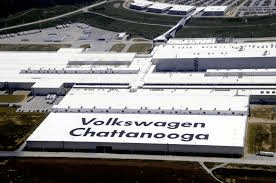
VW's plant in Chattanooga TN
VW’s plant in Chattanooga TN

Clustering is an interesting topic when you are covering location decisions in Chapter 8. Indeed, here in Orlando, over 70,000 people are employed in the theme park cluster that includes Disney, Universal, Legoland, Sea World, Gatorland, and more. This week, Universal Studios announced record profits after sinking a quarter billion dollars into the Harry Potter exhibit–and is adding yet another 1,800 room hotel to its site. The Wall Street Journal (July 31, 2013) adds to the discussion with an article titled “Detroit Was a Cluster”.

“Clusters,” writes The Journal, “offer powerful advantages such as labor market pooling. But these potent synergies can be lost when special technological competence becomes outmoded.” With lean manufacturing, clustering has become more important in the auto industry, with suppliers required to be between one hour and one day’s drive of factories. A new cluster has formed, known as the “auto corridor” between I-75 and I-65, which still includes the upper Midwest but has pulled the industry’s center of gravity steadily south.

The reason is well known: The Japanese, Germans and Koreans located their plants in the South to avoid the United Auto Workers. Honda was the bellwether when in 1980 it picked Marysville, Ohio for its first plant. Honda was expected to be required to employ the UAW, but picked a site in rural Ohio with little union presence. The firm soon concluded that its production system would be impossible with union workers, and that a UAW workforce could be avoided without undue political consequence.

Even a decade ago, more than half of all auto production jobs were still in Ohio, Indiana and Michigan. Now it’s below 44%. Kentucky alone today claims 440 auto manufacturing-related businesses! The transplants made little secret of their motivation in passing up the substantial benefits of the then-cluster around Detroit. Every Toyota factory in the U.S. is non-union and all but one is in the South. Ditto Nissan, Mercedes, Hyundai, BMW and Kia.

Discussion questions:

1. What is a “right-to-work” state?

2. Why are so many auto suppliers and plants clustering in Kentucky?

OM in the News: Alabama Opens Its Wallet to Airbus

airbus alabamaFollowing a year of secret negotiations, Airbus broke ground this month in Mobile, Alabama, for its new plant that will produce the popular A320 jet.  Businessweek (April 22-28, 2013) provides the details of the final location decision and incentives: After looking at “just about every site in the US that had industrial capacity,” Airbus promised to bring an estimated $600 million in investment and 4,000 jobs to the state, no fewer than 1,000 permanent. Alabama, for its part, offered incentives totaling $158 million. They include $82 million in funds for capital investments in the plant and other expenses; and $51.9 million for a 40,000-sq.-ft. on-site training center where workers will be prepared, at state expense, for their new jobs. Faculty from the aerospace departments of colleges in the state will provide the training. The deal also includes tax breaks on manufacturing equipment and a state corporate income tax credit.

The State’s governor says Alabama taxpayers will recoup the investment more than 2-fold within 3 years.

Settling in Alabama, a right-to-work state, will mean lower labor costs for Airbus since plant employees won’t be unionized. Yet opening up shop in Alabama isn’t just about saving Airbus money. The facility won’t make entire airplanes—it will assemble pieces made overseas. Partially completed sections, from cockpit to tail, will be transported by barge from the company’s European factories to Alabama, where they’ll be put together. The cost of transporting the pieces means that even with lower labor costs, planes completed in the U.S. will cost more to manufacture than those made start to finish in Europe.

But having a presence in the U.S. is worth the cost and complications if it helps the company to sell more planes. “Being close to the customer always works—in any industry,” says one French industry analyst. “We believe, similar to other industries, including the auto industry, that if we create an industrial presence in the U.S. our market share will go up.”

Discussion questions:

1. Why did Airbus open a factory outside of Europe?

2. Were the incentives provided unusual or unreasonable?