OM in the News: The Bullwhip Effect Hits Tyson Foods

Two years ago, chicken breasts were coming down the processing line at Tyson Foods’  Arkansas plant so fast the machine slicing them into 15-gram nuggets for Chick-fil-A would occasionally break down.

Now, the line has stopped—for good.

After pushing its plants and staff to increase production of nuggets, breasts and wings as the Covid-19 pandemic eased, Tyson is pulling back, reports The Wall Street Journal (Sept. 6, 2023). The company announced the Arkansas plant would close, one of six planned shutdowns in an effort to cut costs. Tyson’s chicken business, which produces 1/5 of the U.S. supply, is grappling with flat demand and a drop in wholesale prices, which some industry experts say Tyson itself exacerbated by ramping up production.

As the pandemic eased, demand for chicken surged as consumers headed back to restaurants, and fast-food chains capitalized on a craze for fried-chicken sandwiches. Chicken companies such as Tyson, Pilgrim’s Pride and Wayne-Sanderson Farms were challenged to keep up, as processing-plant jobs remained hard to fill.

Pumping out more poultry at each plant and capturing more market share from competitors became a central part of Tyson’s efforts to fix its struggling chicken business, which already had problems hatching enough birds and staffing its processing lines.

The company was killing 37 million birds a week at its processing plants during 2021. By 2022, the company had boosted that to 39 million, and Tyson said it intended to process 42 million chickens a week by the end of the 2023 to boost volume and gain market share.

Nationally, about 162 million chickens on average were slaughtered weekly during in 2021. That number rose to 164 million in 2022. As it pushed to produce more chicken, in a classic bullwhip effect (see pages 473-475 in Supp. 11 of your Heizer/Render/Munson text), Tyson miscalculated demand. In late 2022, the company wrongly predicted how much chicken grocery stores would buy for their meat cases and produced too much of the wrong type.

Tyson closed down two plants in May, laying off nearly 1,700 workers. (The company ousted the president of its poultry business shortly thereafter). Last month, the company closed an additional four plants, which employ about 3,000 workers. The four account for about 10% of its slaughter capacity.

Classroom discussion questions:

  1. Explain the bullwhip effect.
  2. What mistakes did Tyson make?

OM in the News: Tyson Blames the Chickens

There’s simply not enough chicken to go around as US demand for the meat surges, reports the New York Post (May 12, 2021) Underperforming roosters that aren’t producing as many chicks as expected are partly to blame for the shortage, according to Tyson Foods. The Arkansas-based company, one of the world’s largest poultry producers, says that it’s struggling to ramp up chicken supply because the new roosters it’s been using for fertilizing eggs and breeding new chicks simply aren’t hitting expectations.

“We’re changing out one type of male that, quite frankly, we made a bad decision on,” says the company president. Breeding companies provide hens and roosters to chicken producers like Tyson, which then breed the birds and hatch their eggs to produce poultry. Tyson owns one of the major breeding companies in the US.

tyson-roosters-05

The company switched to the new kind of rooster because it improved the quality of meat. The hatching crisis hit Tyson in January, after it introduced the rooster that’s now getting the boot. (It has moved back to the roosters it previously used).

The company discovered that eggs fertilized by this specific type of rooster hatch less often, limiting the company’s supply just as nationwide demand for chicken is sky high. While working to replace the rooster by the fall, but there could be a lingering supply hit that carries over into next year. The breeding problem could be responsible for as much as half of Tyson’s problems meeting demand for its chicken.

There are other factors also holding back chicken supply. The winter storm that slammed Texas earlier this year as well as “worker absenteeism” and a surge in demand are also hurting supply. 

Classroom discussion questions:

  1. Why is this an OM issue?
  2. What mistakes did Tyson make?

Good OM Reading: Ethics and the Chickenizing of America

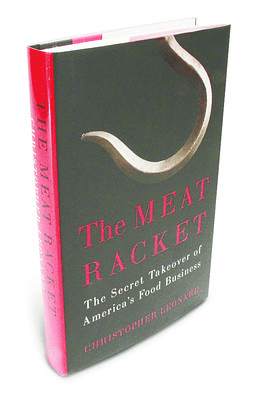
meat racketTyson Foods is now the largest meat-producing company in the world, the leading member of an “oligarchy” of companies whose hold on the American meat industry Christopher Leonard examines in his gripping The Meat Racket.  Mr. Leonard’s focus isn’t the treatment of animals in factory farms; nor is it taste or quality, although some unpleasant facts emerge.  He is primarily concerned, writes The New York Times (March 13, 2014), with how these corporations gained control of the business from farm to table. The 95% of Americans who eat chicken, he contends, support a system that “keeps farmers in a state of indebted servitude, living like modern-day sharecroppers on the ragged edge of bankruptcy.” Many chicken farmers don’t even own the chickens they raise.

As Tyson expanded, it would take over all the businesses that used to make up a small-town economy. “It owns the feed mill, the slaughterhouse, and the hatchery. It owns the trucking line and the food-processing plant where raw meat is packaged and cooked into ready-to-eat meals.” This system has “provided tremendous benefit to American consumers,” Leonard acknowledges. Chickens grow bigger faster, even while eating less feed, and meat has gotten much cheaper. Between 1955 and 1982, the time it took to raise a chicken dropped to 52 days from 73.

After pioneering their model in the poultry business—and, to their triumph, getting the chicken McNugget on the menu at McDonald’s, Tyson set out to “chickenize” first the hog and now the cattle business. It has faced fierce resistance in the latter, but its practices still help set the standard for the entire industry. Tyson was one of the first companies to use a growth hormone called Zilmax, which causes cattle to put on weight with astounding results. “The animals blow up like muscled balloons,” Leonard writes, adding that the hormone also makes the meat leaner and cheaper to produce—in other words “more like chicken.” Tyson stopped using Zilmax last year after critics raised concerns that cows were becoming paralyzed. (Chickens are bred to grow huge breasts so as adults they can barely breathe or stand).

The ethics involved in the industry makes for a good class discussion in a number of text chapters.

Teaching Tip: Teaching Quality Inspection Using Chickens

In Chapter 6, our favorite line when discussing inspection is: “Quality cannot be inspected into a product.” What better way to discuss this important topic with your students than the controversial move by the USDA last week to streamline chicken inspection by cutting by 75% the number of government inspectors who eye chicken carcasses for defects. The Los Angeles Times (June 6, 2012) reports that the USDA move to let  chicken slaughterhouses run production lines 25% faster is angering food safety advocates and poultry plant workers.

The USDA says it can  eliminate  800 inspector positions and save the federal government $30 million a year. Consumer advocates said the rising rates of salmonella infection in recent years should give pause to any plans to cut the number of inspectors. But in testing its relaxed rules at 25 poultry slaughterhouses, the USDA found little difference with conventional plants in the instances of salmonella and other diseases. “The test plants performed exceptionally well”, the department said. (In other words, more inspection did not equal more quality.)
Under existing rules, the production line can move as fast as 140 birds a minute. Four federal inspectors positioned along the line inspect carcasses and remove those that have visual defects. No single inspector inspects more than 35 birds a minute. The relaxed rules allow lines to speed to 175 birds per minute while relying on plant employees to spot defective carcasses and pull them from the line. They then move past a single line inspector.

The CDC estimates that there are 1.2 million incidents of salmonella illness each year–and growing.  When Consumer Reports tested 382 broiler chickens bought from grocery stores, 14% were found to contain salmonella. The union that represents poultry workers said the new rules would mean “more danger on the job.” The industry’s worker injury rate already is about a third higher than the average for all manufacturing industries. They often are prone to back problems, and  59% of line workers already have carpal tunnel syndrome — at line speeds of 70 to 91 birds a minute.

This story can make for a good Ethical Dilemma exercise as well.

OM in the News: The (Gentler) Chicken-Killing Assembly Line

I was 7 years old when my Dad proudly took me to the Dubuque (Iowa) Packing Co. to show me what he did as a supervisor in the cow butchering department.  I won’t go into graphic detail as to how the animals were queued up to have their throats slit.  They were stunned first to make the process as pain free as possible.

Maybe you can see why yesterday’s New York Times (Oct.22,2010) front page headline, “New Way to Help Chickens Cross to the Other Side”, caught  my attention. It turns out that chicken producers, egged on by animal rights groups, are also switching to a system of killing their birds more humanely. The new process uses gas to render the chickens unconscious before they are hung by their feet to have their throats slit.

“When you grab a chicken, turn it upside down and put it on the line, its stress, stress, stress”, says one chicken producer.  The new system is not only meant to be kinder to the animals, but to plant workers as well. Dealing with struggling, flapping chickens–like dealing with bellowing cows who sense impending doom– makes meat processing plant jobs among the worst in the country.

This topic can fit in your OM course in 3 ways: (1) students have strong opinions about the issue of  how we slaughter animals (see the Ethical Dilemma box on pig production in Ch.7, Process Strategy); (2) when you discuss job satisfaction/motivation in Ch.10, it makes the point that not all jobs are easy to staff/manage; and (3) this is a classic case of an assembly  line, in Ch.9’s photo, at the end of the chapter.

Discussion questions:

1. Does killing chickens this way make you more comfortable with the  production process?

2. How are most chickens raised in preparation for slaughter?

3. Will it be easier to market a chicken as “killed stress-free”?