
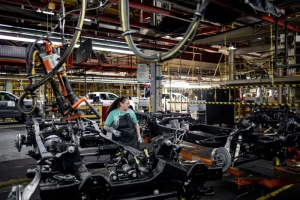
General Motors has entered a $4.5 billion purchasing facility with Procura Auto Parts to safeguard its supply chain against disruptions such as natural disasters, cyberattacks, or sudden demand surges. The automaker is aiming to secure supplies of high-risk components through a financing arrangement of prefunding the purchase of essential parts, reports The Wall Street Journal (Aug. 12, 2026).
- Procura’s Role: The London–Frankfurt–New York-based inventory management firm will buy and store critical parts from GM’s suppliers, acting as an intermediary to secure inventory.
- Funding: A bank syndicate led by JPMorgan Chase and Banco Santander will finance Procura’s purchases.
- GM’s Commitment: GM will issue irrevocable payment undertakings (IPUs) to repay Procura once the parts are used in production
GM has not disclosed the exact components, but past disruptions have involved semiconductor chips, rare earth metals, and wire harnesses.
The move follows years of global automotive supply chain shocks, including the COVID-19 pandemic and semiconductor shortages that halted production at multiple plants. By prepaying suppliers, GM aims to:
- Preserve working capital by avoiding short-term cash outflows.
- Maintain production continuity during unexpected shortages.
- Reduce vulnerability to just-in-time delivery risks.
This complements earlier GM initiatives, such as a long-term chip supply agreement with Micron Technology for memory and storage components. It reflects a broader industry shift toward strategic inventory management and supplier diversification after repeated disruptions.
In summary: GM’s $4.5B deal with Procura is a proactive, multi-year supply chain hedge designed to ensure access to critical parts, protect cash flow, and maintain manufacturing resilience in a volatile global market.
Classroom discussion questions:
1. How does GM’s decision to invest heavily in securing critical components—such as semiconductors—illustrate the growing importance of supply chain resilience in modern operations management, and what risks is the company trying to mitigate?
2. GM’s partnership with suppliers like Procura reflects a shift toward deeper, long‑term collaboration. In what ways can strategic supplier relationships improve operational performance, and what challenges might arise when firms commit to such large, multi‑year agreements?
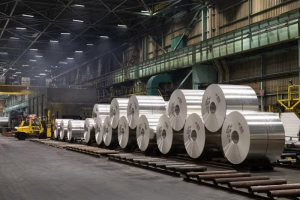


 The union has already idled production lines at three plants in response to failed negotiations with Ford, GM and Stellantis. As the UAW threatens further work stoppages, supplier health may be at risk.


