The McLaren Formula 1 Racing Team has long had a reputation as a data-obsessed racing operation, writes BusinessWeek (Oct. 6-12, 2014). So the company decided 5 years ago that the highly specialized expertise it’s developed in data analysis, simulation, and decision support is something that businesses would profit from and pay for. Among its projects, McLaren’s Applied Technology Group has designed health monitoring systems for sick children, helped data center operators to better manage spikes in demand, and created a scheduling system for Heathrow Airport that reduces flight delays.
Air travel, like racing, is a realm where things often don’t quite go right. The limited supply of Heathrow airport gate slots and runway space and the inevitability of poor weather combine to create a tightly coupled network where delays and bottlenecks can quickly ripple across continents. The managers at airports who coordinate arrivals and departures have to deal with planes that took off the day before—some already late or rerouted—and to figure out how best to bring them in. Heathrow presents a particularly intricate puzzle. It moves more people than all but a couple of airports in the world, yet it has only 2 runways—Chicago’s O’Hare, by comparison, has 8. And local environmental and noise regulations restrict flights to between 6 a.m. and 11 p.m.
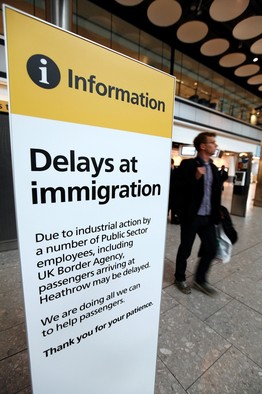
Prior to McLaren, scheduling had relied on a computer program that looked at a few “study days” from the past season, usually idealized days in which little went wrong. McLaren created a software tool that models bad days as well as good ones and simulates the effects on global air traffic of events such as a blizzard in Frankfurt or fog in Singapore. That’s enabled the airport to better plan for delays and, as a result, to increase its capacity. For example, if it becomes clear by midafternoon that Heathrow simply won’t be able to handle all of its remaining scheduled arrivals before the 11 p.m. cutoff, the software will recommend how to proceed based on Heathrow’s priorities. Cancel the fewest flights? Preserve the most connections? Favor long-haul flights over shorter ones?
Classroom discussion questions:
1. To what other elements of airport operations can simulation be applied?
2. Why is simulation important to McLaren?