Another Successful POMS Meeting

It was great to see so many old and new friends at the POMS meeting in DC this past weekend. Thirty years ago, I attended the very first POMS meeting, along with 200 other profs, also in Washington. This year, over 2,000 attended and we hosted an ice cream social to celebrate our newest editions. Here are a few photos from the party.


More Homework Problems and Questions in the New Editions

The 13th edition of Operations Management and the 11th edition of Principles of Operations Management will be available on January 15th and we would like to let you know about some of the changes. First and foremost, you are always asking for more and more material to assign. So here it is:

More Homework Problems—Quantity, Algorithmic
We know that a vast selection of quality homework problems, ranging from easy to challenging (denoted by one to four dots), is critical for both instructors and students. Instructors need a broad selection of problems to choose from for homework, quizzes, and exams—without reusing the same set from semester to semester. We take pride in having more problems—by far, with 818—than any other OM text. For this edition, we have added 180 new algorithmic problems in MyLab Operations Management, with printed versions of each in the text!

Concept Questions

These are multiple choice questions found in MyLab Operations Management that can be used as pretests before you cover a new chapter, as exam questions, or for pop quizzes. There are 4-6 per major text heading (A heads), with over 940 to choose from, including 270 brand new ones.

OM in the News Questions

We have added dozens of new readings, called OM in the News to MyLab. These are 300 word summaries of articles from BusinessWeek, The Wall Street Journal, the New York Times, and a dozen other magazines and publications, along with links to the full articles. Each reading has four multiple choice questions that you can assign, and which and are graded by Mylab.

Video Questions

The 46 short videos that we have produced specifically for the text, including 5 brand new ones featuring Celebrity Cruises, are also found in MyLab. Each has four multiple choice questions from which you can select to quiz your students.


Introducing Chuck Munson, Our New Coauthor

Prof. Chuck Munson joins the Heizer/Render team

Jay and I first met when we were teaching at Boston University in 1973. A decade later, we wrote the 1st edition of our Operations Management text–and have been great friends since, talking or Skyping almost every day. So you can imagine how hard it was to bring in a new coauthor to our close-knit, longtime team. It took about 5 years of searching and auditioning before we found the perfect person–and his name is Chuck Munson. Chuck had earlier written our Instructor’s Resource Manual and Test Bank, had rewritten the Supply Chain chapter, and had added a new chapter called Supply Chain Analytics.

But what a scholar we found! He has published over 25 articles in top journals in our field, including Production and Operations Management, IIE Transactions, Decision Sciences, Naval Research Logistics, European Journal of Operational Research, Journal of the Operational Research Society, Annals of Operations Research, and Interfaces. He is also editor of the book The Supply Chain Management Casebook, and coauthor of Quantity Discounts: An Overview and Practical Guide for Buyers and Sellers. He is senior editor for Production and Operations Management and serves on the editorial review board of 4 other journals.

Perhaps more importantly to the pedagogy we value in textbooks, he is a top-notch instructor. Just this month, Chuck was awarded the highest teaching honor given at Washington State University, the Sahlin Faculty Excellence Award. He has also twice won each of the following: the WSU College of Business Outstanding Teaching Award, the Service Award, the WSU MBA Professor of the Year Award; and once the Outstanding Research Award. Chuck’s masters and Ph.D. are in operations management from Washington University. He was Associate Dean for Graduate Programs at Washington State for 2 years and worked for 3 years as a financial analyst for Contel Telephone Corporation.

You can reach Chuck at munson@wsu.edu.

OM in the News: Forced Labor in Apple’s Malaysian Factories?

malaysia 2“Nearly 1 in 3 migrant workers in Malaysia’s thriving electronics industry,” writes The New York Times (Sept. 17, 2014), “toils under forced labor conditions, essentially trapped in the job.” The investigation, commissioned by the US government and conducted by the factory monitoring group, Verite, reported that 32% of the industry’s nearly 200,000 migrant workers were employed in forced situations because their passports had been taken away or because they were straining to pay back illegally high recruitment fees.

The report said those practices were prevalent among the migrants from Bangladesh, India, Myanmar, Nepal, Vietnam and other countries who work in Malaysia’s nearly 200 electronics factories. Those factories, which produce consumer electronics, motherboards, computer peripherals and other electronic goods, account for a third of Malaysia’s exports and produce for many well-known companies, including Apple, Flextronics, Samsung and Sony. Verite added that about half of the migrant workers who borrowed for their recruitment fees spent more than a year paying off those fees. The Labor Department commissioned the study because the federal government frowns on the importation of goods made by forced labor.

Thirty percent of foreign workers said they slept in a room with more than eight people, while 22% of the workers said they had been deceived about their wages, hours or overtime requirements during the recruitment process. Almost 46% said they had to pay a bribe, were detained or were threatened with detention or physical harm and 27% of the foreign workers said they could not come and go freely from their housing. Apple’s supply chain, which employs 1.5 million workers worldwide, employs 18,000 in Malaysia, including 4,000 migrant contract workers. Since 2008, Apple said it had helped migrant workers in Malaysia and elsewhere to reclaim $19.8 million in excessive recruitment fees. Apple uses about 30 factories in Malaysia.

Classroom discussion questions:

1. What is the responsibility of Apple and other manufacturers to these workers?

2. Why do these workers come to Malaysia?

OM in the News: Zara Turns to RFID for Inventory Control

zara“For more than a decade, radio frequency identification chips were touted as a game-changer for retailers,” writes The Wall Street Journal (Sept.17, 2014). But when they tried to apply the technology, merchants such as Wal-Mart and JC Penny discovered that what looked good on the drawing board didn’t always work so well in warehouses and stores. Now, apparel powerhouse Zara says it has learned from competitors and is rolling out RFID technology throughout its operations. The chips, about twice the size of a mobile-phone SIM card, help the world’s largest fashion retailer keep better track of its stock and replenish its clothing racks more quickly. “It gives us great visibility, knowing exactly where each garment is located,” says the CEO.

RFID chips can store information about whatever item they are attached to and, when prompted, emit that data via radio signals to a scanner. Zara is burying the chips inside its garments’ plastic security tags, an innovation that allows the chain to reuse them after the tags are removed at checkout. The Spanish retailer says it bought 500 million RFID chips ahead of the rollout, or 1 of every 6 that apparel makers are expected to use globally this year.

A major benefit is inventory-taking, a task that used to tie up a team of 40 employees for 5 hours in a Zara store. Now, 10 workers can sail through the job in half the time, waving scanning devices that detect radio signals from each rack of clothing. Before the chips were introduced, employees had to scan barcodes one at a time, and these storewide inventories were performed once every 6 months. Now Zara carries out the inventories every 6 weeks, getting a more accurate picture of what fashions are selling well and which are languishing. And each time a garment is sold, data from its chip prompts an instant order to the stockroom to send out an identical item. Previously, store employees restocked shelves a few times a day.Traditional retailers usually know where 60% of their inventory is at any time. With RFID technology, accuracy levels exceed 95%.

Classroom discussion questions:

1. What benefits accrue from RFID tags in this industry? What are the downsides?

2. Why did Wal-Mart slow its use of RFID?

OM in the News: Cluster Analysis in the Mojave Desert

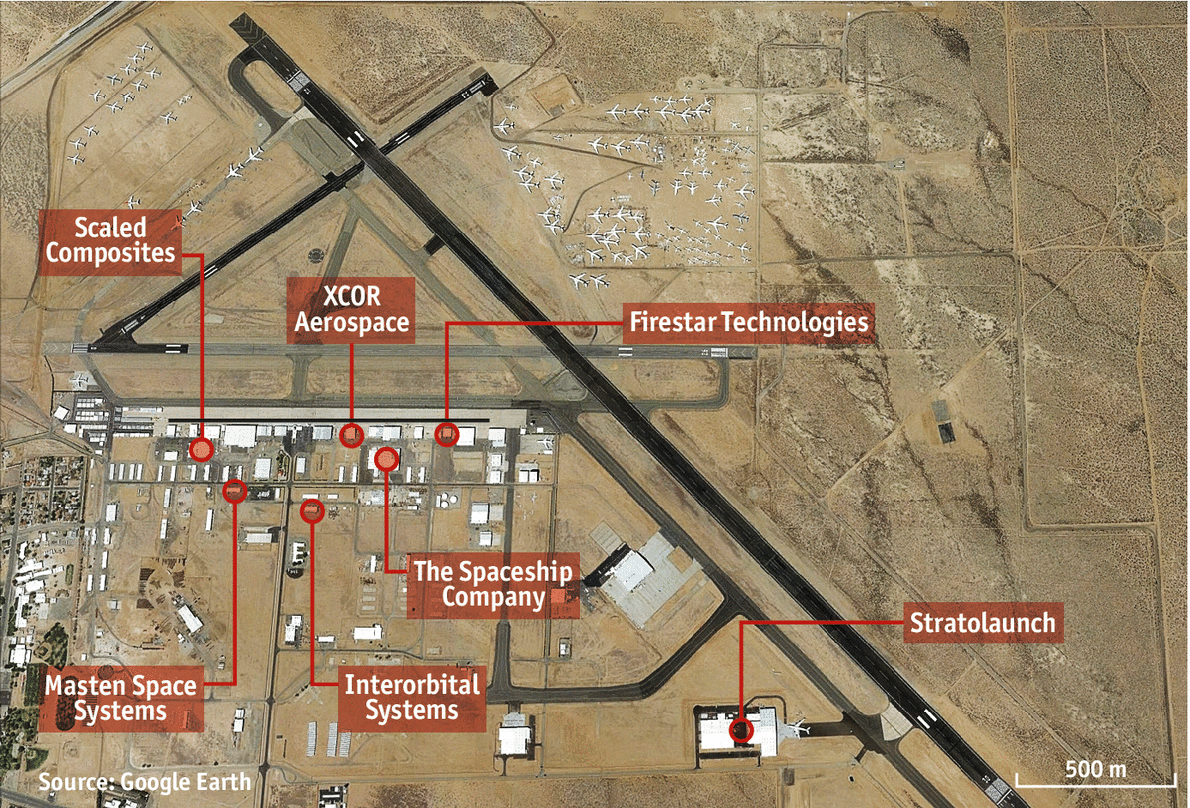
Cluster of 17 "New Space" companies in Mojave Desert
Cluster of 17 “New Space” companies in Mojave Desert

IT BEGAN with a boom. In 1947, Chuck Yeager became the first man to break the sound barrier. He flew from Edwards Air Force Base in the Mojave Desert, America’s main center for experimental military flights. This base was out-of-the-way of prying eyes and surrounded by landscape into which a crash (and there were many) would not inconvenience anyone. Now, reports The Economist (Dec.21,2013-Jan. 4, 2014), the Mojave Desert is emerging as the site of a cluster of what has come to be known as New Space.

The center of activity is 20 miles from Edwards, around the Mohave civilian airfield, now dubbed the Mojave Air and Space Port (see photo). Today, 17 rocket and space-related companies operate in the Air and Space Port. Most hope to make their money from launching satellites. Two, though, plan to enter the trade of taking tourists into space. Scaled Composites has designed and built SpaceShipTwo, a rocket plane intended to carry paying passengers to 100km above Earth using a hybrid rocket engine. Competitor XCOR’s vehicle, Lynx, plans to fly this year.  It, too, is a rocket plane, but is designed to take off from a runway under its own power.

Stratolaunch Systems proposes to take the air-launched-rocket principle and push it to the limit.  Orbital Sciences makes an air-launched rocket, Pegasus, which is used to put satellites into orbit, and the firm also has a contract to resupply the International Space Station. Firestar Technologies is developing a liquid fuel that requires only one tank and no complicated mixing mechanism in the motor, which simplifies engineering. Interorbital Systems is designing small, cheap rockets that can be strapped together in bundles, using as many as are necessary to lift a given payload into orbit.

Mojave is the U.S.’s latest technology cluster (which we discuss in Chapter 8, Location Analysis–see Table 8.3), with firms both competing and collaborating, and a mixture of large and small companies.

Classroom discussion questions:

1. How is this location cluster similar to other high-tech clusters? Different?

2. Why do these firms choose to be near one another?

Thanking Our Pearson Publishing Team

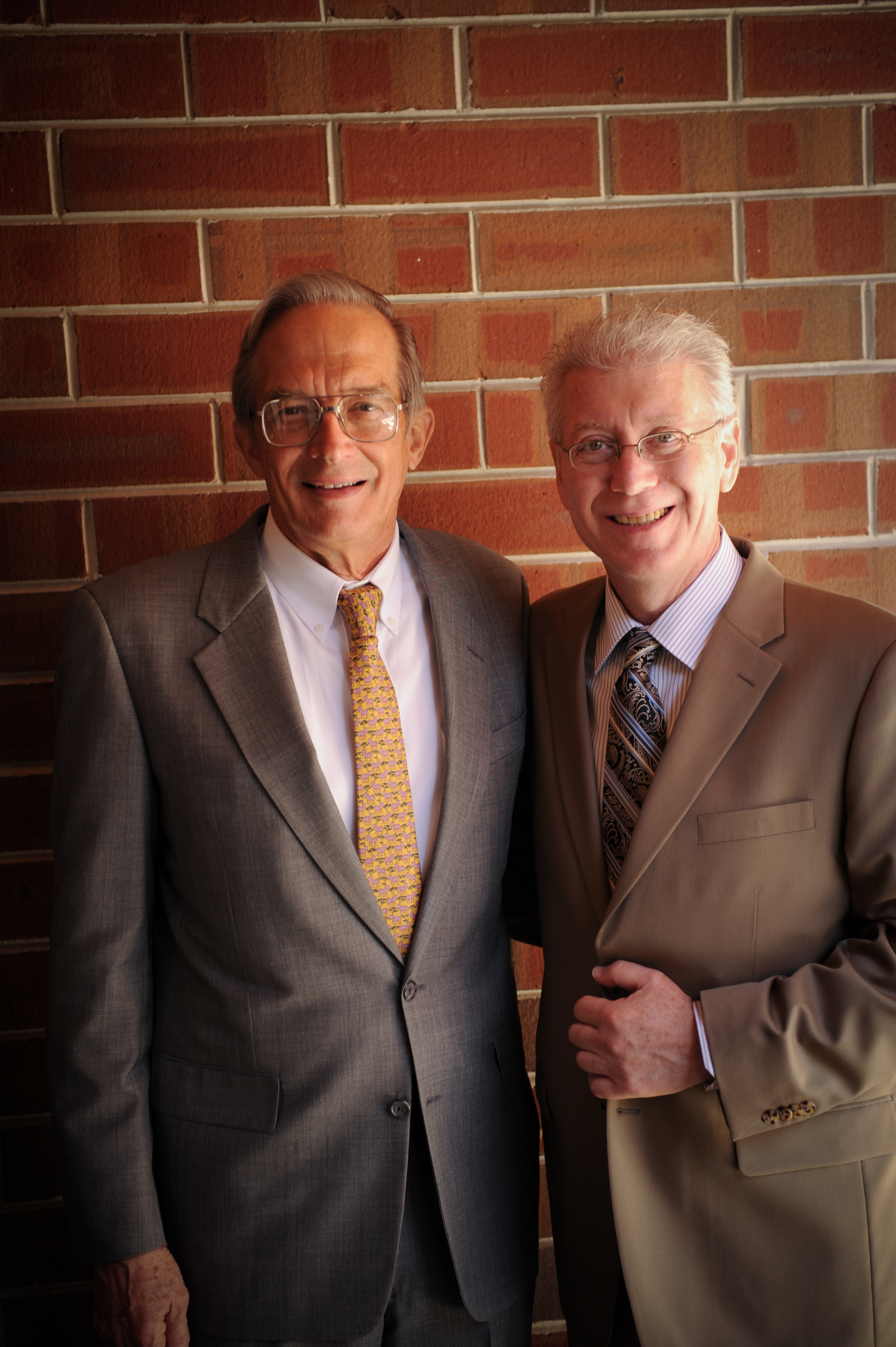
Jay and Barry
Jay and Barry
Chuck Munson
Chuck Munson

As we close out our 30th year of authoring Operations Management texts together, Jay and I look back on 2013 and look forward to the coming year with great excitement and appreciation. We are excited to see how well the latest editions are doing and that Principles of Operations Management (9th ed.) and Operations Management (11th ed.) are the top-selling books in the discipline. A lot of work went into these texts, with new features such as the video case studies on the Orlando Magic, major teaching enhancements in MyOMLab, and chapters on Sustainability and Supply Chain Analytics. We anticipate even more advances in the coming year as we are joined by Professor Chuck Munson at Washington State University as a 3rd coauthor. Chuck has worked closely with us for almost six years now.

But it takes more than a few authors, as hard-working as they may be, to make a successful book. Our team at Pearson has been fantastic over these three decades and we are eternally grateful. Here are just a few of the people we work with on a daily and weekly basis. They make a fantastic team!

Editor-in-Chief Donna Battista

Donna Battista is our Editor-in-Chief. She works as hard as any two people we have ever met, and still finds the energy to run marathons!

Anne Fahlgren
Anne Fahlgren

Anne Fahlgren is our Marketing Manager and helps oversee the myriad of components in the learning package. She also created Jay and Barry’s OM Blog and taught us how to populate it with interesting and useful content.

Courtney Kamauf works almost daily with us to keep MyOMLab current and error-free. She advises us about new features and is so dedicated to its accuracy and efficiency that she is irreplaceable.

Howard Weiss
Howard Weiss

Howard Weiss, at Temple University, works with us weekly to make sure the POM for Windows and Excel OM software he created for

Courtney Kamauf
Courtney Kamauf

our books is 100% reliable and can work perfectly with all our homework problems–a never ending job that he has done miraculously for 25 years.

We thank all of these wonderful folks and the many more people behind the scenes in production. Happy New Year!

OM in the News: 3M’s “Hairball” Supply Chain

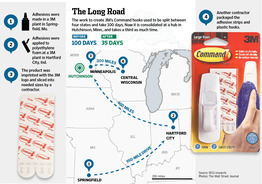
3M’s Command picture-hanging hooks, made of plastic and strips of sticky foam, don’t look complicated. The Wall Street Journal (May 17, 2012) reports, though, that until recently, the Command production process meandered more than 1,300 miles through 4 factories in 4 states.

3M’s recently retired CEO branded such convoluted production trails as “hairballs.” The man in charge of untangling, John Woodworth, 3M’s Supply Chain VP, characterizes the situation this way. “We had long supply chains.  It was and continues to be an issue.”

Every company tries to streamline manufacturing and supplier networks, of course. But few have a task as daunting as Mr. Woodworth’s.  3M makes 65,000 products, ranging from Scotch tape to film for solar-energy panels, dental braces and dog chews. They are produced in 214 plants in 41 countries. Mr. Woodworth, a 38-year veteran of 3M, figures he has been inside half of those plants.

3M’s long-term plan is to have fewer, larger, more efficient plants, and spread them out around the world. More production will be done in what 3M calls “super hubs,” plants capable of making scores of products for a region of the world. 3M now has 10 hubs, including six in the U.S. and one each in Singapore, Japan, Germany and Poland. It plans at least six more, all outside the U.S.

3M’s  stethoscopes, for example, used to be made in steps involving 14 outside contractors and three 3M plants. Now all processes are being brought into a plant in Columbia, Mo. The cycle time will fall to 50 days from 165. The company’s goal is to reduce cycle times—the period needed to go from ordering raw materials to delivering finished goods—by 25%.

Discussion questions:

1. Why did the 3M production process become so complicated?

2. Why is cycle time such an important OM concept?

OM in the News: The Rise of the Robot Reporter

Here is an application of service technology that we missed in Chapter 7:  Wired Magazine (May, 2012) presents a fascinating tale of how artificial intelligence is taking a prominent role in sports and financial news reporting.

Consider this : Every 30 seconds or so, the algorithmic bull pen of Chicago’s Narrative Science extrudes a story whose very byline is a question of philosophical inquiry. The computer-written product could be a  second-half update of a Big Ten basketball contest, a preview of a corporate earnings statement, or a summary of the presidential horse race. The articles run on the websites of  publishers like Forbes, as well as other  media powers (many of which are keeping their identities private).

And the articles don’t read like robots wrote them: ”  Friona fell 10-8 to Boys Ranch in five innings on Monday at Friona despite racking up seven hits and eight runs. Friona was led by a flawless day at the dish by Hunter Sundre, who went 2-2 against Boys Ranch pitching. Sundre singled in the third inning and tripled in the fourth inning … Friona piled up the steals, swiping eight bags in all …”

It may not win a Pulitzer, but the grandparents of a Little Leaguer would welcome this game summary—available on the web even before the two teams finished shaking hands. Narrative Science’s algorithms built the article using pitch-by-pitch game data that parents entered into an iPhone app called GameChanger. Last year the software produced nearly 400,000 accounts of Little League games. This year that number is expected to top 1.5 million and Narrative’s CEO predicts that  more than 90% of news would be written by computers in 15 years. He also believes that as Narrative Science grows, its stories will go higher up the journalism food chain—from commodity news to explanatory journalism and, ultimately, detailed long-form articles.

Discussion questions:

1. Why is AI of interest to OM managers?

2. How could this be used beyond newspapers and wire services?

OM Syllabi: U.of Illinois-Chicago, U.of Indianapolis, U.of West Florida

This month we share the OM syllabi of three more schools using one of our texts: University of Illinois-Chicago, University of Indianapolis, and the University of West Florida.  To see the syllabi of the 31 other schools we have posted so far, just click on the syllabi button on the right side of our blog site.

University of Illinois- Chicago, Dr. Matthew Liotine, IDS 532. Matt teaches this graduate course from Operations Management, 10th ed, using MyOMLab.

University of Indianapolis, Dr. Karl Knapp, SCM 210. Karl’s syllabus offers an excellent introduction for students about to sign onto MyOMLab. He teaches from Principles of Operations Management, 8th ed.

University of West Florida, Dr. Esmail Mohebbi, MAN 3504. Esmail uses a custom edition of the text covering Chapters 1-7, and 11.

If you would like to share your OM syllabus with us,  just email brender@cfl.rr.com or jheizer@omniglobal.net.

OM Syllabi: St. Petersberg College, Rollins College, President University, Goldey-Beacom College

We are pleased to share the OM syllabi of four additional colleges that are teaching from our text this month. To see the 27 schools previously posted, just click on the OM Syllabi link in the right hand column.

St. Petersberg College, Dr. Wende Huehn-Brown, MAN 3504.Wende’s course provides a good model of blended learning, with 80% of the course completely on-line. She uses MyOMLab for assignments.

Rollins College, Dr. Michele Boulanger, INB 365. Many months ago, we posted my MBA syllabus at Rollins. Here is Michele’s undergrad class, which is taught in the International Business Dept., and includes 20 international mini cases. She also uses MyOMLab.

President University (Indonesia), Suresh Kumar. Suresh teaches the course at this new university, in English, using our OM 10/e. (The text, by the way, has been translated into Indonesian, and is available in  Chinese, Korean, Turkish, Spanish, Portuguese, European, and Indian versions).

Goldey-Beacom College, Dr. Robert Donnelly, MGT 481. Bob’s very interesting  post on this blog (Dec.2, 2011) details how he treats simulation in his course.

OM in the News: Shipping Our Batteries to Mexico for Cheaper Recycling

When we discuss the 3R’s of Sustainability in Supplement 5 we emphasize how important it is to build sustainable production processes.  But the  lead article in The New York Times (Dec.9,2011) asks what really happens when our American car battery industry claims to have the highest recycling rate for any commodity–97% of the lead is recycled–and most states mandate that stores take back old batteries. It turns out that spent batteries we turn in are increasingly being sent to Mexico, where their lead is usually extracted by crude methods that are illegal in the US, exposing plant workers and local residents to dangerous levels of a toxic metal.

The rising flow of batteries is the result of strict new EPA standards, making domestic recycling more difficult and expensive. (The allowable lead levels have dropped by a staggering amount in the past 3 years and cost of compliance is about $20 million per plant). So about 20% of batteries (20 million) are being legally shipped to Mexico this year (up from 6% since the new EPA rules), with many more smuggled across covertly. “Along the border, where US vigilance focuses on drugs and illegal immigrants, there is little effort to staunch the flow”, writes the Times.

Whereas lead battery recyclers in the US now operate in sealed, highly mechanized plants outfitted with scrubbers, the vast majority of Mexican plants just break the batteries, releasing the lead as dust and emissions. Spent batteries house up to 40 lbs. of lead, which can cause high blood pressure, kidney damage, abdominal pain in adults, and serious neurological development in children. Lead pollution remains in the ground for decades. The EPA says it “does not inspect, monitor, or verify the Mexican facilities.” Adds a Dallas recycler: “We’re shipping hazardous waste to a neighbor ill-equipped to process it and we’re doing it legally, pretending it’s not a problem.”

Discussion questions:

1. Do your students view this as an ethical dilemma?

2. What other harmful products do we ship abroad for recycling, and why?

OM in the News: Is Boarding the Most Annoying Airline Delay?

I guess the answer is yes, given that yesterday’s New York Times (Nov. 1, 2011) ran a front page article on the woes of airline boarding.  Airlines have been complicating the process of boarding  for decades, writes the Times. First travelers have to be sorted by priority: 1st class, frequent flyers, elite cardholders, military in uniform, families with kids, and so on. Then there is the issue of seats  for those who paid priority boarding fees, the matter of more roll-ons in the aisle from checked-baggage fees, and of course,  the fact that planes are fuller. Boarding time has actually doubled— and it now takes 30-40 minutes to board 140 passengers, up from 15 minutes about 20 years ago.

 Operations scheduling techniques (Ch.15) have been used by every airline to find creative solutions to speed boarding. Spirit Airlines says the answer is to charge $20-$40 per carry-on bag. This “stress-free” boarding saves 6 minutes on average. American Airlines switched a few months ago to boarding passengers earlier who pay $9-$19 extra (and hence find a space for their bag). The rest of the passengers are brought in as 3 groups, sorted out in a spread throughout the plane. This method has cut boarding by 4-5 minutes.

US Airways hired ASU profs to develop a “reverse pyramid” to save time. Passengers with window seats in the back board first. Then, gradually, passengers are brought on to the front of the plane in a staggered pattern. Southwest, which can board its planes in 15 minutes, claims the root of delays is the practice of assigning seat numbers. So it assigns passengers to one of 3 boarding groups.

The conflict: all the extra fees for early boarding and baggage will add $12.5 billion to the bottom  line of US airlines this  year, up 87%  from last year.

Discussion questions:

1. Research has shown that “back-to-front” boarding is the slowest method. Why is it still used?

2. How else can OM help solve this problem?

OM Syllabi: Loyola U., Rider U., U. Missouri-St. Louis, and U. Nevada

As I was having lunch a few weeks back with two new professors at UCF, here in Orlando, I was reminded how valuable it is for recent Ph.D.’s in our field to see the wide variety of ways the OM course is taught around the country. So this month we provide four additions (Loyola, Rider, UMSL, and Nevada) to the list of 23 OM syllabi that we have posted so far, which includes: U. Florida, U. Alabama, U. Tennessee, U. New Orleans, Arkansas State U., Florida State U., Texas Tech U., U. Rhode Island, GWU, U. Miami, Florida International U., Washington State U., Florida Gulf Coast U., U. Dayton, Shippensburg U., U. Southern Maine, S. Illinois U., N. Michigan U., Temple U., Montclair State U., and Rollins College. To read any of these, just click on the OM Syllabi button in the right hand column.

Loyola University-Chicago, ISOM 332, Dr. Rafay Ishfaq. Prof. Ishfaq uses our OM 10th ed. in his class, which is based on modules that consist of recorded video lectures, readings, homework assignments, and live Q&A sessions. He uses MyOMLab for both homework and exams.

University of Missouri-St. Louis, LOM 332, Dr. Haitao Li. Prof Li uses OM 10/e and MyOMLab in this hybrid class of internet and live lecture.

Rider University, MSD 340, Dr. Cengiz Haksever.  Prof. Haksever also teaches from OM 10/e and makes extensive use of POM for Windows software.

University of Nevada-Reno, SCM 352, Dr. H. Barry Spraggins. Prof. Spraggins teaches from a custom-published edition of OM 10/e and combines class lectures with Web Campus lectures in his class.