
Even though economists expected that the Chinese manufacturing sector would contract in July 2013, it did exactly the opposite. China’s economy is heavily dependent on manufacturing and exports; its citizens consume only a fraction of all the goods made in the country, and the rest are exported to the U.S., Europe and other markets. In fact, China makes so much stuff that if it suddenly decided to stop, most of the rest of the world would experience impossibly high demand for many “essentials” of modern life — things like air conditioners, cell phones and personal computers.
Tag: global supply chain

OM in the News: Toyota Airbag Cuts Open Doors to Global Suppliers

Toyota has decided it no longer needs 50 kinds of airbags to protect drivers’ knees. Ten, the company says, ought to suffice. In one of Toyota’s biggest initiatives since 2009, reports Bloomberg (June 10, 2013), the carmaker is winnowing the number of parts it uses and increasing common components across models. The plan will cut both the time and cost for creating new models by as much as 30%. The automaker spent $9.6 billion in R&D last year.
In the past, Toyota focused on developing custom parts. It needed 50 types of knee-level airbags because seats for various models had different profiles. By standardizing “hip heights” across models, Toyota is reducing knee airbag variants by 80%. Last year, it had slashed radiators to 21 models from about 100. And it is reducing the number of cylinder sizes in its engines to 6 from more than 18. “From now on, Toyota will seek the compatibility of certain parts it uses with standard parts used by many automakers globally,” says the firm.
Toyota’s goal should make the company less vulnerable to supply disruptions by using parts from the largest manufacturers that can be substituted globally. The 2011 earthquake and tsunami in Japan forced Toyota to confront the complexity and risks of relying on thousands of suppliers, sub-contractors and sub-subcontractors making customized parts. The earthquake “really made us to look into our supply chain in great detail and see certain weaknesses there and look into things that needed to be fixed,” said Toyota’s spokesman.
International component makers such as Johnson Controls, Bosch GmbH and TRW Automotive are betting Toyota’s campaign will help them win contracts currently held by smaller Japanese companies. “This should mean more opportunities for global mega-suppliers with worldwide capacity and design expertise,” said one analyst.
Discussion questions:
1. Why is Toyota modifying its component options?
2. Why is this a supply chain issue and what are the potential downfalls?
OM in the News: Disney Cleanses its Supply Chain

Ever since a building with garment factories collapsed in Bangladesh a few weeks ago, killing more than 1,000 people, Western apparel companies with ties to the country have scrambled to address public concerns about working conditions there. But one big American company, Disney, had already decided to leave the country — pushed by the devastating fire just six months ago that killed 112 people. The Walt Disney Company, the world’s largest licensor with sales of nearly $40 billion, recently ordered an end to the production of branded merchandise in Bangladesh. The New York Times (May 2, 2013) reports that on March 4, the company had sent a letter to thousands of licensees and vendors setting out new rules for overseas production.
This comes as no surprise to those of us in Orlando, where Disney, with its 60,000 “cast members” (employees in layman’s terms), is king. Its public image as a safe, clean, and wholesome company is carefully maintained. Disney’s move reflects the difficult calculus that companies with operations in countries like Bangladesh are facing as they balance profit and reputation against the backdrop of a wrenching human disaster. “We felt this was the most responsible way to manage the challenges associated with our supply chain,” says Disney’s president of consumer products.
With some labor groups urging Western companies to stay and fix problems rather than leave, Disney said that it would pursue “a responsible transition that mitigates the impact to affected workers and business.” It set out a yearlong transitional period for its contractors to phase out production in Bangladesh, Pakistan, Belarus, Ecuador and Venezuela by April, 2014. In deciding in which countries to permit production, the company relied heavily on the World Bank’s Governing Indicators, which evaluate performance on issues like government effectiveness, rule of law, accountability and control of corruption.
Discussion questions:
1. Evaluate Disney’s decision to leave these 5 countries vs. staying and trying to improve conditions.
2. How can a major company protect its reputation when global supply chains are so complex?
OM in the News: China Holiday Roils Factories

Florida toy maker Laser Peg Ventures works with three different factories in China. Each year, about 25% of the workers there don’t return after the Chinese New Year holiday. Last year, the company received its orders 45 days late because of the holiday, meaning hundreds of thousands of dollars in missed revenue.
Every year, millions of China’s 250 million migrant workers leave their factories and travel across the country to visit their families at home, writes The Wall Street Journal (Feb. 21, 2013). The problem is that fewer and fewer workers are returning to the factories when the break is over. Guangdong Province estimates that 10 million workers, or 61% of the province’s migrant-labor pool, would head home to see their families for the New Year Holiday, with a return rate of around 90%, leaving a labor shortfall of 1.2 million workers after the holiday.
For the world’s manufacturers, post-holiday no-shows are an increasingly frustrating part of China’s tightening labor market. The trend reflects rising expectations among China’s workers, who are seeking out higher pay even as they show less inclination to work in factories. Many workers use the break to look for new jobs or start families. In 2010, 34% of rural migrant workers left their factory jobs to move back home.
The exodus is putting a kink in a long supply relationships. For years, American companies have worked closely with Chinese factory owners to improve production times and reduce error rates. Now, changes in China’s labor patterns are setting back that progress. The New Year exodus typically forces factories to rush to hire new employees, which often creates quality-control issues. Following the holiday last year, apparel maker Jordache found loose seams, holes and other problems, which meant goods had to be resewn or made over. The developments have American companies scouring other countries for factory sites.
Discussion questions:
1. Why is the Chinese holiday a concern to US operations managers?
2. What can American companies do to compensate for the post-holiday problems and shortages?
OM in the News: Where To Park All The Boeing 787s?

The New York Times (Feb. 20, 2013) article titled “New Dreamliner Headache: Parking Space”, makes for a great classroom discussion about a wide variety of operations issues: capacity, supply chains, production scheduling, strategy, quality. With the FAAs grounding of the 787 fleet in its 6th week, Boeing faces a problem of where to store the airplanes that continue to roll off the assembly lines at its giant Seattle and Charleston factories. Reluctant to shut down its production lines, Boeing is producing 787s at a rate of more than one a week. At the time the fleet was grounded, 50 Dreamliners were in service. Since the 787 needs special F.A.A. permission to fly, Boeing is trying to make room for the Dreamliners by clearing out all the other models awaiting delivery. A consensus suggests, though, that it will be many months before the plane will fly again.
One reporter counted 15 Dreamliners in Seattle and noted that all the spaces on the flight line were taken. Some of those planes are positioned on a runway previously used for general aviation. Last week, a pilot calling Paine Field was reminded to heed the runway closure notice because “all the 787s are piled up there, they just keep stacking them up.”
Still, production of the 787 is continuing at the same pace at both plants. Stopping or even slowing the assembly lines would be very difficult and costly because the aircraft’s attenuated supply chain draws on parts manufactured all over the world. The engines are built in the U.K., the fuselage in Italy, and various parts of the wing are constructed in Korea, Australia and Japan. “You cannot stop factories all over the world from production,” says an MIT prof. “But everything in the end has capacity. The next step is to keep the suppliers manufacturing but not send the parts, but how many wings can Mitsubishi keep in its factory?”
Discussion questions:
1. Why is the 787 grounded?
2. What are Boeing’s options if the plane is not certified to fly for 2 more months?
OM in the News: Darden’s Lobster Supply Chain Heads to Asia
In a bold move towards vertical integration, restaurant giant Darden (Olive Garden, Red Lobster, Longhorn) has just opened up a $653 million lobster farm on the Malaysian  island of Borneo, according to The Wall Street Journal Southeast Asia (Nov.16, 2012). The lobster farm serves two purposes: (1) for restaurants facing weak growth prospects in Western markets, the fast-growing economies of Asia are attractive as millions more people eat out and desire to try Western food; and (2) it guarantees an unlimited supply of the seafood for Darden’s 2,000 U.S. stores. A long-term investment, the 9,300-hectare aquaculture park will produce 40 million pounds of lobsters and generate $1 billion in annual revenue when it reaches maximum capacity.
“We plan to establish our Asia-Pacific restaurant development hub in Kuala Lumpur,” says the CEO. “Asia is an attractive market and Malaysia represents a strategic and central location for us to begin to explore the possibilities in this part of the world.”
The Darden project dovetails with the Malaysian government’s program to lift that nation into developed nation status by 2020 by creating high-income jobs in agriculture and other areas. Two local firms will assist Darden in the project. These companies say they plan to hire more than 14,000 people to work on the project over the next decade, including scientists, engineers, aquaculture specialists and skilled technicians.
Production is set to begin by 2015 and reach full production in 2029. Globally, the market for lobsters is estimated to be worth over $4 billion a year, with the Asia Pacific region accounting for about 75% of the total market. Borneo was chosen because it has “suitable” geography and available sea space for an efficient operation; it is also free from catastrophic weather that could threaten the project’s long-term viability.
This is a story that dovetails nicely with our two video case studies on Darden supply chains in Chapter 11 and Supplement 11.
Discussion questions:
1. Why is Darden entering the seafood production business?
2. What are the plusses and minuses of this vertical integration?
OM in the News: Supply Chains and Thailand–A Year After the Flood
 Disruptions in global chains have moved from an academic subject to a daily topic in the past two years. The Wall Street Journal (Oct.6-7, 2012) headline “After Floods, Businesses Still Wary of Thailand” provides a good classroom topic when you are covering Supplement 11. A year after massive floods in Thailand that disrupted the global supply chain for cars and electronics, most factories are at work again, but not always like before.
Some foreign companies—having learned hard lessons about concentrating too much of their production in one country—are shifting to other parts of Southeast Asia. Thailand’s worst floods in 50 years, coming just seven months after Japan’s earthquake and tsunami, exposed the danger of relying on narrow, concentrated supply chains. So foreign companies are hedging their bets by building facilities and finding suppliers in other regions so they can quickly resume operations if disaster hits.
Western Digital, one of Thailand’s largest foreign employers, moved some manufacturing of hard-disk drive components from Thailand to Malaysia. The company, based in Calif., also asked some suppliers to take similar steps, hoping to avoid a components shortage like last year. Western Digital now employs 25,000 people in Thailand, compared with 37,000 before the floods.
Japan’s Omron Corp. shifted some production of relays—electromagnetic switches for automobiles and motorcycles—to Japan and China. Nidec Corp., also based in Japan, moved part of its production of hard-disk-drive motors to China and the Philippines. This production “will not be coming back to Thailand,” said its president. Yet he added that Thailand has “skill and technology that overcomes other issues.” Nidec, which suffered damage to eight of its Thai factories last year, has cut production of disk drive motors in the country to protect against another disaster.
Discussion questions:
1. How can firms avoid supply chain disruptions?
2. What can Thailand do to regain manufacturing jobs lost due to the fear of future flooding?
OM in the News: Ford’s Secret Battle to Save Its Supply Chain
Late in 2008, Ford was just months away from running out of cash. With the auto industry careening toward ruin, Congress offered the Big 3 a bailout. GM and Chrysler grabbed the taxpayer lifeline, but Ford decided to save itself. Under CEO Alan Mulally, Ford had  already put together a bold plan to unify its global operations, transform its product lineup, and overcome a dysfunctional culture. It was an extraordinary risk, but Mulally applied the principles he developed at Boeing to streamline Ford’s operations, force its executives to work together, and convince the UAW to join his fight for the soul of American manufacturing.
It wasn’t just the Big 3 struggling to stay in business though. In a very interesting article in The Wall Street Journal (March 9, 2012), we learn of the secret “Project Quark”, a move to save Ford’s suppliers, most of whom were also on the brink of bankruptcy. Without parts, nothing else Ford did would matter. In a high-tech room that looked like it belonged in a NASA facility, Ford created a risk profile for each supplier. It might be easy to find another company to make plastic trim, but finding one for exhaust systems might be impossible, as such firms are highly engineered and have proprietary technology.
Ford pared the list down to 850 suppliers it had to keep in business. It also recognized that the world’s automakers had become mutually dependent on a complex web of suppliers. Although GM and Chrysler bowed out of cooperating, Toyota, Honda, and Nissan did not. With the web in danger of collapsing in late 2008, Ford started dealing with suppliers that were vital to Toyota, in exchange for Toyota buying from American parts companies, like Delphi, which were vital to Ford.
This is a wonderful article that you might ask your students to read when you teach Ch.11, Supply Chain Management.
Discussion questions:
1. Why did GM refuse to participate?
2. Why did the Japanese auto makers join Ford?
OM in the News: Boeing Wants Production Faster, Faster, Faster
There are not many businesses in which the next 6 years’ worth of customers form an orderly queue, put down fat  deposits, and make futher installments as they wait for delivery. But Boeing, reports The Economist (Jan.28,2012), has such a backlog (and 2011 profits of $4 billion). The key to continued success, though, is ramping up production to meet the soaring demand–an operations issue if there ever was one.
At its Renton factory (near Seattle), 737s are being churned out at a record rate of 35/month after a recent speeding up of the 2 assembly lines. The plan is to increase to 42/month by 2014, squeezing a 3rd line into the giant hangar. Likewise, at Boeing’s nearby Everett factory and at a 2nd plant in South Carolina, plans are to turn out 10 giant 787 Dreamliners/month by the end of 2013.
These assembly plants are the final stage in a long and hugely complex global supply chain that we describe in the Global Company Profile in Chapter 2. Boeing has about 1,200 tier one suppliers, providing parts coming in from 5,400 factories in 40 countries. These in turn are fed by thousnads more tier 2 suppliers, which themselves receive parts from countless others.
Boeing is the first to admit that it outsourced too much work on the 787, leading to 2 years of delays and 40 unfinished jets parked on runways in several states awaiting final parts. Some work has been brought back in-house, and a “war room” has been set up to constantly monitor the world’s supply of parts and raw materials. Boeing just signed a long term contract with the Russians to ensure a steady stream of titanium. It has also hired 100’s of “examiners” to visit suppliers to check that they are building production to meet Boeing’s rush to expansion.
Discussion questions:
1. Why is Boeing working more closely with suppliers now?
2.What is the danger in ramping up production dramatically?
Teaching Tip: Globalizing our OM Classes
I’ve just returned from a trip to India and was again reminded not only how much the world’s economies are intertwined, but also that we need to be sure our students appreciate that economic integration. This is a shrinking world. For instance, while in New Delhi, Boston University was having Executive MBA presentations in my hotel. And GE Chairman Jeffrey Immelt was also in town holding GE’s Corporate Excellent Council meeting and talking about added investment in GE’s energy, aviation, and locomotive facilities as well as GE’s 30% growth in India. Warren Buffett was in Bangalore speaking at the Confederation of Indian Industries and then in New Delhi discussing growth of Berkshire Hathaway’s insurance business. Michael Dell, with eight data centers across India, was also in New Delhi reportedly reviewing performance and investment opportunities. Meanwhile, Sara Palin was speaking about the US economy at the India Conclave 2011 in Mumbai. And, of course, the Indian auto assembly plants of Honda, Toyota, and Suzuki were concerned about part shortages after the earthquakes in Japan.
As an aside, perhaps I should add that Bill and Melinda Gates were also in India and slated to meet with Buffett to recruit others to join them in their philanthropic activities.
As we put on our professor hats and ‘profess’, it is hard for us to overemphasize the global perspective our students need (and that we introduce in Chapter 2). Whether it is international economics, investments by GE, Berkshire Hathaway, or Dell, automotive supply chain issues, or Boston University’s international education, we owe it to our students to ensure that they have an international perspective. The world is not flat, but it is getting there.
OM in the News: Earthquakes, Japan, and the Global Supply Chain
It is much too early to predict how soon Japan will recover from the  terrible devastation of last week’s earthquakes and tsunami. Your students, though, are aware of the situation on the ground and the implications for global commerce and manufacturing, so this is a topic worth discussing in class.
Various newspapers have taken differing views on how the devastation will affect the global economy. Today’s Wall Street Journal (March 14, 2011) comes right out and asks the question: “Are global supply chains so taut that a disruption in the world’s No. 3 economy will be felt around the world?” Their answer: Japan’s factories play an out-size role in global production , ranging from a fifth of the world’s semiconductors to advanced machine tools. The result could be shortages of key components around the world. For eaxample, Reneses Electronics is the world’s largest maker of micro controllers for cars and other equipment. In suffering major damage, it places customers at risk. Its chips are key ingredients and its inventory is not stockpiled nor readily replaced, employing the JIT concept. And most auto makers use only 1-2 suppliers for parts.
Likewise, today’s New York Times writes: “Most high-tech goods these days are produced through carefully orchestrated procurement and manufacturing networks that combine parts from around the globe, often shipped on tight daily production schedules. Even temporary shortages can drive up prices sharply.”
Forty percent of chips for smartphones and tablet computers and most LCDs for appliances are also made in Japan. Further, Sony’s Blu-ray disc and magnetic tape factories were flooded. And with rolling blackouts twice a day to conserve power, most manufacturers are unable to operate expensive machinery that requires stable energy. Toyota, Nissan, and Honda are not even sure the logistics are available to get their cars to ports for shipping.
Discussion questions:
1. Discuss the importance of having manufacturing facilities around the world?
2. How are Japanese automakers impacted with respect to US sales?
OM in the News: Sustainability in the Global Clothing Supply Chain
Some day in the not too distant future, the clothes and shoes you buy will not only have a label sewn in with the brand name/size/fabric content, 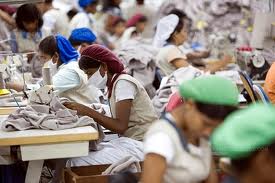 but with a sustainability score as well. Yesterday’s New York Times (Mar. 1, 2011) reports that the Sustainable Apparel Coalition is developing a comprehensive database of the environmental impact of every manufacturer, component, and process in apparel and shoe production. The coalition includes such names as Wal-Mart, JC Penney, Hanes, Patagonia, and Timberland.
Americans spent $340 billion last year on clothes and shoes, which is about a quarter of the global market. Amazingly, virtually all of it purchased here—99% of footwear and 98% of clothes–came from other countries. And the various parts of any one garment often come from a diverse multinational chain of fabric mills, dye operations, and assembly plants.
This obscure nature of the global supply chain has long been a concern to environmental groups. Greenpeace, for example, using Google Maps, revealed that a blue jean factory in Xintang, China, was washing blue chemicals downriver from its textile mill. But the company whose name appears on the designer label– and surely the end customer–are often unaware of the environmental connection. “The apparel supply chain is long and quite complicated”, states a University of Delaware prof.
The coalition’s tool is a database of scores assigned to all players in the garment life cycle–cotton growers, fabric makers, dyers, mill owners, and distributors–based on measures such as water use, energy efficiency, waste, chemical use, greenhouse gases, and labor practices. “The government has standards for miles per gallon on a car, but we have no real standards for clothing”, adds the CEO of Timberland.
Discussion questions:
1. Are students interested in such a “green score”?
2. What changes will such a database bring about?
3. Why are the biggest retailers signing on?
Guest Post: Supply Risk Hook – Why Kenya Can’t Stand Iceland!
Like Barry and Jay, I’m a great lover of hooks! A hook can be a little story, a movie clip, or a simple exercise. The key is that they’re short and memorable! Here’s a nice one concerning global supply chain risk that I use in my supply management lecture.
I take in a nice bunch of flowers and ask my students where they come from. In the case of Europe, the most likely origin is Kenya. Horticulture is Kenya’s biggest source of income with 1000 metric tons of produce shipped daily to Europe. (See the photo In Ch.11 of the Heizer/Render text). In fact, around 30% of all cut flowers sold in the EU are imported from Kenya.
I then discuss all the effort required to get these lovely flowers into our stores every day. Here you can mention the challenges of speed as a key performance objective, the perishability of stock, the extension of the supply chain etc. Then I ask (jokingly, of course!) why Kenya dislikes Iceland right now?! For the period earlier this year when the Icelandic volcano was grounding most flights throughout Europe, Kenya’s flower supply chain was shut down at a cost of approximately $3million per day. Flowers and other fresh produce had to be thrown away because there was no way of getting them to the market other than airfreight.
This story can be used demonstrate the nature of global supply networks and the risks they face from disruptions that are often well beyond their control. You can then get students to think of other factors that can cause disruptions to supply networks: Natural disasters (Hurricane Katrina or Pakistan floods for example); Geo-political challenges; trade disputes; etc.
This hook is of course particularly handy if you’re in Europe, because Kenya was so badly affected by the Icelandic volcano in a way that many flower suppliers in the USA weren’t. So, you could simply tell the story as if you were in Europe for that lecture… “So kids, imagine I’ve gone over to England to visit my Grandma and I’m taking her this bunch of flowers. Where do you think they came from?…” You get the idea! Happy teaching!
Prof. Alistair Brandon-Jones writes this guest post from the University of Bath, one of the top five business schools in the UK. Alistair has been active in developing myomlab.