OM in the News: New Product Design is Choking McDonald’s

mcdonalds2“McDonald’s menu may have grown too big to succeed,” writes The Wall Street Journal (Dec.4, 2014). The fast-food giant has added oatmeal, snack wraps and lattes to its offerings in recent years to appeal to a wider swath of customers. But swelling menus have made the company’s kitchen operations increasingly complex. Its McCafé drinks, for example, require a separate station behind the counter equipped with coffee grinders and blenders, causing longer waits. The menu has expanded from 85 items seven years ago to 121 today.

McDonald’s isn’t alone in struggling with the temptation to add too many new products. General Motors expanded its offerings for decades only to kill off its Saturn and Pontiac brands in 2009. The typical U.S. grocery store now stocks up to 50,000 products, up from 15,000 in 1991.

Some products can stall the food-assembly line. The Premium McWrap, —a 10-inch flour tortilla is referred to as a “showstopper” behind the counter. “Our kitchen comes to a halt when we get an order for a McWrap,” says one franchisee. It’s supposed to take 60 seconds or less to assemble the ingredients, fold them in the tortilla and squeeze the McWrap into a box. But it usually takes some 85 seconds–too long given McDonald’s goal of getting customers through its drive-throughs in 90 seconds or less. Last year McDonald’s clocked its slowest average speed of service in the past 15-years: 189.49 seconds, more than twice the chain’s goal.

“The totality of the products we’re serving is what’s challenging us,” says another manager. “We’ve recognized that we’ve overtaxed our restaurants and need to take a step back on that.”

Classroom discussion questions:
1. Why does McDonald’s continue to add menu items?

2. Where do you think McDonald’s falls in figure 5.1 on page 156 of the text?

OM in the News: The Environmentally Friendly Paper Cup

Starbucks has been serving in paper cups for years

Jamba Juice, McDonald’s, and several other food chains are starting to serve their drinks in paper cups. Drinks stay just as hot and cold in  new doubled-walled paper cup as in the old non-biodegradeable foam variety. The paper industry likes it a lot too. Demand for paper cups is growing 5% a year. Environmental concerns from consumers and new bans on plastic foam in more U.S. cities are prompting food chains to make a switch, reports The Wall Street Journal (April 11, 2014).

Jamba Juice said last year it would adopt paper cups for its smoothies and other cold drinks “to improve our environmental footprint.” McDonald’s is replacing plastic-foam cups with double-walled McCafe paper cups at all 14,000 McCafes across the country. The company says it is trying to be more environmentally conscious and cut costs on trash. Dunkin’ Brands Group Inc. has said it is testing paper cups. These companies join Starbucks, which has been using paper for years.

Environmental advocates say paper is easier on the environment than plastic foam because the latter tends to break up in landfills and then is mistaken by animals for food. Plastic foam is difficult to recycle unless it is kept clean and separated from other types of plastics—so many plants in the U.S. don’t take it. It isn’t biodegradable.

Paper cups are slightly more expensive than foam. Extras like double walls for insulation or plant-based lining to make it compostable add to the price. While the paper cups cost a few cents more, McDonald’s says it will make up the difference in the trash. Most of the chain’s waste is paper-based– wraps, fry cartons and Big Mac boxes—so paper cups can go into the same trash bin, and eventually into recycling bins.

Classroom discussion questions:

1. Why is McDonald’s switching from foam to paper cups?

2. Why are plastic foam cups a concern to society?

OM in the News: Speeding Up the McDonald’s Drive-Thru

mcdonaldsMcDonald’s Corp., losing the speed race to rivals and racking up customer complaints about slow service, is adding a third drive-thru window, reports The Chicago Tribune (Nov.15, 2013).

Called Fast Forward Drive-Thru, the reboot will start appearing in new and rebuilt McDonald’s stores next year. Patrons now pay at the first window and pick up food at the second. Soon there will be a second pick-up window. The drive-thru is even more important to McDonald’s than the Big Mac. The fast-food chain generates 70% of its sales from hungry drivers. Ever since McDonald’s created its first drive-thru in 1975 in Sierra Vista, Ariz., fast-food chains have competed fiercely to shave seconds off order times, equipping workers with headsets, video cameras and clocks showing how long cars have been waiting. In the early days, fast-food restaurants derived about 40% of their sales from drive-thrus.

Disgruntled diners have taken to Twitter to complain about slow drive-thru service at McDonald’s. “I HATE when McDonald’s makes me pull out of the drive thru line and wait in a parking spot like a chump,” @EmLynnClements posted last week. @HumblePie34 added: “McDonald’s needs an express drive thru lane so I don’t have to wait an hour for a mcflurry.”

A more complicated menu has bogged down McDonald’s service. Customers, for example, can choose from 9 different sauces to go with Mighty Wings. Fueling up at McDonald’s drive-thrus takes longer than at Taco Bell and Wendy’s. It takes 189 seconds at a McDonald’s, compared with 158 seconds at Taco Bell and 134 seconds at Wendy’s. McDonald’s drive-thru service is slower than last year and its slowest ever.

Classroom discussion questions:

1. Name 5 ways to increase service efficiency (see Chapter 5, page 175).

2. What are the advantages and disadvantages of adding the 3rd window? Why doesn’t every drive-thru use this approach?

OM in the News: Serving Fries 24 Hours a Day at McDonald’s

mcdonalds salesWhen you are teaching human resource strategy in Chapter 10, your students may find the issue of running a restaurant 24 hour/day interesting. The Wall Street Journal (April 30, 2013) writes that “fast-food chains are hanging a lot of hopes on night owls and early birds.” With a lean economy squeezing their sales, thousands of restaurants are extending their hours to try to get more people through the door.

About 45% of McDonald’s 14,100 U.S. locations are now serving customers around the clock, up from about 30% in 2005. Dunkin’ Donuts has doubled its number of 24-hour restaurants over the past decade to nearly a third of its 7,000 U.S. outlets. Taco Bell implemented a breakfast menu for the first time last year, and today 825 stores open between 7 a.m. and 9 a.m., instead of the usual 10 a.m.

For many franchisees, extending hours is an alluring idea, since it lets them bring in more revenue without boosting fixed costs like rent. It can also simplify other operations issues: Outlets that stay open around the clock, for instance, can eliminate procedures for opening and closing the restaurant.

But the practice doesn’t always bring big payoffs. Even though fixed costs don’t rise, there are added expenses such as higher utility bills and extra pay for hourly employees working the graveyard shift. Simply finding people to work those hours can be a struggle. “It is always difficult to get people to work overnight. It’s just contrary to the body,” says one consultant.

Meanwhile, the boost in sales can be meager. Consumers still prefer to eat at fast-food joints during traditional hours. Noon to 1 p.m. is the busiest time of day for quick-service restaurants, accounting for about 15% of customer visits last year. In contrast, the hours between 9 p.m. and midnight represented just 6% of visits, and the hours from 1 a.m. to 4 a.m. less than 1%.

Discussion questions:

1. What are the advantages and disadvantages of running a restaurant 24 hours a day?

2. Why is finding people to work the overnight shift so difficult?

OM in the News: Where to Locate the Next McDonalds–in Your Hospital?

We all know that hospitals can be dangerous places to spend a few nights. Here are just a few statistics on annual deaths in US hospitals due to  preventable errors (as cited from a variety of studies): 44,000-98,000 (Institute of Medicine, 1999); 195,000 (Health Grades, 2004); 180,000 Medicare patients (US Department of Health, 2008); and 99,000 (AHRQ, 2009).  But what we would not expect as a reason for our demise to be hospital food. Maybe that is why a group of 1,900 doctors is starting a move to rid  hospitals of our favorite fast food chain, McDonald’s,  that has found a location strategy in a crowded market.

It turns out that 22 hospitals currently have contracts with the fast food industry leader, reports MarketWatch (April 10,2012), including the Cleveland Clinic and Children’s Memorial Hospital of Chicago. “Kids are being treated for diet-related conditions like diabetes on one floor in the hospital and given the wrong message by being offered the world’s most recognized junk food brand on another floor in the hospital,” says the  former president of the American Diabetes Association  “The practice earns McDonald’s an undeserved association with healthfulness among parents and children alike.”

A  study in the  Pediatrics demonstrated that allowing a McDonald’s  to operate inside a hospital affects hospital guests’ consumption on the day of their visit, and boosts the perception of the “healthfulness” of McDonald’s food. To address this concern, the group just sent a letter to the 22 hospital administrators last week,  noting: “It’s no surprise that McDonald’s sites stores in hospitals. For decades, McDonald’s has attempted to pose itself as part of the solution.”

In 2009, Dallas’ Parkland Health & Hospital System replaced a McDonald’s with a smaller chain offering healthier food. McDonald’s had been the only chain restaurant at the hospital for 20 years.

Discussion questions:

1. Do your students think locating McDonald’s in hospitals is an ethical issue?

2. Into what other types of facilities has the firm expanded?

Video Tip: Delivering Fast Food and Groceries in Asia

 I was about to blog about a video of how the Home Plus  Korean supermarket chain has extended its “storefronts” into that country’s subway system. It’s a great 2.5-minute clip that your students will enjoy and which will lead to class discussion about layout, location, and logistics. As  the #2 food chain in Korea,  Home Plus wanted to catch up in sales with E-Mart, but without adding more stores. The virtual  stores  on the subway platform allow customers waiting for trains to scan items with their smart phones. The products are delivered to their homes shortly after the customers  arrive themselves.

But then yesterday’s Wall Street Journal (Dec.13, 2011) followed with a story along a similar vein.  Titled “Asia Delivers For McDonald’s”, the Journal reports that in cities from Beijing to Seoul, McDonald’s and KFC have set up armies of motorbike delivery drivers carrying specially designed boxes delivering Big Macs and buckets of chicken wings. More than 1/2 of KFC’s 3,500 restaurants in China offer delivery, sometimes in just 15 minutes (with a goal of under 30 min.) for orders placed either on-line or by phone.  And more than 2,000 new KFCs will be added in China in the next decade with the service. “We will probably stop building call centers as more people buy online”, says KFC’s CFO.

“If you can’t come to us, we’ll come to you”  is  McDonald’s slogan in Asia, says the firm’s regional president. Equipping its kitchens to handle  delivery involves laying out an area for assembly. Orders are packed in battery-powered induction heating boxes and insulated coolers that both fit on the back of the yellow and red scooters. The flat delivery fee is about $1.

Discussion questions:

1. Why did the online supermarket delivery system (eg., Webvan) did not succeed in the US?

2. Why do we have more drive-throughs  in the US?

OM in the News: Product Enhancement and the McDonald’s Happy Meal

Under pressure from 550 health organizations to stop marketing  “junk food”  to children and to retire Ronald McDonald (the clown mascot), McDonald’s has chosen the path of product enhancement (Ch.5) as a preemptive strike. The New York Times (July 27, 2011) reports today that the firm will start to fill its Happy Meal boxes with apple slices and smaller portions of french fries this September. By next April, the new menu will be rolled out to all 14,000 restaurants.
The food industry overall has come under increased scrutiny as childhood obesity levels have risen. San Francisco last year banned the inclusion of toys in kids’ meals unless there is a fruit and vegetable included. New York City has a similar rule in the works. Instead of developing all new kids’ products (or including vegetables), McDonald’s is responding with 1/2 the number of fries and a 20% lower calorie count.

The new Happy Meal, containing 4 chicken nuggets and a small Coke, weighs in at 410 calories (vs. 520 in the older product), 17 grams of fat (vs. 23 g), and 58 grams of carbs (vs. 69 g). The firm decided against making apples a total replacement for fries when only 11% of customers showed an interest in that option. While some critics praised the changes (Mrs. Obama called them “positive steps”), one NYU prof called the move a “sham”, in part because McDonald’s is not limiting sodas. In fact, sugar levels go up with the Coke and apple together.

Discussion questions:

1. What are the operations challenges in changing the Happy Meal?

2. Do students believe legislation is an appropriate means to make menus healthier?

3. How are other restaurants responding with children’s menu options.

OM in the News: The New Hotel Layout

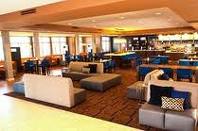
We open Chapter 9, Layout Strategies, with the Global Profile on how McDonald’s around the globe are starting to look more like coffee shops than burger joints. According to The Wall Street Journal (June 10, 2011), hotel lobbies are being redesigned en mass to look like Starbucks outlets as well.  Hilton’s Garden Inn chain remodeling plan, for example, includes what employees call a “Starbuckian area” with communal seating  for the laptop set.

Likewise, Intercontinental’s Holiday Inn  chain is opening a new lobby concept called the “social hub”, with built-in TVs, high tables for laptop plug-in, and an area for food and coffee. Marriott is refitting 100’s of lobbies with touch screens so customers can check weather and flight information. More than 300 Courtyard’s have lobby bistros, with a full breakfast and other food options. And Hyatt lobbies now have a central counter where guest can order drinks, coffee, or food. The same employees who check guests in can even serve the lattes or burgers.

Research shows that younger guests would rather spend time in lobbies than in their rooms. “They want to be alone, but not lonely”, according to a Hilton VP. The new layouts represent a way for hotels, hard hit during the recession, to boost  revenues without taking the risk of raising room rates.

Discussion questions:

1. Why are hotels renovating lobbies instead of rooms?

2. What are the strategic issues of hotel layout?

Teaching Tip: The World’s Most Admired Companies–2011

In reading Fortune’s new 2011 list of the “50 most admired companies” in the world, I saw some good teaching opportunities. Of the nine attributes rated by the 4,100 execs who did the rankings, I would view six of them as being under the OM purview. (The rest are financial measures). And what makes the rankings more interesting is that Fortune points out the major changes since their pre-recession survey 4 years ago.

Here are the  6 categories, along with the old and new champs for each:

1. Ability to attract/ keep talented people:  then, GE: now Goldman Sachs.

2. Global business effectiveness: then Nestle: now McDonald’s

3. Quality of management: then P&G: now McDonald’s

4. Quality of products/ services: then Anheuser-Busch: now Amazon.com

5. Sustainability: then UPS: now Statoil

6. Innovativeness: then Apple: now Apple

Two things we can discuss with our students: (1) McDonald’s is considered the world’s best-managed company on 3 attributes (the last being wise use of corporate assets). Can the class explain why? (2) Only Apple preserved its status (for innovativeness) over the 4 traumatic years. And Apple ranks no.1 in the Fortune overall most admired list.

A wonderful editorial recently in The Wall Street Journal (April 12,2011), by Vinton Cerf (an Internet pioneer now at Google), explains Apple’s success. He writes: “Americans get very excited about innovation…In Silicon Valley, and elsewhere in the US, the engine requires sources of trained professionals, sources of capital, and new and exciting companies that form a mutually enforcing ecosystem”.

Contributing factors, Cerf adds, include the freedom to pursue ideas, the freedom to fail, and freedom of access to information. “Business failure in the US is a mark of experience”. I am reminded of a recent interview of Stephen Jobs who remarked that being fired from Apple by John Scully (in 1984) was the best thing that ever happened in his career. (He came back as CEO in 1997). In other cultures, such a downfall would be a permanent scar.

OM in the News: Queuing Up For Quick McDonald’s Medicine

McDonald’s medicine it’s called: patients in the US want their health care like their food–served up speedily and made “your way”. ” The prospect of waiting for health care is not only distasteful to Americans;  its downright threatening”, say the  MD authors of the recent Time (Jan. 26,2011) article. The mere specter of Canadian-style waiting  lists for tests and procedures evokes enough fear to challenge the concept of government subsidized health care, they add.

We have blogged about waiting for medical care earlier and it’s clear that convenience has become an important part of the way people think. CVS  drug stores offer walk-in “Minute Clinics”, many ERs have billboards advertising guaranteed wait times (offering free movie tickets if they run longer), while other hospitals have even experimented with drive-thru ERs!

The real question is whether it is feasible to implement a reasonable waiting time for “urgent” conditions—like heart attacks, strokes, and lung infections. The good news is that convenient care clinics do a good job of handling coughs, colds, a swollen knee, and even a nagging hernia that hurts a bit more than usual today. But the root problem may be that the current system of medical care  is not set up to triage acute health needs.

This is where OM can help. So many of the issues tied to creating more efficient heath care can be tackled by re-engineering, process analysis, layout changes, JIT, lean,and all the other topics we teach in OM. You can click on Mark Graban’s Lean Blog to see his excellent discussions.

Discussion questions:

1. Why do we need to reorganize ER treatment centers?

2. What is the difference between “severity” and “urgency” in selecting a treatment?

3. How can OM help shorten ER queues?

OM in the News: Product and Layout Changes Drive McDonald’s

We open Chapter 9 (Layout Strategies) with the story of  the 7 strategic changes at McDonald’s since 1950. All  but one have been major layout redesigns (eg., indoor seating, drive thru, play areas, self-service kiosks, etc.). Adding breakfast foods to the menu (in the 80’s) was the one product change–until now. The front page article in The Wall Street Journal (Dec.27,2010) details two brand new strategies–the 1st a product decision and the 2nd yet another layout change.

Under pressure from market-share competitors of all types–from 7-Eleven and Starbucks to smoothie outlets and gas stations– the 14,000 US McDonald’s have broadened their fare. As of now, there are  fruit smoothies, oatmeal, carmel-mocha drinks, flatbread sandwiches, and “garden” snack wraps. This new product development strategy (Ch.5) has created so many choices that the company has been running ads reminding us it still sells Big Macs.

Using manufacturing technology, McDonald’s has made many new items from existing items’ ingredients. Chicken wraps use Chicken Selects’ meat and breakfast burrito tortillas. This simplifies preparation and lowers costs.

But new layout costs have  blunted franchisee enthusiasm. The food assembly line (see Figure 9.12 in the text) had to be changed to make wraps. And an even bigger modification was the addition of the $100,000 McCafe drink stations– one of the most expensive changes in years. (The corporation picks up $30,000 of that cost). Stores had to be redesigned to make room for space next to the pick-up window to accommodate the 4 pieces of drink equipment. Some franchisees balked at the price tag and low drink sales volumes, claiming “we are not even paying for the electricity to run the machines”.

Discussion questions:

1. Why did McDonald’s make these two strategic changes?

2. Ask your students to rank the importance of the  9 changes, referring to the Global Profile in Ch.9.

3. How has the average McDonald’s  changed in the past decades? Are all of the layout strategies still in place?

OM in the News: Locating in China and Avoiding Mexico

Chapter 8 opens with a list of key success factors companies use in making location decisions, and Table 8.1 ranks the global competitiveness of 133 countries. China comes out #29 and Mexico #60. Back-to-back headlines in The Wall Street Journal (Dec.16 and 17, 2010) deal with two very different location strategies. The 1st involves US firms opening outlets in China.

We may be losing manufacturing  jobs to China by the hundreds of thousands, and outsourcing engineering jobs to India and call center jobs to the Philippines by the 10,000s. But US companies are making very successful inroads in China in one field—fast food! McDonald’s is opening  200 new stores in China next year, adding to the 1,100 locations it already has. (KFC, by the way, leads with 3,200 outlets, including many in lesser-developed cities where there is less competition). California Pizza Kitchen  plans to expand, while Starbucks is tripling its stores to 1,500 in the next 5 years. Half of the new McDonald’s will have drive-thrus and 550 will include delivery service. Currently, the firm just does not have the supply chain to allow it to expand beyond the 150 cities it is already in.

On a less favorable location note, the Journal headline declares,”Companies Shun Violent Mexico”. Electrolux just announced it had chosen Memphis over locations in Mexico for a $190 million appliance factory sporting 1,200 jobs. The decision involved factors such as proximity to suppliers,but Mexico’s deteriorating security and spiraling drug-related violence played more than a minor role. “We won’t put a factory in Mexico until some of this violence gets addressed”, says the CEO of Terex,  a heavy equipment maker. Whirlpool’s concern about safety was also a factor in building an oven plant in Tennessee, rather than Mexico. Toyota’s approach was to build a plant deeper inside the country, in a relatively safer area.

Discussion questions:

1. What is the long-term danger to Mexico in terms of foreign investment?

2. Why are US fast-food chains trying to penetrate Chinese markets?

3. Discuss the difficulty McDonald’s faces in  a rapid expansion abroad.