OM in the News: Hotel Robots Help During Covid-19

Room-service robots like Relay reduce in-person interactions between staff and guests.

“Robots that delivered a burger and fries a few years ago were a high-tech gimmick that gave hotel guests a good laugh,” writes The Wall Street Journal (Aug. 12, 2020). Now, manufacturers are suggesting these machines could help guests stay safe during a global pandemic.

Hoteliers and robotics companies say delivery bots like Sovioke’s Relay are cutting down on potentially unsafe interactions between hotel staff and room guests, by offering contactless room service. And cleaning robots, like Maidbot’s Rosie, are vacuuming hallway floors while cleaning crews spend more time than ever sanitizing rooms.

Before the pandemic, bots at one California hotel chain would typically make 200-300 trips a month, mostly ferrying items like toothbrushes or towels from the reception desk, on to elevators, and up to people’s hotel rooms. Those same bots now make about 700 trips a month, as more guests seek to avoid interactions with hotel staff. And there are new types of robots in development that could help hotel owners during the pandemic. Maidbot vacuuming robots  are rolling out wet-cleaning and disinfecting machines to further assist housekeepers in virus-proofing room surfaces.

The use of robots in the hotel industry has concerned some that these machines could eventually be used to replace employees. Many U.S. hotels have reduced staff during the pandemic, and although hotel operators and robotics companies insist robots help rather than reduce staff, robots could limit how much extra labor hotels bring on to meet new sanitation demands.

The robots aren’t always perfect. Children can confuse them by trying to get them to move in too many directions at once, causing the bots to get stuck. And sometimes it takes patience and a few programming tweaks before the robots really learn the layout of the hotel.

Classroom discussion questions:

  1. How else is technology changing the hotel industry? (Hint: see Ch. 7 in your Heizer/Render/Munson OM text)
  2. What other tasks might hotel robots perform?


OM in the News: The Energy-Minded Hotel

A guest room key card at a Sofitel
A guest room key card at a Sofitel Hotel

American hotels have long resisted key cards (where guests must place a room key into a slot on the wall to activate the lights and temperature control system) or other energy-saving systems. Energy was cheap, and hoteliers feared that guests, who routinely left their rooms with the lights and air-conditioner on, would see any check on their energy use as an inconvenience. “But the aversion of hoteliers in the U.S.,” writes The New York Times (May 10, 2016), ” is slowly shifting as Americans have become more energy conscious and more states and municipalities have adopted rigorous building codes for energy use.”

In 2014, 29% of hotels had a sensor system in guest rooms to control the temperature, compared with less than 20% in 2004; and more than 75% had switched to LED lighting, up from less than 20%. Other energy-saving measures had also been more widely adopted. Energy costs typically represent 4-6% of a hotel’s overall operating expenses, with the largest share for heating and air-conditioning.

Many major hotels in the U.S. have digitally controlled thermostats to monitor the temperature in guest rooms. And a growing number have installed sophisticated systems that sense when a room is occupied. When a hotel guest enters a room, the device allows the temperature to be manually controlled within a certain range — from 60 to 80 degrees, for example — and then sets it back into an energy-saving mode when the room is vacant again. Such a system can save a hotel 20% or more in energy costs. And many utility companies now offer rebates to hotels that have installed digital thermostats and other energy management devices.

Classroom discussion questions:

  1. What are the downsides of key card technology?
  2. Why is sustainability of growing concern in the hotel industry?

OM in the News: Hotels Embrace Sustainability With Unwashed Towels

hotel2Stuart Gitlow traveled this month to the Westin Peachtree Plaza in Atlanta for a conference. During his three-night stay, he dispensed with housekeeping. “I don’t need my bed made every day and can certainly use the same towel three mornings in a row,” he wrote.  Gitlow was rewarded for his green efforts with 500 Starwood Preferred Guest loyalty points for each night of his stay. Had he not chosen points, he also had the option of receiving a $5 voucher for food. The program, called Make a Green Choice, allows all guests, not just frequent travelers, to opt out of housekeeping. About 6.4 million guests have participated since 2009.

As the drought in California and the Western states draws increased attention to conservation, hotels are turning to sustainability as a way of both attracting guests and cutting costs, reports The New York Times (April 28, 2015). Hotels have 3 reasons to pay attention to conservation: corporate sustainability; better expense management; and consumer interest. A study by TripAdvisor found that 79% of travelers placed an importance on properties that use environmentally minded practices.

Hotels here and abroad are introducing or augmenting farm-to-table cuisine in restaurants to lower their carbon footprint, providing charging stations for electric vehicles and using kitchen scraps for compost and even recycling cooking oil for experimental biodiesel fuel. Behind the scenes, hotels are installing energy-efficient light bulbs and digital thermostats and are using recycled water for landscaping. They also are displaying discreet cards in guest rooms about the energy saved by not changing sheets and towels daily. At the Westin Peachtree Plaza, groups are offered behind-the-scenes tours to learn about hotel sustainability. Sites include the kitchen, loading dock and laundry. The hotel has conducted seven tours since the beginning of the year.

Classroom discussion questions:

1. In what other ways can hotels practice sustainability?

2. Why is this a good OM strategy?

OM in the News: Eliminating the Waiting Line at Hotel Check-In

Concierge registering guest at Andaz West Hollywood

Hotels are changing the way guests check in to their rooms, writes The New York Times ( March 19, 2013), eliminating the traditional stop at the front desk to speed up, simplify and personalize the process. When guests arrive at citizenM, a boutique European hotel chain, they check in at a kiosk and go straight up to their rooms. The kiosk was designed to be easy to use because most travelers are encountering it for the first time.

“The hospitality industry is moving toward more automated check-in systems,” says NCR’s VP for kiosk systems. “Customers are used to A.T.M.’s at the bank instead of tellers, checking in for airplane flights online, and they are now looking for that same efficiency when they arrive at a hotel. No one wants to wait in line for the front desk anymore”.

Automated hotel check-in is expected to expand rapidly. In a typical system, guests check in by computer or phone before they arrive and enter their expected arrival time, which helps the housekeeping staff with the room cleaning schedule. A bar code is sent to the traveler to print out or display on his or her phone. At the hotel, the guest scans the bar code at a kiosk. The machine assigns a room and spits out the number of plastic key cards requested, and the guest can head upstairs.

Hotels are also using new technologies to eliminate the front desk check-in line — with personal greeters who shepherd guests through the check-in process in a more comfortable setting. Andaz West Hollywood has combined its front desk staff, bellmen and concierge functions into “hosts,” who greet guests as they enter the lobby and sit with them on comfortable couches to check in using an iPad with a credit card reader.

This article is a nice complement to the Winter Park Hotel case study in Module D.

Discussion questions:

1. What is the benefit to hotels in implementing kiosk check-in?

2. Will these systems be widespread in a few years?

OM in the News: China’s Newest Exports–Bridges for California and Workers for the Bahamas

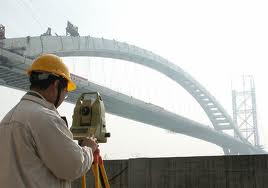
China’s role as an exporter is not exactly a news item, but two articles caught my eye this week that are worth discussing in your OM class. In the first, The New York Times (June 26, 2011) tells of how California decided to by-pass the U.S. “Buy American” program to have the new San Francisco-Oakland Bay Bridge built in China and shipped here in massive pieces. The Times writes: “The project is part of China’s continual move up the global economic value chain–from cheap toys to Apple iPads to commercials jets–as it aims to become the world’s civil engineer”.  Based on the reputation of showcase projects like the Beijing Olympic-sized airport terminal and the mammoth hydroelectric Three Gorges Dam, Chinese companies have been hired to build copper mines in the Congo, high-speed rail lines in Brazil, and huge apartment complexes in Saudi Arabia.

So it shouldn’t have come as a big surprise to find out that China is about to build the largest resort in the Caribbean, in Nassau, Bahamas, to challenge the huge Atlantis Hotel head-on. The surprise, however, was the uniformly negative  reaction from every Bahamian I met, 3 weeks ago while on vacation, to the project’s construction. The Miami Herald’s report  that China would be sending 5,000 of its own workers to build the $3.4 billion, 2,250 room Baha Mar hotel and casino resort did not please locals –or the U.S. government. Hotel execs are cognizant of the negative message they will send to tourists, as well as the Bahamian citizens, by maintaining a work camp for thousands of Chinese laborers in a highly visible and affluent section of town. But the Chinese government insisted on Chinese workers– or there would be no financing. The Bahamas wanted another tourist draw and reluctantly agreed.

Discussion questions:

1. “He who has the gold, makes the rules” seems to apply in the hotel case. Do students agree?

2. Why did California opt for a Chinese bridge?

OM in the News: The New Hotel Layout

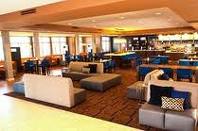
We open Chapter 9, Layout Strategies, with the Global Profile on how McDonald’s around the globe are starting to look more like coffee shops than burger joints. According to The Wall Street Journal (June 10, 2011), hotel lobbies are being redesigned en mass to look like Starbucks outlets as well.  Hilton’s Garden Inn chain remodeling plan, for example, includes what employees call a “Starbuckian area” with communal seating  for the laptop set.

Likewise, Intercontinental’s Holiday Inn  chain is opening a new lobby concept called the “social hub”, with built-in TVs, high tables for laptop plug-in, and an area for food and coffee. Marriott is refitting 100’s of lobbies with touch screens so customers can check weather and flight information. More than 300 Courtyard’s have lobby bistros, with a full breakfast and other food options. And Hyatt lobbies now have a central counter where guest can order drinks, coffee, or food. The same employees who check guests in can even serve the lattes or burgers.

Research shows that younger guests would rather spend time in lobbies than in their rooms. “They want to be alone, but not lonely”, according to a Hilton VP. The new layouts represent a way for hotels, hard hit during the recession, to boost  revenues without taking the risk of raising room rates.

Discussion questions:

1. Why are hotels renovating lobbies instead of rooms?

2. What are the strategic issues of hotel layout?

OM in the News: Recycling Leftover Hotel Soap?

Ever wonder what happens to leftover soap and shampoo at hotels like Sheraton, Westin, Marriott, and Hilton? USA Today (April 26,2011) describes how a non-profit organization called Clean the World recycles used soap for distribution in developing countries and homeless shelters.

Most bars of soap, about a million, are thrown out each day by US hotels. But Clean the World, and other groups, are taking in  1.6 million pounds of soap a year through agreements with about 1,000 hotels. Clean the World charges hotels 65 cents a room to clean and redistribute soap and shampoo bottles. It has built recycling centers in Orlando, Las Vegas, Toronto, and Vancouver. Soap is sterilized in its plants and reformed into 2-ounce bars.

In the past 2 years, Clean the World has distributed more than 8 million bars of soap in the US and 40 countries, including Haiti, Uganda, Zimbabwe, and India. Its efforts have diverted 550 tons of waste from landfills. “Each day, 9,000 children die from diseases that can be prevented by washing with soap”, the organization says.

Sustainability in hotels is a topic we discuss in both Ch.5 and Ch.7. Here is a good example to bring to your students.

Discussion questions:

1. Why doesn’t every hotel practice this recycling strategy?

2. How else can hotels be “green”?