OM in the News: Best Practices at the Sanford Health System

hospitalIn 2012, waste in the national health care system was measured at $750 billion annually. Driven by tightening margins and increased pressure for positive outcomes, health systems nationwide are looking for ways to maximize resources and trim costs, writes Argus Leader (May 7, 2014).

“It’s not just about cutting costs,” said the CEO of Sanford Clinic in South Dakota. “We do have to cut per-unit costs, but we have to look at standardization, best practices. We have a very fragmented health care system, and that’s where integration and coordination of care is so critical. It’s not just for efficiencies. It’s for best outcomes and eliminating errors and waste.”  The clinic’s approach to becoming more efficient involves the approaches of Kaizen and Six Sigma, tools used in business for process improvement, but the greater goal is to integrate continuous performance improvement into the culture.

The Sanford Health System, of which the clinic is a part, set a goal of finding $100 million in efficiencies this year, with much of the savings coming through better supply chain management. “We looked at cost transformation opportunities, which is tying it back to product standardization; maybe some miscellaneous contracts we have from one region to another that we could consolidate,” added the President of Sanford USD Medical Center. As the system has grown, it has commanded better pricing options from vendors. Various Sanford locations have worked together to identify best practices and streamline products and pharmaceuticals to achieve more savings through buying in bigger quantities.

Agreeing to use a common spine hardware, for example, saved $2.5 million annually. Working with cardiologists to determine the pacemaker of choice across the system saved another $2.4 million. Further, a new asset management system is designed to further optimize staffing and supplies. It will monitor where patients and care providers are to manage patient flow and track equipment.

Classroom discussion questions:

1. Why is OM so important in hospitals?

2. What tools in Chapter 6 can be used to improve hospital quality?


OM in the News: Wal-Mart Ramps Up Global E-Commerce

A worker at Wal-Mart's "dark store" in Mexico City
A worker at Wal-Mart’s “dark store” in Mexico City

Wal-Mart says it has cracked the code for speedy, same-day grocery delivery—in Mexico. As retailers like Wal-Mart and Amazon.com rush to expand home delivery in the U.S. to groceries, the retail giant is looking across the border for help: Its high-end Mexican grocery chain, Superama, already delivers groceries in as little as 3 hours.

Wal-Mart has ramped up its global e-commerce operations over the past few years, writes The Wall Street Journal (Feb. 19, 2014), in hopes of catching up to online rival Amazon.com. The company vowed to match Amazon’s service offerings within 2 years. Currently, only about 2% of Wal-Mart’s sales come from the Web.

The company has been testing home-grocery delivery in Colorado and California, but it hasn’t announced a timeline for taking the service nationwide. It is also experimenting with grocery delivery in such cities as Buenos Aires and Santiago, Chile. Wal-Mart says it is “committed to being the online global leader in grocery delivery.”

Mexico provides $27 billion in sales and contributes 6% of the company’s global sales. Superama helped Wal-Mart achieve a 92% market share in the home delivery of groceries in Mexico. A fifth of its grocery orders arrive via mobile-phone apps, computers and tablets. The service is strongest in Mexico City, where much of Mexico’s wealth is concentrated. The capital’s snarled traffic and cramped grocery stores make delivery from Superama appealing for the well-to-do.

The majority of the grocery deliveries in Mexico come from supermarkets that are open to the public. But in the future, Wal-Mart de México plans to deploy more “dark stores”— spaces used exclusively to fulfill online orders. Such “closed” stores are more efficient: Wal-Mart’s inaugural dark store in Mexico City handles the same volume of orders as 5 stores open to the public.

Classroom discussion questions:
1. Why is Wal-Mart pursuing this global strategy?
2. What has happened to previous firms who entered the on-line grocery business in the US?

OM in the News: Straining the African Hamburger Supply Chain

Johnny Rockets in Lagos, Nigeria

“It ain’t easy bringing Africa the hamburger,” writes The Wall Street Journal (Dec.10, 2013). In the past year, Johnny Rockets in Nigeria opened its first retro diner on the continent, and Burger King cut the ribbon on the first of at least 200 restaurants it plans for South Africa and nearby countries. Next year, Hardee’s plans to build eateries in Nigeria and South Africa. Some of the burger world’s biggest names are introducing the American culinary classic to Africa’s expanding consumer class.

But that quest is straining a supply chain that is short on the refrigerated trucks and warehouses needed to keep patties and vegetable toppings fresh. And in many places, Africans are consuming beef at a faster clip than cattle ranchers can deliver new cows, meaning beef prices keep climbing. That is testing the limits of what the continent’s young urbanites can afford. For hamburger chains, the biggest problem is getting meat. From Nigeria to Namibia, slaughterhouses rely on local herdsman as a source of beef.

But herdsman come and go. That prompted Burger King to invest $5 million in a local cattle ranch that is gearing up to churn out 1.2 million Whopper patties a week. In Nigeria, meat supplier Chi Ltd. is one of several agribusinesses building ranches in anticipation of the new burger chains. The problem is, Nigerian cattle tend to be pretty scrawny. And the ideal burger source, the European brown cow, succumbs to tropical disease here.

Johnny Rockets’ final product is pricey. To give an authentic taste of the U.S., they fly in onions, mushrooms and iceberg lettuce. Burgers start at $14 for the Rocket Single, a lone patty topped with a Cheddar slice.

Classroom discussion questions:
1. Compare the supply chain problems in Africa to those of entering more developed countries.

2. Besides the food supply chain, what other obstacles do restaurant chains face in Africa?

Guest Post: Supply Chain Risk Management and ISO

Chris Bowler
Chris Bowler
John Bowler
John Bowler

Our Guest Post today comes  from John Bowler, who is Visiting Professor at DeVry University’ s College of Business, and Chris Bowler, who is Principal, Porter Keadle Moore, where he specializes in Enterprise Risk Management.

We find it interesting that the foundation of the relatively new Supply Chain Risk Management (SCRM) ISO standard is based on theories first advanced quite some time ago – PDCA (Deming, circa 1950) and Competitive Strategy and Competitive Advantage  (Porter, circa 1980 and 1985).  Along the same lines, Jay and Barry’s OM text states in Chapter 2 that competitive advantage is achieved through one of these three strategies: (1) differentiation, (2) cost-leadership or (3) response. We note that the Accenture 2011 Global Risk Management Study found 47% of the companies surveyed listed “reducing costs” as their highest risk management challenge.

While many firms today are focused on “lean” cost reducing practices, some companies and many experts are finding that these lean approaches can create unanticipated events, which can quickly escalate into crisis and perhaps even system failures. Is it reasonable then to suggest that a company  is better served by refocusing its SCRM efforts on its specific competitive strategy’s strengths, weaknesses, opportunities, and threats?  Along those lines, ISO 28002 (2011) brings these following new insights to the table:

  • SCRM is really about effectively capturing profitable business opportunities compatible with a firm’s (competitive) strategy.
  • SCRM effectiveness depends on the resiliency of the firm’s processes, people and technology to both stress and breaks along the supply chain.
  • When an organization incorporates and aligns its SCRM with its strategic goals, the resultant degree of resiliency ensures the firm’s long-term profitability and survivability.

This new way of thinking about SCRM as Supply CHANGE Management reflects transformational thinking not only for finance and operations but for the C-suite as well.

OM in the News: Apple’s Move to Multiple Suppliers for the New iPad

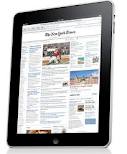
The scene at Apple stores around the world last Friday resembled a rock concert, with large crowds, barricades, food, and cheering  as the company introduced its 3rd generation iPad. But when covering Supply Chain Management in Chapter 11, you and your students may be more interested in what’s going on under the hood of the new iPad tablets. The Wall Street Journal (March 17-18, 2012) writes that Apple “heavily hedged its bets on suppliers of key components, a strategy aimed at holding down costs and risks. The strategy allows a customer to play one supplier off another for lower prices, and minimize disruption if a single factory runs into production problems.”

How do we know the contents and supplier names?  The research firm UBM TechInsights, it turns out, bought and took apart several iPads on Friday, and found components with the same functions made by at least 3 manufacturers in different tablets. Some teardowns revealed memory devices from Micron Technology, some from Hynix Semiconductor, as well as others with chips  from Toshiba. The distinctive high-resolution displays came from  Samsung, LG Display, and Sharp.

The desire to diversify supply sources has taken on added importance with recent natural disasters, including the 2011 earthquake in Japan and  flooding in Thailand. “The multiple suppliers in the iPad suggest Apple is more actively trying to mitigate such risks,” says a UBM executive,  adding that  the strategy is credited to Apple CEO Tim Cook who “made his name at the beginning as the master of the supply chain.”

After opening the new device, UBM estimated that Apple paid $309 for the components in the iPad (that sells for $629). This compares to a current cost of $248 for the iPad 2, which was released last year. Here is the link to a 3 min. video on the iPad teardown.

Discussion questions:

1. Why do many electronics industry companies seek multiple suppliers?

2. Why did component costs increase in this new iPad?

OM in the News: Boeing Checks Out its Supply Chain for Weak Links

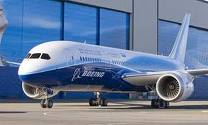
Boeing’s production problems with its 787 Dreamliner have taught it to stress-test  suppliers as it tackles a mountain of orders for its best-selling 737 jets. In the past, “We had much more of an attitude of: We’ll set the requirements and you have to go do your job”, says Boeing’s VP for the 737  in The Wall Street Journal (Dec.30,2011). Now, it is using “a fundamentally different approach”, by regularly verifying that suppliers have the right skills.

This is part of a critical effort to boost production by about 60% (or 300 jets a year) to work down a backlog of 3,500 orders worth $270 billion. To do so, Boeing has added 200 supply chain specialists in the last 18 months. They visit vendors frequently as part of the strategy to remove bottlenecks and delays that have hobbled previous ramp-ups. Take Vaupell Holdings, for example– one of 1,000 suppliers subject to exhaustive reviews of production tools, materials and schedules. A Boeing employee visits almost daily now, as compared to once a week in the past.

Airplanes are one of the most complex industrial products. Jets at Boeing contain several million parts, coming from 1,200 direct suppliers and many more 2nd and 3rd tier suppliers. Problems down the supply chain, such as shortages of machines used to mold certain components, can cause delays that ripple not just across Boeing, but through the whole commercial airplane industry. Boeing execs say their heightened sensitivity to the supply chain stems from the troubles it had in producing the first 787s, which depend heavily on parts made  outside Boeing.

Discussion questions:

1. Why is Boeing so concerned about its suppliers?

2. What happens when the supply chain suffers severe disruptions?

OM in the News: Apple’s Supply-Chain Secret?

 Businessweek (Nov.4-10, 2011) describes the “world of manufacturing, procurement, and logistics ” in which Apple excels.  “Apple has built a closed ecosystem where it exerts control over nearly every piece of the supply chain, from design to retail store”, writes the magazine. “The iPhone maker spends lavishly on all stages of the manufacturing process, giving it a huge operations advantage”.

This is a great article to ask students to read, as it describes the critical role of OM in one of their favorite companies. “Operations expertise is as big an asset for Apple as product innovation or marketing”, says the former head of SCM at HP. With its volume –and ruthlessness–Apple gets big discounts on parts, manufacturing, capacity, and air freight. This enables the company to handle massive product launches without maintaining huge inventories, all the while earning 25% profit margins.

As one example of details in the supply chain, Apple bought up all the available holiday air freight space  to ensure its new translucent blue iMacs would be widely available before Christmas–paying $50 million to do so. The move handicapped Compaq when it later wanted to book air transport.  Apple also decided to fly iPods directly from Chinese factories to consumers homes, allowing the buyer to track the phone’s progress around the world on its web site.

The company recently announced it plans to double capital expenditures on its supply chain to $7.1 billion next year, while committing $2.4 billion in prepayments to key suppliers. The tactic ensures availability and low prices. Because it  locked up all available screens to use in its iPhone4 debut last  year, competitors like HTC couldn’t buy the screens it needed. 

 While life as an Apple supplier may be lucrative because of volumes, Apple  does squeeze prices to the bone, and may require suppliers to keep 2 weeks of inventory within a mile of Asian assembly plants.

Discussion questions:

1. In what ways do Apple’s retail stores provide an OM advantage?

2. How does Apple use SCM as a strategic weapon?

Good OM Reading : Once Upon a Car

If you are looking for a fast-paced, riveting story of the near demise of the US auto industry, read Once Upon a Car: The Fall and Resurrection of  America’s Big Three Auto Makers. Author Bill Vlasic started following GM, Ford, and Chrysler in 2008, about a year before GM and Chrysler filed for bankruptcy.

 We attend a secret meeting between Rick Wagoner (GM’s CEO) and Bill Ford (the great grandson of Henry Ford), in which the GM team proposed a merger with Ford. Desperate to stave off bankruptcy and burning through more than $1 billion per month, GM needed Ford’s $30 billion bank account. Savings would be huge and synergy phenomenal. As GM’s vice-chairman Bob Lutz had argued, “It could be one  large, enormously powerful global auto company.You could shut one proving ground, one finance department, one tax department, a bunch of plants, get rid of a lot of engineering”.  But  Ford was angry with GM’s arrogance in wanting to be the senior partner and  would have none of it.

The overture, though, was also disturbing. If GM went bankrupt, a big part of the auto supply chain would go with it. And that would definitely hurt Ford.  (You may recall that some 15 years earlier, GM won a major lawsuit  against VW, only to realize that if destroyed VW, its own supply chain would be severely damaged. It settled for $100 million in cash and VW’s promise to buy a $1 billion in parts from GM per year).

To protect his flank, Ford courted the future president, Barack Obama, who was excited about Ford’s plans to create smaller, fuel-efficient cars. On the other hand, Wagoner’s outsized control of his board and his political maneuvering killed a potential partnership with Renault-Nissan. In the end, he was forced out by Obama as part of the $50 billion bailout. And as to Chrysler, we learn that it didn’t have a chance in the game. Daimler-Benz, its German owner, wanted to dump Chrysler for years and had long starved its R&D budget. UAW union head Ron Gettelfinger does not escape blame either. Outsized demands and the infamous union job bank did little to help his autoworkers.

Video Tip: Supply Chain Management at Arnold Palmer Hospital

We think our video case studies on the Arnold  Palmer Hospital for Children and Women have been very popular for 2 reasons. First, they cover seven different OM topics–from quality to layout to process design to JIT to capacity to project management to  SCM–which means you can follow one organization from start to finish during the semester. And second, hospitals are a great example of a service application of OM that students can relate to. So if you are looking for a video to spice up your supply chain (Chapter 11) lecture, this is a good choice.

Arnold Palmer Hospital (APH) used to belong to a 900 member national group purchasing organization (GPO), through which it saved money on virtually every staple it needed.  But not everyone was pleased. Doctors, for example, were given only limited brand choices of certain surgical implants, like pacemakers, through the GPO. And it was difficult to take advantage of local vendors who might provide better service and prices. By creating its own, much smaller GPO, with only 7 local hospital members, APH realized it could save 7%, around $7 million annually, on its $100 million in purchases. This savings came despite the increased overhead of starting one’s own purchasing department.

In this 8-minute video, you will see the power of an interesting group, a Medical Economics Evaluation Committee. The committee allowed hospital staff to have  input into the approved products list, picking the medical tools they preferred, but only after agreeing to stick with a few choices at the best prices–truly a combination of medicine and economics.

The video also shows the 3 tiers of suppliers and how they are effectively integrated into the supply chain to drive down costs, reduce inventory, and improve quality.

OM in the News: Toyota’s Quake-Proof Supply Chain

Still impacted by the massive earthquake 6 months ago, Toyota has just announced that it is creating a robust supply chain that would recover within 2 weeks in the event of another disruption. Toyota and other Japanese automakers were forced to halt a large portion of their production both inside and outside Japan for months after the quake and tsunami cut off supplies of 100’s of parts from the devastated northeast region.The Baltimore Sun (Sept.6, 2011) reports that Toyota is taking 3 steps to fight supply chain risks, a process that will take 5 years to implement.

The 1st is to further standardize parts across Japanese automakers, so they could share common components that could be made in several locations.

The 2nd step is to ask suppliers down the chain to hold enough inventory–perhaps a few months’ worth–for components that can’t be built in more than one location. This is to prevent a repeat of what happened with microchip supplier Renesas, which has yet to complete recovery.

The 3rd step is to make each manufacturing region (such as North America or Europe) independent in parts procurement so a disaster in Japan does not impact production overseas.  This would also offset losses from the strong yen by lowering costs and creating a natural  hedge. Last year, Toyota built 43% of its 7.6 million vehicles in Japan and exported more than half of them. Currently, the company provides engines and transmissions  for cars built here and in Europe from Japan– at a cost that is high due to the strength of the yen. Toyota will also begin importing more components to cut cost of cars made in that country.

Discussion questions:

1. Is the plan overkill? If a part is made in a low-risk zone, does it need to be made in a half-dozen plants?

2.  Do these initiatives apply beyond the auto industry?

OM in the News: Japan Dispensable as a Supplier?

The article in today’s New York Times (May 30,2011) begins: “Maybe Japan is not as crucial to the global supply chain as those first few weeks after the earthquake made it seem”.  As an example, the Times describes STMicroelectronics, the $10 billion European semiconductor giant, which after the initial shock of losing  Japanese components, quickly lined up alternative suppliers outside of Japan. “It is going smoother than we had thought”, says the CEO. And it turns out this experience is widely shared. Beyond a very short list of components (like auto micro controllers), it turns out that Japan plays only a small role in the global supply chain.

There may be 2 reasons for the limited impact of the Japanese disaster. First, the resiliency of supply networks and quick action by companies helped. But a new report by SCM World finds that Japan, despite being the world’s 3rd largest economy (behind the US and China), is not the major source of manufactured parts for companies outside that country. China was the #1 source (37%), then the US (20%), then Germany (7%). Japan tied with Canada for 8th place.

“What’s remarkable is how relatively isolated Japan is”, says the report’s author. “It’s far less integrated into the world’s manufacturing supply chains than you would expect, given the size of Japan’s economy”. Japan’s manufacturing prowess and global competitiveness are focused in a few industries, like autos and consumer electronics.

Further, big Japanese firms have preferred to have essentially captive suppliers. These tight, cooperative bonds have meant shared experiences and constant communication. But they also meant that Japanese suppliers have been less likely to sell to foreign corporations.

Discussion questions:

1. Why did the earthquake have a limited effect on manufacturers outside Japan?

2. How will the close relationship among Japanese companies help the country recover more quickly?

OM in the News: The Foxconn Explosion and the iPad

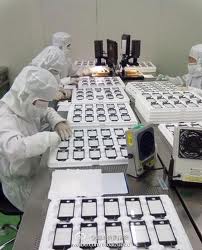
We last blogged about Foxconn– one of  China’s and the world’s largest manufacturers–when Businessweek featured the company as its cover story last September. Known as the “consumer electronics assembler of the world, this giant firm makes products for nearly every major electronics company. Its customers include Apple (iPads and iPhones), Acer (PCs), Amazon (Kindles), Cisco (networking gear), H-P (printers and PCs), Dell (PCs), Motorola (phones), Microsoft (Xbox systems), and Sony (Playstations). The headlines at that time centered about working conditions at Foxconn, where almost a dozen employees committed suicide last year.

So yesterday’s headline in The Wall Street Journal (May 24, 2011), “Factory Blast Roils Tech Supply Chain” raised a number of concerns, especially at Apple, whose iPads are reportedly made at the same Hon Hai plant in southwestern China.  (Apple, concerned about even rumors of supply chain disruptions for the popular iPad2, would not  acknowledge that the product is manufactured there. The original report came in a leak to the Washington Post 2 days ago).

In the blast at the relatively new Hon Hai plant, 3 workers were killed and 15 injured, and the safety practices at Foxconnn are being raised anew. Labor rights groups had already warned the factory about hazardous working conditions , including aluminum dust floating in the air because of a process that workers use to polish iPad cases. The combustible dust, a recognized risk in electronics manufacturing, appears to be  the cause of the explosion. Apple had earlier complained to Foxconn about factory conditions, but did not move its contracts elsewhere.

Discussion questions:

1. Why do so many electronics firms contract out their manufacturing?

2. Why is Apple unwilling to confirm where its iPads are made?

OM in the News: How GM Survived the Japanese Supply Chain Break

Two months after Japan’s devastating  earthquake, Japanese automakers in the US are still struggling with significant supply disruptions. Toyota, for example, which gets 15% of its parts needed for North American factories from Japan, is operating at only 30% of capacity. 

G.M., which spends about 2% of its part’s budget in Japan, identified 118 products that created shortage problems at the start of the crisis. Yesterday’s New York Times (May 13, 2011) documents the dramatic story of how G.M. went through a “white knuckle time” when numerous plants came close to closing. The story ends with the company announcing it is winding down its disaster response operations–the crisis averted. But it did not appear to be anything short of  a catastrophe in early March.

 Four days after the earthquake, G.M. assembled 100’s of employees into a 24-hour-a-day team, in what it called “Project J”. The company idled 2 plants to conserve supplies and found as many alternative sources as possible . Coordinating efforts from 3 “crisis rooms” in Warren, Michigan, the Vice-Chairman realized that existing contingency plans prepared for “nothing on this kind of scale or scope”. Issues with 33 problematic parts did not even become known for 2 more weeks, when G.M. discovered disruptions from sub-suppliers it barely knew of.

One G.M. consultant added: “It’s not just the assembly plant that needs to run, it’s not just the direct supplier. I’ve got to understand every piece at a second tier, a third tier, and a fourth tier below that. We’ve never had to do that before”. With only sparse information available from many suppliers, G.M. sent over 40 employees to Japan to size up the situation–and to offer help getting vital plants reopened. The Japanese culture did not always welcome the offers from outsiders, but in the end, the company resolved all but 5 shortage problems.

Discussion questions:

1. Why is G.M. in much better shape with regard to parts than Toyota?

2. What major lesson did G.M. learn from the disaster?

OM in the News: Complexity of the African Supply Chain

While the aftermath of the Japanese earthquake is causing many companies to worry about the auto and electronics supply chains, a different pall is hanging over a supply chain in the Democratic Republic of the Congo. The substance in question is a rare earth metal called tantalum, and the Congo is the world’s 3rd largest producer of this ingredient key to smartphones, tablets, and computers. The Wall Street Journal (April 27,2011) reports that Intel, AT&T, H-P, and other big technology companies are caught in a new SEC rule that requires them to report if  their supply chain includes tantalum coming  from war-torn regions of Africa. Key minerals, according to the law, cannot come from the Congo’s rebel-controlled mines.

I have to admit that I did not know much about such “rare earths” until we blogged about neodymium . At that time China cut its exports of that metal by 3/4 to save supplies for its own electronics manufacturers. China makes 97% of the world’s neodymium, dysprosium, and didymium.

The complex African supply chain means that US companies don’t really know who they are buying from. They purchase finished products through suppliers that source from smelters,which in turn buy from traders on the ground. Intel, Dell, TriQuint, AT&T, and Microsoft are all scrambling to work with suppliers to track the minerals. AT&T, hoping for an exemption,  estimates it would have to wade through 35 manufacturers, 60-80 parts suppliers, 1,060 commodity-part suppliers, and an unknown number of brokers and distributors to get to the mine that is the source of its tantalum.

Just as Ford recently discovered that a 3rd tier supplier in Japan was the sole source for 3 paint pigments for its autos, manufacturers around the world are finding that complex supply chains are an OM function that needs to be monitored and managed.

Discussion questions:

1. Why is it so difficult to manage global supply chains such as this one in the Congo?

2. What alternatives do manufacturers have in replacing rare earth suppliers?

OM in the News: Hitachi’s Airflow Sensor Shuts Auto Plants Worldwide

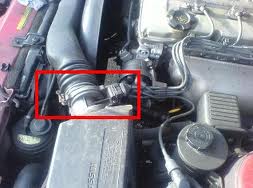
The Wall Street Journal (March 24,2011) reports today that a small electronic part that measures airflow to car engines (and retails for $90) is shutting or cutting auto production at  plants around the world. The impact of the Hitachi sensor is, of course, tied to the earthquake in Japan 2 weeks ago. Hitachi makes 60% of the world’s market for airflow sensors, but its plant in northern Tokyo remains shut down.

Here is the ripple effect from the one part you probably never heard of before:

GM Shreveport, assembly halted March  21.

GM Buffalo engine plant, 10% of workers laid off.

Peugeot-Citreon and  Vigo in Spain,  and Peugeot in France, production cut in half.

Opel in Germany, Zaragoza in Spain,  and Trnava in Slovakia, output slowed.

Hitachi also supplies  Ford, Renault, Nissan, Toyota, and VW.  “Ford is monitoring availability of sensor supplies ‘hourly’ as it runs low on the same part”, says The Journal. But this may be just the tip of the iceberg. Auto makers keep different  supply levels (say 10 days for this part), and since the sensor arrives by ship, it may take another few weeks for the full impact to be felt. The last shipments made before the quake should arrive in the US next week.

On a more positive note, an accompanying article in The Journal announces that Japanese chip makers are gradually resuming operations in northeastern Japan. The problem for Fujitsu, Renesas, and Toshiba is that power supplies are still inconsistent.  Designed to operate 24/7, when systems are shut down, it takes up to a week to reboot all the machines in the plant.

Discussion questions:

1. What can auto makers do to prevent this situation from happening in the future?

2. How can the restart process be speeded up?