Video Tip: Lean Operations at a NYC Food Bank

metro world childThis summer, my older son, a senior majoring in OM at the University of Florida,  interned at a wonderful non-profit called Feeding Children Everywhere. This organization manufactures and provides free prepackaged soup meals to millions and millions of needy families in the US and abroad. One packet, when added to 2 quarts of boiling water, delivers a healthy (and tasty) meal to a family of 4. Using efficient operations and a legion of volunteers, the cost is only 75 cents per package.

So when I came across this wonderful 6 minute video (click below) of how lean production helped improve a food bank in NYC, I thought it would make a perfect introduction to the role of OM in a non-profit–one that might really interest your students when you are covering Chapter 16.

http://www.youtube.com/watch?v=EedMmMedj3M

To aid families more quickly, we see in the video that Toyota partnered with Metro World Child to help them serve meals to more New Yorkers who were impacted, and still suffering, from Superstorm Sandy. Using the principles of the Toyota Production System, we see how the number of meals delivered hourly has increased 18-fold, meal-assembly time has significantly decreased, and the number of volunteers needed is nearly half of what it used to be. Toyota has also pledged to donate another meal for each viewing of the video up till July 19, 2013. Thanks to an explosion of online views, there have been more than 1 million meals given out on the company’s tab to date.


Good OM Reading: The Lean Startup Company

hbr coverLaunching a new enterprise—whether it’s a tech start-up, a small business, or an initiative within a large corporation—has always been a hit-or-miss proposition. According to the decades-old formula, you write a business plan, pitch it to investors, assemble a team, introduce a product, and start selling as hard as you can. And somewhere in this sequence of events, you’ll probably suffer a fatal setback.

The odds are not with you: As new research by Harvard  shows, 75% of all start-ups fail. We’ve now learned at least three things, writes the May, 2013 issue of Harvard Business Review : 1. Business plans rarely survive first contact with customers. As the boxer Mike Tyson once said about his opponents’ prefight strategies: “Everybody has a plan until they get punched in the mouth.” 2. No one besides venture capitalists and the late Soviet Union requires five-year plans to forecast complete unknowns. These plans are generally fiction, and dreaming them up is almost always a waste of time. 3. Start-ups are not smaller versions of large companies. They do not unfold in accordance with master plans. The ones that ultimately succeed go quickly from failure to failure, all the while adapting, iterating on, and improving their initial ideas as they continually learn from customers.

One of the critical differences is that while existing companies execute a business model, start-ups look for one. This distinction is at the heart of the lean start-up approach. It shapes the lean definition of a start-up: a temporary organization designed to search for a repeatable and scalable business model. With examples from Amazon, Roominate, GE, Qualcomm, and Intuit, this article makes the point that make people in every kind of organization—start-ups, small businesses, corporations, and government—are feeling the pressure of rapid change. The lean start-up approach will help them meet it head-on, innovate rapidly, and transform business as we know it.

OM in the News: Building the “Lean” High-Rise

constructionThat new apartment tower going up in downtown Orlando is growing so quickly, it’s as if Jack buried a bean there and a concrete stalk sprouted, writes the Orlando Sentinel (March 10, 2013). The 320 unit SkyHouse high-rise, topping out at 23 floors,  will open to renters only 13 months after the first dirt was shoveled aside. It takes that long just to build some custom homes. The job has gone quickly because of “Lean”, which is dedicated to ridding the construction process of waste, especially wasted time. Work schedules have been drawn so that nobody is left waiting on someone else.  Contractor Batson-Cook, owned  by a Japanese company, is adhering to concepts drawn from Toyota’s obsession with eliminating “muda” — or waste of motion, material and time — using Lean.

The tower’s rapid rise  is the result of a well-oiled pattern of repetition made possible by dividing the job into smaller  bites. The typical way to construct such a tower would have been to complete each 15,000 sq.ft. floor before starting on the next one. Workers would erect floor forms, lay out reinforcement steel, and set up the initial wiring and plumbing fittings, which would take 4 days to complete. The floor’s concrete would be poured and finished on the 5th day. The waste in that is that the concrete finishers are idle for the first 4 days, while the forms, steel and utilities crews are idle on the 5th day. At SkyHouse, each floor is divided into 3 sections of 5,000 square feet each. Starting early each day, the forms, steel and utilities workers prepare one of the sections for a concrete pour that occurs late in the afternoon, when 17 concrete trucks arrive.

With this approach, workers do the same thing every day at the same time. By taking smaller bites of work, crews are in constant motion. The Lean approach, by cutting construction time, reduces costs and allows a building to begin generating income sooner. Batson-Cook said it expects SkyHouse to be finished months sooner and millions of dollars cheaper than a conventionally built tower.

Discussion questions:

1. Why is Lean such a powerful construction tool? Why isn’t it used more frequently?

2. How does muda differ from Lean?

OM in the News: The Case for “Just-in-Case” Inventory

amazon warehouseAn interesting article  in The New York Times (Feb. 13, 2013) proposes that major storms, like Hurricane Sandy, and longshoreman strikes are causing companies to rethink the popular JIT  business model, in which only small amounts of inventory are kept on hand, to fashion just-in-case inventory management. The shift has led retailers and logistics companies to alter supply chains by adding distribution hubs. Just-in-case inventory helps retailers keep merchandise on store shelves in the event a supply chain disruption affects one of the major distribution markets.

 Since the 1990s, JIT has made sense for companies looking to reduce the cost of keeping large inventories on hand. Technology enabled retailers and manufacturers to closely track and ship items to replace merchandise sold or components consumed in production. The model also reduced transportation costs, because goods would be shipped only as necessary. Now, more companies are trying to strike a balance between “carrying the minimum inventory possible, yet never running out of things.”

For example, Houston’s Ranger Steel,  a massive steel plate distributor, recently expanded its network of distribution centers. Until the late 1990s, Ranger  regularly trucked its products directly from Houston to customers throughout the US. “For a long time that concept worked like a charm,” said the company’s VP. “Then you started to see the spike in fuel pricing, and new governmental rules that made truck transportation very expensive.” So like many retailers and wholesale suppliers, Ranger has added 7 distribution centers to its network, cutting delivery times to 24 hours by moving its inventory closer to customers. Multiple, well-placed distribution centers minimize the time and distance spent on the final leg of delivery, when trucks are often nearly empty while transporting individual items. “The final mile is the most expensive cost per pound or cost per piece,” writes The Times.

Discussion questions:

1. Why is “just-in-case” being proposed as a JIT alternative at this time?

2. Is the concept of JIT fading?

OM in the News: The “Leaning” of Anheuser-Busch

“There has never been a beer company like AB InBev,” writes Businessweek (Oct. 29-Nov.3, 2012). It was created in 2008 when InBev, the Belgium-based owner of Beck’s and Stella Artois, swallowed Anheuser-Busch(AB), the maker of Budweiser, in a $52 billion hostile takeover. Today, AB InBev is the dominant beer company in the U.S., with 48% of the market. It also controls 69% in Brazil, is the 2nd-largest brewer in Russia and the 3rd-largest in China. The company owns more than 200 different beers around the world.

In a case study in lean management (Ch.16), after taking over Anheuser, AB InBev slashed costs at the combined company by $1.1 billion in a single year. A former AB InBev executive was quoted as saying: “the company saved about $55 million a year substituting cheaper hops in Budweiser and other U.S. beers.”   AB InBev also saved money on other materials. It used smaller labels and thinner glass for its bottles. It tried weaker cardboard for its 12-packs and cases. The old Anheuser-Busch insisted on using whole grains of rice in its beer. AB InBev was fine with the broken kind.

AB InBev CEO Carlos Brito was likewise tough when it came to the perks to which Anheuser employees had grown accustomed. He cut the number of BlackBerrys in half. Execs who once traveled in corporate jets now flew commercial. He removed the interior walls at 1 Busch Place in St. Louis and turned the office into an open-plan space. “We always say the leaner the business, the more money we will have at the end of the year to share,” said Brito. “I don’t have a company car. I don’t care. I don’t need the company to give me beer. I can buy my own beer.” He also laid off 1,400 people, about 6% of the U.S. workforce.

Profits are up, but AB InBev is having trouble selling beer. The company’s shipments in the U.S. have declined 8%  from 2008 to 2011,  and last year Coors Light surpassed Budweiser to become America’s No. 2 beer.

Discussion questions:

1. What are the OM implications of AB InBev’s cuts?

2. What are the main attributes of lean companies discussed in Chapter 16?

3. How do beer drinkers feel about the changes?

Good OM Reading: Health Care Kaizen

Paula’s husband had just come out of open-heart surgery. Laying in the recovery room with a breathing tube in his throat, he was clearly agitated. He motioned at his arms to try sign language, but the limbs would not move. Paula (a nurse at the hospital) began to panic along with him. When the anesthesia wore off, he said his hands and arms were numb–they remained so for weeks. It turns out that when surgeons performed the procedure, they had leaned over the  man and put pressure on his arms. With a single, small improvement, a nurse found that arm sled “positioners” could be used to tuck a patient’s limbs in place while removing the pressure.

This story is just one of 100’s in a new book called Health Care Kaizen, by Graban and Swartz, that describes small improvements made by those who do the work.  Kaizens are low-cost, low-risk process changes that can be easily implemented. The idea, say the authors, is to challenge and empower everyone in the organization to use their creative ideas to improve their daily work. And what better a place to see improvements than in our health care systems!

It is often said that “people hate change.” But in this readable book, we see that people actually love change when:  (1) they are fully engaged in the process, (2) they get to make improvements that help patients, and (3)  they don’t fear losing their jobs as a result of the changes. At one hospital, the CEO offered to shave his head if employees generated ideas that saved $3.5 million that year. The staff responded with $7 million in savings (such as $22,000 by switching from paper gowns to cloth ones) and the boss shaved in public.

At another, the neonatal ICU had automated paper towel dispensers. A nurse noticed babies flinching from the ongoing noise and decided to study the impact of what turned out to be a 50 decibel sound. The kaizen result was manual dispensers which allowed babies to get more rest, thereby gaining weight and getting home sooner–saving $2,000/day ICU fees.

Whether you teach health care OM or are looking for great examples of kaizen for class, this is a book worth reading.

OM in the News: Health Care Kaizens

Now, more than ever, hospitals are being expected to do more with less.  That’s where lean methodologies come in, says Healthcare Technologies Online (May 2, 2012).   Lean methodologies, as we discuss in Chapter 16, are geared toward continuous process improvement, and there are two predominant lean schools of thought — Six Sigma and Kaizen.   Each takes a slightly different approach to achieving this outcome. Six Sigma incorporates more statistical analysis than Kaizen, focusing on eliminating defects so that a final product is as close to perfection as possible. Kaizen looks to improve all aspects of a business by standardizing processes and eliminating waste.

The Kaizen philosophy also strives to include every employee into the process improvement initiative.  Kaizen stresses that the real experts in any organization are the people who actually do the work each day, and these employees should be intimately involved in improving their own workflows. In healthcare, this could be a nurse in the emergency department, someone working in finance, a surgeon in the operating room, or an IT executive.

Each person has their own ideas for how their specific workflows could be more efficient. The idea of Kaizen is that a lot of little ideas evaluated and implemented at a local level can have a huge impact on an organization and can generally be implemented much more quickly and easily than a single million-dollar idea handed down from corporate. However, many employees don’t feel empowered to implement changes in their organizations, even if they are common sense solutions. Kaizen puts a structure in place that provides employees with this power.

Kaizen changes are often small, but when instituted in masse they can make a huge difference. For example,  Franciscan St. Francis Health of Indianapolis  estimates that its facility implemented nearly 4,000 Kaizen ideas last year that resulted in a multi-million dollar impact to the hospital’s bottom line.

Discussion questions:

1. Find and describe how another hospital has successfully implemented lean techniques.

2. Why don’t all hospitals embrace kaizen and six sigma tools?

OM in the News: Hospitals Turn to Lean

 Hospitals, under increased pressure to cut costs and become more efficient as Medicare reduces reimbursement rates, are turning increasingly to lean healthcare, writes MedCity News (March 23, 2012). Quoting Mark Graban, author of Lean Hospitals: Improving Quality, Patient Safety and Employee Engagement, “the lean model is about empowering people to improve and making lots of little savings.”

One of the biggest expenses for hospitals that can be controlled are complications resulting from hospital acquired infections. Graban referenced one hospital that saved $8 million by reducing hospital acquired pressure ulcers. “The goal is to have every employee be a problem solver every day.” Graban added that it’s critical for upper management to create an atmosphere where staff at all levels feel that they can contribute and that their contribution is valued.

Small changes can make a significant difference. Just because something needs to be changed doesn’t necessarily mean it has to be a major undertaking. In many cases improvements that can make a difference are subtle differences. Graban recounts one instance in which a hospital had installed an electronic paper towel dispenser right down the hall from a neonatal intensive care unit and its noise caused some disruption. Some staff spoke with the maintenance team and explained why it was a problem and replaced it with a manual dispenser. “That becomes empowering where a hospital allows changes to be made without treating it as a bureaucratic process,” Graban said.

Ask patients. By taking the time to involve patients in the lean process, hospital staff could get insights that may not have occurred to them or get a better sense of their priorities.

Discussion questions:

1. Suggest some areas in which lean can be applied in a hospital setting?

2. What is the origin of lean production?

OM in the News: Why GE Decided to Reshore Appliance Production

It seems that after decades of neglect, GE has a newfound love affair with its appliance manufacturing division. Manufacturing & Technology News (Feb. 28, 2012) reports that the 122-year-old company is reinvigorating its 900 acre Appliance Park in Louisville with a $1 billion investment in designers, engineers, workers, and production systems to produce a new line of innovative products. And for the first time, it is applying the lean methodology to all of its operations.

In moving production back to the US from China, GE decided that every aspect of its water heaters, for example, needed to be redesigned through a team approach under a lean planning system that included GE’s sales division, designers, product and process engineers, accountants, execs, workers, retailers, and customers (including the plumbers that install them). In the process, it made the unit more affordable, reducing the retail price from $1,600 (when made in Asia) to $1,200 when made in Louisville. The bright and modern factory production line, with visual controls, uses the common lean practice of a “pull” system based on demand.

Why did GE reshore?  “What you have to look at is the total cost of the whole product,” says one GE exec. “When you make a product far away from where consumers buy it, you have costs of shipping, duties, customs and you have to carry more inventory. You can respond faster if your factory is domestic. The whole notion of going to the cheapest labor place isn’t always the best answer.”

Adds the local union leader, a partner in the reshoring effort: “Lean takes the waste out of a process. We become more competitive with Mexico or China.” (Please note that this magazine requires a $495 subscription fee).

Discussion questions:

1. Why did the union back lean production, when its efficiencies usually mean fewer workers are needed on the line?

2. Why is GE reshoring its appliance division to the US, yet sending its x-ray headquarters to China (as noted recently in our blog)?

OM in the News: Iowa Hospitals Saving Millions With Lean Techniques

Though lean has been around for the past 3 decades in manufacturing,  its use in driving health-care performance improvement has been much more recent.  In fact, many of the lean specialists working at hospitals  have been hired from manufacturing companies in the past 6 years. They’re now applying skills once devoted to making factory floors more efficient to health-care challenges such as decreasing patients’ waiting time in ERs.

The Business Record (Feb. 24, 2012)  just  reported that in my home  State of Iowa (I was born in Dubuque), more than 70% of the 118 hospitals say they are now using lean techniques. This is up from 50% just 3 years ago. The Iowa Medical Society provides 73 separate detailed, and on-line, monthly quality measures based on reports from all of the state’s hospitals.

Iowa’s 2 major quality goals are to reduce hospital-acquired infections by 40% and reduce preventable readmissions by 20%. If these two goals were achieved nationwide, health care costs in the US would be reduced by $35 billion. Since the Congressional Budget Office (CBO) expects health-care spending to increase at a rate of 8%  per year between now and 2022, Medicare/Medicaid programs will double in the next decade to $1.8 trillion, or 7.3% of our nation’s total economic output.

Under the Patient Protection Act, hospitals’  medical reimbursement payments will be linked to their performance on such procedures as cardiac, surgical, and pneumonia care. “Health care is turning to lean to continue to stay in business,” says the CEO of  the Iowa Healthcare Collaborative. Currently, one of its biggest projects is an initiative to ensure operating room supplies are delivered to the right place at the right time, to minimize unnecessary movements of supplies.

You might want to show the Arnold Palmer Hospital video on JIT (see Ch.16) if you discuss this article with your class. It illustrates the many ways OM and lean are  critical to the future of hospitals.

Discussion questions:

1. Why is lean so important in the health-care system?

2. Name several areas in which lean can be applied in a hospital.

Video Tip: Lean Six-Sigma at Franciscan St. Elizabeth Hospital

I just came across a wonderful 5-minute video about lean six-sigma that Mark Graban mentioned in his blog–one of my favorites– about Lean Hospitals (see our Links We Like on the right side). The video is narrated by Brian Hudson, a  researcher at Franciscan St. Elizabeth Hospital.  Hudson was trying to improve the time it takes to get a patient with chest pain from “door” (arrival at the hospital) to “balloon” (insertion of a tube to unblock a clogged artery) down  from 114 minutes to the national standard of 90 minutes. A faster “door to balloon ” time often is the difference between life and death for a heart attack patient.

A year after Hudson started his research in 2007, using lean 6-sigma, he had been able to get his hospital’s average to 74 minutes. In 2009, Hudson suffered a heart attack, watching the clock in the emergency room the whole time with the same mental checklist he had developed for doctors. If you don’t show this video in class, watch it yourself–it may save your life!

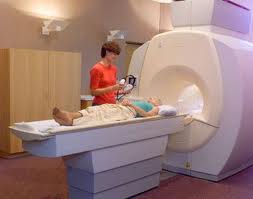
OM in the News: Lean Operations and Hospital MRI Productivity

When we discuss how to build a lean organization in Chapter 16 (JIT and Lean Operations), we note that one of the many ways to improve productivity is to eliminate all but value added activities.  A new research study in the Journal of the American College of Radiology (Sept., 2011) reports on a German hospital that was able to almost double the percentage of patients receiving an MRI scan in 24 hours, increase scanner productivity by 1/3, and save $338,000 in its first year of implementing lean management techniques.

Long the lifeblood of corporate bosses, lean is only now beginning to filter down to health care. The authors, at the 1,200 bed University Hospital Giessen write: “Many health care organizations do not measure key parameters such as demand, capacity, patient access, process efficiency, and productivity. They are run like cottage industries of dedicated artisans. Among the consequences are underutilization of very expensive resources and long patient delays”.

They identified 33 “failure modes”, or process snags leading to waste,  and fixed the 14 most critical ones. Fixes included increasing staffing levels to keep personnel from being overloaded, eliminating redundant exams, and getting rid of superfluous documentation. This dropped radiology information systems time from 3 minutes/exam to under 1 minute. After launching the program, 1,000 additional exams  can be run per year. The mean cycle time also dropped (from 52 to 39 minutes), while throughput increased by 38%, and scanner productivity jumped 32%.

“Quality and cost are reconciled by process improvement”, they conclude. We would also note that lean is not just about laying off people  to save money. Here is a good class example about using lean to set the best staffing level and finding new ways to use and develop workers.

Discussion questions:

1. Identify other ways to improve hospital productivity with lean tools.

2. How was the hospital able to justify higher staffing costs?

OM in the News: Hospital ERs Turn to Lean Management

The Wall Street Journal (Aug.2, 2011) writes: “To speed patients through the system, emergency rooms are adopting lean-management principles pioneered by Toyota to increase efficiency, cut costs, and provide better service”. It’s certainly about time. Waiting times in ERs that can run into several hours have become a fact of life in the US. And while the number of ER  departments has dropped by 1/3 over the past 2 decades, the number of patients seeking care has gone up by 40%. To boot, there are fewer doctors doing primary-care even as more uninsured patients show up (who must, by law, be treated).

The lean production changes (see Ch.16) include: (1) streamlining the traditional methods of triaging, which means no longer providing a bed for non-critical patients,(2) staffing with less-costly nurse practitioners and PAs so ER doctors can avoid paperwork and focus on care, and (3) posting ER waiting times on-line , in waiting rooms, and even on highway billboards.

The 2 metrics ERs use to judge their efficiency are: LWBS (“leave without being seen”) and AWT (“average wait time”). The latest national LWBS number is 2.7%, up from 1.7% in the prior decade. (California is closer to 20%).  “We don’t want them to walk out the door for their own health, but it’s also not a good business model”, says one ER director. Revenue drops about $450,000 if even 1% of patients walk in a typical ER.

With lean changes, one Phoenix hospital chain (Banner Health) saw its LWBS drop from 8% in 2007 to 0.5%  this year, while volume increased 4%. At Ochsner Medical Center (New Orleans), AWT went from several hours down to 33 minutes, while the LWBS rate dropped from 15% to 1%. The process analysis tools we discuss in OM can indeed make a major difference in the quality of health care.

Discussion questions:

1. What tools in Ch.7 (Process Strategy) can be useful in reengineering in the ER?

2. What other JIT/Lean/TPS approaches discussed in Ch.16 can be employed in the ER?

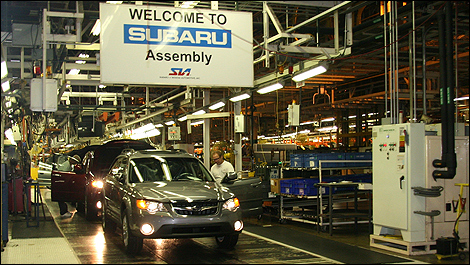
OM in the News: Subaru–America’s Leanest and Greenest Auto Plant

Our OM in Action box in Ch.6 (Managing Quality) highlights the  Lafayette, Indiana Subaru plant’s environmental leadership as it relates to ISO 14001. A good article about the same plant to reference when lecturing about lean (Ch.16) and green appears in the latest Businessweek (June 6-12, 2011). Here are a few facts about Subaru, which is perhaps the leanest car plant in the US: (1) in its 22 year history, Subaru-Indiana has rolled out 3 million cars and has never resorted to layoffs (this during a period that spanned 3 recessions  and the loss of 46,000 auto jobs in that state); (2) it has given workers a wage increase every year of operation; (3) it provides premium-free health care, lots of overtime (averaging $15,000 last year), financial counseling, and the ability to earn a Purdue U. degree on-site.

But whereas Toyota made kaizen famous, Subaru has created green kaizen. Going back almost a decade, Subaru decided to become the nation’s 1st zero-landfill car factory. It recycles  98% of the plant’s waste and incinerates the other 2% in an operation that sells power back to the grid. The plant abounds with well-reused parts containers. In 2010, Subaru saved $5.3 million by obsessively reducing, recycling, composting , and incinerating–and saved multiples of that using employee-sponsored ideas to reduce injuries and fatigue. The workers can get bonuses (up to a new car) for pointing out excess packaging and processes that can be cut from the assembly line.

To score a cherished “associate” position  at the factory, would-be employees are expected to put in long hours mastering Subaru’s low-impact manufacturing. They learn to scrutinize every byproduct for savings and to look for ways to slice seconds off the assembly process. The jobs pay $14 (starting) up to $25 (peak)/ hour, yielding a salary of $50-60,000 including mandatory overtime.

Discussion questions:

1. What happens when the plant needs to slow down (say from parts shortages)?

2. How does Subaru get such worker commitment that the UAW has failed 3 times to unionize the plant?

Good OM Reading: Lean Culture… The Leader’s Guide

For those faculty with some background in management theory, leadership, and organization behavior, Larry Miller’s new book, Lean Culture, The Leader’s Guide, is an excellent refresher in a very applied way…. that is, how to build lean organizations. For faculty (and students) with limited exposure to these topics, it is a great survey book.  The strong applied nature of the book makes it good supplemental reading regardless of background.  Miller has done a great job of tying management literature to lean literature. One can tell from the presentation that Miller has fought the culture wars necessary to bring about organizational change.  And successful implementation of lean often means fighting those wars. Miller, has indeed, provided the ‘leader’s guide’ for the battle.

The book is an easy read and full of great figures, many of which focus on lean topics, while others deal with management and behavioral issues.  The lean topics of his text are excellent reinforcement of material covered in the Heizer/Render text. Supplementing your course by adding the structure and applied approach of Lean Culture, either as outside reading or via lectures, may help students identify  what is to be done and how to do it. There is no way to be an effective manager or a change agent as we seek lean organizations without understanding leadership, organization culture, and the tools of lean. Here is the plan.

I think you will find that the book really is  The Leader’s Guide  for implementing lean and that it will help you and your students make lean work.