Good OM Reading: Can Parking Behavior Predict Productivity Gains?


One of the well-known experimental studies of people’s behavior is the “Stanford marshmallow experiment”  in 1970 in which children were put in an room and given the following instructions: they are given one marshmallow and can eat it immediately; however, if they wait for 15 minutes without eating it, they will receive another marshmallow. The most interesting finding is that more than 10 years later, the children who resisted the temptation to eat immediately and earned the second marshmallow “were significantly more competent” and achieved higher SAT scores. In general, people who exhibit the ability to delay gratification tend to do better in career and life.

parkingAnd every once in a while, we come across an academic journal article that is equally fascinating. The concept is that at the macrolevel, a metric that measures the overall effort of delaying gratification across economies would better gauge or explain economic growth differences across countries. Prof. Shaomin Li, at Old Dominion U., proposes a novel metric in his fascinating article in The International Journal of Emerging Markets (No. 4, 2014): the way that people park their cars.

Back-in parking takes more time and effort than head-in parking. Yet, it is easier, quicker, and safer when exiting. Thus Li conjectures that people who take the trouble to back in demonstrate the ability to delay gratification; they want to invest more time and effort now so that they can enjoy the fruits of their labor later. They demonstrate a culture of long-term orientation. Such behavior, says Li, should be positively associated with taking time to study, saving more money and working harder in order to enjoy life later, a trait that contributes to national productivity gains and economic growth. The table summarizes the analysis.

parking table

Good OM Reading: The Pitfalls of Project Management Reporting

mit sloan  coverWill every corporate project be on time and deliver what was promised? Maybe — but maybe not, write four profs in MIT Sloan Management Review (Spring, 2014). Accepting 5 inconvenient truths about project status reporting can greatly reduce the chance of  unpleasant surprises.

 INCONVENIENT TRUTH 1: Executives can’t rely on project staff and other employees to accurately report project status information and to speak up when they see problems. Most executives expect and assume that employees will report when they see problems that might adversely impact a project. In negotiations between the U.S. and the Soviet Union, President Reagan’s signature phrase was “trust, but verify.”

INCONVENIENT TRUTH 2: A variety of reasons can cause people to misreport about project status; individual personality traits, work climate and cultural norms can all play a role. Executives tend to attribute misreporting to poor ethical behavior on the employee’s part. But one of the best remedies is building diverse teams, which can help balance out culturally specific behavior that might inhibit accurate project reporting.

INCONVENIENT TRUTH 3: An aggressive audit team can’t counter the effects of project status misreporting and withholding of information by project staff. The importance of promoting trust between those who report project status and those who receive the reports is the solution.

INCONVENIENT TRUTH 4: Putting a senior executive in charge of a project may increase misreporting. Research actually suggests that the stronger the perceived power of the sponsor or the project leader, the less inclined subordinates are to report accurately.

INCONVENIENT TRUTH 5: Executives often ignore bad news if they receive it. Executives should not only listen to a variety of stakeholders but should also take the warnings they receive seriously. If they do not, they may unwittingly contribute to a climate of silence in which employees grow even more reluctant to report bad news.

This research study nicely complements our treatment of Project Controlling in Chapter 3.


Good OM Reading: Creating More Resilient Supply Chains

The Japanese earthquake and tsunami created one of the biggest supply chain disruptions in modern history

Many more companies now find themselves at increasing risk of supply chain disruption,” write Professors Maria Saenz and Elana Revilla in the  MIT Sloan Management Review (Summer 2014). They note a recent study by AON Risk Solutions which found that, on average, the percentage of global companies reporting a loss of income due to a supply chain disruption increased from 28% in 2011 to 42% in 2013. At many companies, the resiliency of the supply chain has not kept pace with the continually rising level of logistical complexity. Most supply chain managers have yet to do much about this problem.

A recent MIT study found that even many large companies are unable to create contingency rules and procedures for operations during a complex, high-risk event. In fact, about 60% of the surveyed managers either do not actively work on supply chain risk management or do not consider their company’s risk management practices effective. These managers lack a framework to guide them in the deployment of their risk management practices. Many understand so little about their risks that they don’t even know what kind of framework would fit the particular supply chain dynamics they face.

The example of some companies that have more advanced risk management systems suggests that it doesn’t have to be this way, report the authors. Cisco Systems Inc. is one of a handful of companies — others include Coca-Cola, Whirlpool and Procter & Gamble — that have tried to understand and measure the operational and financial vulnerabilities that could threaten the smooth operation of their supply chains. Supply chain managers at Cisco have learned to integrate supply chain design and supply chain risk management, balancing proactive mitigation capabilities with reactive capabilities in order to keep the company’s supply chain as resilient, efficient and profitable as possible. As John Chambers, CEO of Cisco Systems, comments, “In an increasingly networked world, supply chain risk management is top of mind in global organizations as well as a key differentiator for leading value-chain organizations.”

Good OM Reading: Rethinking Corporate Social Compliance in the Supply Chain

 third worldFollowing widely publicized human rights scandals in the early 1990s, corporations, dominated by those in the footwear and apparel industries, invested heavily in social compliance programs to enforce a minimum standard of human rights and employee safety throughout their supply chains. These standards, framed loosely on a U.N. declaration, typically sought to separate the worst human rights abuses from production processes where finished goods were manufactured. In the contract manufacturing sector, such abuses include child labor, forced labor, excessive overtime and unsafe conditions.

One might expect that given the pervasiveness of corporate social compliance programs and the volume of audits being performed that the evidence of abuses in corporate supply chains would be diminishing. If anything, the opposite may be true. The collapse of the Rana Plaza Garment Factory in Bangladesh in 2013 put a spotlight back on the issue of human rights in contract manufacturing. Social compliance programs have presented a dangerous illusion of progress while conditions, egregious even by 19th-century standards, have persisted unaddressed.

In the garment sector, countries such as Bangladesh, Haiti, Lesotho and Cambodia represent large and growing sources of production. The reason these countries have become major players has had little to do with a proximity to raw materials or a uniqueness of expertise, and much more to do with these countries possessing large volumes of impoverished labor.

What needs to change?  In this excellent (12 page) report, titled Human Right and Professional Wrongs, by Ernst & Young (2014),  several recommendations emerge:  (1) Companies need to use 3rd-party certifiers and auditors more strategically; (2)Procurement systems need to be tightened to prevent orders from being placed with factories that have not had their social compliance status assessed; (3) Agents need to be brought in line with the social compliance expectations of retailers; (4) Companies need to maintain longer relationships with a smaller number of suppliers; and (5) Companies need to incorporate human rights before they begin manufacturing.


Good OM Reading: Reshoring Revisited

A recent study, Where in the World, compiled by the Entrada Group,  provides some interesting insight as to why small- and mid-size manufacturing executives are now ranking the U.S. and Mexico as “prime locations” for lower-cost production of goods bound for North America.

Here are some of the findings from Entrada’s survey:

  • Proximity is appealing — While the U.S. is the most attractive low-cost manufacturing location among all respondents (at 33%), it’s worth noting that among respondents from companies that already manufacture in 2 or more locations (their headquarters plus one), Mexico and the U.S. tied as the top choice, each with 23% of the response.
  • Experience with expansion matters — Respondents from companies that currently manufacture at 2 or more locations revealed a greater appetite for future expansion to a low cost location or locations, when compared to firms producing solely at their headquarters. Of companies that manufacture in 2 or more places, 67% said they plan additional expansion in the future, compared to just 33% of single-location manufacturers that plan future expansion.
  • Quality and the bottom line both count — While respondents overall rank high-quality production as the most important factor when choosing a manufacturing destination, low operating costs was tops among companies when reflecting on motivation for past expansion, by more than 2-to-1 over high-quality production.
  • Cost savings are not always realized — Companies that expanded to a “low-cost manufacturing location” achieved their goals to a large extent just half of the time, with half realizing just moderate savings or worse.
  • Today China is the most common low-cost location, followed by Mexico — More than half of survey respondents (51%) currently manufacture product in China, with 35% manufacturing in Mexico, the 2nd-greatest response.
  • China, Mexico not “either-or” — Out of firms that manufacture product in China, 40% also produce in Mexico. Indeed, for many manufacturers, a presence in both countries makes sense for delivery to regional markets.

Good OM Reading: An Analysis of State-Provided Benefits in Location Decisions

Competing for businesses by offering companies targeted benefits is a popular policy among the governments of American states. As we discuss in Chapter 8, benefits come in many forms, including business tax credits for investments, property tax abatements, and reductions in the sales tax paid by the recipient businesses. Policymakers sometimes establish “enterprise zones” to facilitate these benefits, granting them to companies that hire people and invest in the zones. The purpose of benefits is to promote employment, innovation, economic growth, and revitalization.

Despite their good intentions, policymakers often overlook the unseen and unintended negative consequences of targeted benefits, according to a new study titled The Political Economy of State Provided Targeted Benefits (May, 2014). The paper analyzes two major, neglected downsides of these policies: (1) they lead to a misallocation of resources, and (2) they encourage “rent-seeking.” The authors, both at George Mason U., argue that these negative consequences of benefits are likely to outweigh any benefits.

Targeted benefits are by no means a new policy in the U.S. During the “railroad era” in the 1800s, many American cities provided subsidies to railway companies to attract their business. As railroad expansion slowed in the early 1900s, local governments’ role in luring particular companies to their locales diminished. But in recent decades, the trend has been a steady increase in the number of state governments offering various tax benefits to businesses. The 1980s has been called the “decade of industrial recruitment and state incentive packages.” Surprisingly many states do not evaluate their benefits programs consistently.

 The study examines the systemic effects of targeted benefits on market competition and the incentives facing both companies and politicians. It concludes that benefits cause a misallocation of resources as governments use them to change the composition of economic activity and to attempt to increase overall economic activity. It also finds they lead to cronyism as firms seek to secure benefits from the government.


Good OM Reading: Reducing the Risk of Supply Chain Disruptions

MIT SloanFor supply chain executives, recent years have been notable for major supply chain disruptions that have highlighted vulnerabilities for individual companies and for entire industries globally. (The Japanese tsunami in 2011 left the world auto industry reeling for months. Thailand’s 2011 floods affected the supply chains of computer manufacturers dependent on hard disks. The 2010 eruption of a volcano in Iceland disrupted millions of air travelers and affected time-sensitive air shipments.) This excellent article in the MIT Sloan Management Review (Spring, 2014), by Professors Sunil Chopra and ManMohan Sodhi, is worth the 23 minutes it will take you to read it–especially if you teach Chapter 11 and Supp.11 in our text.

Today’s managers, they write, know that they need to protect their supply chains from serious and costly disruptions, but the most obvious solutions — increasing inventory, adding capacity at different locations and having multiple suppliers — undermine efforts to improve supply chain cost efficiency. While managers appreciate the impact of supply chain disruptions, they have done very little to prevent such incidents or mitigate their impacts.This is because solutions to reduce risk mean little unless they are weighed against supply chain cost efficiency. Financial performance is, we know, what pays the bills.

Supply chain efficiency, which is directed at improving a company’s financial performance, is different from supply chain resilience, whose goal is risk reduction. Although both require dealing with risks, recurrent risks (such as demand fluctuations) require companies to focus on efficiency in improving the way they match supply and demand, while disruptive risks require companies to build resilience despite additional cost.

The authors suggest two strategies for reducing supply chain fragility through containment while simultaneously improving financial performance: (1) segmenting the supply chain or (2) regionalizing the supply chain. In many instances, though, reducing disruption risk involves higher costs. The reason executives are reluctant to deal with supply chain risk comes from the perception that risk reduction will reduce cost efficiency significantly. Managers can do much to ensure that loss of cost efficiency is minimal while the risk reduction is substantial by avoiding excessive concentration of resources like suppliers or capacity. And nudging trade-offs in favor of less concentration by overestimating the probability of disruptions can be much better in the long run compared to underestimating or ignoring the likelihood of disruptions.

Good OM Reading: Ethics and the Chickenizing of America

meat racketTyson Foods is now the largest meat-producing company in the world, the leading member of an “oligarchy” of companies whose hold on the American meat industry Christopher Leonard examines in his gripping The Meat Racket.  Mr. Leonard’s focus isn’t the treatment of animals in factory farms; nor is it taste or quality, although some unpleasant facts emerge.  He is primarily concerned, writes The New York Times (March 13, 2014), with how these corporations gained control of the business from farm to table. The 95% of Americans who eat chicken, he contends, support a system that “keeps farmers in a state of indebted servitude, living like modern-day sharecroppers on the ragged edge of bankruptcy.” Many chicken farmers don’t even own the chickens they raise.

As Tyson expanded, it would take over all the businesses that used to make up a small-town economy. “It owns the feed mill, the slaughterhouse, and the hatchery. It owns the trucking line and the food-processing plant where raw meat is packaged and cooked into ready-to-eat meals.” This system has “provided tremendous benefit to American consumers,” Leonard acknowledges. Chickens grow bigger faster, even while eating less feed, and meat has gotten much cheaper. Between 1955 and 1982, the time it took to raise a chicken dropped to 52 days from 73.

After pioneering their model in the poultry business—and, to their triumph, getting the chicken McNugget on the menu at McDonald’s, Tyson set out to “chickenize” first the hog and now the cattle business. It has faced fierce resistance in the latter, but its practices still help set the standard for the entire industry. Tyson was one of the first companies to use a growth hormone called Zilmax, which causes cattle to put on weight with astounding results. “The animals blow up like muscled balloons,” Leonard writes, adding that the hormone also makes the meat leaner and cheaper to produce—in other words “more like chicken.” Tyson stopped using Zilmax last year after critics raised concerns that cows were becoming paralyzed. (Chickens are bred to grow huge breasts so as adults they can barely breathe or stand).

The ethics involved in the industry makes for a good class discussion in a number of text chapters.

Good OM Reading: The State Of Operations Management in the Military

orms today coverSeventy-five years ago, near the beginning of World War II, the field of operations research was born in Britain. Today, as the U.S. emerges from the longest sustained war in its history, the military faces a post-war drawdown. During the mid-1990s, much of the conventional wisdom was that the U.S. was in the midst of a so-called “Revolution in Military Affairs.” Technology would provide a global precision strike capability that would give us “an ability to bomb any target on the planet with impunity, dominate any ocean, and move forces anywhere to defeat just about any army.”

In an excellent article just published in OR/MS Today (Feb., 2014), we read of a “vigorous military science” in the 1990’s, resulting in an excessive focus on modeling and simulation technology. For example, medical “planning factors” were derived from attrition-based, theater-level campaign model casualty projections, vastly over predicting casualties, thereby creating unnecessary and unaffordable requirements for medical force and supply support. More recent analyses of casualties have yielded major improvements in forecast accuracy and an ability to better design more responsive, lower cost medical support requirements. Research efforts have expanded to other areas, identifying spare part consumption patterns and readiness “drivers.” Using empirically derived usage patterns, profiles, and trends, the operational planning, demand forecasting and budget requirements have been significantly improved.

Persisting supply chain problems that existed 10 years ago are now also becoming increasingly more apparent. With mounting pressures to generate savings and find efficiencies, these issues include the inability to relate resources to readiness due to poor inventory management and fragmented supply chain operations across the materiel enterprise. The promise for improved performance attributed to large investments in enterprise resource planning (ERP) systems has not been realized, continuing to plague the services. But a recent study suggests major OM improvements can be achieved using decision-support systems empowered with advanced analytics, including dramatically improved demand forecast methods, sensor-based technologies for part replacement, and integrated supply chain optimization methods. These effects are likely to be in the range of many billions of dollars, resulting in a ROI of several orders of magnitude.

Good OM Reading: Sustainabilty’s Next Frontier

MIT SloanFor the past 5 years, MIT and the Boston Consulting Group have studied the sustainability challenges facing US firms. This new report’s findings are both encouraging and disconcerting. The study found a disconnect between thought and action on the part of many firms. For example, 2/3 of respondents rate social and environmental issues, such as pollution, as “significant” or “very significant” among their sustainability concerns. Yet only about 40% report that their organizations are addressing them. Even worse, only 10% say their companies fully tackle these issues.

  • More than 90% have developed a sustainability strategy, compared to 62% among all respondents.
  • 70% have placed sustainability permanently on their top management agenda, compared to an average of 39%.
  • 69% have developed a sustainability business case, compared to only 37% of all respondents.

These leading companies suggest a path forward. MIT calls them “Walkers” — companies that “walk the talk” by identifying and addressing significant sustainability concerns. “Talkers,” on the other hand, are equally concerned about the most significant sustainability issues, but address those issues to a far lesser degree.

Data from the past 5 years shows that many organizations are struggling to move forward. For example, the percentage of companies that have established a sustainability business case has only grown from 30% to 37% during this period. More than half of the respondents have either failed to establish a business case or haven’t even tried to create one. The percentage of companies that report their sustainability efforts are adding to profits has consistently come in at roughly 35% since 2010. Many companies have hit a crucial inflection point. They have reaped the immediate gains from sustainability but have yet to embark on the next level: addressing the most significant sustainability issues.

This is an interesting report that you may wish to share with your class when you cover our new chapter on Sustainability in the Supply Chain (Supp.5).

Good OM Reading: Embracing Digital Technology

Companies routinely invest in technology, and too often feel they get routine results. But a new MIT Sloan Management Review (Oct., 2013) study makes it clear that companies that are aggressively engaged in “digital transformation” tend to perform better. Why? According to the authors, “the current wave of digital innovation is about connecting companies to customers, and companies can’t afford to miss out on opportunities to improve efficiency, service, sales and performance. Companies must succeed in creating transformation through technology, or they’ll face destruction at the hands of their competitors that do.”

Researchers divided companies into 4 categories in terms of their commitment to digital transformation, then tracked the companies’ performance over time. “Digital transformation” refers to overall intensity of the effort to align a company’s operations with its business model through successful uses of digital technologies as a replacement for older processes. The 4 categories of enterprise were:

Digirati: Those companies that have gone all-in on digital transformation. This relatively small percentage of companies outperformed all others across the board.

Conservatives: Companies that have been slower than average to move toward digital transformation. Conservatives performed worst in revenue creation at -10%.

Fashionistas: Companies that publicly say transformation is important to them and may even throw a lot of money at transformation efforts, but whose efforts don’t match their rhetoric. Fashionistas scored worst in profitability at -11%.

Beginners: These performed worst among all the companies in terms of profitability (-24%) and 2nd worst in revenue creation and market valuation.

Results mean, for example, that automating an e-procurement system doesn’t just reduce the amount of paper being shuffled; it also gives a firm more accurate data that can help negotiate lower prices from vendors. Transforming warehouse management doesn’t just reduce headaches for shipping managers; it also can lower the amount of money tied up in inventory. And digital transformation of fleet management not only saves fuel and improve drivers’ efficiency; it also can help a company quickly and cost effectively serve customers and earn more and bigger orders. The bottom line: companies aggressively committed to digital transformation excel.

Good OM Reading: Superstorm Sandy and Supply Chains, One Year Later

flooded carsA month or 2 into dreaded hurricane season, and the US has so far dodged the bullet. Still, with 7 hurricanes expected to hit, what can be learned from Superstorm Sandy is a topic for discussion among supply chain managers. Though Sandy hit shore last year as “only” a tropical storm, it was one the most devastating weather events since Hurricane Katrina, in part because many supply chains were caught off guard.

In the aftermath of Sandy, the Securities and Exchange Commission led a just-released study of mid-Atlantic companies to understand how this event affected them and how they recovered. Here is a quick summary of the results:

  1. Consider all the possibilities of widespread disruption: Business continuity plans should take into account all possible sources for electricity, fuel, water and telecommunications in an effected area. Consideration should be given to multiple, redundant services and the proximity of vendors to the potential disaster area. Companies also should consider solutions that allow employees to work remotely.
  2. Consider alternative locations: Companies should consider diverse alternative locations with adequate resources to stay up and running and how they will get enough employees there.
  3. Examine critical vendor relationships: Companies should take a look at vendors that provide critical services or products, from fuel to banking and finance, and line up Plan B vendors (including pre-arranged contracts) if they should be knocked off-line.
  4. Telecommunications and technology: Contract with multiple carriers rather than relying on a single provider.
  5. Communications plans: In addition to staying in close touch with customers and trading partners, firms should consider establishing relationships with multiple broker-dealers to facilitate alternative market entry points.
  6. Take into account time-sensitive regulatory requirements: A crisis can happen at any time, potentially interrupting month-end data for regulatory computations and financial reporting. This is a good reason to dump paper solutions.
  7. Review and test the plan: Business continuity plans, including vendor and customer lists and other critical data, should be updated continually and tested at least annually.

The recommendations in this short SEC report may have been drafted with financial firms in mind, but the advice applies to all businesses and their supply chains.

Good OM Reading: The Box That Built the Modern World

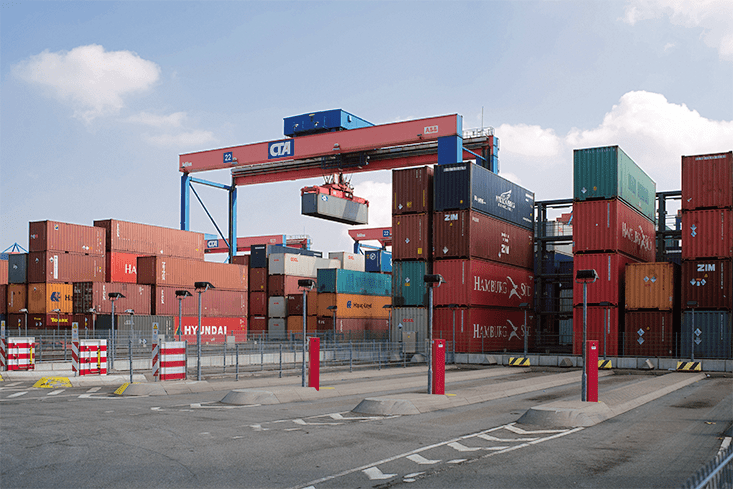
shipping containersFor a fascinating story called “The Box That Built the Modern World,” enjoy this article in In Transit (Issue 3, 2013). The piece follows the Hong Kong Express, docked at Hamburg’s Container Terminal for 33 hours. “Already, the ship was half empty. Cargo from Asia was stacked in neat rows of shipping containers on the dock. The ship is nearly a quarter of a mile long; from side to side it’s 157 feet. It can carry 13,167 20-foot-long containers, the standard box used in commerce around the world.” In less than 2 months the Hong Kong Express will call at 11 ports and travel more than 12,500 miles. Circling the world 4-5 times a year, it can move 1.4 million tons of cargo annually.

More than any other single innovation, the shipping container epitomizes the enormity, sophistication, and importance of our modern transportation system.  Fundamental to how practically everything in our consumer-driven lives works, it is the Internet of things. Just as email is disassembled into bundles of data you send, then re-assembled in your recipient’s inbox, the boxes are designed to be interchangeable, their contents irrelevant.

Once they enter the stream of global shipping, the boxes are shifted and routed by sophisticated computer systems that determine their arrangement on board and plot the most efficient route to get them from point to point. The exact placement of each box is critical: ships make many stops, and a box scheduled to be unloaded late in the journey can’t be placed above one slated for offloading early.

The In Transit article traces a T-shirt sewn at a factory near Beijing. Tagged, folded, and boxed, the T-shirt is stuffed into a container with 33,999 identical shirts at the factory. The merchandise passes through 36 steps before arriving at a discount clothing retailer’s distribution center near Munich. There’s the trucker who moves the box to a waiting ship in Xinjiang, the feeder ship that moves it to Singapore to be loaded onto a bigger Europe-bound freighter, the crane operator in Hamburg, customs officials, train engineers, and more. The total time in transit for a typical box from a Chinese factory to a customer in Europe might be as little as 35 days. Cost per shirt? “Less than one U.S. cent,” says a shipping exec. “It doesn’t matter anymore where you produce something now, because transport costs aren’t important.”

Good OM Reading: The Lean Startup Company

hbr coverLaunching a new enterprise—whether it’s a tech start-up, a small business, or an initiative within a large corporation—has always been a hit-or-miss proposition. According to the decades-old formula, you write a business plan, pitch it to investors, assemble a team, introduce a product, and start selling as hard as you can. And somewhere in this sequence of events, you’ll probably suffer a fatal setback.

The odds are not with you: As new research by Harvard  shows, 75% of all start-ups fail. We’ve now learned at least three things, writes the May, 2013 issue of Harvard Business Review : 1. Business plans rarely survive first contact with customers. As the boxer Mike Tyson once said about his opponents’ prefight strategies: “Everybody has a plan until they get punched in the mouth.” 2. No one besides venture capitalists and the late Soviet Union requires five-year plans to forecast complete unknowns. These plans are generally fiction, and dreaming them up is almost always a waste of time. 3. Start-ups are not smaller versions of large companies. They do not unfold in accordance with master plans. The ones that ultimately succeed go quickly from failure to failure, all the while adapting, iterating on, and improving their initial ideas as they continually learn from customers.

One of the critical differences is that while existing companies execute a business model, start-ups look for one. This distinction is at the heart of the lean start-up approach. It shapes the lean definition of a start-up: a temporary organization designed to search for a repeatable and scalable business model. With examples from Amazon, Roominate, GE, Qualcomm, and Intuit, this article makes the point that make people in every kind of organization—start-ups, small businesses, corporations, and government—are feeling the pressure of rapid change. The lean start-up approach will help them meet it head-on, innovate rapidly, and transform business as we know it.

Good OM Reading: A Million Random Digits With 100,000 Normal Deviates

million random digitsJay just called from the snowy Denver POMS meeting, asking me to review the new edition of this classic book that we reference in Module F, Simulation. The book is Rand Corp.’s 600-page paperback, “A Million Random Digits With 100,000 Normal Deviates” (which delivers exactly what it promises), selling for $64.60 on Amazon.com. Exhibiting the great sense of humor that OM profs have, 400 people have submitted online Amazon reviews, writes The Wall Street Journal (May 1, 2013). Most of them mocked the 60-year-old reference book for OM professors, pollsters and lottery administrators.

“Almost perfect,” said one reviewer. “But with so many terrific random digits, it’s a shame they didn’t sort them, to make it easier to find the one you’re looking for.” Five stars from this commenter: “The first thing I thought to myself after reading chapter one was, ‘Look out, Harry Potter!’ ”

Several reviewers complained that while most of the numbers in the book appeared satisfactorily random, the pages themselves were in numerical order. Rand said its long list of random numbers, first published in 1955, is one of its all-time best sellers. “It’s a tool of some sort, but it’s beyond my clear understanding,” a Rand spokesman admitted.

One Amazon reviewer panned a real-life copycat publication called “A Million Random Digits THE SEQUEL: with Perfectly Uniform Distribution.” “Let’s be honest, 4735942 is just a rehashed version of 64004382, and 32563233 is really nothing more than 97132654 with an accent.”

“We are always amazed by the creativity of our customers,” said an Amazon spokeswoman.