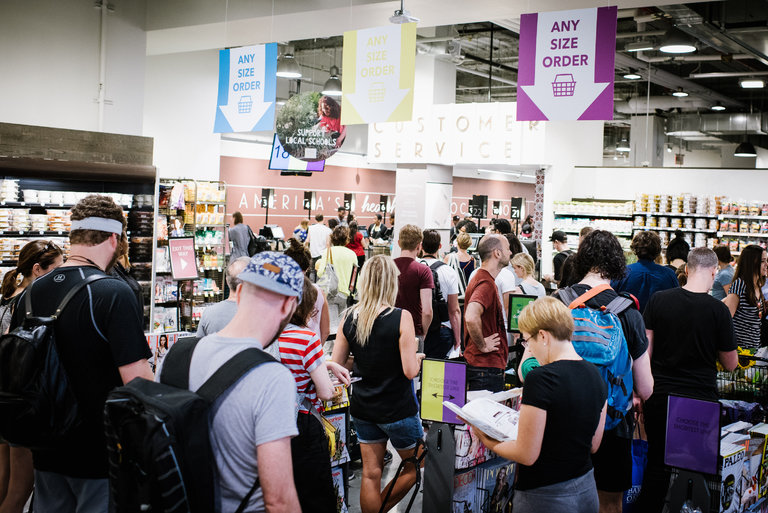
The contest for supermarket and grocery shelf space is heating up as brands—including more lower-cost offerings from grocery stores themselves—vie for a shrinking number of spots in the aisles. Grocers are trimming both the number of items they stock and their overall physical space, reports The Wall Street Journal (Aug. 16, 2024).

U.S. consumers are looking for ways to cut grocery bills that have soared. In response, supermarkets and grocery stores are becoming more selective as they stock their shelves with an eye toward reining in prices for shoppers. Between 2009 and 2023, square footage in supermarkets decreased 3.3%. Meanwhile, between 2020 and last year, retailers cut unique products by nearly 9%.
A confluence of factors influences which brands make the cut. Among them are brand recognition and whether brands’ products are selling, or are expected to. Retailers also charge slotting fees, a topic in Chapter 9 of your Heizer/Render/Munson text, for aisle space.
The fees, which food companies pay retailers in exchange for shelf space for their goods (and a topic of negotiation), depend on the retailers and brands, as well as on categories. Most companies think of slotting fees as a cost of entry for shelf space. The fees can add up quickly, on average ranging anywhere from around $100 per item per store to five or even six figures. Leading brands may also influence what is on shelves as so-called “category captains,” which are generally a retailer’s top sellers of goods such as coffee, snacks and cheese.
The aim behind these actions isn’t to get just any shelf space—it is to be in a prime location, which is around eye level. Having the choice placement, referred to with descriptors such as the “strike zone” or the “bull’s-eye,” can be significant for sales. “We want to be right there in your sightline…because that really drives consumption,” said one product exec. “If you’re up in the gutter or down in the crack, it’s harder to get the consumer to know you’re even there.”
Once on a shelf, major shelf resets generally follow a strict schedule. Stores usually assess their shelves to determine whether they have the right mix of products and brands just once a year. Minor product changes happen midyear. If a product doesn’t get its space, then it must wait for the next reset.
Classroom discussion questions::
- Slotting fees put small and local companies at a disadvantage. Are they ethical?
- What are the sellers options in getting shelf space?
 Prof. Howard Weiss shares his insights with us monthly.
 Is the honeymoon period with the self-checkout register officially over? What once was a convenient alternative, quickly became the only option in many retail stores, as it was sold as an efficient, cost cutting solution meant to move customers in and out of stores quickly.