Teaching Tip: Examining Supply Chains

In Chapter 11, Figure 11.1, we present a Supply Chain with costs for beer. This figure provides an opportunity to discuss both the value added and the risks associated with each step in the supply chain. And, because students can often relate to the product, beer, the presentation encourages a discussion of not only the multiple tiers, but also the processing delays, logistics, storage, cooling, and where and how costs might be reduced in the supply chain.    Finding other examples of Supply /  Value Chains can be a challenge, but we found very timely and good examples (and perhaps almost as interesting as beer), by PetroStrategies, Inc. —  supply chains of the oil and gas industries.      

PetroStrategies shows both the Crude Oil Value Chain and the Natural Gas Value Chain. The great thing about their presentation is that in addition to the ‘chains’ being shown, so are estimates of Costs, Value (selling price at each stage), Gross Margins, Net Margins, and Percent of selling price for each component in the chain. 

Given the current interest in oil and gasoline prices, a lively discussion of costs and values in the supply chain from wellhead to gasoline pump should ensue. You might note that although the data is relatively recent (2007), gasoline costs are shown at $2.00 per gallon.

Discussion Questions:  

1.  Where are the risks in these supply chains?

2. What can be done to enhance supply and / or reduce the risks?

3. Have you any suggestions about what could be done to reduce costs in these supply chains?

OM in the News: Sustainability in the Global Clothing Supply Chain

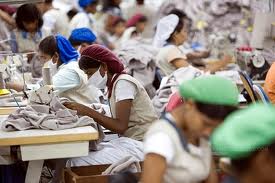
Some day in the not too distant future, the clothes and shoes you buy will not only have a label sewn in with the brand name/size/fabric content, but with a sustainability score as well.  Yesterday’s New York Times (Mar. 1, 2011) reports that the Sustainable Apparel Coalition is developing a comprehensive database of the environmental impact of every manufacturer, component, and process in apparel and shoe production. The coalition includes such names as Wal-Mart, JC Penney, Hanes, Patagonia, and Timberland.

Americans spent  $340 billion last year on clothes and shoes, which is about a quarter of the global market. Amazingly, virtually all of it purchased here99% of footwear and 98% of clothes–came from other countries. And the various parts of any one garment often come from a diverse multinational chain of fabric mills, dye operations, and assembly plants.

This obscure nature of the global supply chain has long been a concern to environmental groups. Greenpeace, for example, using Google Maps, revealed that  a blue jean factory in  Xintang, China, was washing blue chemicals downriver from its textile mill. But  the company whose name appears on the designer label– and surely the end customer–are often unaware of the environmental connection. “The apparel supply chain is long and quite complicated”, states a University of Delaware prof.

The coalition’s tool is a database of scores assigned to all players in the garment life cycle–cotton growers, fabric makers, dyers, mill owners, and distributors–based on measures such as water use, energy efficiency, waste, chemical use, greenhouse gases, and labor practices. “The government has standards for miles per gallon on a car, but we have no real standards for clothing”, adds the CEO of Timberland.

Discussion questions:

1. Are students interested in such a “green score”?

2. What changes will such a database bring about?

3. Why are the biggest retailers signing on?

Video Tip: Darden’s Global Supply Chains

Because supply chains (Ch.11) are such an important topic in OM, we have produced 3 video cases on the topic: Arnold Palmer Hospital’s Supply Chain, SCM at Regal Marine, and Darden’s Global Supply Chain. Since I am a regular at Olive Garden (one of Darden’s main brands), filming this 8-min. video was of personal interest.

How is it that I can order fresh fish–not frozen–here in Winter Park, FL, and be eating seafood that was caught off the coast of Thailand less than 48 hours ago? And the same for you at any of the 1,500 restaurants in the Darden family. That’s some supply chain!

Actually Darden has 4 independent supply chains it runs, of which its Seafood Network is one. There is also: the Central Distribution SC  for non-food items (housed in Orlando); its Independent SC  for locally purchased items such as produce and dairy products; and its Direct Distribution System, which uses 3rd party logistics, for other items.

Interviews with Darden’s Senior VP for Supply Management and Purchasing illustrate how critical this function is to every aspect of running a restaurant chain. It also raises the question about the complexity of maintaining 4 distinct supply chains. Should local managers be allowed to make their own purchases? How does a major chain deal with seafood shortages (“overfishing”) that occur more regularly?

More details about the seafood aspects of the supply chain are in our Supp.11 video case, “Outsourcing Offshore at Darden”.

OM in the News: Terrorism and The Global Supply Chain

It’s not every day that The Wall Street Journal publishes an editorial by the US Secretary of Homeland Security, Janet Napolitano, entitled “How to Secure the Global Supply Chain” (Jan.6,2011).  In it, Napolitano writes, “The complex supply chain that consumers and businesses in the US rely on every day is a target for those who seek to disrupt global commerce”. This is certainly a topic we need to consider adding to our discussions of global OM issues in Ch.2 and Ch.11.

Regardless of where a terrorist event takes place, a significant disruption of our supply chain may follow.  An example was the Oct., 2010 plot to put explosives on a UPS cargo flight bound for the US from Yemen. Following that act, the Dept. of Homeland Security required all cargo on passenger planes within the US to be screened. It also screens all US-bound air cargo that is considered high risk (most likely from terror-sponsoring countries, I would surmise).

Napolitano names 3 elements to the US plan:

1. “Preventing terrorists from exploiting the supply chain to plan and execute attacks”. This means working with customs groups and shippers to keep chemicals out of the hands of terrorists.

2.”We must protect the most critical elements of the supply chain, like central transportation hubs, from attack or disruption”.

3.”We must make the global supply chain more resilient, so that in case of disruption it can recover quickly”.

Incidentally, 2 days after this article, the Journal reported that Secretary Napolitano received a small bomb in a package that exploded in her mailroom (WSJ, Jan.8-9,2011).

Discussion questions:

1. In what ways can a disruption of the global supply chain impact a business in the US, such as IBM, GE, or Boeing?

2. What other events, beside a terrorist strike, can effect the supply chain? How?

OM in the News: UPS’ Supply Chain and the No-Left-Turn Rule

For the longest title award, we turn to this week’s Fortune (Dec. 27,2010, pp.44-51) and find Bob Stoffel at UPS. Stoffel is the Senior VP for Supply Chain, Strategy, Engineering, and Sustainability.

With the word Strategy in his title, Stoffel points out that UPS is a lot more than a transportation company. It now has 1,000 engineers who are there just to help customers with their supply chains. Zappos built its whole e-commerce strategy around UPS’ Louisville Worldport. Zappos can take an order for shoes at 10pm and have them in the customer’s hands at 10am the next day.

When a Toshiba laptop comes in for repairs, it is UPS that actually fixes it and has it back to the customer in 24 hours. “It’s a triple win”, says Stoffel. “You’ve saved transportation links, you’ve reduced inventory,… and you’ve reduced your carbon footprint”.

Regarding sustainability, UPS has improved its fuel efficiency by 10% with a fleet of all-electric trucks, hybrids, and natural-gas vehicles. And thanks to telematics, GPS, and other technologies, UPS delivered 350,000 more packages  a day over last year, but drove 53,000 miles less a day. Finally, the firm’s famous “no-left-turn” policy is part of another 20 million miles a year saved through technology by avoiding costly delays from left turns and poor routings. “It drives my wife nuts”, Stossel says. “I won’t turn left (when looking for a gas station).We’ve got to find one on the right”.

My favorite improvement is the new “Eco Responsible Packaging” program to advise shippers how to waste less space in packaging. Just think of all the small items you have received in a big box. “Our vehicles run out of space before they run out of weight capacity”, says Stossel.

Discussion questions:

1. What is UPS’ sustainability strategy?

2. How is UPS part of other firms’ supply chain?

OM in the News: Megaships as Part of the Supply Chain

There may be a (post) recession here in the US, but as Asian trade swells, the demand for massive container ships is booming. “Megavessels–ships longer than the 1,063 foot-high Eiffel Tower”, writes today’s Businessweek , “are in demand again”. Shipping lines are preparing for the 2014 completion of the $5.25 billion expansion of the Panama Canal, plus the recovery of global trade. It takes about 3 years to build a new “big” ship–one that can move more than 8,000 20-foot containers. The Canal can only handle ships with up to 5,000 containers now, but will accomodate vessels with up to 12,600 containers in 3 years.

Global trade is expected to expand 11% percent this year and 7% next year, recovering from an 11% drop in 2009. Currently there are 61 ships in operation that can carry more than 6,000 boxes, with 144 more on order to begin service starting in 2014. All except 12 come from South Korean shipyards, especially leader Daewoo Shipbuilding, in Seoul. Daewoo is even taking calls for ships that can carry 20,000 containers, double the current capacity of most megaships.

Manufacturers who ship from several continents–think consumer electronics or appliances–like the massive ships because they can lower transportation costs. One 20-foot container can hold 1,000 42″ LCD TVs. LG Electronics’ Logistics head states: “Although sea transportation is already the most energy-efficient mode of transportation, we are constantly studying…efficiencies…that save money”. Adds an industry analyst: “The trend is big ships. Its not a choice but a must. Its going to be a fight of who can carry more at lower costs”‘.

Discussion questions:

1. Why do the Koreans dominate this industry? Who are US competitors?

2. Why are megaships supply chain and OM issues?

3. Are government policies a part of this industry?

OM in the News: Which is Better–Electric Cars or Electric Trucks?

My blog on Oct.31, 2010 dealt with forecasting the demand for electric cars. Who doesn’t  love the idea of electric vehicles (EVs)?  But as we wrote: “everybody feels that everybody else should be driving environmentally-friendly vehicles”. With gas hovering under $3/ gallon, does it really pay financially for you or me to invest in a $40,000 Chevy Volt?

Maybe not, but logistics managers at such firms as Staples, Frito-Lay, FedEx, and AT&T have come to find that electric trucks make a lot of sense for their commercial delivery fleets. As The Wall Street Journal (Dec.8,2010) writes:” electric delivery trucks…make more sense in many ways than electric cars”. That’s because delivery trucks generally drive  short, defined routes each day–better suited to the limits in range of EVs. And  EVs have lower maintenance costs, a big concern to companies with large fleets.

“We’re a business here”, says  Staples’ VP-Fleet  Services. “They have to justify themselves”. Staples just bought  41 trucks from Smith Electric Vehicles, in Kansas City, and plans to double the order. The trucks have a top speed of  50 mph, and can carry 16,000 lbs. They cost about $90,000, which is $30,000 more than a diesel, but Staples expects to recover that expense in 3.3 years. The EVs have no transmissions; need no fluids, filters, or belts (which cost around $2,700/year); have “regenerative” brakes that last 4-5 years, vs. 1-2 on regular trucks; save $700/year because there is no exhaust system  to maintain; and cut fuel costs by $6,500/year. It all adds up to $60,000 savings over the 10 year life of a truck.

Frito-Lay, with an order for 176 Smith trucks, plans to convert 2,000 more delivery vehicles to EVs. Similarly, FedEx, which has 19 EVs in London, Paris, and LA, expects a proliferation of electric trucks. Its not a “good deed for the sake of a good deed. There is a great return on that investment”, adds a Frito-Lay OM exec.

Discussion questions:

1. Do you think use of electric trucks will spread faster than electric cars? Why?

2. What limits the proliferation of electric trucks?

3. Make the case for the USPS to switch to an EV fleet.

OM in the News: Boeing’s Supply Chain Nightmare

You may have read 2 weeks ago about the latest setback for Boeing’s long-awaited 787 Dreamliner (I may start to call it the “Nightmareliner”) when a fire forced a test plane to land in Texas. But the problems with the biggest advance sales (over 850 on order) plane in history started with its supply chain two years ago. The delays have cost the firm billions in penalties for breaking contract obligations to airlines.

The 787, promised for delivery in 2008, illustrates the complexity of a global supply chain—one that has broken many times on the most complex new plane in decades. The New York Times (Nov.30,2010) now reports “Boeing has had to rebuild crucial parts from foreign suppliers….Boeing executives have acknowledged that they outsourced too much of the design work, and production of the first 20 or 30 planes has been slowed by the need to rework many parts”. Not only did the company face flawed components being delivered, but plane sections made in Japan did not always fit together on the final assembly line in Everett, Washington.

At one point, Boeing was even forced to buy one its its suppliers who simply could not deliver a quality part on time. Over 70% of the plane is built by other companies, including 20 international suppliers in 12 countries. The risk sharing plan originally envisioned is detailed in the Global Company Profile highlighting Boeing at the opening of Chapter 2.

The effect of the delays will cascade for years and make it hard for Boeing to reach its planned production rate of 20 planes a month by late 2013. The latest delay appears to set the 1st delivery back another 6 months.

Discussion questions:

1. What are the advantages and disadvantages of Boeing’s global outsourcing program for the 787?

2. Did Airbus face any similar problems with its A380 superjumbo?

3. What is the impact on customers?

Teaching Tip: Global Trade, Deficits, and Logistics

If the trade deficit is a topic that arises in your OM class, a visual image of the Port of New York and New Jersey is worth 1,000 words. Fortune (Nov.15,2010,pp.14-15) discusses the “Container City” one passes in driving on the NJ Turnpike.

In the first 8 months of 2010, 70,000 more full cargo containers entered the Port  than left it.  In other terms, 45% of the containers exported from the Port are empty, a reflection of the US trade imbalance. Yet a 3rd statistic: 1.80 to 1 is the ratio of imports to exports, up from 1.75 to 1  last year.

Six of the world’s largest ports are now in China, up from two just a decade ago. The largest port in the US in the Port of Los Angeles, the world’s 16th biggest, down from 8th ranked a decade ago.

What all of this means, of course, is that we are running a huge trade deficit, of which the logistics imbalance is one surrogate measure. Who benefits? My cousin Bob is the only one I know. He ships scrap metal to China for recycling and pays only a fraction of the shipping charges he would if he were sending  from China to the US.

Supplier and Risk Monitoring

A good way to help students gain insight into the significance of  supply chain risks (Chapter 11 introduces the issue of supply chain risk)  may be to reference the  Dow Jones Supplier & Risk Monitor.  This Dow Jones approach may help students see that mitigating supply chain risk is a significant issue in the real world. So much so that firms (in this case Dow Jones) sell the service.   The DJ Supplier and Risk Monitor helps companies keep track of and evaluate events that may be critical to their supply chain. Dow Jones claims that they can identify potentially disruptive events, new products, product recalls, reputation problems, product safety issues, and other types of breaking news. Additionally, DJ believes they can help companies uncover potential problems by highlighting news stories by volume and relevancy.  Also available are company performance and financials. The system can provide graphic displays of selected priorities, instant alerting, and emailing.  The idea is to show students that commercial tools exist to expand risk scanning to all of the elements in the supply chain and potential partners.  Monitoring the supply chain and evaluating risk is not just an academic exercise.

Guest Post: Supply Risk Hook – Why Kenya Can’t Stand Iceland!

Like Barry and Jay, I’m a great lover of hooks! A hook can be a little story, a movie clip, or a simple exercise. The key is that they’re short and memorable! Here’s a nice one concerning global supply chain risk that I use in my supply management lecture.

I take in a nice bunch of flowers and ask my students where they come from. In the case of Europe, the most likely origin is Kenya. Horticulture is Kenya’s biggest source of income with 1000 metric tons of produce shipped daily to Europe. (See the photo In Ch.11 of the Heizer/Render text).  In fact, around 30% of all cut flowers sold in the EU are imported from Kenya.

I then discuss all the effort required to get these lovely flowers into our stores every day. Here you can mention the challenges of speed as a key performance objective, the perishability of stock, the extension of the supply chain etc. Then I ask (jokingly, of course!) why Kenya dislikes Iceland right now?! For the period earlier this year when the Icelandic volcano was grounding most flights throughout Europe, Kenya’s flower supply chain was shut down at a cost of approximately $3million per day. Flowers and other fresh produce had to be thrown away because there was no way of getting them to the market other than airfreight.  

This story can be used demonstrate the nature of global supply networks and the risks they face from disruptions that are often well beyond their control. You can then get students to think of other factors that can cause disruptions to supply networks: Natural disasters (Hurricane Katrina or Pakistan floods for example); Geo-political challenges; trade disputes; etc.

 This hook is of course particularly handy if you’re in Europe, because Kenya was so badly affected by the Icelandic volcano in a way that many flower suppliers in the USA weren’t. So, you could simply tell the story as if you were in Europe for that lecture… “So kids, imagine I’ve gone over to England to visit my Grandma and I’m taking her this bunch of flowers. Where do you think they came from?…” You get the idea! Happy teaching!

Prof. Alistair Brandon-Jones writes this guest post from the University of Bath, one of the top five business schools in the UK. Alistair has been active in developing myomlab.

OM in the News: Caterpillar’s New Approach to the Supply Chain

In the past, equipment giant Caterpillar did not have to focus on collaborating with suppliers. Along with Komatsu, it was dominant in its field. But Caterpillar is starting to recognize  what Honda and Toyota have long known, namely that competition is based on the supply chain, not individual companies.The company’s attitude in the past was one of servant-master with suppliers, according to Businessweek (Oct.21,2010).

So Caterpillar decided to partner with supplier Tenneco to design  new emission cutting components, rather than set specs and pick the cheapest vendor, as it had done in the past. The joint effort cut costs on the part by 20%.  The firm’s CEO expects the Tenneco relation to be the new benchmark and will work more closely with 200 companies it believes are critical to its growth.

Caterpillar was not prepared for the global growth spurt of 2006-2008 and saw flat profits even with a 24% sales increase. This was because it paid more for raw materials and faster parts deliveries.

Discussion questions:

1. Compare Caterpillar to Boeing (see Ch. 2’s Global Company Profile) in terms of partnering.

2. How did Caterpillar move to change its corporate supply chain culture?

Teaching Tip: Location, Location, Louisville?

We open Chapter 8, Location Strategies, with a Global Company Profile on why FedEx selected Memphis as its US superhub. But Fortune (Oct.18,2010) expands on this topic, with a feature called “Louisville Flies High”.

It turns out that Louisville has great geography, economic incentives, and high tech logistics that have attracted more than 100 corporations this past decade. The city is within a 2-hour flight to 75% of the US population and sits just 40 miles from the exact center of the continental US on a population density map. Its also one hour below the frost line.

The clear supply chain draw is UPS, whose $2 billion Worldport has 30,000 conveyors and can sort 416,000 packages per hour. Toshiba now trains UPS employees to fix computers on site–and return them within 48 hours. Zappos moved to Louisville to be near the giant UPS facility also. If a package leaves the online shoe retailer (which my wife adores) at 12:45am, UPS will deliver the shoes anywhere in the country the same day.

This makes for a nice discussion in both the Location and Supply Chain(Ch.11) chapters.

OM in the News: Wal-Mart’s Drive to Squeeze the Supply Chain

Wal-Mart trying to squeeze more out of its supply chain? Not exactly shocking news, but here is a new twist in BusinessWeek (Oct. 7, 2010). With the title VP for International Purchase Leverage  (I don’t think I have heard that one before), Hernan Muntaner is convinced he can get even better deals from suppliers by consolidating  Wal-Mart’s purchases with its current partners. For example, Muntaner wants to buy potatoes jointly with Pepsi’s Frito-Lay, so that both can get lower prices.

Although Pepsi doesn’t seem interested so far, and may indeed be more sophisticated than Wal-Mart in procuring raw materials like potatoes, Muntaner has already signed on a sugar supplier in England and a paper supplier in Chile.  “We can do this with anything that is sold”, he says.

Collaborative sourcing, as Wal-Mart calls it, is detailed in a book by that title by Michael Philippart, Christian Verstraete, and Serge Wynen.

Discussion questions:

1. Why might suppliers be wary of the new Wal-Mart push?

2. Look at the Ethical Dilemma in Ch.11 that compares Wal-Mart to Sears. Does this purchasing concept tie in to the ethical issue?

OM in the News(and Video): Ford’s Lean Auto Plant in Brazil

Ford’s most progressive plant in the world may well be in northeast Brazil, where it uses lean manufacturing, sophisticated supply chains, and a vast array of robotics to produce the EcoSport SUV and Fiesta. A  colleague in that country, who is using the Portuguese edition of our text,  just emailed me the link to a video about which he is justifiably proud.  This 3.5 minute video illustrates all 3 concepts: lean, SCM, and automation and makes a nice presentation in Ch11 or Ch.16. (I do need to warn you that the last few seconds are a bit anti-union).

In 2009, the Ford plant produced over 207,000 vehicles. This South American operation brings so much profit to the parent company in Dearborn,Michigan,that the firm was able to turn down federal loans in 2009 that both GM and Chrysler accepted.

Brazil is becoming a leader in lean auto making, with another plant churning out VWs with a similar layout in which suppliers produce, on-site, with their own employees, the parts that are installed in the final vehicle. If you look at the Global Company Profile that opens Ch.16 in our text, you will see a  layout at the Toyota Tundra plant in San Antonio, Texas that also resembles what we see in the video.

Discussion Questions:

1. Why is it doubtful that this Ford plant will be replicated in the US?

2. How does the supply chain differ from most US plants?

3. Why is this an example of lean manufaturing?