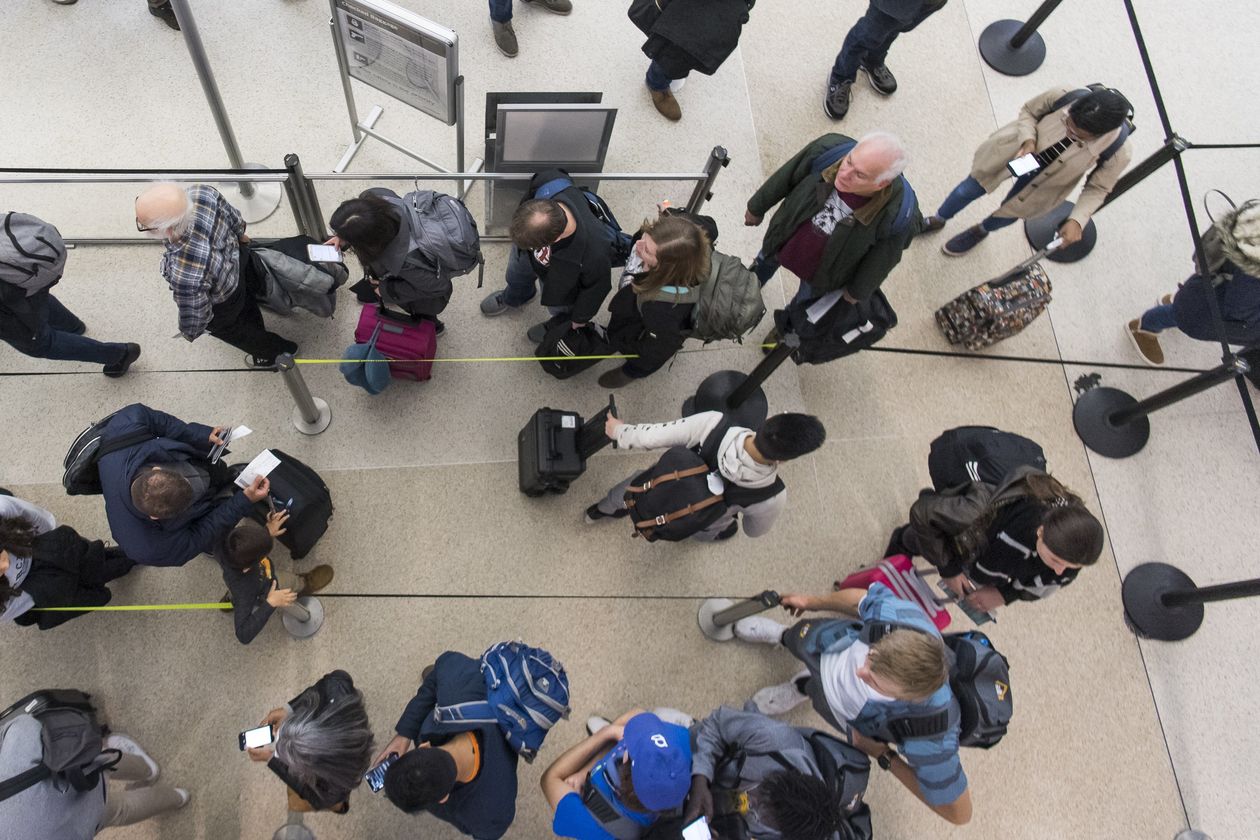
Providence College Professor Jon Jackson discusses a topic that every flier understands.
For over 50 years, Southwest Airlines has stood out with its open seating policy—passengers lined up, boarded in order, and picked any available seat. That system will soon end. Starting in January, Southwest will introduce assigned seating and its first premium seats, as part of a major redesign of its boarding process. Internally called “Project USA,” this initiative is more than a marketing shift—it’s a deep operational rethink based on one principle: if queuing isn’t good, boarding isn’t good.
 Southwest’s new boarding plan is a live experiment in queuing theory and process design, balancing efficiency with customer experience. Boarding is a significant driver of turnaround time—a key metric for airlines. Every minute saved at the gate means higher aircraft utilization, lower fuel costs, and better schedule reliability, writes The Wall Street Journal (Oct 13, 2025).
Astrophysicist Jason Steffen’s boarding process, which boards passengers in a diagonal pattern, minimizes blocking and maximizes parallel activity. Simulations suggest it could reduce boarding times by 30–50%, but it relies on strict compliance and passenger discipline—hard to guarantee in practice.
Southwest’s new system will use a variation of the WILMA method—boarding Window, then Middle, then Aisle seats—to reduce aisle interference and speed up boarding. This approach is validated by queuing research, though the Steffen process is even more efficient in theory.
Boarding an aircraft is fundamentally a queuing problem—a test of bottlenecks, flow efficiency, and human behavior. The new plan introduces nine boarding groups and two parallel lines to create a smoother, more predictable flow.
 Prof. Howard Weiss shares his insights with our readers monthly.
 Several cities go a step further to improve transit times. You do not even need to go through a turnstile or wait for a bus driver to check your ticket. These cities use an honor system that relies on riders to purchase their tickets. This reduces boarding times and lines for busses and waiting times on the subways. Also, passengers can board busses using any door not just the front door which reduces the boarding time. There are controllers who may check tickets and if the rider does not have one the rider is fined – for example, $60 in Hamburg, Germany, $150 in Copenhagen, or $250 in Los Angeles.