OM in the News: Innovation is a Messy Business

Grounded Japanese 787s

In Chapter 5, Design of Goods and Services, we talk about how new products are the heart of a great company. 3M, for example, introduces a new product every day! But The Wall Street Journal (Jan. 24, 2013) headline warns: Innovation is a Messy Business. Writes the Journal, “Aviation innovation is especially risky because the stakes are so high. A crashed laptop might lose data, but a crashed plane kills people.” Unlike 3M products, entirely new jetliners get developed only about once a decade, costing billions of dollars.

Nine years ago, Boeing  decided to take the biggest leap in airliner technology in a generation and develop the 787 Dreamliner. Boeing promised it would burn less fuel while flying farther and offering more passenger comfort than existing models. The 787 also showed Boeing’s “commitment to innovation.” Airlines, eager to save money and woo fliers, ordered a record numbers of Dreamliners.

We in academia have made “innovation” a buzzword for competing in the global economy. Boeing’s experience offers a reminder that innovation—for all its value—doesn’t come as easily as a catchphrase. It can get messy. Boeing, an icon of  ingenuity, has reshaped travel over the past half-century with bold technological leaps such as the 747 jumbo jet. But the 747 first nearly bankrupted the company due to technical problems. Boeing’s backers say the Dreamliner will prove just as revolutionary.

The 787’s problems again show the traumas that innovation can bring. Boeing said the plane would leapfrog advanced technologies at Airbus. It would rely more on electricity to run its systems than existing planes, which used hydraulic and pneumatic power. To convince wary airline executives that carbon-fiber body material was strong, Boeing sales teams carried samples and hammers, letting airline executives whack the composite with all their might. Airlines signed on, knowing the risk.

Discussion questions:

1. What are the main operations problems facing the 787?

2. Why did Boeing risk introducing such a radically different plane?
OM in the News: Six Ways 3-D Printers Can Change the World

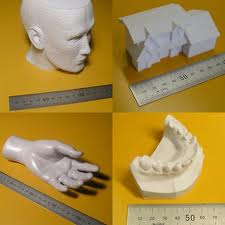
3D printing technology, which allows you to produce 3-dimensional solid objects from a digital model, have become more affordable -as low as $499. Here are just a few amazing products we will see from this developing technology, compliments of OnLine Business degree.org.

  1. Vintage car parts: Vintage car lovers are sometimes stuck with a vehicle that will no longer run because a single part is broken. Replacement parts for antique cars often no longer exist. You can now scan a part that needs to be replaced, and then print a plastic or metal replacement part.
  2. Body organs: Organovo is the first company to create a bioprinter, which replaces the ink drops of a printer with human cells. Although this technology is 5 years away,  it will one day be possible to use an adult’s stem cells to print and grow a kidney, heart valve, or pair of lungs.
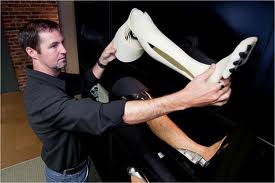
  3. Artificial limbs: Bespoke Innovations is using 3D printers to produce functioning artificial limbs for a much lower cost than what has been previously available. With digital modeling, a prosthetic limb can be customized to suit the recipient’s body and needs.
  4. Space missions: Getting a replacement part from Earth to the space station is not only technically challenging, it also costs a whole lot of money. 3D printers may soon allow astronauts to resupply as needed.
  5. Structurally sound houses:  Construction companies are using ‘Contour Crafting’ to cheaply build structurally strong buildings. Italian designer Enrico Kini is working toward using large-scale 3D printing technology to produce entire stone buildings made of sand and an inorganic, liquid binding agent.
  6. Prosthetic jaw: European researchers have created a prosthetic jaw for a patient suffering from a severe infection of her mandible. The replacement was made with a 3D printer and powdered titanium, instead of plastic, to sculpt the jaw. A bioceramic coating was applied so that the patient’s body would not reject the implant.

Discussion questions:

1. Why are 3-D printers an important new OM tool?

2. How can the printers be used in a factory environment?

OM in the News: WSJ’s Technology Innovation Awards for 2012

My favorite issue of The Wall Street Journal (Oct.16, 2012) is the one that announces the technology innovation awards for the year: Treatment for tuberculosis in India; A thermostat that programs itself; A lifting device that could help cut workplace injuries; A tsunami barrier that automatically deploys when destructive waves approach; A sports headphone that sends sound waves through your cheek bones, and does not block out important background noises. Here are the 3 top winners out of 536 applications.

Printechnologics is the Gold winner for its Touchcode technology which enables publishers, consumer-product companies, event promoters and others to include invisible codes on printed items that can be read instantly on any device with a touch screen. The codes can link to videos, games, recipes or just about any other online feature; a concert ticket printed with Touchcode could take you to a clip of the performer singing, for instance. A user only needs to place the printed item on the screen of a tablet or smartphone and the invisible code immediately connects to the online content.

Pure Storage Inc. won the Silver award for a data-storage system that uses flash memory instead of disk drives to hold information in corporate data centers. FlashArray storage systems sell for roughly the same as comparable disk storage, while delivering 10 times faster speeds, taking up one-tenth the space and using one-tenth the energy. That means companies can run complicated data-analytics programs more quickly and on larger databases than is possible with disk storage systems.

The bronze winner is Vidacare Corp. whose OnControl Bone Marrow System eases that pain  of a bone-marrow biopsy. OnControl bores like a household drill into the space inside the bone. When the device reaches the correct point in the bone for the sample, changes in resistance and how the motor sounds offer cues for the doctors. It’s  faster, less painful,  and more precise.

OM in the News: 3-D Printing Moves to Human Organs

“Need an artery for bypass surgery or custom cartilage for that worn-out knee?”, asks The Wall Street Journal (Sept.18, 2012). Then just hit “print” on your 3-D printer.

In laboratories across the U.S., biomedical engineers are working on ways to print living human tissue, with the goal of producing personalized body parts and implants on demand. These tissue-engineering experiments represent the next step in a process known as computerized adaptive manufacturing, in which industrial designers turn out custom prototypes and finished parts using inexpensive 3-D computer printers.

Instead of extruding plastic, metal or ceramics, these medical printers squirt an ink of living cells– called shorthand bioprinting. The machines can build up tissue structures, layer by layer, into all sorts of 3-D shapes, such as tubes suitable for blood vessels, contoured cartilage for joints, or patches of skin and muscle for living Band-Aids.

At Cornell, researchers are printing heart valves, knee cartilage and bone implants. At Wake Forest, bioengineers are printing kidney cells and are working on a portable unit to print healing tissue directly into burns or wounds. At the University of Missouri, researchers have printed viable blood vessels and sheets of beating heart muscle. Biomedical engineers hope to print out tailored tissues suitable for surgery and entire organs that could be used in transplants, to eliminate long delays for patients awaiting suitable donor organs and the risk their bodies may reject the tissue.

Leading the way is Organovo Inc., which introduced the first commercial 3-D bioprinters in 2010, and has so far made 10 of its “NovoGen” bioprinters. “It allows us to print a tissue structure that is a functional, living, human tissue,” says Organovo’s CEO.

Discussion questions:

1. Relate these 3-D printers to those currently being used in industry (see Chapter 5).

2. How is this advancement an OM issue?

OM in the News: The Self-Service Airport

Airlines are laying the groundwork for the next big step in the increasingly automated airport experience: a trip from the curb to the plane without interacting with a single airline employee, writes The Wall Street Journal (Aug.28, 2012).

For years, travelers have been checking in online or at airport kiosks and airlines have been converting paper boarding passes into electronic ones. Now carriers are turning to technology that enables travelers to check their own bags and scan those boarding passes, a topic we discuss in Chapter 5 on service design.

At the airport of the near future, “your first interaction could be with a flight attendant,” said Ben Minicucci, COO of Alaska Airlines. Alaska Air has been at the forefront of self-service in the U.S., recently introducing self-tagging of baggage in Seattle and San Diego with 8 more airports planned this year. Airlines say the  technology will quicken the airport experience for travelers—shaving 1-2 minutes from the checked-baggage process alone—and freeing airline employees to focus on fliers with questions.

Airline-employee unions say the machines are a way for carriers to cut staff by outsourcing pre boarding tasks to fliers. But a recent survey found self-boarding appeals to 70% of passengers and almost as many travelers want to tag their own bags. Self-tagging and self-boarding have each been implemented in 115 instances around the world.

U.S. airlines and airports are catching up to their counterparts in Europe, where  Lufthansa began testing self-boarding in the late 1990s. That airline officially implemented the technology last year in its three main hubs in Germany, where customers have readily adapted to it. “A lot of our passengers are frequent fliers who really prefer not to talk with staff all the time,” says Lufthansa. Last month in Las Vegas, JetBlue Airways became the first U.S. airline to officially implement self-boarding gates, where fliers scan their own tickets to board the plane.

Discussion questions:

1. In what ways can OM make airline check-in/boarding more efficient?

2. Will the concepts described become standard procedure in a decade? Why or why not?

OM in the News: Apple Redesigns the iPhone Connector — The World Freaks Out

This is indeed from the title of Businessweek’s (July 26, 2012) article about the 30 pin connector found in every Apple product for the past 9 years. That was when Steve Jobs  unveiled the third-generation iPod, the first device with a plug design that has become nearly as significant to independent manufacturers as iTunes has to the music industry. The bottom-mounted connector capable of transferring songs and charging the music player is now a standard Apple  component. Makers of mobile accessories use the plug’s specifications when designing chargers, cases, speakers, and stands for iPods, iPhones, and iPads.

That $1.3 billion-a-year market will soon be upended by the connector’s first overhaul since 2003. The new plug will have only 19 connector pins, down from 30 in the port used by more than 600 million iPods, iPhones, and iPads, as well as millions of third-party accessories. Manufacturers who took the design for granted aren’t thrilled.  “There’s an entire ecosystem built around a single connector that’s going to be obsolete,” says one industry expert.

Apple executives are well aware of that. The company sells its own peripherals and enjoys a lucrative relationship with third-party accessory makers, who pay about $4 for each accessory authorized by Apple. Apple has long kept a close eye on the accessory market and in 2010 slapped patent-infringement lawsuits on companies that sold unlicensed iPod cables, chargers, and speakers.

Regardless of the disruption it will cause, the redesign is overdue. Wireless software is making plugs less critical, as new accessories can play music from an iPod, tablet, or smartphone without a physical link. Some companies have stopped making Apple accessories pending a formal announcement.

The bottom line: A design upgrade for Apple’s connector, unchanged for nearly a decade, could mean new peripherals for much of its huge existing user base.

Discussion questions:

1. How is OM a part of this  product redesign?

2. Describe another product’s redesign and its similarity to the impact on the market.

OM in the News: Will the New Ford F-150 Be Tough Enough?

Just west of Detroit, Ford is working on one of the biggest gambles in its 108-year history: a pickup truck with a largely aluminum body. The radical redesign (a topic in Chapter 5) will help meet tougher federal fuel-economy targets. But as The Wall Street Journal (July 27, 2012) reports, Ford will have to overcome a host of manufacturing obstacles, plus convince die-hard pickup buyers that aluminum is as tough as steel.

Ford is hoping the switch to the lighter metal will cut the weight of its F-150 truck by about 700 pounds,  a 15% reduction. This would enable Ford’s trucks to go farther on a gallon of gasoline, and open the door to the use of smaller engines to further boost fuel economy. (Other car makers also are experimenting with aluminum. Novelis, the world leader in rolled sheet aluminum, is tripling its U.S. production capacity of  aluminum used to make body panels).

Few have as much at stake as Ford. The F-series is one of the most profitable motor-vehicle lines in the world. In 2011, a third of Ford’s $8.8 billion global operating profit was generated by F-series sales. But aluminum is more expensive than steel, and extensive use could drive up costs by $1,500, cut the F-series’ hefty profit margins, or push away price-sensitive customers. Aluminum also is trickier to work with. The switch will require investment in $100’s of millions  in new manufacturing equipment, and the use of auto-assembly techniques that pose challenges in high-volume production. A big headache is the lack of magnetism, requiring powerful and electricity-hungry vacuums to be used to pick up the aluminum sheets for transfer. Assembly plants now use giant magnets to move steel body panels around. Aluminum also is more springy than steel and it scratches more easily.

Discussion questions:

1. What are the main issues facing operations managers with this redesign?

2. What the threats and opportunities Ford faces?

OM in the News: 3-D Printers–The Next Frontier in OM

When the dishwasher in a Boeing cafeteria in St. Louis broke down recently, the  company’s plumber didn’t want to wait for a plastic replacement part to be shipped to the site. He asked an engineer to replicate the part on a computer screen and “print it out”. That took about 30 minutes. Hence we witness the start of another major OM advancement –the 3-D printer revolution (as reported in The Wall Street Journal, July 14-15, 2012).

Pratt & Whitney’s aircraft-engine unit is using the 3-D process to make blades and vanes in compressors inside jet engines. Honeywell’s aerospace unit employs it to build heat exchangers and metal brackets but expects to find far more applications. Boeing already makes about 300 different smaller aircraft parts using 3-D printing, including ducts that carry cool air to electronic equipment. Some of these ducts have complicated shapes and formerly had to be assembled from numerous pieces, boosting labor costs.

Abe Reichental, CEO of 3-D Systems, a printer manufacturer, says the technology also will “re-localize” manufacturing of many items. He notes that printers, costing from $500 up to $1.2 million, can be set up almost anywhere, which will allow for production of items when and where they are needed and eliminate the costs of shipping and warehousing. The Defense Department is enthusiastic about the technology, which could at some point allow it to make parts in the field rather than waiting for them to be shipped from another continent.

3-D printing also is “an enabler” for entrepreneurs who want to make products but can’t afford elaborate factories and don’t want to entrust their manufacturing to faraway firms, says Reichental. They wouldn’t need to create expensive tools or molds. Some makers of 3-D printing equipment believe that car-part stores eventually will keep their inventories in digital form—as software containing the instructions for making each item—and print out items on demand.

Discussion questions:

1. How can new start-up businesses benefit from this tool?

2. What are the disadvantages of 3-D printers?

OM in the News: A 3D Printer on Every Desk?

For 25 years, carmakers and aerospace companies have used industrial-grade 3D printers to fashion prototype parts for their vehicles. Businessweek (April 30-May 6, 2012) reports that more recently, the medical field has turned to the machines to make custom hearing aids and invisible braces, while architects use the technology to produce models and consumer electronics companies to build prototypes of their latest gadgets.

One of the most exciting innovations in OM, 3D printers have become indispensable for doing business. The large industrial systems, ranging  from  $5,000 to $1 million can print in different colors of plastic and employ other materials such as metal, glass, and ceramics. Software makers are harnessing this power, making much better tools for manipulating objects. The market for 3D printers, about $1.7 billion, will reach $3.7 billion by 2015.

Mercedes , Honda, Boeing, and Lockheed Martin use 3D printers to fashion prototypes or to make parts that go into final products. The technology has broadened out to attract vacuum maker Oreck and Invisalign, which produces custom braces for teeth. Microsoft also uses a 3D printer to help design computer mice and keyboards. “A person who buys a BMW will want a part of the car with their name on it or to customize the seats to the contours of their bodies,” says 3D Systems’ CEO. “We’re printing with chocolate in our research labs today, so Godiva might print a candy bar with your face on it.”

As so often happens with industrial-grade technologies, 3D printing has flowed downstream to consumer. For $1,299, anyone can now buy a 3D printer, hook it up to a Wi-Fi network, and begin downloading files that will turn into real objects. The beauty and value of 3D printing & prototyping is that it can unleash the creative energy that is so unique to our minds. People who previously only “thought” about an invention or improvement can now make it real in a short time.

Discussion questions:

1. Why are 3D printers an important OM tool?

2. Why are the printers catching on as a household device?

OM in the News (with video): Boeing’s 4th Generation 737 Takes Shape

If you’ve ever flown, chances are you’ve ridden on a 737. Boeing’s strategy of product enhancement (Ch.5) has made the 737 the best-selling commercial aircraft in history, with 9,745 built since 1968. The newest version, the 737 Max, which is scheduled to make its debut in 2017, is designed with new engines to burn less fuel than its three predecessors, to help airlines’  costs and leave less of a carbon footprint on the environment.

Before the Max, writes USA Today (April 14-15, 2012), there were three versions of the plane: the Original that took flight  in February 1968; the Classics, which began flying passengers in 1984; and the Next Generation, which made its debut in 1998 with new wings and engines that enabled it to go farther and faster  while burning less fuel. All represented enhancements in the original concept of a narrow-body jet with the ability to fly medium to long-haul distances.  (Here is a great time-lapse 2.5 minute video of a 737 being built for Southwest that you can show in class).

At its most basic, the Max will be the same 737 stalwart the public has come to know. It’s a single-aisle jet that will ferry up to 215 passengers, but with higher efficiency. Outfitted with new engines, the Max will use 10% to 12% less fuel than its most current peer, the Next-Generation. That holds particular appeal for airlines, with jet fuel making up 25% to 40% of their costs, and whose profitability is threatened as the price of crude oil stays around $100 a barrel.

Even with Max, demand remains so high for the 737 that Boeing in January began delivering current model 737s at the unprecedented production pace of 35 a month. It plans to ramp up to 42 a month at the start of 2014 . Will a  completely new single-aisle plane will arrive eventually? “It’s something that we’ll definitely do at some point,” says Boeing.

Discussion questions:

1. Why has Boeing chosen product enhancement over a new single aisle plane?

2. How have cell phones been enhanced over the past 2 decades?

OM in the News: The Promise and Perils of Modular Design

If you are an auto aficionado ( and who isn’t), you will enjoy the Wall Street Journal (March 10-11, 2012) article sizing up the recent Geneva auto show, which highlights all the new vehicles and concept cars. Although half the article lambasted the new Bentley SUV (photo shown here) as “graceless, frightening, cynical, and terrible attempt to translate Bentley’s sleek styling” into a Range Rover, the heart of the piece was really on how OM plays a major role in design today through modularity (see Ch.5).  Indeed, Bentley and Lamborghini  are just 2 of 11 brands to share VW’s SUV architecture. VW will soon be building all its cars under only 4 modular “toolboxes”; one for city cars, one for mid-size cars, one for midengine sports cars, and one for large vehicles such as the Bentley SUV, Audi 8, and Porsche Panamera.

Eleven brands, scores of different models– from tiny to enormous and slow to fast–all with 4 toolboxes. The new Audi A3, for example, shares a platform with the VW Polo/Golf/Passat/ Tiguan, as well as the Seat Leon and Skoda Octavia. Up to 44 vehicles will be built on the platform, resulting in material savings of 20% and facility savings of 30%. This is because vehicles built in the modular system allow production to be modularized. VW will be able to rapidly shift production from one factory to another to anticipate regional demand and capacity. Similarly, Fiat/Chrysler is building its new Maserati SUV on a shared Jeep Cherokee platform.

The prevailing wisdom is that successful companies will have to reach a critical mass–6-8 million vehicles/year– to achieve economies of scale, most-favored status among suppliers, and to avoid fatal exposure in any one market. Only Pagani’s Huayra hypercar–all 700 HP and $1.5 million price tag–will have 4,700 custom-made parts ; it does not share a single switch, light bulb, or horn with any other car on the planet.

Discussion questions:

1. Why is modular design so important in the auto industry?

2. Which auto manufacturers have already obtained “critical mass”?

OM in the News: The Making of Amazon’s Kindle Fire

The Wall Street Journal (Nov.18, 2011) has an interesting  article on the manufacture  of Amazon’s new Kindle Fire, and asks: “Is the company making any money on the $199 device”?  Two research firms that follow Apple’s production closely come up with different answers. UBM TechInsights says Amazon pays $143 for the components in the Fire.  ISuppli estimates the cost to be $203. The main difference is in the price of the 7 inch display and touch-screen assembly, which UBM puts at $50, but which ISuppli estimates to be $87.

Both firms agree that Amazon used a lot of techniques to save costs. The box the Fire comes in is the same one used to package the Fire for other retailers like Best Buy. The only accessory inside is a wall charger and cord. “Amazon’s approach was to take out everything they didn’t need”, says iSuppli.

I like this product for class discussion because its one the students care about, yet likely have very little knowledge about its inner workings.

Discussion questions:

1. Why do firms, such as iSuppli and UBM, analyze  products like the Kindle so closely?

2. Why does Amazon view the manufacturing process and component costs as a trade secret?

OM in the News: Turning a Smartphone into a Medical Device

When we talk about new product development in Chapter 5, we can use the smartphone as an example of the platform for a new industry–mobile health care apps. Businessweek (Oct.2-9, 2011) reports on a new wave of smartphone apps and attachments that may “make health care fundamentally different than it used to be”. For example, in the past few months, products that turn a phone into a blood pressure measuring cuff, a CT-scan viewer, and other devices have received FDA approval. By 2015, 30% of smartphone users will be using mobile health products, says one consultant.

Here is one example: When Dr. Brian Froelke joined emergency responders to the Joplin, Missouri tornado, he brought a hairbrush-sized attachment to his Toshiba smartphone. The device, by Mobisante Corp., converts the phone into a pocket ultrasound machine. He used it to examine a pregnant woman who came into a temporary hospital complaining of stomach pain. “It was useful to reassure the mom that the baby didn’t have any obvious problems”, Froelke  says. Mobisante is in talks with the US Army, which is interested in using the portable device to diagnose wounded soldiers in the field.

At $7,495, Froelke’s attachment was also less expensive than a hospital ultrasound machine that can cost $100,000. It’s “easily the best bang for your buck”, says an ER doctor who reviewed it for Emergency Physicians Monthly. By reducing costs for insurers and medical providers, mobile health-focused startups hope to grab a slice of the $273 billion medical equipment market from giants such as GE and Philips. “Big companies of tomorrow are the small companies of today”, adds the CEO of a firm that makes a $129 blood pressure cuff that attaches to iPhones.

Discussion questions:

1. Why are these new devices are important to OM managers.

2. How are these devices going to impact medical practice here and abroad.

Teaching Tip: Old Ketchup Packets Heading for the Trash?

If you want to enhance your lecture on product development and enhancement (Chapter 5), just stop by your McDonald’s or Burger King and grab some of the old and new packages of ketchup and bring them to class. The Wall Street Journal (Sept.19,2011) describes how Heinz spent 3 years developing its new “Dip and Squeeze” packet to replace the traditional packet used since 1968. As the name promises, Dip and Squeeze can be squeezed out through one end of the lid or the lid can be peeled back for dipping.

Ask your students what they think. Did they like ripping off the corners of the old style with their teeth  while driving? Did they squirt the ketchup right into their mouths and then add fries?

For decades, Heinz has been searching for a better solution for single-serve packets. And some research showed that traditional packets were so annoying (and drippy) that people don’t order fries as often at drive-thrus ( a problem, since 2/3 of all revenue at these restaurants comes from the drive-thru). To develop the new packet, Heinz staffers sat behind a one-way mirror, watching customers in 20 fake minivan interiors putting ketchup on burgers and fries. ( We all know how messy the process can be).

Although the new packets are 3 times as expensive as the old ones, they signal to users: “This is a serving. This is a bottle of ketchup. You actually don’t need 16 bags”. Cost is king in fast food,  but customers have strongly preferred the new packaging—to the point that some consumers started hoarding the new packages, a trend that will likely wear off as the novelty fades.

This is a great example of building a better mousetrap.

OM in the News: Redesigning the Chevy Malibu

 While the US’s fuel economy requirements rose just 10 mpg in the past 30 years, they are now poised to rise 2 mpg on average each year over the next decade. And by 2025, new cars must average 54.5 mpg., twice today’s standard! Short of dramatic use of battery-power and hybrid vehicles, how can auto makers reach these lofty targets?  The answer, according to The Wall Street Journal (Aug.30,2011) is a whole bunch of seemingly small product redesign changes, the topic of Chapter 5.

Here is what GM has done to the 2013 Chevy Malibu, due in showrooms early next year, to create a car that will go 92 more miles on a tank of gas than the current model:

1. Round the front bumper, to reduce drag (.4 mpg).

2.  Angular rear tail lamp, to reduce airflow (.3 mpg).

3.  A compact, battery-operated, electric motor to provide more power during acceleration (5 mpg).

4.  No spare tire, but a portable air compressor to fix a flat, thus saving 128 lbs. of weight (.4 mpg).

5.  Aluminum, instead of steel in the hood and a rounded front corner (.4 mpg).

6. “Active shutters” behind the grille to allow air to cool the engine (.3 mpg).

7. Flattened underbody panels , to improve airflow under the car (.4 mpg).

The mpg race is indeed changing product design. The car’s redesign began 3 years ago and involved concentrating on details. “It takes looking at every single gram and kilogram and every part of the car”, says the Malibu’s engineering manager. The small changes Chevy is making add up to a 7.2 mpg improvement.

Discussion questions:

1. What are some other auto changes that can yield mileage improvements?

2. Ask students to each find a product and suggest ways to make it more efficient and ecologically friendly.