Good OM Reading : Pfizer–The Inside Story of Revenge, Betrayal, and Power

Fortune’s cover story (Aug.15, 2011) is a wonderfully written article about a dysfunctional pharmaceutical giant, Pfizer, and the palace coup that removed CEO Jeff Kindler last December. The inside view (from 42 interviews over a 4-month period) of a $68 billion company that produced such blockbusters drugs as Lipitor and Viagra is movie material. Once a Wall Street darling and corporate icon, Pfizer has tumbled into disarray, with its stock price sagging from $49 down to $18 today and its pipeline dried up. What went wrong  and how is this an OM topic?

 First, there is the management issue. “Its managers descended into behavior that would do Machiavelli proud. There was the ex-CEO who wouldn’t relinquish his power. There was the HR chief who divided the staff rather than uniting it. There was Kindler himself who agonized over decisions even as he second-guessed everyone else’s actions”, writes Fortune.

The real OM story, though, is R&D and new product development (Ch.5), which is the lifeline of every drug company.With 3 of its biggest drugs about to lose patent protection and face generic competition (Lipitor alone brought in a staggering $12 billion/year and loses its exclusive rights this year), investors wanted to know what Pfizer was going to do to replace them. Its immense R&D budget of $9.4 billion last year produced two major hopes. Both ended in disaster. A cholesterol drug, torcetrapib, cost $890 million to develop and produce. A late trial revealed it increased death rates over control groups– and the drug was killed 2 days later. Exubra, an insulin system, cost a $2.8 billion write-off when unhappy customers  bought only $12 million of the product.

With the business model failing, the R&D budget cut to $7 billion, Pfizer laid off 1,600 researchers at its Groton ,CT, flagship site, fired CEO Kindler and the HR VP (with massive severance packages, of course). The big pharm industry is one that requires excellent management, and I think you will be interested in  reading about what happens without it.

OM in the News: Sustainability and eBay Packaging

In Chapter 5 we discuss some of the easiest ways to make products more  sustainable. We can: (1) make them recyclable; (2) use recycled materials; (3) use less harmful ingredients; (4) use lighter materials; (5) use less energy; and (6) use less material. MITSloan Management Review (Aug. 11, 2011–E Newsletter) describes how eBay has made its packing boxes more sustainable by using almost all of these approaches. In doing so, the online auction company has come up with a solution that not only feeds on people’s desire to recycle, but helps brand the business as sensitive to the environment.

The eBay box is made of especially durable cardboard. Covered in graphics of birds and trees, it has text all over that basically says: “this box has been designed to be used over and over”. The inside of the lid even has spaces where users can leave notes where the box has been, essentially inviting recipients to celebrate the fact that the box has been used and reused.

The idea bubbled up internally. The firm’s Green Team is tasked with “inspiring the world to buy, sell and think green every day”. Out of the 250 suggestions submitted to eBay’s annual Innovation Expo, the grand prize winner was the eBay box. The project received a prestigious Clio design award a few months ago.

By May that the company had given away 100,000 of the boxes. The Green Team reports that “each box is made of 100% recycled material, printed with water-based inks, and designed to require minimal tape”. The 1,500 boxes reused so far have “conserved almost 7,000 gallons of water, energy to power 13 homes for a week, and reduced greenhouse gasses equivalent to taking 18 cars off the road for a week”.

Discussion questions:

1. Ask students to pick another product that can be redesigned to be greener.

2. Show the Frito-Lay video on sustainability (in Ch.7) and compare that company’s packing efforts to eBay’s.

OM in the News: Product Enhancement and the McDonald’s Happy Meal

Under pressure from 550 health organizations to stop marketing  “junk food”  to children and to retire Ronald McDonald (the clown mascot), McDonald’s has chosen the path of product enhancement (Ch.5) as a preemptive strike. The New York Times (July 27, 2011) reports today that the firm will start to fill its Happy Meal boxes with apple slices and smaller portions of french fries this September. By next April, the new menu will be rolled out to all 14,000 restaurants.

The food industry overall has come under increased scrutiny as childhood obesity levels have risen. San Francisco last year banned the inclusion of toys in kids’ meals unless there is a fruit and vegetable included. New York City has a similar rule in the works. Instead of developing all new kids’ products (or including vegetables), McDonald’s is responding with 1/2 the number of fries and a 20% lower calorie count.

The new Happy Meal, containing 4 chicken nuggets and a small Coke, weighs in at 410 calories (vs. 520 in the older product), 17 grams of fat (vs. 23 g), and 58 grams of carbs (vs. 69 g). The firm decided against making apples a total replacement for fries when only 11% of customers showed an interest in that option. While some critics praised the changes (Mrs. Obama called them “positive steps”), one NYU prof called the move a “sham”, in part because McDonald’s is not limiting sodas. In fact, sugar levels go up with the Coke and apple together.

Discussion questions:

1. What are the operations challenges in changing the Happy Meal?

2. Do students believe legislation is an appropriate means to make menus healthier?

3. How are other restaurants responding with children’s menu options.

OM in the News (with Video Tip): 3-D Printing of Body Organs and Concrete Buildings?

It was just July 7 when we blogged about a 3-D printer creating a crescent wrench as strong as the original. That blog was  accompanied by a short video showing the process from start to finish–one certain to entertain your class. But today’s Wall Street Journal (July 16-17,2011) has raised the 3-D printing bar potential way beyond plumbing tools. With the title,  “How Close Are We to Printing New Organs?”, the Journal describes how a whole dummy kidney made of biocompatible materials and cells, was “printed” on stage at a TED talk a few months ago. With about 90% of patients needing a transplanted organ seeking a kidney, being able to create a “self-derived” kidney would save many lives and spare people the expense and pain of dialysis.

Such “printed” kidneys that would be able to work in the body (they are structural, but lack blood vessels) are still years away, but the rate of advance means the 1st autologous transplant may still happen this decade.  Already, synthetic windpipes, grown with a patient’s own cells, are being transplanted. (The windpipe of the patient is scanned, molded from a porous medical plastic, and infused with cells from the patient in a bioreactor).

And the concrete in our blog  title?  Here is a 3-minute video of a concrete structure being built by a grander and rougher  3-D printer at a British university. The architect makes the design, after which the printer extrudes concrete from a nozzle to build up the object, layer by layer. Printed concrete products are proving to be stronger than the cast ones. They also have the advantage of a hollow interior through which a building’s wires and pipes can be run. And the ducts in the concrete parts look uncannily like blood vessels needed in the 3-D kidneys.  Pretty exciting advances in OM technology!

Discussion questions:

1. Why is 3-D printing, which has been around for a decade, now becoming such an important tool?

2. Ask students to research the costs of 3-D printers.

Video Tip: Bringing 3-D Printing to Life in the Classroom

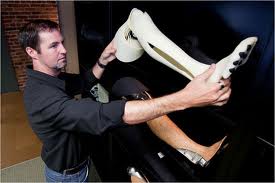
Computer Aided Design (CAD) and 3-D Printing may not be the most exciting topics in the Design of Goods and Services chapter (Ch.5), but after you show this 4-minute video clip, there will be a definite uptick in class discussion. Our photo of a 3-D  printer just can’t do justice to the amazing work going on in this rapidly advancing area of OM. So when Prof. Bruce Elwell showed me the video we link to here, I knew it’s something important to share in the blog.

I recommend that you bring a crescent wrench with you to class to bring home the product and its design. Pass it around while the video plays so your students can get a better feel for the tool. And if you would like more background on 3-D printers, take a look at the blog we did on the subject a few months ago. It was based on a major article in The Economist in Feb., 2011.

OM in the News: Making Airplanes More Efficient

With airlines hemorrhaging billions of dollars a year, largely because of soaring oil prices and environmental regulations, building more efficient jets has become Boeing and Airbus’s biggest OM challenge. Pressured by airline execs,  manufacturers  have already begun making lighter planes to reduce fuel consumption. In 1980, for example, it took 46 gallons of fuel to fly a passenger 1,000 miles. Today it is down to 22 gallons–and could drop to 18 within a decade. Still, a decade ago, fuel accounted for 15% of an airline’s budget. Today, it’s 35%. And airlines worldwide may have to spend an extra $3.3 billion a year to meet new E.U. carbon dioxide restrictions on planes flying into Europe.

So when we talk about product design and sustainability considerations in Ch.5, airline OM managers are desperate for any improvements that can reduce weight and emissions. The Miami Herald (July 4, 2011) reports on some the efficiency gains that were dreams just a few years ago. Both the Boeing 787 and Airbus A350 are new long-range jets with 1/2 their bodies made of carbon-fiber composites (which weigh 20% less than traditional aluminum alloys). Engine manufacturers are unveiling brand new engines for single-aisle planes (which are 75% of the 22,000 jets worldwide)  that promise to cut fuel use by 15% (or $1 million per plane per year).

The Herald also lists more ways to save on fuel: (1)  a satellite-based air traffic control system (several years away) that could cut fuel use by 12%; (2) “winglets” added to the tip of each wing to prevent drag; (3) carrying less weight in the plane– (American is replacing 19,000 catering carts with ones that weigh 16 lbs. less. Southwest is looking at lighter weight seat covers, while Jet Blue is using thinner seats. Every pound saves 30 gallons of fuel/year); and (4), replacing older jets faster (American is replacing aging MD80s with 737 that use 35% less fuel).

Discussion questions:

1. Why is efficiency a product design issue?

2. What other changes can be made to improve operational efficiency?

OM in the News: When New Medical Products Fail

In Chapter 5, we discuss both the importance of new products in a firm’s success (see Fig. 5.2) and the product development system (Fig. 5.3). One  industry whose lifeblood is new and improved products is medicine– where high product demand and the need to gain a competitive edge results in a constant churning of new drugs, devices, and procedures. But the promise of innovation can also prove a trap, according to The New York Times (June 25, 2011), a situation now playing out with dire consequences for 10,000’s of people who received artificial hips in the last decade.  “I don’t understand it, but there is a phenomenon in the U.S., for the latest and the greatest”, says a Swedish orthopedic surgeon.

The issue is metal-on-metal hip implants, designed by device makers as a supposedly major advance over a 50 year-old previous design  that used metal and plastic. The older, relatively simple model consists of a metal “ball” that replaces the thigh bone, while  a plastic “cup” serves as an artificial hip socket. This device is highly effective, with a 95% success rate a decade after surgery.

“The vast majority of the innovations with respect to orthopedics over the past 2 decades have not resulted in improved patient outcomes”, says one UC prof. But companies began promoting the new implants as “the next big step”. Patients, intrigued by ads featuring celebrity athletes doing strenuous physical activities, also wanted the metal-on-metal devices. All- metal implants now account for a 1/3 of the 250,000 hip replacements in the U.S..

Unfortunately FDA simulations to test the new product were based on idealized conditions, not real-world wear and tear. Now, debris from the grinding of the metal parts is causing crippling tissue and muscle damage, and even neurological problems. Of the half-million all-metal implants inserted, there is a likelihood that tens of thousands of patients will require painful replacements.

Discussion questions:

1. Why are metal implants failing at a high rate?

2. What other major drugs and medical products have imploded shortly after introduction?

OM in the News: Cost-Cutting and Value Analysis in Fashion

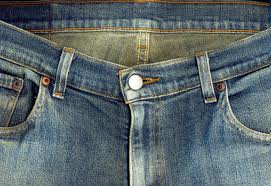
We introduce the subject of value analysis in Ch.5 as a way to manufacture a successful product more economically. And with soaring cotton and labor costs that are hard to pass onto budget-conscious consumers these days, the fashion industry is paying close attention. The shock to apparel company execs, who have experienced only falling or stable prices for the past 2 decades, means they are turning to “deconstruction” to find out how to take garments apart and put them back together with fewer and cheaper materials. Businessweek (May 30-June 5,2011) reports that with costs going up 15% in the 2nd half of 2011, clothing makers are redesigning apparel to extract savings.

Since fabric can cost as much as  50% of a garment’s cost,  cutting it more carefully can reduce waste by 50 cents on a pair of $195 wool slacks. Buying zippers on a roll can save another few cents, eliminating cuffs and pleats, scrimping on linings, and switching to coarser material for pockets  can each save  another 10-50 cents. “For big apparel companies the make 100,000’s of men’s suits a year, saving 20 or 50 cents a garment is a lot of money”, says a prof at the Fashion Institute of Technology.

Deconstruction expert Peter Brown recently examined a $29.50 pair of slacks and spotted a coin pocket. “Eliminating it zaps a nickel”, he states. He also cuts out watch pockets (who uses them anymore?), and decorative stitching on the waist band (which is only seen by the wearer). And does a dress shirt need real shell buttons or will imitation pearl do? At 20 cents a button for a shirt that needs a dozen buttons, one manufacturer recently opted for the imitation.

Discussion questions:

1. How else can clothing manufacturers cut their costs?

2. What is the danger in removing the watch pocket from a pair of dress slacks?

OM in the News: New Product Design Keeps Intel a Generation Ahead

Chapter 5 discusses the critical importance of new product design in OM and the impact it can have in the technology arena. Indeed, as The New York Times (May 4,2011) breaks the news about Intel’s success in a 3-D transistor design, we see how important staying ahead of the fierce competition can be. Breaking away from a design (called the planar transistor) that has been a constant in the chip industry since 1959, Intel has found a way to make smaller, faster, and lower-powered chips.

Its designers are turning from 2-dimensional transistor switches (the basic building block of the information age) to a third dimension to find more room. Intel said yesterday that the new process allows chips to run 37% faster in low voltage applications (like iPhones and iPads), while power consumption drops 50%. 

This exciting news is significant because it means the world’s largest chip maker (see yesterday’s blog about the industry) is not slipping from the pace of doubling the number of transistors etched onto a sliver of silicon every 2 years, a phenomenon known as Moore’s Law. This “law”, named after Intel’s co-founder, has set the computer industry apart from other manufacturing because it continued to improve at an accelerating rate.

Intel currently uses  a photolithographic process to make a chip and the current generation is called a 32 nanometer chip. (By comparison a human red blood cell is 7,500 nanometers in width). “Intel is on track for  22 nanometer manufacturing later this year”, says the scientist in charge of the project. By 2015, the firm is on target to make chips in a 10 nanometer generation.

Being first out with the 3-D chip technology gives Intel a full generation lead over competitors, but it does not guarantee success in a fast-changing consumer products market where “ultra-low power” chips are critical in consumer products.

Discussion questions:

1. Why is Moore’s Law a critical part of the chip industry?

2. What is Intel’s gamble in developing the 3-D chip?

OM in the News: Recycling Leftover Hotel Soap?

Ever wonder what happens to leftover soap and shampoo at hotels like Sheraton, Westin, Marriott, and Hilton? USA Today (April 26,2011) describes how a non-profit organization called Clean the World recycles used soap for distribution in developing countries and homeless shelters.

Most bars of soap, about a million, are thrown out each day by US hotels. But Clean the World, and other groups, are taking in  1.6 million pounds of soap a year through agreements with about 1,000 hotels. Clean the World charges hotels 65 cents a room to clean and redistribute soap and shampoo bottles. It has built recycling centers in Orlando, Las Vegas, Toronto, and Vancouver. Soap is sterilized in its plants and reformed into 2-ounce bars.

In the past 2 years, Clean the World has distributed more than 8 million bars of soap in the US and 40 countries, including Haiti, Uganda, Zimbabwe, and India. Its efforts have diverted 550 tons of waste from landfills. “Each day, 9,000 children die from diseases that can be prevented by washing with soap”, the organization says.

Sustainability in hotels is a topic we discuss in both Ch.5 and Ch.7. Here is a good example to bring to your students.

Discussion questions:

1. Why doesn’t every hotel practice this recycling strategy?

2. How else can hotels be “green”?

OM in the News:Frito-Lay’s Move to All-Natural Snack Foods

In this latest edition of our OM text, Jay and I focused on Frito-Lay, including five new video case studies on topics from manufacturing strategy, to SPC, to sustainability, to inventory control, to maintenance. We picked the massive company because it made a product line that every student could relate to.

So The Wall Street Journal’s  article (March 24,2011) on Frito-Lay’s attempts to retool its product line (Ch.5) to focus on “natural ingredients” was eye-catching. My family and I had consumed probably a 100 large bags of chips during our company research and filming time– a far cry from our normal organic-only household routine.

In a move to make half its snacks with only natural ingredients by the end of 2011, Frito-Lay is gambling that: (1) customers really do want to eat only healthy snacks, (2) retooling doesn’t end up making the products “taste like cardboard”, and (3) the 35% higher ingredient costs will not drive prices too high. Under pressure from the FDA to reduce sodium in the chips, the company has done so (by 25%), but in a very clever way so the taste buds will not know about it. (The secret was to cut salt crystals differently so they remain on the chip’s surface, closer to the tongue, instead of falling into the chip’s recesses).

The firm is also saying goodbye to MSG and 3 dozen other artificial ingredients, and eliminating trans fats. (Its baked chips, by the way, are tasty and have much reduced saturated fats, so I do sneak them into the shopping cart now and then).

The “all-natural” market represents about 20% of the $15 billion in annual US snack sales and is growing rapidly at 14% a year.

Discussion questions:

1. How does this new strategy impact the operations function?

2. How can the “house of quality” (QFD) be used?

3. How does this fit into Frito-Lay’s “green” strategy (see Ch.7).

OM in the News: The Nintendo Product Life Cycle Game

This week, Nintendo launched its first all-new machine in 5 years, a hand-held player with a 3-D display that doesn’t require the user to wear glasses. The company has dreamed for 15 years of 3-D game systems, but two previous attempts  (the Family Computer 3-D System in 1985 the Virtual Boy System in 1993)  required glasses or goggles and were both embarrassing  flops.

With the game world gravitating towards the use of sophisticated apps on cell phones (LEGO Harry Potter costs $4.99 on an iPhone), The Wall Street Journal (Mar. 2,2011) reports Nintendo is facing the classic product life-cycle curve on its most popular products, its DS and Wii game players. The DS came out in 2004 and the Wii in 2006. Demand for both peaked in 2009 and sales of games for them are on the decline as well. The goal is for the 3-D player (called the 3DS) to restart the life cycles for both machine and games.

The 3DS is a clamshell device, about the size of a passport when closed and 8/10 of an inch thick. The first units went on sale in Japan this week for $299, with more than 90% of the first 400,000 units shipped to retailers sold in 2 days. It will soon arrive in the US and Europe.

The only catch: Nintendo is warning that children 6 and under should not play the games, as it could have a negative effect on their eyesight development. The 3DS delivers separate images to the left and right eyes. The device is very sophisticated and even includes a 3-D digital camera.

Discussion questions:

1. Why is this project critical to Nintendo?

2. In a SWOT analysis (Ch.2), what are the weaknesses and threats?

3. Do students believe this is the “next wave”?

OM in the News: Making the 737 a Better Product

The hottest fashion sensation on the runway this spring  is a new design from the house of aluminum couture, Boeing. Rather than a major redesign of its all-time best-seller, the 737, Boeing has chosen the route of product enhancement (which we discuss in Ch.5). The Wall Street Journal (Feb.24,2011) reports that airlines have been pushing for an update on the plane, which has been around since 1967.

But what makes Boeing’s action to redesign the jet more interesting is that for the first time, it went directly to passengers, not the airline buyers, for direct feedback. Focus groups around the world were put in different mockups of cabin interiors to get their reactions. (This reminds me of how Arnold Palmer Hospital mocked up  rooms in a warehouse to see what future patients thought would be a good layout...see our video case in Ch.9). In the past Boeing’s primary design goal was function, not passenger psychology.

In the new design/layout, which does not impact the 737’s exterior or performance, or even interior seat width or leg room, overhead bins have been reshaped to fit into the ceiling at an angle. This dramatically opens up headroom so tall passengers can stand up straight under the bins.  Because the bins are flat before takeoff, then angle up when loaded, they also have a power motor to make the flight attendant’s job easier. Boeing also redesigned the window shades and side walls to make the cabin look roomier. Fancy lighting systems also make the ceiling appear to be higher. All these changes, by the way, were developed for the long-delayed 787, and intended to make flying more comfortable.

Sixty airlines have opted for this new interior and 1,700 of the 2,200 737s slated for production have been ordered with this more expensive option.

Discussion questions:

1. Why did Boeing choose product enhancement of the 737 over product migration (making a new plane)?

2. Why are the vast majority of customers opting for the new layout?

OM in the News: Exciting Developments in 3-D Printing

When we were writing the current edition of our OM text,  Jay spent  weeks just looking for any decent  photo of 3-D printers and 3-D object modeling (which we cover in Ch.5). Now The Economist (Feb.10,2011) has just published a lead article on how 3-D printing will transform manufacturing. This is a topic we think your students will find interesting.

Engineers and designers have been using 3-D printers for a decade, but mostly to make quick and cheap prototypes before tooling up in a factory to manufacture the real thing. Now 3-D printers are being used more than 20% of the time to actually manufacture the products. Its called “additive manufacturing” and is already being used to make medical implants, jewelry, dental crowns, custom boots, racing-car parts, solid-state batteries, and much more.

At AEDS (the Airbus people),  machines “print” a complex titanium landing gear bracket, the size of a shoe, which would normally be laboriously hewn from a solid block of metal. Their plan is much bigger though: as the 3-D printers grow, AEDS wants to print the whole wing of a jet.

Printing in 3-D may seem bizarre, but it is similar to clicking the print button on your inkjet printer to produce a letter. The difference is the “ink” in a 3-D printer is a material deposited in successive, thin layers until a solid object emerges. EADS, for example, starts with titanium powder. The printers spread a layer about .02 mm thick onto a tray where it is fused by lasers. Compared to a machined part, the printed one is 60% lighter, but just as strong! And a reduction of 1 kg in an airplane saves $3,000 in fuel per year.

The most exciting part of additive manufacturing is that it lowers the cost of entry into the business of making things. Some think the impact will be to manufacturing what the inkjet printer was to document printing.

Discussion questions:

1. Have each student find a different application of 3-D printing.

2. Why is this a potentially revolutionary technology?

OM in the News: Boeing Goes Long with New 747-8 Jet

Eighteen feet. That may not sound like much, but it’s the length added to Boeing’s new version of the 747, called the 747-8 Intercontinental commercial jet. This added length makes the 747-8 the longest jetliner in the world, says USA Today (Feb.14,2011), trumping Airbus’ A380 superjumbo by 12 feet.

The 747-8 is a great example of  what we call “product enhancement” in Chapter 5. Rather than develop an all new plane, as Boeing did with the 787 Dreamliner and Airbus did with the A380,  Boeing chose the less risky and cheaper  path of  enhancing a successful, trusted plane that has been selling since 1969. As you probably know, both the 787 and the A380 have run into multi-year delays. Boeing’s strategy had worked well in the past, taking the world’s best-selling plane, the 737 (first introduced in 1967) and adding numerous enhancements over the decades.

The 747-8 actually took advantage of some of the new technology the firm created for the 787. The new wing design, engines, larger windows and storage bins all came from 787 innovations. The range, now 8,000 miles and more fuel-efficient engines make the updated plane a match for airlines with long, intercontinental flights. Lufthansa and Korean Air have ordered 25 planes so far.

The A380 is still the biggest plane by seating capacity (525 vs. 467 for the 747-8), height (79 ft. vs. 63 ft.), and range (300 miles more). But Boeing calls its enhanced jet  “that sweet spot in the market”.

Discussion questions:

1.  What is the difference between product enhancement and product migration?

2. Why was it important for Boeing to introduce the 747-8 model?

3. What were the major problems with the 787? (see our earlier blogs)