OM in the News: Process Improvement In Hospitals

The New York Times (June 3,2012)  writes that there is some good news about our  health care system. A growing number of hospitals, doctors, employers and insurers are using the process improvement tools of Chapter 7 to reduce the cost of delivering medical care while maintaining or improving quality.

Seattle’s Virginia Mason Medical Center, for example, has conducted reviews to eliminate waste and inefficiency. It says that after doctors were required to use a checklist of the medical circumstances needed to justify a costly imaging test, CT scans for sinus conditions dropped by 27% and M.R.I.’s for headaches by 23%. It placed nursing teams and supplies closer to patients, freeing nurses to spend 90% of their time on direct patient care, far more than the 35% at most hospitals. The time needed to process insurance claims was sharply cut by consolidating steps.

Virginia Mason also collaborated with Starbucks and the company’s insurance provider, Aetna, to find better ways to treat patients with back pain, a costly burden to Starbucks. At the start, all patients complaining of back pain typically waited many weeks to see a specialist, who would then prescribe a costly, unnecessary M.R.I. before finally sending them on to a physical therapist. Using process analysis to separate out the uncomplicated cases,  the medical center was able to send them directly to a therapist on the day the patient requested an appointment, and the vast majority were able to quickly return to work.

Premier Inc., a 2,600 hospital group, has also reduced unnecessary laboratory and screening tests and reduced labor costs by eliminating inefficient processes, like multiple re-entries of the same patient data for admitting, scheduling, discharge and billing. It has started  using administrative assistants rather than nurses to call patients to remind them of appointments. Premier reported  that over a three-year period, 157 of its hospitals in 31 states saved almost 25,000 lives and reduced health care spending by nearly $4.5 billion, a 12% savings.

Discussion questions:

1.  What are the benefits to Starbucks, Aetna, and Virginia Mason from their new approach?

2. Why is OM such an important topic in hospitals today?

OM in the News: The Rise of the Robot Reporter

Here is an application of service technology that we missed in Chapter 7:  Wired Magazine (May, 2012) presents a fascinating tale of how artificial intelligence is taking a prominent role in sports and financial news reporting.

Consider this : Every 30 seconds or so, the algorithmic bull pen of Chicago’s Narrative Science extrudes a story whose very byline is a question of philosophical inquiry. The computer-written product could be a  second-half update of a Big Ten basketball contest, a preview of a corporate earnings statement, or a summary of the presidential horse race. The articles run on the websites of  publishers like Forbes, as well as other  media powers (many of which are keeping their identities private).

And the articles don’t read like robots wrote them: ”  Friona fell 10-8 to Boys Ranch in five innings on Monday at Friona despite racking up seven hits and eight runs. Friona was led by a flawless day at the dish by Hunter Sundre, who went 2-2 against Boys Ranch pitching. Sundre singled in the third inning and tripled in the fourth inning … Friona piled up the steals, swiping eight bags in all …”

It may not win a Pulitzer, but the grandparents of a Little Leaguer would welcome this game summary—available on the web even before the two teams finished shaking hands. Narrative Science’s algorithms built the article using pitch-by-pitch game data that parents entered into an iPhone app called GameChanger. Last year the software produced nearly 400,000 accounts of Little League games. This year that number is expected to top 1.5 million and Narrative’s CEO predicts that  more than 90% of news would be written by computers in 15 years. He also believes that as Narrative Science grows, its stories will go higher up the journalism food chain—from commodity news to explanatory journalism and, ultimately, detailed long-form articles.

Discussion questions:

1. Why is AI of interest to OM managers?

2. How could this be used beyond newspapers and wire services?

OM in the News: Companies Pick Up Used Packaging and Recycling Cost

The New York Times (March 25, 2012) reports : “A growing number of large food and beverage companies are assuming the costs of recycling their packaging after consumers are finished with it, a responsibility long imposed on packaged goods companies in Europe and more recently in parts of Asia, Latin America, and Canada.”  Called “extended producer responsibility”, this is another sustainability task for OM managers to handle as they address the design-to-disassembly decisions  (Chapter 7). There are 3 causal factors:

First, “Environmentally conscious consumers are demanding that companies share their values,” says Starbucks’ director of environmental impact. Second, financially strapped local governments are looking for ways to shift the costs of recycling onto someone, and companies that make the packaging are logical candidates. And third, it is now cheaper to recycle some products (like aluminum cans) than it is to make them from virgin material. (Shredding, melting, recasting and rerolling used aluminum into new can sheet  saves 95% of the energy it takes to make it from raw ore).

Company-sponsored recycling efforts are voluntary in all states, except Maine, at this point in time. But a few big firms are going full-speed ahead. Coca-Cola has a stated goal of recycling 100% of its N. American cans and bottles by 2015 and 50% in the rest of the world. Coke is also trying out nonpetroleum-based packaging material. Dasani and Sprite come in PlantBottles that are 30% plant-based and can go through the same recycling process as oil-based containers.

Starbucks’ goal is to have recycling bins in all its stores in 3 years (it is at 18% right now). It asks customers to throw their cups in the bins, from which they are turned into napkins and new cups. Stoneybrook Farms collected 11 million no.5 yogurt cups last year at collection bins placed in Whole Foods stores. The cups are turned into toothbrushes and razors!

Discussion questions:

1. Why are grocery chains opposed to mandated packaging recycling?

2. What role might Walmart play in the trend?

OM in the News: Amazon Adds That Robotic Touch

“In the battle between man and machine, the robots  just scored a victory in the world of e-commerce,” writes The Wall Street Journal (March 20, 2012). Why? Because Amazon this week bought Kiva Systems, which makes squat orange robots used in shipping centers,  for $775 million. Although Amazon has used some automation in its fulfillment centers in the past, it depended heavily on people, hiring thousands during the peak holiday seasons to cruise through gigantic warehouses to pick items from shelves.

With Kiva, Amazon is looking for a more automated approach. The robots, which we have blogged about earlier, are already used at Zappos.com and Diapers.com, two websites that Amazon acquired. Rather than a worker walking to the shelves, Kiva’s robots bring the product shelves to a stationary warehouse worker. The robots  locate the items in a customer’s order, move the products around the warehouse, and help get packed boxes to the shipping dock. This improves productivity by bringing the products directly to employees to pick, pack, and stow.

Kiva claims that a packer working with its robots can fulfill 3-4 times as many orders per hour, but Amazon, with over 56,000 employees, says it won’t eliminate jobs. The firm now has a total of 69 fulfillment centers (with 19 new ones added last year alone).

The Journal article is accompanied by a short video of the robots in action.

Discussion questions:

1.Compare the old and new Amazon picking  systems. What are the advantages and disadvantages of each?

2.Why did Amazon buy Kiva?

OM in the News: R2D2 Enters the Hospital Hallways

Thousands of “service robots” are entering US hospitals. “Picture R2D2 from ‘Star Wars’ carrying a tray of medications or a load of laundry down hospital corridors'” writes The Wall Street Journal  (March 15, 2012).  As America’s elderly population grows, the country’s health care system is facing cost pressures and a shortage of medical personnel. Administrators are planning to foist some of the less glamorous work onto robots. “We are just not going to have enough human hands to do all the work,” says an industry expert.

The new breed of service robots are self-aware, intelligent (using advanced sensors and motion detectors tied to powerful microprocessors and voice activation), and able to navigate changing environments, even in chaotic hospitals.  InTouch Health, in Santa Barbara, has machines that allow doctors to connect to far-flung patients with videoconferencing. The robots enable a doctor to make rounds virtually and check on patients from miles away. More than 400 hospitals are using the InTouch machines.

 Aethon, in Pittsburgh, has sold robots to over 100 hospitals. These machines haul food trays, linens, medical trash, drugs, and medical records around the hospital, all while staying out of the way of rushing doctors and nurses. While the robots are popular with hospital staff, a union spokesperson at El Camino Hospital (which has 20 robots deployed) says: “We will always advocate for good jobs in which community members could be doing the work.”

(There is a short video on the robots embedded in the WSJ article as well.)

Discussion questions:

1. Ask the class to name some other service applications of robots.

2. What are the advantages and limitations of using robots in hospitals?

OM in the News: Apple Releases Names of Suppliers and Their Compliance

Apple Inc. just released an audit of its major suppliers, saying it found a number of violations including breaches in pay, benefits, and environmental conditions, especially in China. It conducted 229 audits last year, an increase of 80% over 2010. The company, notorious for keeping its supply chain under wraps, also for the 1st time named its major suppliers. Under pressure from activists in the US and abroad, Apple’s 27 page Social Responsibility Report  is the most comprehensive in the firm’s history. It also reflects new CEO Tim Cook’s  departure from the culture of secrecy maintained under Steve Jobs.

Asking your students to read this report and evaluate the firm’s strength and weaknesses may make for a good discussion when you cover Chapters 7 and 11.

The Wall Street Journal (Jan.14, 2012) reports that nearly a third of Apple’s suppliers do not abide by the company’s standards. Five  facilities employed underage workers;  112 were not properly dealing with hazardous chemicals (137 workers were seriously injured cleaning iPad screens with n-hexane); 108 firms did not pay properly for overtime; and 93 had workers exceeding the 60 hour per week corporate cap. Apple did add that all suppliers have stopped discriminatory screenings for medical conditions or pregnancy. Several references are made to one of Apple’s biggest manufacturing partners, Foxconn, and the spate of employee suicides (jumping off the roof) at its Shenzen, China facility.

While Apple has occasionally divulged the names of selected suppliers, the rest have been a secret, long-studied and sought out by industry analysts. The new list of 156 companies represents 97% of the first tier of Apple’s supply chain. It includes such well-known firms as Sony and Intel, along with less-known names like Tianjin Lishen Battery, Zenya Aluminum, and Unisteel Technologies.

Discussion questions:

1. Why did Apple release this report and name its suppliers?

2. What more can Apple do to increase its social responsibility?

OM in the News: How Analytics Will Change Day-to-Day Decisions

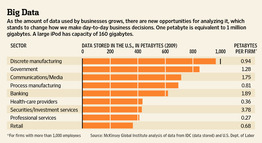
A few months ago, we reviewed an excellent new book called Thinking, Fast and Slow (Oct.22, 2011)  in which author Daniel Kahneman talks about how we make decisions. We see what we want , ignore probabilities, and, as Kahneman writes,  “we are often confident even when we are wrong”. But The Wall Street Journal’s  (Jan.4, 2012) article “What’s Your Algorithm”, says the important theme in business for 2012 will be “how analytics harvested from massive databases will begin to inform our day-to-day business decisions.  Call it Big Data, analytics, or decision science. This will change your world.”

The new algorithms can help us reduce the human decision-making biases that Kahneman fears. These software systems can chew through billions of bits of data, analyze them, and package the insights for immediate use. For example, crunching millions of data points about traffic flows, an analytics system might find that on Fridays a delivery fleet should stick to the highways–despite your devout belief in surface road shortcuts.

Until recently, we have been stymied by the cost of storage, slower processing speeds and the flood of data itself, often spread across different corporate databases. “A few years ago it might take a month to run a project involving 30 billion calculations. Today it can be done in 2 or 3 hours”, says Opera Solutions’  CEO.  HP just spent $11 billion to buy Autonomy Corp., which vacuums up “unstructured data” then applies analytic approaches to it.

Analytics (or as we called it, OR, MS, QA, or Decision Sciences when studying in grad school) is becoming mainstream WSJ reading.

Discussion questions:

1. How has IBM taken a leading role in business analytics?

2. How can massive number crunching help the operations manager?

OM in the News: Qantas Airways Turns to RFID to Eliminate Queues

 The Wall Street Journal (Dec.29,2011) writes: “Qantas has created practically paperless airports, rolling out new technology that eliminates many long lines and speeds passengers all the way to their seats. No paper itinerary. No sticky luggage tag. No boarding pass.” Says one frequent business traveller: “I think this is the best check-in in the world. It’s incredibly efficient”.

The system, built around RFID, is similar to toll tags used on highways. Fliers get an ID card that they flash at a kiosk in the ticketing area. The system assigns a seat and checks the passenger in.  To check luggage, the passenger goes to a baggage drop area and flashes the card again. Personalized RFID tags are placed on the bags, which are scanned for weight and size.. Finally, the ID is flashed at the gate–no boarding pass needed– and agents hand the flier a receipt with the seat number printed on it.

Qantas started building the system a few years ago when it was running out of room in its large Sydney terminal and faced long backups at counters. It concluded that to eliminate lines, it needed to eliminate the “pain points” at the airport–checking in, checking bags, and boarding. So it decided to invest in technology rather than floor space. With kiosks positioned in 4 V-shaped patterns, it’s almost impossible for long queues to build up. The system is largely self-service for customers, sp ground workers now roam the lobby to assist with things like directions and kiosk help.

Discussion questions:

1. Why did Qantas decide to use RFID technology?

2. How does this system benefit both fliers and the airline?

OM in the News: Meet the Electric School Bus

“Forget the Prius”, says today’s Wall Street Journal (Dec.28,2011). “The future of electric is the school bus”. It seems that Americans just love long drives in fast cars too much for electric cars to be our country’s solution to green transportation.  But the routine runs of electric school buses are another matter. Whereas most current school buses run on diesel fuel, have the aerodynamic profile of a box, and get mileage in the single digits (5-6 mpg), a new generation of zero-emission, hybrid buses may be slowly taking over.

School buses, it turns out, are perfectly suited to be electric vehicles. They cover short distances on daily runs, follow set and predictable routes (making it unlikely their batteries die during the route), and spend a lot of the day sitting in depots, giving them plenty of time to recharge. They also make frequent stops, which while bad for fuel efficiency in a conventional bus, actually helps recharge electric vehicle batteries while  brakes are applied.

Money is the prime obstacle, in that a hybrid costs 60% more than a diesel school bus. But hybrids can improve fuel economy by 65% and if budgets were not hurting so badly in many school districts, fleets would be expanding rapidly.  School districts can recover the $30,000 price differential in 3-5 years through  fuel savings once the investment is made.

Navistar Int’l, Trans Tech, and Smith Electric Vehicles are three of the major players in the electric school bus industry.

Discussion questions:

1. Why is this an OM issue?

2. In what other ways can a school district use sustainability (Ch.7) to actually save money?

Teaching Tip: How Technology Almost Ruined the World Series for the Cardinals

Everyone loves a good baseball story, but how often can you find one to tie into your OM lecture? In case you don’t follow the sport, here is a quick summary of how a lack of technology (a topic in Ch.7) cost the St. Louis Cardinals Game 5 of the 2011 World Series, as reported in The Florida Union-Times (Oct.26,2011). In an age of texting, email, iChat and Skype, baseball, it seems, remains mired in the Civil War era of flannel uniforms. St. Louis manager Tony La Russa conveyed his decision to the bullpen to change pitchers (in the 8th inning with the score tied 2-2 against opponent Texas Rangers) using the old-fashioned dugout phone (shown in the photo).

La Russa’s call to bullpen coach  Derek Lillquist to warm up two pitchers, Rzepcynski and Motte,  was perhaps drowned out by the screaming crowd of 51,459 fans. So Lillquist thought La Russa only said Mark Rzepczynski.  La Russa called back to confirm and asked for Motte again. This time, Lance Lynn started to throw, even though he was supposed to be resting from the previous game and used only in an emergency. The series of miscommunications wound up putting Rzepczynski on the mound against Mike Napoli with the bases loaded, a lefty-righty matchup that clearly favored Texas. The Rangers catcher delivered with a two-run double that sent Texas to a 4-2 victory.

For all the magnificent scoreboards in each ballpark, and all the computers that track each pitch, it seems baseball is stuck with land lines. “It’s amazing “, says TV commentator Keith Olbermann. “With all the technology here, they can’t get a call completed from one part of the building to another? You go to an Apple store, the communications device the salesman is carrying is capable of launching a nuclear device”.

A happy ending, by the way, for the Cardinals, winning the 7th game by 6-2.

OM in the News: China Discovers the Dangers of Reverse Engineering

It has been almost a year since we wrote a blog on how China has pulled ahead of competitors by reverse engineering many high-tech products, including bullet trains. It turns out though, that such an approach is not without dangers as The Wall Street Journal  (Oct.3, 2011) points out under the front page headline “China Bullet Trains Trip on Technology” (with a 5 min. video clip embedded in the article). As you may recall, during a July lightning storm, two of China’s bullet trains collided in Wenzhou, killing 40 and injuring 100’s. More recently, two trains collided in Shanghai, injuring 280.

 Thus arises the issue of deep international distrust over China’s questionable use of foreign technology, including weak intellectual property protections. For in fact, key components in China’s high-speed rail system come from Japan’s Hitachi Ltd. Fearful that Chinese technicians might reverse engineer and steal their signaling technology, Hitachi locked many components in a “black box” design. This approach made it harder to copy, but as a downside, made it harder to understand during testing and use. By withholding technical blueprints, known in Japanese as zumen, troubleshooting the gear was also more difficult. “Providing zumen means we completely trust the buyer of our technology”, says a Hitachi exec. He adds, we do not want  a buyer who would “become a competitive threat in other markets”.

In less than 7 years, China has built a bullet-train network larger than the ones Japan and Germany took decades to construct. According to the CFO of the company working with Hitachi on the signaling systems, China has made it a “very clear mandate of localizing the product. Basically, foreign players are not allowed to bid independently for high-speed rail projects”.

Discussion questions:

1. Why don’t all companies transferring technology to China protect their “zumen”?

2. How has corruption played a factor in China’s rail system?

OM in the News: Reversing Self-Service Technology in Supermarkets

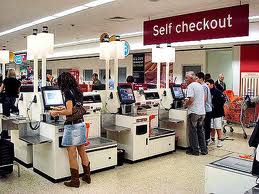
Supermarket chains started introducing self-service lanes about 10 years ago, touting them as an easy way for shoppers to scan their own items’ bar codes, pay, bag their bounty and head on their way. Retailers also anticipated  labor savings, potentially reducing the number of cashiers as they encouraged shoppers to use the do-it-yourself technology (one of our topics in Ch.7, Process Strategy). But Forbes (Sept. 26, 2011) is reporting that some grocery chains nationwide are bagging this “wave of the future” option by eliminating self-serve lanes.

Big Y, a Northeast US chain, just announced it was phasing out self-checkout lanes. Albertsons is also reducing its unstaffed lanes and adding more clerks to traditional lines. Why? Because a recent Food Marketing Institute study found that only 16% of supermarket transactions in 2010 were done at self-checkout lines in stores providing that option–down from a high of 22% three years ago. Overall, people reported being much more satisfied with their shopping experience when they used cashiers. Big Y  found that its self-service lines caused delays because of coupons and payments. Intentional and accidental theft  and misidentifying products also helped reach the tipping point.

Other chains plan to keep the self-service option in place because they think giving shoppers that choice is an important part of customer service. “People shop in different ways”, says a Stop & Shop spokeswoman. Home Depot and some other businesses that cater to a do-it-yourself mentality, have had more success with their self-service lanes. And it may all come down to demographics–such as whether the store is in a tech-savvy region. “It is a match between technology and the customer base”, says a St. Joseph U. prof.

Discussion questions:

1. What other businesses have reversed direction in terms of new technology?

2. Why have ATMs succeeded at airports and banks?

OM in the News: Technology Puts the Brakes on Truckers

Who doesn’t remember the romantic age of the US trucking industry? Powered by cheap diesel, drivers could do pretty much as they pleased on the open road. The days of open-throttles were made famous by Bert Reynolds’ 1977 movie, “Smokey and the Bandit”. Using his CB radio to skirt police traps, the  hero shreds speed limits on a cross-country beer run. Well, those days are gone.

The Wall Street Journal’s article (July 11,2011), “Firms Put Brakes on Truckers”, describes the technology trucking companies are using to wring better fuel economy from their fleets.  Firms are putting computerized governors on trucks’ engines, cutting top speeds from 70 mph to 65 mph. Titan Transfer is even paying bonuses to drivers who get the best fuel economy–and chewing out drivers who don’t. Every decline of 5 mph improves an 18-wheeler’s fuel use by 1/2 mile per gallon–big savings to the shippers.

Today, a driver’s every move is electronically recorded and relayed back to dispatch centers. The black box in the cab is wired to a satellite dish near the roof that beams the truck’s location, its speed, and even what gear it’s in back to the company in real-time. When one driver tried to shift into neutral going down a hill, to override the truck’s governor, a red light immediately flashed telling him to pull over and call HQ for a tongue-lashing.

Drivers, understandably, are not happy about covering less distance each day, as they are paid by the mile. This cuts take-home pay and makes the old-time,  cross-country run stretch from 3 days (at 80 mph) to 4 or 5 days. But even some reluctant drivers agree that 65 mph saves not only fuel, but lives.

Discussion questions:

1. What are other ways that technology can help make the trucking industry more efficient?

2. Make the case, from the driver’s perspective, why the changes are not efficient.

OM in the News: Pilots and the iPad–Efficiency in the Airlines, Part 2

Yesterday’s blog was on building efficient airplanes that weigh less and pollute less. With jet fuel  prices at near record high prices, we noted that every pound lighter a plane can be made saves 30 gallons of fuel a year. It’s interesting that the very next day, The New York Times (July 5, 2011) reported that 1.5 pound iPads are replacing 60 pounds worth of   flight manuals that pilots currently drag around.  The FAA has started to authorize airlines to use the tablet computer as an electronic flight bag to take the place of bulky paper manuals that contain operations instructions, checklists, log books, navigation charts, weather information and airport diagrams.

The flight director at Alaska Airlines says: “The iPad allows pilots to quickly and nimbly access information. When you need to make a decision in the cockpit, 3 to 4 minutes fumbling with paper is an eternity”.  Every one of Alaska’s pilots is now using the device — and  American Airlines, which just got FAA approval, is not far behind. The e-manuals include hyperlinks and color graphics. And pilots skip the tedium of updating manuals by swapping out old pages with new ones. Switching to the iPad is also expected to reduce absenteeism from shoulder and back injuries associated with hoisting the heavy bags (which also tear up the seats, according to one AA pilot).

There are now over 250 aviation apps for the iPad, including some that are easier to use than avionics technology installed in the planes. As we discuss in Ch.7, technology can play a major role in increasing operational efficiency. With American’s fleet at about 620 planes, the airline stands to save over 1 million gallons of fuel per year just with the iPads!

Discussion questions:

1. How else does technology save the airlines time and money?

2. Can the iPads be used when the plane is in flight?

OM in the News: UPS Turns to Lighter Trucks for Efficiency

For as many times as it has tested electric, hybrid, and other alternative powertrains for its trucks, UPS has run into the same issues of complexity and cost. Now it’s trying a simpler route  to fuel savings. Although competitor FedEx and other fleet deliverers such as Staples, At&T, and Frito-Lay have turned to electric (see our blog on electric trucks on Dec.10, 2010), UPS is looking lighter. Using light-weight composite materials, the delivery company  is able make trucks 1,000 pounds (about 10%) lighter than today’s familiar brown “package cars”.

USA Today (June 9,2011) reports that with less weight, the new trucks can have smaller diesel engines that save 40% on fuel use–without the complexity of high-tech batteries, hybrid systems, or other advance technologies that can run up total costs. “This technology is available to us today. We don’t have to worry about plugging it in or getting propane”, says UPS’ engineering director.

The first batch of trucks is being built by Utilimaster, in Indiana, using an Isuzu chassis, powered by a simple Isuzu 150-horsepower clean-diesel engine. Isuzu, which no longer sells cars in the US, maintains a vigorous truck operation here. It sees the new diesel as a chance to trump hybrids because “we didn’t think people were going to be able to afford a hybrid or electric vehicle”. The fuel savings don’t just come from lower weight and a smaller engine. With a sleek  new look, the trucks are 13% more aerodynamic than competitors.

Comparing this approach with electric/hybrid alternatives shows once again that there is more than one way to skin the cat of increased operations efficiency.

Discussion questions:

1. What are the advantages and disadvantages of the alternatives discussed?

2. Why doesn’t every company switch to one of these new technologies?