OM in the News: America’s Second Railroad Revolution

Union Pacific's Bailey Yard
Union Pacific’s Bailey Yard

Rail is on a roll in the U.S. As Forbes (Feb.10, 2014) writes, “The relic of the 19th century will become the most important logistics system of the 21st century.” Thanks to leaps in technology, more and more freight traffic has moved from roads to rails, where trains can move one ton of goods about 500 miles on a single gallon of fuel. The industry, so recently an aging also-ran in the age of superhighways, has seen revenues surge 19% to $80.6 billion since 2009, creating 10,000 new jobs at railroad companies. Less than a decade ago diesel prices were so low that manufacturers rarely considered rail for shipments of less than 1,000 miles. Now they’re ditching trucks in favor of trains for jobs as short as 500 miles.

All of which is driving a multibillion-dollar revival in rail R&D and infrastructure, investment unseen in America since the transcontinental railroad. Thousands of new state-of-the-art locomotives–far more fuel-efficient and less polluting than the ones they replace–are now operating on U.S. railroads. And the boom (with $20 billion in infrastructure spending annually) has been underwritten by industry, with no cost to taxpayers. Further, the Rail Safety Improvement Act of 2008 required railroads to fund, build and implement a new, safer “Positive Train Control” system by the end of 2015, refitting locomotives and tracks, and placing GPS devices on every locomotive.

This technology has been revolutionizing freight hauling, allowing the railroads to pinpoint a locomotive’s location within one yard. And instead of sending trains speeding across the country only to stop at each red signal, the new system means conductors will be able to know about planned stops well in advance, allowing them to simply reduce speed (and fuel consumption) to a level that won’t force them to stop altogether and burn major amounts of fuel when restarting from a standstill.

Classroom discussion questions:

1. Why are these changes in the rail industry important to operations managers?

2. What new technology is GE using in locomotives which will be 50% cheaper than diesel?

OM in the News: Clustering Technology and the Danish Pig

hogsEvery weekday 20,000 pigs are delivered to the Danish Crown company’s slaughterhouse in central Denmark, writes The Economist (Jan.4, 2014). They trot into the stunning room, guided by workers armed with giant fly swats. They are hung upside down, divided in two, shaved of their bristles and scalded clean. A machine cuts them into pieces, which are then cooled, boned and packed.

The slaughterhouse is enormous, ten football fields long with 7 miles of conveyor belts. Its managers attend to the tiniest detail. The fly-swatting workers wear green rather than white because this puts the pigs in a better mood. The cutting machine photographs a carcass before adjusting its blades to its exact contours. The company calibrates not only how to carve the flesh, but also where the various parts will fetch the highest prices.

Denmark is a tiny country, with 5.6 million people and wallet-draining labor costs. But it is an agricultural giant, home to 30 million pigs and numerous global brands. In 2011, farm products made up 20% of its goods exports. The value of food exports grew from $5.5 billion in 2001 to $22 billion in 2011. The government expects it to rise by a further $9 billion by 2020.

Why, in a post-industrial economy, is the food industry still thriving? Much of the answer lies in a cluster in the central region of the country. The cluster includes several big companies, which act as its leading investors: Danish Crown, Arla, Rose Poultry and DuPont Danisco.  Plenty of smaller firms are also sprouting, which act as indicators of nascent trends and incubators of new ideas. Interestingly, among the Danish public, distaste for “factory farming” is increasing. Borgen, a popular television political drama, devoted an entire episode to criticizing pig farming.

Classroom discussion questions:

1. Why is clustering so important (see Chapter 8)?

2. How is technology impacting the food processing industry?

OM in the News: The Changing Workforce

jobsIN 1930, John Maynard Keynes worried of a new disease: “technological unemployment…due to our discovery of means of economizing the use of labor outrunning the pace at which we can find new uses for labor.” Now, 2 Oxford professors are arguing that jobs are at high risk of being automated in 47% of the occupational categories into which work is sorted. That includes accountancy, legal work, technical writing and a lot of other white-collar occupations.

Automation processes have steadily and relentlessly squeezed labor out of the manufacturing sector in most rich economies, writes The Economist (Jan. 18-24, 2014). As we note in Chapter 1, the share of U.S. employment in manufacturing has declined sharply since the 1950s, from almost 30% to less than 10%. At the same time, jobs in services soared, from less than 50% of employment to almost 70% (see chart). It was inevitable that firms would start to apply the same automation to service industries.

jobs2The case for a highly disruptive period of economic growth is made by MIT profs in “The Second Machine Age.” Like the first great era of industrialization, they argue, it should deliver enormous benefits—but not without a period of uncomfortable change. They write that the amount of progress computers will make in the next few years will equal to the progress they have made since their very beginning!

The combination of big data and smart machines will take over some occupations wholesale; in others it will allow firms to do more with fewer workers. Some jobs—especially those currently associated with high levels of education and high wages—will survive (see table). Rich economies seem to be bifurcating into a small successful group of workers with skills highly complementary with machine intelligence, with the rest of workers less successful.

Classroom discussion questions:

1. In what service jobs will automation be a major factor?

2. Will manufacturing reverse its downward slope of employment?

OM in the News: How UPS is Using Operations Research

UPSAfter 10 years of research and development, United Parcel Service is officially launching an automated system that uses algorithms to devise optimal routes for its drivers, reports The Wall Street Journal (Oct. 31, 2013). It says the new tool will slash fuel consumption and costs, and support the creation of new services. UPS’ CIO said that the company believes that its on-road integrated optimization and navigation program—dubbed Orion—is the world’s largest operations research project. Ten thousand of its 55,000 drivers will be on the Orion system this year, and it will be fully deployed by 2017.

The effort involved a team of 500 workers. The computer scientists in the group have written an algorithm with 1,000 pages of code. It’s the largest technology project at UPS, which invests $1 billion a year in technology. First, the company had to install GPS sensors to track its drivers and vehicles, a technology known as telematics. That effort already has avoided about 100 million minutes of engine idling. UPS then devised its own mapping system, which includes about 250 million delivery points, a database that is updated continually.

The company’s operations research group devised algorithms that calculate the best route for each driver on a given day. In 2008, those calculations could take hours to perform. Now, they are done in 8 seconds.

The payoff on the investment will be measured in a variety of ways. The company stands to save $50 million a year if every driver can simply reduce the length of his or her route by one mile a day. That will help UPS reduce fuel consumption and environmental impact, while allowing drivers to make more deliveries per day. This year, technology will help the company save 1.5 million gallons of fuel and reduce CO2 emissions by 14,000 metric cubic tons.

Classroom discussion questions:

1. Why does UPS invest so heavily in technology?

2. What other approaches can UPS employ to impact sustainability?

Video Tip: Inside Tesla’s Robotic Factory

teslaIf you want to show an example of all the high tech manufacturing tools discussed in Chapter 7, here is the perfect video for your class.  In it, Wired Magazine (July 16, 2013) provides a tour of the 5 million-square-foot Tesla Motors factory in Fremont, California to see how CEO Elon Musk is rethinking how cars are built.  Tesla Motors has kicked off production of the gorgeous Model S into overdrive, cranking out some 400 cars a week on one of the world’s most advanced automotive production lines. My wife and I are so impressed that we are scheduled to take the car for a test drive this weekend

A major automaker in Detroit or Japan can churn out 400 cars a day, and in fact the Tesla Motors plant had a capacity of 6,000 cars a week when Toyota and General Motors ran this factory in the 1980s and 1990s. But Tesla’s numbers are impressive when you consider the Silicon Valley automaker started less than a decade ago with a few engineers and mechanics shoving piecemeal components into a rolling chassis made by Lotus.

Tesla got the factory for a song from Toyota in 2010, spent about a year or so setting up tooling and started producing the Model S sedan in mid-2012. The automaker brings in raw materials by the truckload, including the massive rolls of aluminum we see in the 5 minute video that are bent, pressed, and formed to create the car. Those lightweight components are assembled by swarm of 160 red robots.

The bare body is shipped off for prepping and paint before joining the assembly line under the power of autonomous robots. The shell is ushered through the line as Tesla’s 3,000 workers work alongside their robotic counterparts to install the battery, motor, interior, and miles of cabling and components that help create the electric sports sedan.

OM in the News: The New Industrial Revolution

The upper for Nike's Flyknit shoe
The upper for Nike’s Flyknit shoe

“Welcome to the New Industrial Revolution,” writes The Wall Street Journal (June 11, 2013)—a wave of technologies and ideas that are creating a computer-driven manufacturing environment that bears little resemblance to the gritty and grimy shop floors of the past. The revolution threatens to shatter long-standing business models, upend global trade patterns and revive American industry.

“Manufacturing is undergoing a change that is every bit as significant as the introduction of interchangeable parts or the production line,” says the head of GE’s global research lab. “The future is not going to be about stretched-out global supply chains connected to a web of distant giant factories. It’s about small, nimble manufacturing operations using highly sophisticated new tools and new materials.” The upheaval is accelerating thanks to the convergence of a number of trends: the low cost and accessibility of Big Data associated with cloud computing; the plummeting cost of electronic sensors and microprocessors that can be used to make machines more adept; and software advances that allow a whole new level of manufacturing precision.

To get an up-close look at how the new technologies are already disrupting the old ways of doing things, consider Nike’s Flyknit shoe. As high-tech as some sneakers may be in materials and appearance, almost all of them are still made on assembly lines that put heavy emphasis on human labor. Workers sit side by side in enormous facilities, cutting material and stitching and gluing shoe components together. But with new technology, Nike has begun to make a shoe with just a few parts instead of dozens– and with up to 80% less waste. Out of the blue, the reason for making shoes in low-wage countries begins to evaporate and the advantages of locating the machine closer to the customer—in part for faster delivery—begin to loom much larger.

Boston Consulting Group just published a report predicting that as much as 30% of America’s exports from China could be domestically produced by 2020.

Discussion questions:

1. What is the “new industrial revolution”?

2. Will the number of manufacturing jobs in the US increase dramatically? Why?

OM in the News: Uncaged, Robots Become Gentler

The Baxter robot
The Baxter robot

FACTORY robots are usually caged off from humans on the assembly line lest the machines’ powerful steel arms deliver an accidental, bone-crunching right hook. But now, reports The New York Times (March 31, 2013), gentler industrial robots are coming out from behind their protective fences to work shoulder-to-shoulder with people. It’s an advance made possible by sophisticated algorithms and improvements in sensing technologies like computer vision.

The key to these new robots is the ability to respond more flexibly, anticipating and adjusting to what humans want. That is in contrast to earlier generations of robots that often required extensive programming to change the smallest details of their routine. A Georgia Tech prof states: “Robots of the future won’t just be in manufacturing. Almost any area could have a robot that would help make our life easier, whether lifting patients in hospital beds or helping at home.”

Gentle, helpful robots aren’t just being created in labs; they are also arriving in the marketplace. Since January, Rethink Robotics of Boston has been sending customers its two-armed robot called Baxter, which can work uncaged, moving among people. Baxter’s cameras inspect what is to be lifted, recognizing an object from many angles. In the coming year, Baxter will be able to grab objects not only from above, but also from the side, putting them into a milling machine, for example, and pressing the “go” button. It will also be able to connect with other machines to synchronize tasks.

“Baxter is a great starting point for this new generation of robots,” adds the Georgia Tech prof, “making the technology accessible to companies that before would have had to pay hundreds of thousands of dollars.”

Discussion questions:

1. How have robots evolved in the past 20 years?

2. What are some operations functions that a robot like Baxter can help improve?

OM in the News: Boeing’s Dreamliner Nightmare

Recent 787 emergency evacuation

By now, you likely know that the Federal Aviation Administration (FAA) ordered U.S. airlines to ground the Boeing 787 Dreamliners in their fleets until the lithium-ion batteries on the planes could be proved reliable. The FAA’s action, writes USA Today (Jan.17, 2013), came after Japan’s two largest airlines grounded their combined 787 fleets because an All Nippon Airways (ANA) plane had to make an emergency landing when the crew detected a battery’s burning smell.

The 24 Dreamliners flown by ANA and Japan Airlines  represent nearly half the 50 that Boeing has delivered to airlines. More than 800 of the planes are on order. The Dreamliner is Boeing’s newest and most technologically advanced jet, and the company is counting heavily on its success; it is the first commercial aircraft to be made largely of lightweight, fuel saving, carbon composites rather than conventional aluminum and steel.  Passengers like the airy cabins, large windows and comfortable humidity.

But the Dreamliner has had technological and supply chain problems from the start, which resulted in its being 3 years late in delivery. Last month, United Airlines and Qatar Airways had to divert or ground planes because of electrical issues. The 787 relies heavily on electricity and thus needs the large lithium-ion batteries to power it. Batteries, though, aren’t the plane’s only problem: On Jan. 8, a fuel leak on a Japan Airlines flight to Tokyo was detected before takeoff from Boston. On Jan. 11, cracks were spotted in the cockpit window of an ANA in Japan. The same day, another ANA flight was delayed because of an oil leak from an engine generator.

Boeing has said the 787’s reliability is “well above 90%.” As you teach reliability in Chapter 17, however, recall that the overall reliability of the Space Shuttle was .98–and, indeed, 2 Shuttles crashed out of 100+ flights.

How do passenger’s feel about the plane? “The uncertainty surrounding the Dreamliner makes it a plane that isn’t one that you can book and expect to fly reliably,” says one travel analyst.

Discussion questions:

1. What is the major operations issue facing Boeing right now?

2. What was the reliability of other technologically new planes introduced in the past 50 years?

OM in the News: Shell Oil’s Use of Operations Technology in Drilling

Noble crew and imaging equipment

A new generation of digital technologies in offshore oil drilling ships is helping Shell Oil drill wells faster, more safely and at a lower cost than ever before. It is part of the technological revolution fueling North America’s oil-and-gas boom, writes The Wall Street Journal (Jan. 3, 2013), increasing the continent’s energy independence. The Noble Bully—a 30,270-gross-ton behemoth as long as two football fields—can guide a 21.5-inch-wide drill bit thousands of feet below the water’s surface to the center of a target 4 sq. ft. in size.

Innovations in information technology, the topic of Chapter 7, including powerful new data-imaging tools and predictive analytics, are making it possible for companies like Shell and Chevron to map and exploit previously uncharted oil-and-gas fields locked in shale and “tight” rock formations, or buried far below the ocean floor and obscured by thick layers of salt. Seven to eight feet narrower and 160 to 260 feet shorter than conventional offshore drilling vessels, the Noble Bully can operate as deep as 12,000 feet. Shell says it can drill as much as 40,000 feet below the seafloor.

The Noble Bully’s  sensors pick up more data than their predecessors from sonic blasts sent out by an exploration ship. Shell operates the highly automated drill ship with 160 workers—40% fewer than required on a typical vessel. Shell scientists working on shore analyze the data with artificial intelligence the company developed, and produce 3- and 4-dimensional maps of the oil reservoirs.

Safety is an almost constant topic of conversation aboard the Bully, where anyone—even visitors—have the authority to stop work if they think something isn’t right.

Discussion questions:

1. How is Shell enhancing oil drilling productivity?

2. What is the role of the operations manager in offshore drilling?

OM in the News: Will the New Ford F-150 Be Tough Enough?

Just west of Detroit, Ford is working on one of the biggest gambles in its 108-year history: a pickup truck with a largely aluminum body. The radical redesign (a topic in Chapter 5) will help meet tougher federal fuel-economy targets. But as The Wall Street Journal (July 27, 2012) reports, Ford will have to overcome a host of manufacturing obstacles, plus convince die-hard pickup buyers that aluminum is as tough as steel.

Ford is hoping the switch to the lighter metal will cut the weight of its F-150 truck by about 700 pounds,  a 15% reduction. This would enable Ford’s trucks to go farther on a gallon of gasoline, and open the door to the use of smaller engines to further boost fuel economy. (Other car makers also are experimenting with aluminum. Novelis, the world leader in rolled sheet aluminum, is tripling its U.S. production capacity of  aluminum used to make body panels).

Few have as much at stake as Ford. The F-series is one of the most profitable motor-vehicle lines in the world. In 2011, a third of Ford’s $8.8 billion global operating profit was generated by F-series sales. But aluminum is more expensive than steel, and extensive use could drive up costs by $1,500, cut the F-series’ hefty profit margins, or push away price-sensitive customers. Aluminum also is trickier to work with. The switch will require investment in $100’s of millions  in new manufacturing equipment, and the use of auto-assembly techniques that pose challenges in high-volume production. A big headache is the lack of magnetism, requiring powerful and electricity-hungry vacuums to be used to pick up the aluminum sheets for transfer. Assembly plants now use giant magnets to move steel body panels around. Aluminum also is more springy than steel and it scratches more easily.

Discussion questions:

1. What are the main issues facing operations managers with this redesign?

2. What the threats and opportunities Ford faces?

OM in the News: Penney’s Turns to the iPad For a Cash Register

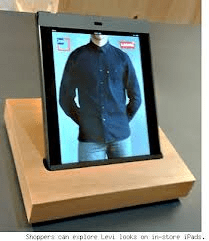
In Chapter 7, Process Strategy, we discuss the impact of new technology and equipment on the customer service experience. USA Today (July 25, 2012) provides a great example to use in class with a front page story that starting this weekend, salespeople in Penney’s new Levi’s shops will use only iPads to check out customers. All of Penney’s 1,100 stores will offer mobile checkout by the end of the year.

More than 6,000 Nordstrom salespeople are already using mobile devices to check people out, just like at Apple stores. “By the end of this year, Nordstrom salespeople will be able to do everything on their handheld devices that they can at a register,” says Jamie Nordstrom, grandson of the chain’s founder. “I believe the future of our point-of-sale systems is completely mobile,” he adds. “It’s hard to know whether it’s in one year or five years because the technology is evolving so rapidly.”

Several grocery stores — Costco and Sam’s Club are two — already use employees armed with mobile devices for “line busting.” The workers scan products for customers standing in lines and print a bar code that they can take to cashiers to pay. Nordstrom salespeople will still be able to make change, but not with the “cash registers of yesterday”. “As long as there is cash, we’ll always be happy to accept cash”, Nordstrom says.

Other stores where customers interact often with salespeople will likely start adopting mobile checkout. “If you go through the whole process of shopping with help along the way, why should you have to stop and be funneled to a line?” says an industry consultant.

Discussion questions:

1. What other technology changes are impacting OM in the retail scene?

2. How does the iPad build flexibility into the store’s operations?

OM in the News: A 3D Printer on Every Desk?

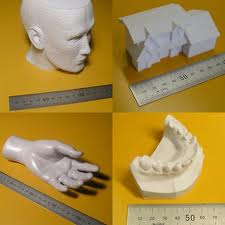
For 25 years, carmakers and aerospace companies have used industrial-grade 3D printers to fashion prototype parts for their vehicles. Businessweek (April 30-May 6, 2012) reports that more recently, the medical field has turned to the machines to make custom hearing aids and invisible braces, while architects use the technology to produce models and consumer electronics companies to build prototypes of their latest gadgets.

One of the most exciting innovations in OM, 3D printers have become indispensable for doing business. The large industrial systems, ranging  from  $5,000 to $1 million can print in different colors of plastic and employ other materials such as metal, glass, and ceramics. Software makers are harnessing this power, making much better tools for manipulating objects. The market for 3D printers, about $1.7 billion, will reach $3.7 billion by 2015.

Mercedes , Honda, Boeing, and Lockheed Martin use 3D printers to fashion prototypes or to make parts that go into final products. The technology has broadened out to attract vacuum maker Oreck and Invisalign, which produces custom braces for teeth. Microsoft also uses a 3D printer to help design computer mice and keyboards. “A person who buys a BMW will want a part of the car with their name on it or to customize the seats to the contours of their bodies,” says 3D Systems’ CEO. “We’re printing with chocolate in our research labs today, so Godiva might print a candy bar with your face on it.”

As so often happens with industrial-grade technologies, 3D printing has flowed downstream to consumer. For $1,299, anyone can now buy a 3D printer, hook it up to a Wi-Fi network, and begin downloading files that will turn into real objects. The beauty and value of 3D printing & prototyping is that it can unleash the creative energy that is so unique to our minds. People who previously only “thought” about an invention or improvement can now make it real in a short time.

Discussion questions:

1. Why are 3D printers an important OM tool?

2. Why are the printers catching on as a household device?

OM in the News: Qantas Airways Turns to RFID to Eliminate Queues

 The Wall Street Journal (Dec.29,2011) writes: “Qantas has created practically paperless airports, rolling out new technology that eliminates many long lines and speeds passengers all the way to their seats. No paper itinerary. No sticky luggage tag. No boarding pass.” Says one frequent business traveller: “I think this is the best check-in in the world. It’s incredibly efficient”.

The system, built around RFID, is similar to toll tags used on highways. Fliers get an ID card that they flash at a kiosk in the ticketing area. The system assigns a seat and checks the passenger in.  To check luggage, the passenger goes to a baggage drop area and flashes the card again. Personalized RFID tags are placed on the bags, which are scanned for weight and size.. Finally, the ID is flashed at the gate–no boarding pass needed– and agents hand the flier a receipt with the seat number printed on it.

Qantas started building the system a few years ago when it was running out of room in its large Sydney terminal and faced long backups at counters. It concluded that to eliminate lines, it needed to eliminate the “pain points” at the airport–checking in, checking bags, and boarding. So it decided to invest in technology rather than floor space. With kiosks positioned in 4 V-shaped patterns, it’s almost impossible for long queues to build up. The system is largely self-service for customers, sp ground workers now roam the lobby to assist with things like directions and kiosk help.

Discussion questions:

1. Why did Qantas decide to use RFID technology?

2. How does this system benefit both fliers and the airline?

Teaching Tip: How Technology Almost Ruined the World Series for the Cardinals

Everyone loves a good baseball story, but how often can you find one to tie into your OM lecture? In case you don’t follow the sport, here is a quick summary of how a lack of technology (a topic in Ch.7) cost the St. Louis Cardinals Game 5 of the 2011 World Series, as reported in The Florida Union-Times (Oct.26,2011). In an age of texting, email, iChat and Skype, baseball, it seems, remains mired in the Civil War era of flannel uniforms. St. Louis manager Tony La Russa conveyed his decision to the bullpen to change pitchers (in the 8th inning with the score tied 2-2 against opponent Texas Rangers) using the old-fashioned dugout phone (shown in the photo).

La Russa’s call to bullpen coach  Derek Lillquist to warm up two pitchers, Rzepcynski and Motte,  was perhaps drowned out by the screaming crowd of 51,459 fans. So Lillquist thought La Russa only said Mark Rzepczynski.  La Russa called back to confirm and asked for Motte again. This time, Lance Lynn started to throw, even though he was supposed to be resting from the previous game and used only in an emergency. The series of miscommunications wound up putting Rzepczynski on the mound against Mike Napoli with the bases loaded, a lefty-righty matchup that clearly favored Texas. The Rangers catcher delivered with a two-run double that sent Texas to a 4-2 victory.

For all the magnificent scoreboards in each ballpark, and all the computers that track each pitch, it seems baseball is stuck with land lines. “It’s amazing “, says TV commentator Keith Olbermann. “With all the technology here, they can’t get a call completed from one part of the building to another? You go to an Apple store, the communications device the salesman is carrying is capable of launching a nuclear device”.

A happy ending, by the way, for the Cardinals, winning the 7th game by 6-2.

OM in the News: Reversing Self-Service Technology in Supermarkets

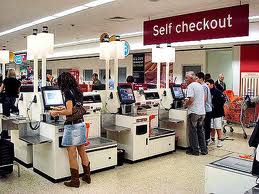
Supermarket chains started introducing self-service lanes about 10 years ago, touting them as an easy way for shoppers to scan their own items’ bar codes, pay, bag their bounty and head on their way. Retailers also anticipated  labor savings, potentially reducing the number of cashiers as they encouraged shoppers to use the do-it-yourself technology (one of our topics in Ch.7, Process Strategy). But Forbes (Sept. 26, 2011) is reporting that some grocery chains nationwide are bagging this “wave of the future” option by eliminating self-serve lanes.

Big Y, a Northeast US chain, just announced it was phasing out self-checkout lanes. Albertsons is also reducing its unstaffed lanes and adding more clerks to traditional lines. Why? Because a recent Food Marketing Institute study found that only 16% of supermarket transactions in 2010 were done at self-checkout lines in stores providing that option–down from a high of 22% three years ago. Overall, people reported being much more satisfied with their shopping experience when they used cashiers. Big Y  found that its self-service lines caused delays because of coupons and payments. Intentional and accidental theft  and misidentifying products also helped reach the tipping point.

Other chains plan to keep the self-service option in place because they think giving shoppers that choice is an important part of customer service. “People shop in different ways”, says a Stop & Shop spokeswoman. Home Depot and some other businesses that cater to a do-it-yourself mentality, have had more success with their self-service lanes. And it may all come down to demographics–such as whether the store is in a tech-savvy region. “It is a match between technology and the customer base”, says a St. Joseph U. prof.

Discussion questions:

1. What other businesses have reversed direction in terms of new technology?

2. Why have ATMs succeeded at airports and banks?